Sleep loss is known to affect workout performance negatively. It does this by increasing pain sensitivity, which reduces our ability to produce maximum levels of motor unit recruitment by reducing the maximum tolerable perception of effort.
Acidosis is a metabolite-related fatigue mechanism. Exercise training can reduce the rate at which acidosis develops by a variety of adaptations. One such adaptation is an increase in extracellular (outside the muscle fiber) buffering capacity.
Building muscle may be an underappreciated strategy for metabolic health
A review found that a 1.9–3.3% increase in muscle mass was associated with lower fat mass, HbA1c, fasting glucose
Skeletal muscle is not just for movement—it is a metabolic organ
https://t.co/vP1XgFeiH6
Athleticism is not just being strong.
It is the ability to express strength rapidly: sprinting, jumping, decelerating, changing direction and producing force at the right moment.
Strength builds the engine. Lift heavy. Move fast. Stay athletic.
https://t.co/J0oT6qcrLT
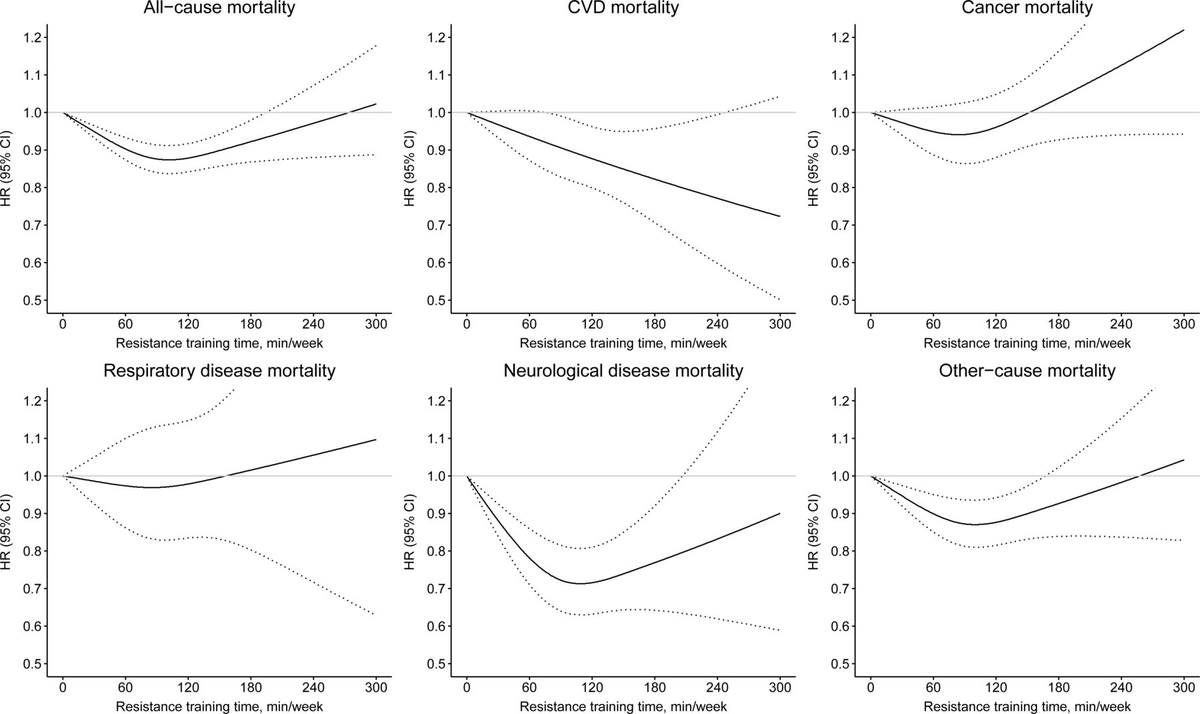
Strength training for 90-120 minutes per week is associated with up to a 30% lower risk of death from all causes, CVD, cancer, and neurologic disease.
That seems to be the upper limit - no additional benefit was observed above 120 minutes of strength training per week.
These benefits were independent of total aerobic activity, but combining strength training with ~5-15 hours of moderate-to-vigorous-intensity aerobic activity reduced all-cause mortality risk by 45%!
Clear message here is: "do both."
Head up sleeping increases red blood cell volume🩸
This new study investigated the effects of sleeping with either…
1️⃣ Head-up sleeping position (HUS) - 6% tilt up
2️⃣ Horizontal sleeping position (CON)
…on erythropoiesis and red blood cell volume over a 5-week period 💤
Here is what they found ⬇️
There were no differences between sleeping positions in…
⏰ Time spent in bed
💤 Sleep quality
🩸 Plasma EPO
🩸 Blood pressure
However, red blood cell volume (RBCV) significantly increased in the HUS condition by 105 ml 📈
👉 Alongside a significant increase in total haemoglobin mass (+36 g)
This improvement in RBCV is comparable to similar duration altitude interventions ✅
There were only 9 male participants who completed both conditions in this study, so it’s quite small scale, but pretty cool nonetheless 🔍
Reference:
https://t.co/J7xAeCTwLi
Subscribe to Performance Nutrition Digest FREE to receive your daily study breakdown, straight to your inbox or via the Substack app 📥
https://t.co/kPsQssm5ut
Performance Nutrition Digest is powered by Healthspan Elite⚡️
https://t.co/V0YqjzPGsK
EPA and DHA are both "omega-3," but they perform different jobs.
DHA is structural, built into neuron and retinal membranes. EPA is a signal, metabolized fast [little of it stays (at least in the brain)].
EPA clears arachidonic acid, the raw material for inflammatory eicosanoids. DHA is the stronger trigger for the resolution molecules that shut down NF-kB, the master switch for cytokines (CRP, TNF-a, IL-6).
A 2026 meta-analysis of 96 trials caught the split: DHA-leaning ratios (<1:1) cut cytokines most, EPA-leaning ratios (≥1:1) cleared AA most (dose was 1-3 g/day).
Mood looks like it contradicts this. The depression benefit tracks EPA (≥60% EPA), even though EPA barely enters neurons. The best current explanation is that a share of depression is inflammation-linked, and EPA acts on that signaling at the periphery, not inside the brain. It moves the input, not the structure.
Nutritional strategies for ACL recovery 🦵
This new systematic review summarised the available evidence on nutrition and rehabilitation following anterior cruciate ligament reconstruction (ACLR), including data from 15 studies and more than 700 participants 📚
Here are the key findings ⬇️
Protein & Muscle Recovery 🥩
📈 Higher protein intakes were consistently associated with better muscle mass retention during rehabilitation
💪 Protein supplementation alongside rehabilitation improved quadriceps strength recovery
🧬 Higher protein intakes (~1.9 g/kg/day) may help support muscle protein synthesis during periods of reduced activity
🏋️ Combining resistance training and protein appears more effective than rehabilitation alone
🥛 Whey protein supplementation improved quadriceps strength recovery in some studies
⚡ Protein remains the nutritional intervention with the strongest evidence for supporting ACL rehabilitation
Supplement Strategies 💊
🧬 Leucine supplementation showed promise for supporting muscle recovery and limiting muscle loss
🐟 Omega-3 supplementation (flaxseed oil providing 4.2 g ALA/day) improved functional outcomes and return-to-sport rates
🏃 Athletes receiving flaxseed oil were more likely to return to their pre-injury level of sport
☀️ Athletes with low vitamin D levels experienced greater quadriceps muscle loss after surgery
🔬 Correcting vitamin D insufficiency before surgery may help preserve muscle during recovery
Recovery & Return to Sport 🔄
🏋️♂️ Preserving muscle mass appears critical for successful rehabilitation
📉 ACL reconstruction commonly results in substantial muscle atrophy and strength loss
⚡ Nutritional support may help reduce the magnitude of muscle loss during rehabilitation
🎯 Most studies focused on muscle function, strength and recovery rather than return-to-sport outcomes
🏃 Return-to-sport was only directly assessed in one study, highlighting a major research gap
❓ More high-quality research is needed before specific ACL nutrition guidelines can be developed
What Didn't Work? 🚫
💥 Creatine supplementation did not improve strength recovery during the first 12 weeks after surgery
🍊 Vitamins C and E altered some inflammatory markers but generally did not improve strength or functional outcomes
🦴 Glucosamine supplementation did not improve rehabilitation outcomes
⚠️ Evidence for collagen-containing supplements remains limited and inconclusive
For enhancing outcomes focus on these 6 key points ⬇️
🥩 Prioritise protein intakes of ~1.6-2.2 g/kg/day throughout rehabilitation
🍽️ Spread protein intake evenly across the day
☀️ Assess and correct vitamin D insufficiency where appropriate
🐟 Consider increasing omega-3 intake through diet or supplementation
🏋️ Use nutrition to complement, not replace, a structured rehabilitation programme
📈 Focus on preserving muscle mass and strength throughout recovery
Reference:
https://t.co/KdDKmTRgwr
Subscribe to Performance Nutrition Digest FREE to receive your daily study breakdown, straight to your inbox or via the Substack app 📥
https://t.co/kPsQssm5ut
Performance Nutrition Digest is powered by Healthspan Elite⚡️
https://t.co/V0YqjzPGsK
🧬 Ciencia
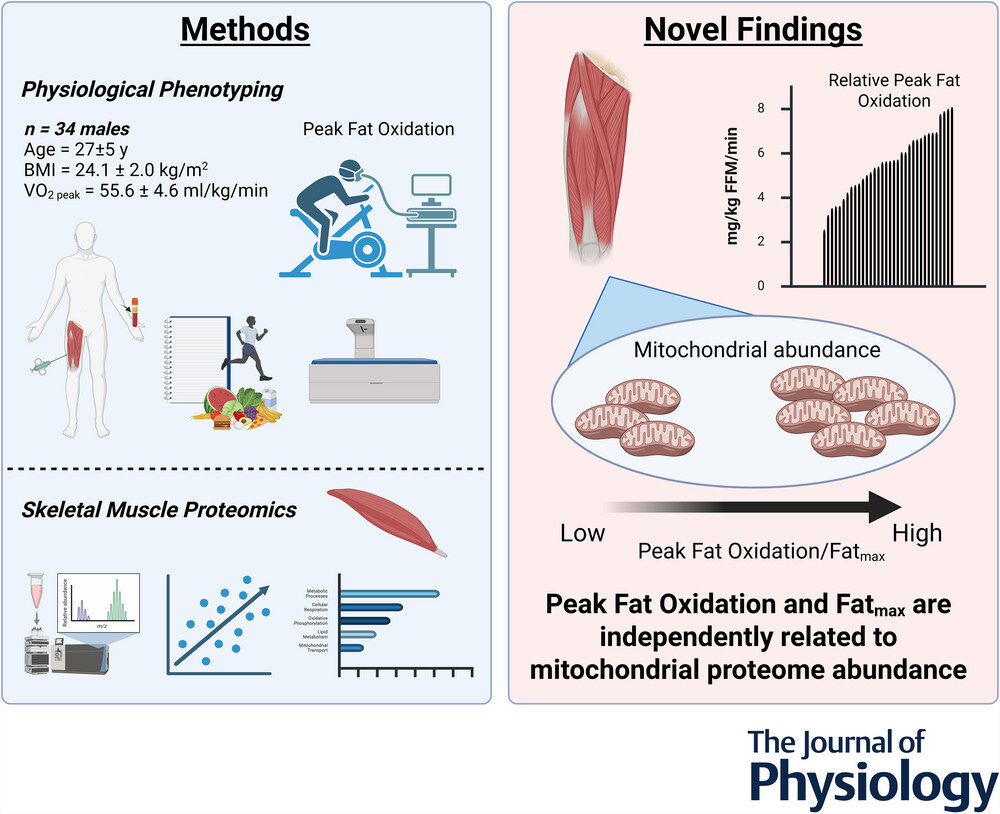
La proteómica muscular muestra que una mayor abundancia mitocondrial se asocia con mejor oxidación de grasas durante el ejercicio 🧔♂️ 💪⚡
👀Más evidencia de que el músculo importa mucho más allá del VO₂peak.
https://t.co/bP673oTXeI
Old-school strength training still holds up.
The Hepburn method combines:
🏋️ heavy low-rep sets for strength
💪 moderate-rep volume for hypertrophy
Example: front squat
8×2 → progress to 8×3 at ~80% 1RM
then 3×6–8 at ~65–70% 1RM
Simple. Progressive. Effective.
Insufficient sleep reduces the stimulus for various adaptations, which has implications for athletes and bodybuilders. See Patreon for the full article with citations.
Tart cherry may enhance muscle adaptations to exercise 🍒
This new study investigated the effects of tart cherry supplementation on recovery from exercise-induced muscle damage 🔍
Participants either consumed…
1️⃣ Tart cherry (high-dose)
2️⃣ Tart cherry (low-dose)
3️⃣ Placebo
…for 7-days prior to muscle damage.
Muscle biopsies were taken to analyse effects on the musculoskeletal system
Here is what they found ⬇️
🩸 Compared to placebo, tart cherry juice led to significantly enhanced plasma phenolic acid concentrations
🧬 Plus significant changes in skeletal muscle expression of both structural and contractile proteins
❌ Functional recovery (muscle strength) was not improved in this study
These findings may indicate a protective effect in skeletal muscle with loading tart cherry prior to exercise 🍒🛡️
During periods of intense activity or in the lead up to excessive strain (e.g. ultramarathons) tart cherry could be a valuable strategy ✅
Reference:
https://t.co/9zhN1x4ppL
Subscribe to Performance Nutrition Digest FREE to receive your daily study breakdown, straight to your inbox or via the Substack app 📥
https://t.co/kPsQssm5ut
Performance Nutrition Digest is powered by Healthspan Elite⚡️
https://t.co/V0YqjzPGsK
🥤 Meta-analysis of 9 RCTs: artificially sweetened beverages showed no significant effects on body weight, waist, glucose, insulin resistance, lipids or blood pressure vs unsweetened drinks
Water first—but diet drinks appear metabolically neutral
https://t.co/3mj5Dd7FEg
🆕Estudio en @BJSM_BMJ con 147.374 participantes sugiere que hacer 90–120 min/semana de entrenamiento de fuerza 🏋️♂️se asocia con menor riesgo de mortalidad💀
Y mejor aún: combinar fuerza + ejercicio aeróbico parece ofrecer el mayor beneficio 💪🚶♀️
https://t.co/R9A4no0wTL
📚resistance exercise increased muscle protein synthesis in trained women, but menstrual cycle phase did not alter the acute response
Practical takeaway: don’t overcomplicate it—train consistently, adjust to symptoms, and let progression drive results
https://t.co/pDlyhPyq2G
Otro, estudio, este de NeuroImage (2026), muestra que la siesta restaura la neuroplasticidad sináptica en la corteza humana Tendría impacto en la consolidación de la memoria y la capacidad de aprendizaje Se reduce el "ruido" sináptico acumulado https://t.co/5oQTVwlUNe
What's the right amount of time for resistance training?
A new study supports 90-120 minutes/week across multiple outcomes, which plateaus beyond that for lack of additional benefit
From 30-year follow-up of ~150,000 participants
https://t.co/mUy9o4HkbH
One curious feature of the effects of insufficient sleep is that it causes atrophy mainly in fast twitch muscle fibers but muscle damage mainly in slow twitch muscle fibers. This may provide insight into how the negative effects of sleep loss are mediated.
Figuring out whether caloric restriction reduces muscle mass is difficult when physical activity levels are normal because the reduction in bodyweight changes the number of activated fibers in activities of daily life. Immobilization studies provide an answer.
❌ Mito: Para ganar músculo hay que entrenar “hasta reventar” siempre‼️
✅ Realidad: La #hipertrofia depende sobre todo de aplicar tensión mecánica, hacer series de calidad cerca del fallo, progresar y sostenerlo en el tiempo 🏋️♂️📈
https://t.co/K3qlumNWAb






![WilliamWallace's tweet photo. EPA and DHA are both "omega-3," but they perform different jobs.
DHA is structural, built into neuron and retinal membranes. EPA is a signal, metabolized fast [little of it stays (at least in the brain)].
EPA clears arachidonic acid, the raw material for inflammatory eicosanoids. DHA is the stronger trigger for the resolution molecules that shut down NF-kB, the master switch for cytokines (CRP, TNF-a, IL-6).
A 2026 meta-analysis of 96 trials caught the split: DHA-leaning ratios (<1:1) cut cytokines most, EPA-leaning ratios (≥1:1) cleared AA most (dose was 1-3 g/day).
Mood looks like it contradicts this. The depression benefit tracks EPA (≥60% EPA), even though EPA barely enters neurons. The best current explanation is that a share of depression is inflammation-linked, and EPA acts on that signaling at the periphery, not inside the brain. It moves the input, not the structure.](https://pbs.twimg.com/media/HKJjbp0WkAAlilK.jpg)