CANCEL your weekend plans.
You NEED to:
• Build an eval harness that runs before every deploy
• Create golden datasets with 100+ test cases minimum
• Implement LLM-as-a-judge with calibrated scoring
• Add regression detection that blocks bad deploys
• Build accuracy metrics beyond simple exact match
• Track hallucination rate with factuality checks
• Measure grounding quality with citation validation
• Add safety evals for toxic/biased outputs
• Build cost-quality tradeoff curves for model selection
• Implement A/B testing framework for prompt variants
• Add human eval workflow for edge cases
• Track latency percentiles (p50, p95, p99)
• Build dashboards showing quality trends over time
• Add alerting when quality drops below threshold
• Create shadow deployment to test in production safely
• Implement canary releases with automatic rollback
• Build eval reports you can show to stakeholders
• Publish your eval methodology publicly
You have way too much to do.
Bookmark & Repost.
AI Engineering Interview Questions and Answers
- LLM Fundamentals
- Prompt Engineering
- Retrieval-Augmented Generation (RAG)
- AI Agents and Agentic Systems
- Fine-Tuning and Model Adaptation
- Vector Databases and Embeddings
- AI System Design
- LLMOps and Production AI
- Evaluation and Testing
- AI Safety, Ethics, and Responsible AI
- Multimodal AI
- AI Infrastructure and Scalability
- Coding and Practical Implementation
- Behavioral and Scenario-Based Questions
Learn here: https://t.co/WHqlFfvvL9
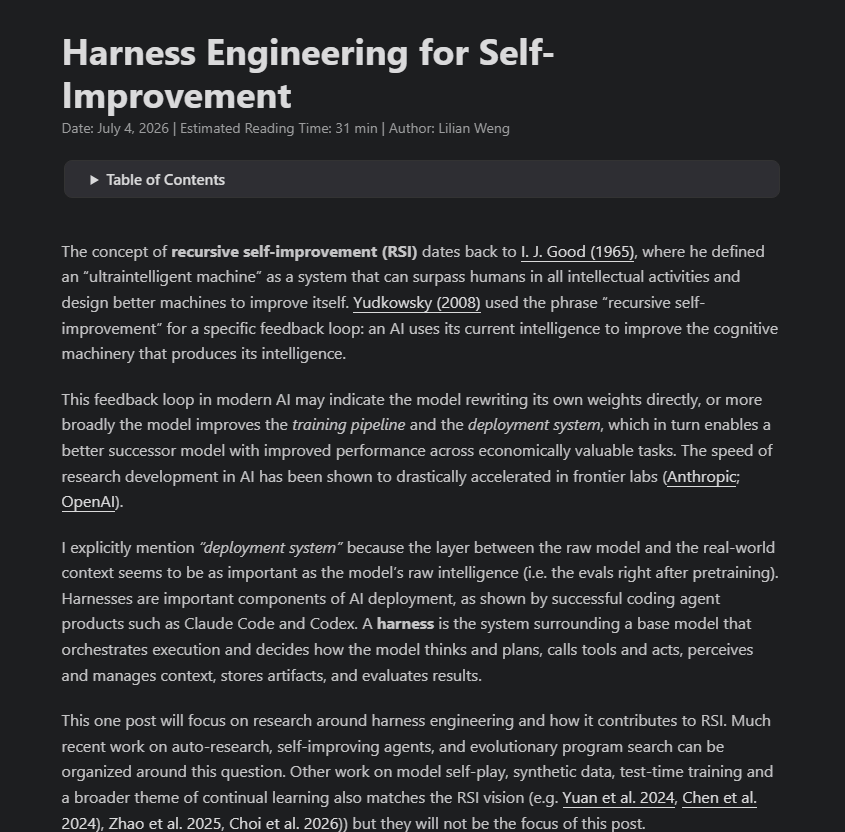
Lilian Weng @ OpenAI on Harness Engineering
a deep breakdown of harness design patterns, workflow automation, persistent memory via file systems, and how modern agents like claude code actually work. the best blog post I've read all month.
link: https://t.co/k5m2QmmUFc
if you've been using latest frontier LLMs, it's almost certain that you would have noticed by now the newer models have become worse to talk to
they're more robotic, they speak jargons, they spits out verbose text, and do stuff you didn't ask for
how did that happen? well, i'm not the person who trained those models so i can't speak for certain, but i've known enough evidence that gives me a well-educated guess, and i thought it's interesting to share as a crash course of modern LLM training pipelines
so here we go
let's wind back to 2020. GPT-2 and GPT-3 already came out and were widely available, but they could only predict one token at a time - that's what LLMs are at their core
token prediction was offered via API, but there was nothing you could "talk to". so while it generated a lot of excitement in the academic field due to the emergent intelligence, it didn't have any wide adoption
in 2022, ChatGPT changed all that. the research work that led to ChatGPT was a model initially named "InstructGPT". it took GPT-3 as the intelligent base, and used reinforcement learning with human feedback (RLHF) to teach the models how to "chat"
the core idea of RLHF is that you ask the model to generate a few responses, and then let real humans pick which one they like. do this over and over again, and you get a model that knows how to talk
worth noting even as early as InstructGPT, research found that making the model more pleasant to talk to will reduce their pure academic capabilities. this was called "alignment tax", which is an interesting thing we'll come back to in a bit
there were various techniques done to minimize the reliance on humans, but ultimately the reward is modeled after human preference, making these AI assistants easy to talk to
so remember this: RLHF = training the model to be likable by humans
in 2024, there was an inflection point introduced by claude sonnet 3.5 which was the first model that can kind of autonomously finish coding tasks. it led to the first wave of viable "coding agents"
the way sonnet 3.5 achieved this was by training the model with a harness (now it's called an agent) that has bash and file editing tools, throw the agent into a virtual machine, give it a task, and let it try to complete it. these tasks all have a machine-verifiable outcome predefined, mostly via test cases, that can validate whether the model really finished the task or not
then you let the model do billions and billions of attempts in such virtual environments, and some of them would succeed by chance. you keep the successful agent sessions, and use reinforcement learning to teach the model to do that more, and boom - you get a coding agent
that is called reinforcement learning with verifiable rewards (RLVR). if you look closely, you'll see that in this RLVR process, the final text response from the model doesn't matter AT ALL, as long as the code written by the agent could pass the test. it could talk like a jerk and it would still be rewarded
so remember this: RLVR = training the model to be accepted by machines
late 2024 and early 2025, we saw o1 and deepseek R1 came out as the first wave of "reasoning models". this article is getting long so i'm not diving into reasoning models now, but just know that reasoning models also relied heavily on RLVR to scale the training process - let the model think before taking action, and if the thinking led to a machine verifiable outcome, reward the thinking trace and teach the model to think like that more often
the biggest difference between RLVR and RLHF is that RLVR is more scalable. human feedback is expensive to get, especially in domains where only an expert can have a valid opinion on which result is good
with RLHF, if we let the model generate 100 responses, then a human has to review all 100 responses to pick which is good
with RLVR, the human (or sometimes an AI) would define a task and verifier only once, and the model can generate a million responses - the machine verifier will pick which responses are good in an automated way
so as a result, RLVR is becoming more and more dominant in newer models' training pipeline
if you put all these things together:
- RLHF = training the model to be likable by humans
- RLVR = training the model to be accepted by machines
- RLVR is more scalable
- "alignment tax" says "likable by humans" makes the model do worse on verifiable tasks
now you see why the newer models are becoming less and less likable?
this is not just a "frontier labs screwed up their model training" problem - this is a war between machines and humanity, and humanity is losing
we chased after benchmarks, when none of the benchmarks measure whether humans actually enjoy working with the model
we use machines to decide which AI response is better because that's easier and cheaper, when we have no way of making sure those machines actually represent what we humans want
we let AI go dark in a virtual environment on its own and complete predefined tasks at all costs, when in reality we often cannot define a verifiable outcome upfront, and need AI to work with us along the way
i don't have a good solution to this, but i want to call for awareness that we're starting to witness a failure in aligning super intelligence right in front of our eyes
this war between machines vs humanity is one we really can't afford to lose
CC founder suggests: Clear CLAUDE.md, Skills and hooks every six months.
The accumulation of old skills will continue to burn tokens. After model iteration, most skills are no longer useful. Regular subtraction is necessary to reduce costs and release the model's capabilities
10 YouTube Resources Every AI / LLM Engineer Should Bookmark 📌
━━━━━━━━━━━━━━━━━━━━━━━━━━━━━━━━━━
1. Andrej Karpathy — Neural Networks: Zero to Hero
https://t.co/0JzLsj5uGW
Best for:
• Neural Networks
• Backpropagation
• GPT from Scratch
• Tokenizers
• Transformers
━━━━━━━━━━━━━━━━━━━━━━━━━━━━━━━━━━
2. https://t.co/CmLFBHy8lC
https://t.co/GgRKdD4BZB
Best for:
• Prompt Engineering
• RAG
• AI Agents
• LangChain
• OpenAI APIs
━━━━━━━━━━━━━━━━━━━━━━━━━━━━━━━━━━
3. Hugging Face
https://t.co/L86nWnzxcU
Best for:
• Transformers
• Fine-Tuning
• Tokenizers
• Open Source LLMs
• Inference
━━━━━━━━━━━━━━━━━━━━━━━━━━━━━━━━━━
4. LangChain
https://t.co/on2gYaJCr7
Best for:
• AI Agents
• LangGraph
• RAG
• Multi-Agent Systems
• MCP
━━━━━━━━━━━━━━━━━━━━━━━━━━━━━━━━━━
5. AI Jason
https://t.co/Uwvj6v5nGo
Best for:
• AI Agents
• MCP
• LLM Apps
• OpenAI SDK
• Automation
━━━━━━━━━━━━━━━━━━━━━━━━━━━━━━━━━━
6. AssemblyAI
https://t.co/NaeETDfOT2
Best for:
• Production AI
• Voice AI
• RAG
• LLM Applications
• AI Engineering
━━━━━━━━━━━━━━━━━━━━━━━━━━━━━━━━━━
7. Sam Witteveen
https://t.co/073SAwgF7Z
Best for:
• LangChain
• LlamaIndex
• RAG
• Agents
• Vector Databases
━━━━━━━━━━━━━━━━━━━━━━━━━━━━━━━━━━
8. IBM Technology
https://t.co/lX4OBsUjBw
Best for:
• Transformers
• Embeddings
• Vector Databases
• AI Concepts
• Enterprise AI
━━━━━━━━━━━━━━━━━━━━━━━━━━━━━━━━━━
9. 3Blue1Brown
https://t.co/Jd8WgfNzoa
Best for:
• Linear Algebra
• Neural Networks
• Deep Learning Mathematics
• Attention Intuition
━━━━━━━━━━━━━━━━━━━━━━━━━━━━━━━━━━
10. Microsoft Developer
https://t.co/krWCaxl62j
Best for:
• Azure AI
• Semantic Kernel
• AI Agents
• Copilot
• Enterprise LLM Development
━━━━━━━━━━━━━━━━━━━━━━━━━━━━━━━━━━
Learning Order
1. 3Blue1Brown
↓
2. Andrej Karpathy
↓
3. Hugging Face
↓
4. https://t.co/CmLFBHy8lC
↓
5. LangChain
↓
6. Sam Witteveen
↓
7. AI Jason
↓
8. AssemblyAI
↓
9. IBM Technology
↓
10. Microsoft Developer
Bookmark this.
These resources take you from AI fundamentals to building production-ready LLM applications.
The code then passed all tests after execution.
Now I’d like to ask you: Why did the tests pass? What flaws might exist in the tests that tricked the AI (and even human developers)?
Suppose there is a function designed to "calculate the discounted total price of an array". The original bug caused the program to crash when an empty array was encountered. AI fixed the bug by adding just one line of code that only handles the single scenario of an empty array.