Dear @karpathy
I understand you may be interested in a new position
Please consider applying to one of our open roles at The Innovation Game (TIG) https://t.co/TIpRGFF9bM
TIG fulfils the vision for automated open research you set out on No Priors (see quoted post)
We're building decentralised infrastructure to prevent frontier AI capabilities from going closed. See https://t.co/vMLGTmtVQx for details
Kind regards,
John Fletcher, CSO, The Innovation Game
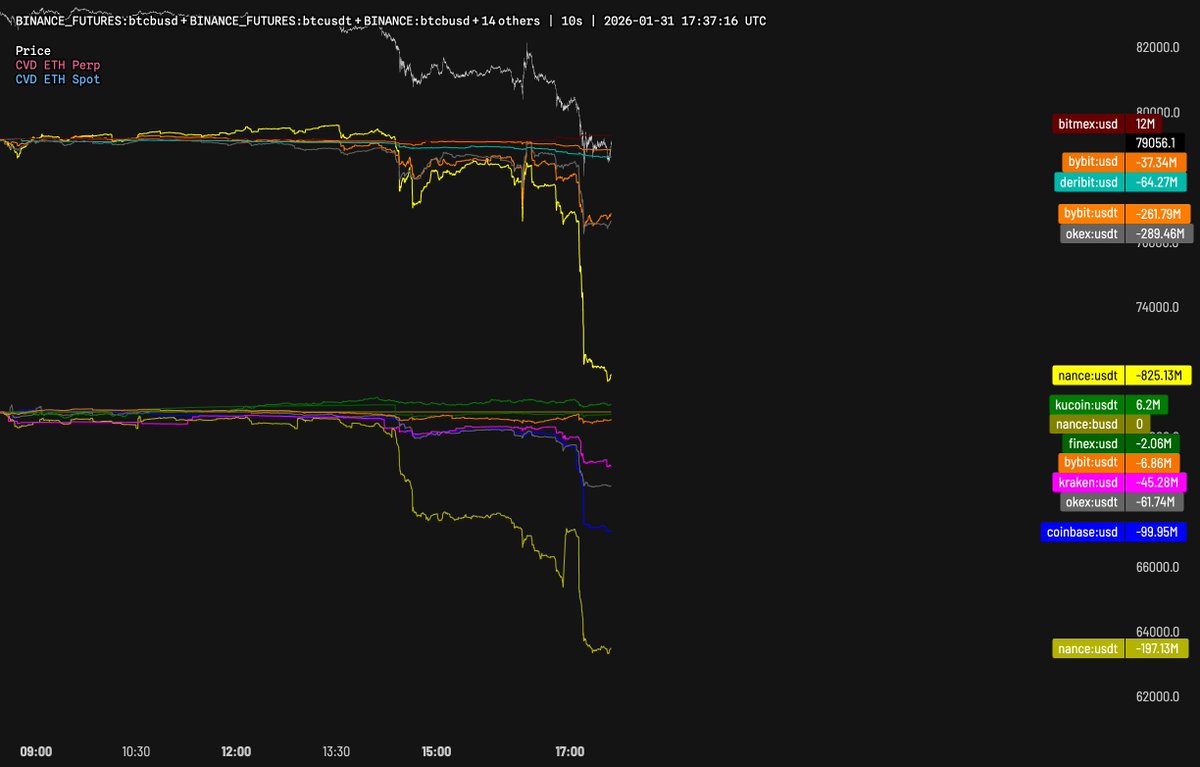
Binance just dumped $1B causing BTC to crash to $77K
The crypto markets will not recover until CZ is back in jail
TradFi noticed what CZ did on 10/10 and quietly exited their crypto positions
This is why BTC decoupled from gold and equities in October
You do not hate CZ enough
You wire money to buy a car 🚗
The dealer gives you the keys.
But for the next 12 minutes, there is a mathematical possibility that the universe rewinds and the money creates a "fork”.
We call this "Probabilistic Finality", real businesses call it "Unacceptable Risk".
In regulated markets, a deal is a deal.
Instant Finality, no take-backs 🙅
@RedbellyNetwork@NYSE Its a shame they aren't using redbelly network. Looks like they are all building their own platform for RWA's and not using an outside one like redbelly.
Update on Recent Regulations:
New developments in the U.S. Senate’s Market structure bill includes a provision that would ban passive yield on stablecoin holdings. While this creates a potential problem for Yield Bearing stablecoins, USST by design is safe under these regulations.
USST is not a yield-bearing stablecoin - it is a stable monetary layer backed by productive, on-chain real-world assets.
The current regulatory discussion reinforces why architecture matters. USST was never designed as a yield-bearing stablecoin; it is a spendable, fully collateralized stable asset where yield accrues at the collateral layer, not to the token itself. Because USST holders are not promised, paid, or marketed yield, our model aligns naturally with emerging regulatory expectations that seek to distinguish stable units of account from investment instruments.
USST effectively separates money from returns. While tokenized real-world assets (RWAs) sit as collateral and accrue yield in the background, the USST token remains a neutral, spendable stablecoin. This was a deliberate design choice to ensure USST functions as pure financial infrastructure -usable for payments, settlement, and DeFi without crossing into the category of yield-bearing instruments that regulators are rightly scrutinizing. As regulation evolves, only models that are transparent, structurally sound, and institution-ready will scale.
The "RWA Revolution" is stalled. Why? 'Cause institutions can't build the future of finance on probability
Banks definitely won't take chances. They need settlement finality and legal accountability
The $16T market needs a home and it isn't Ethereum. It's @RedbellyNetwork