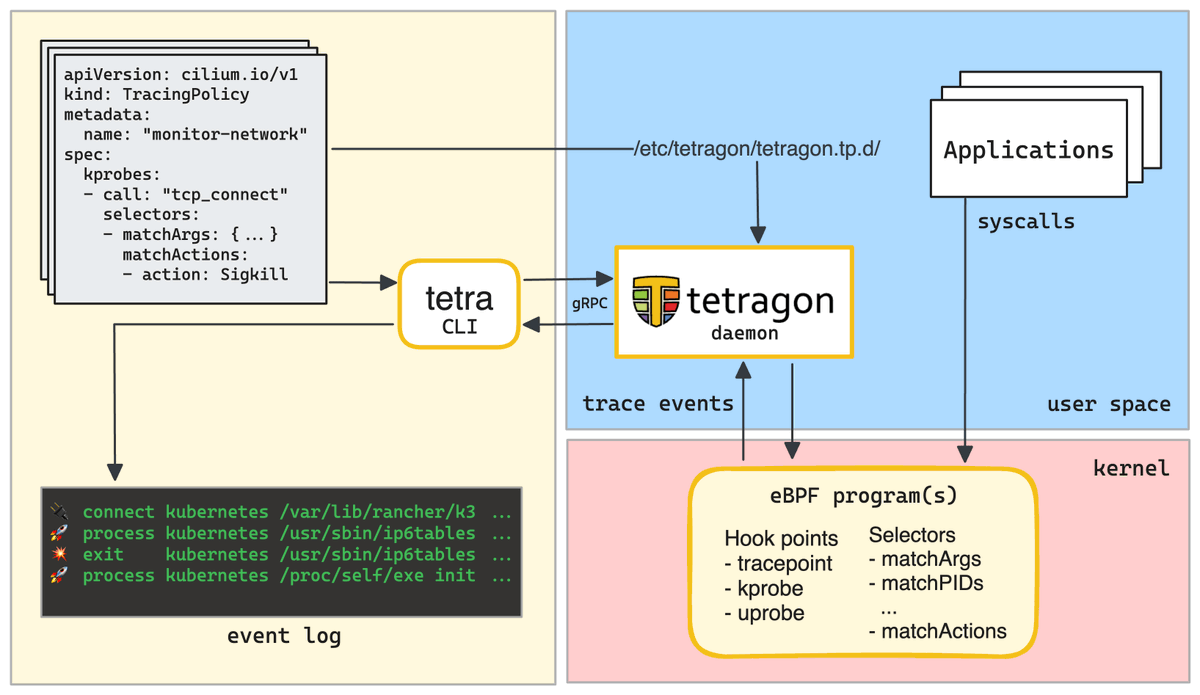
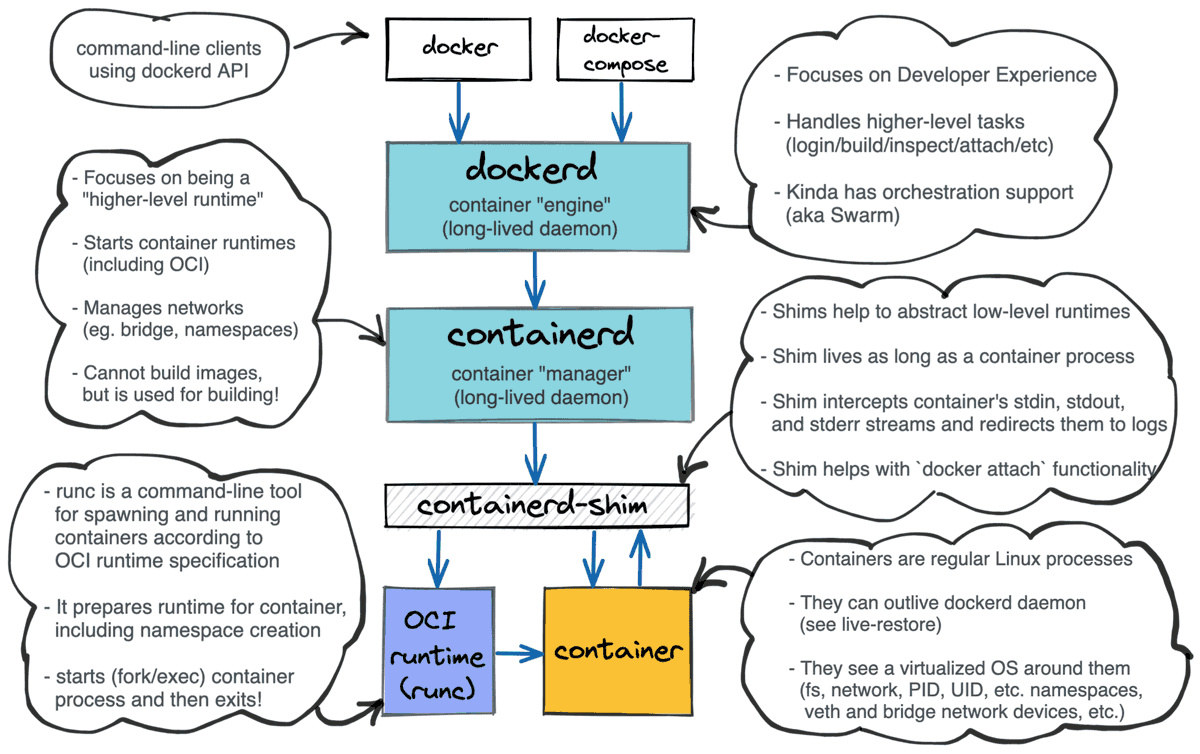
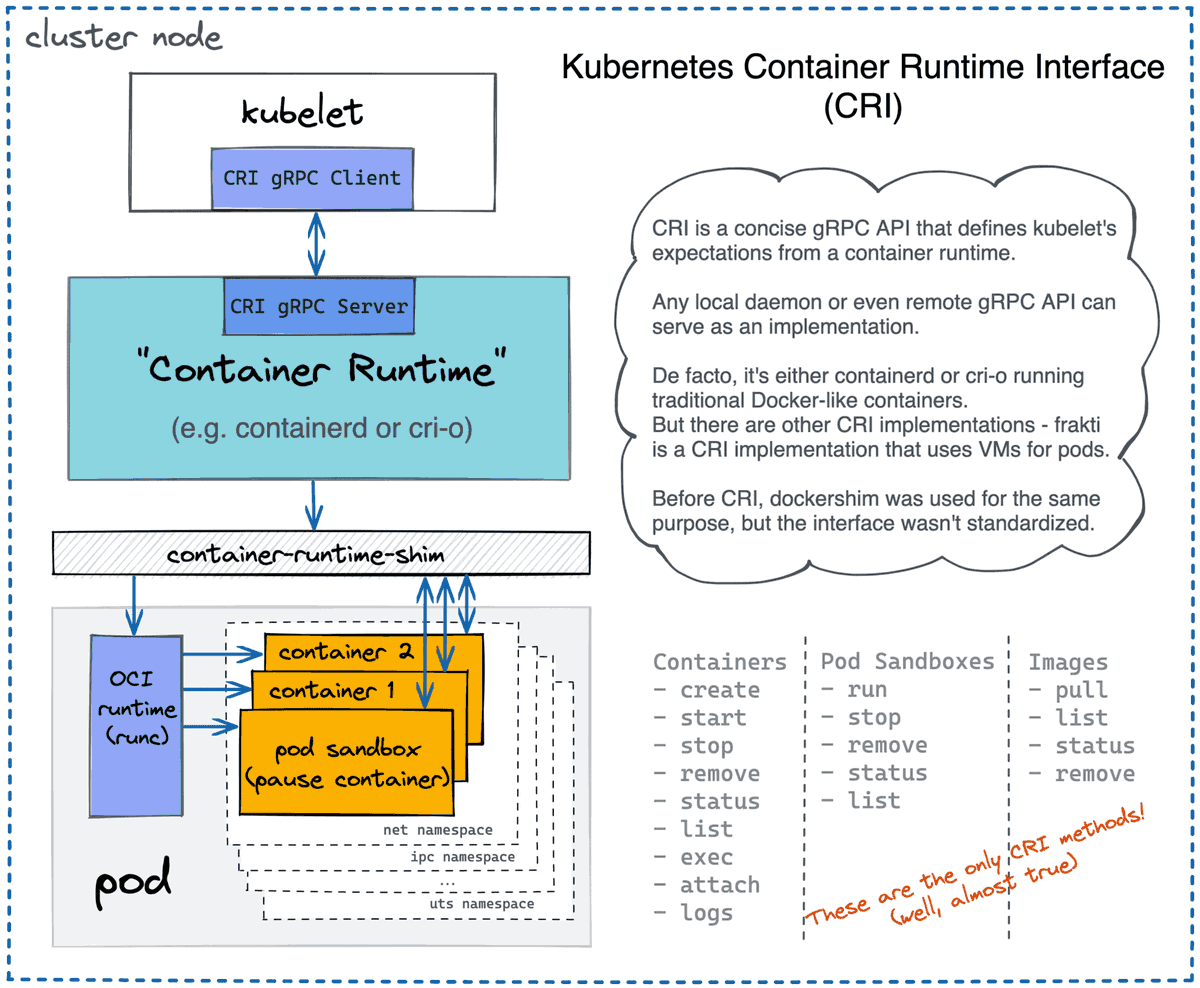
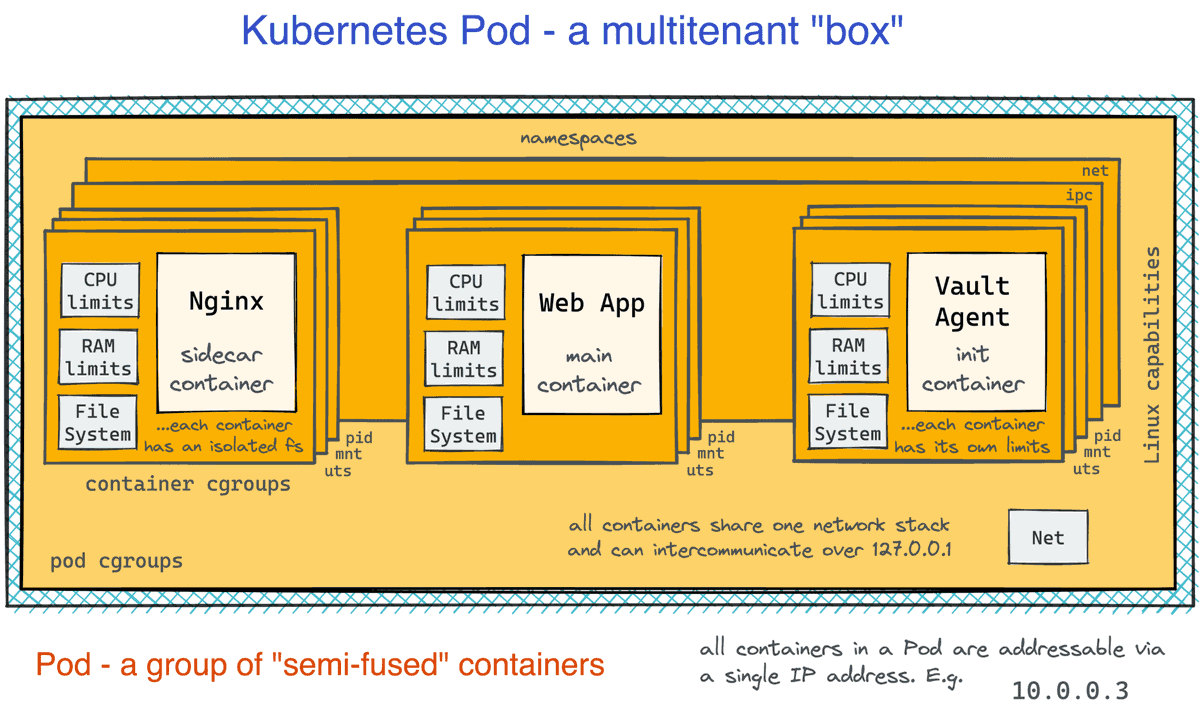
If Learning Linux is something in your New Year’s resolution.
I have compiled all my Linux and shell scripting notes that can help you get started and master Linux.
https://t.co/E1m0OBZ8Z3
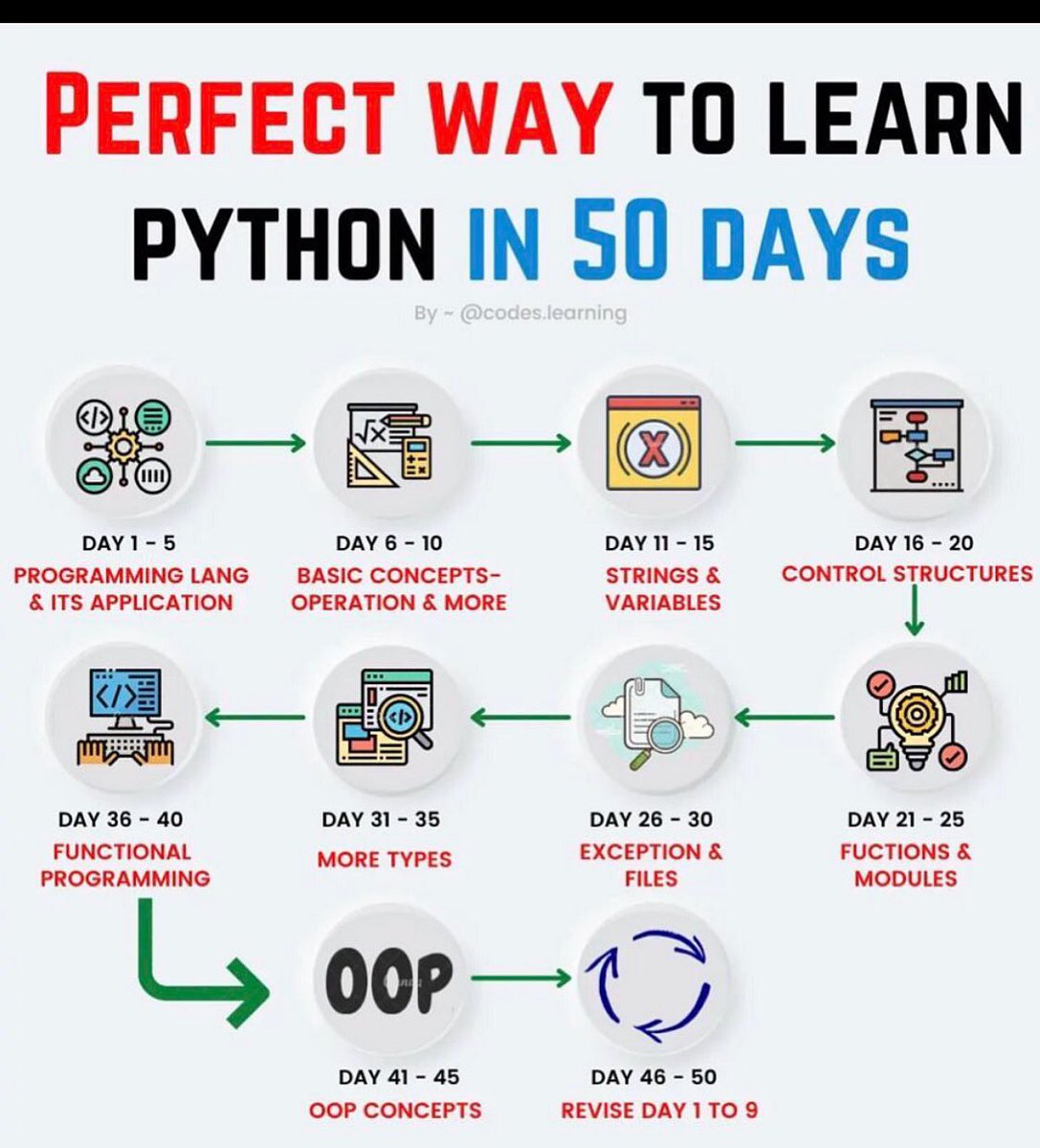
OOP concepts are the most fundamental concepts in programming languages like Java, Python, Javascript, etc.
Here's a Dead Simple Guide to Understand It:
Faceless YouTube channels are one of the best ways to make money
Latte Social just made it insanely easy to start
Here's how to make faceless YouTube videos with AI & make $20,000/m
Looking for a Job? I Give You 30 Ways to Find a Job in Cyber:
Many struggle with direction when pursuing a job in Cyber Security. Learning can be easy, but figuring out what to learn can be the biggest challenge.
Here are 30 topics that can lead you straight into a job. No, you don't have to learn all of these, but the more you know, the more value you bring to the table. Remember, this is your own journey. You get to choose your direction. I'm just giving you the map.
1. Networking fundamentals - How do things talk?
2. Operating system security - Keep it locked it down.
3. Database security - Is that data safe?
4. Cryptography - SSL, TLS, AES, What is all this?
5. SIEMS - History is important!
6. Intrusion detection systems (IDS) - ALERTS!
7. Firewalls - Lock those doors and keep them out.
8. Virtual private networks (VPNs) - Private tunnels
9. Penetration testing - Hacking and cracking.
10. Vulnerability assessment - What's this vuln?
11. Secure coding practices - Keep code secure
12. Web application security - A wasp? No, OWASP
13. Mobile device security - Locking phones down
14. Cloud security - It's up there floating around
15. Incident response - When they panic, you're calm
16. Risk management - What's important to business?
17. Physical security - Can the donut guy walk right in?
18. Wireless security - All this data, floating in the air
19. Social engineering - I got donuts, let me in.
20. Threat intelligence - What's going on out there?
21. Malware analysis - Ripping apart bad software
22. Forensics - Solving that mystery
23. Identity & Access Management - Who and When?
24. Compliance frameworks - Where are the gaps?
25. Disaster recovery - Getting back to business
26. Business continuity planning - Making that plan
27. Project management - Use your resources
28. Communication - Can you work as a team?
29. Professional development - Let's grow
30. Cybersecurity frameworks - NIST, PCI, ISO, oh my.
If you understand these and can communicate clearly about them, you are paving the way to a great future working from your pajamas. No one should care about HOW you learned what you know, but WHAT YOU KNOW.
This Saturday, I'll be emailing thousands of people exact directions on how to get Cyber recruiters in your inbox. Don't miss out. Subscribe at ➡https://t.co/GcdJet8RwY⬅.
#cybersecurity #informationsecurity #infosec #leadershipbyexample
5 Best Linux courses for Beginners in 2024
1. Linux for Beginners - https://t.co/U1p5ADAzxV
2. Linux Basics - https://t.co/reF8uDcysr
3. Learn Linux in 5 Days - https://t.co/NEJA3jxALK
4. Linux Bootcamp - https://t.co/ImI5CuDXUD
5. Linux Sysadmin - https://t.co/sBhs9ysLzb
CI/CD explained in simple terms.
— What is continuous integration
— What is continuous delivery
— Benefits and challenges
— What does CI/CD look like in practice
Tomorrow, thousands of subscribers will learn all about CI/CD.
Join us to get the issue: https://t.co/cdQACkYZ9V
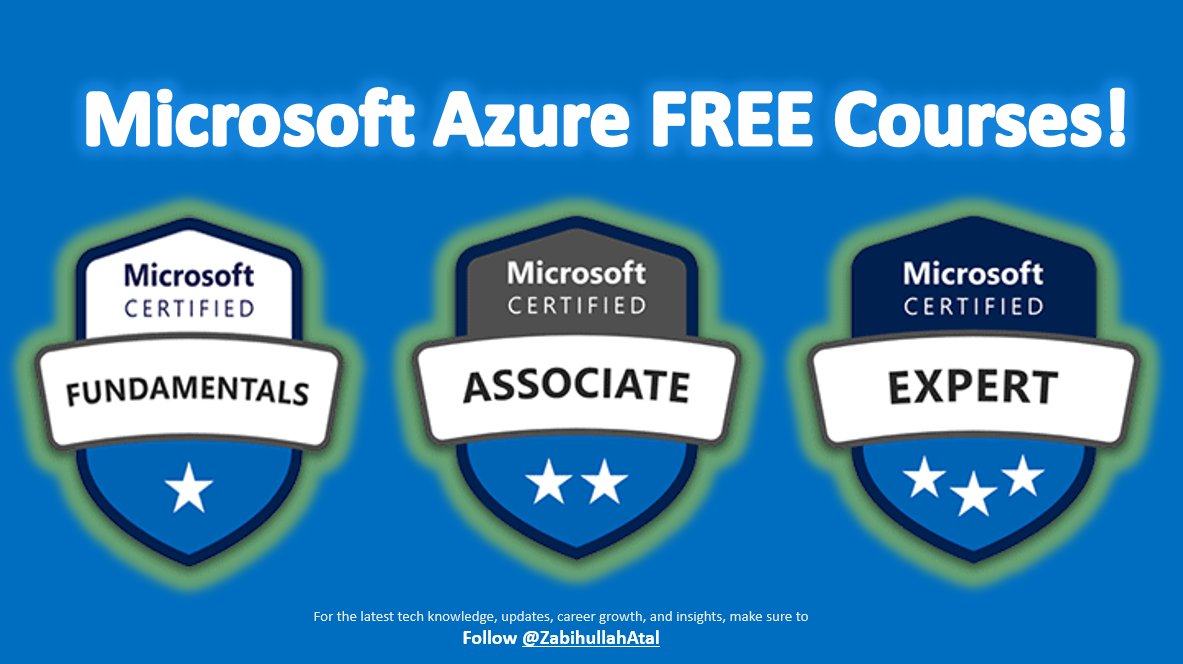
Microsoft Offering FREE Azure Courses!
No Payment is Required!
Learn with your own Pace and be Prepared to get Certified.
Azure certifications are the most in-demand Certification in the IT industry, offering a ticket to better opportunities and career growth. 🔝
Discover the following Azure certifications free Courses and learning resources to help you become an Azure Certified in 2023.
1/13 Exam AZ-900: Microsoft Azure Fundamentals
Course Link:
https://t.co/VsTOkrWWOl
2/13 Exam AZ-104: Microsoft Azure Administrator
Course Link:
https://t.co/UU2SQldt1K
3/13 Exam AZ-305: Designing Microsoft Azure Infrastructure Solution
Course Link:
https://t.co/iBgk256fbb
4/13 AZ-204: Developing Solutions for Microsoft Azure
Course Link:
https://t.co/QW3uPoHYu0
5/13 AZ-800T00--A: Administering Windows Server Hybrid Core Infrastructure
Course Link:
https://t.co/bLNsWQEFAW
6/13 AZ-801: Configuring Windows Server Hybrid Advanced Services
Course Link:
https://t.co/tq8VeaIB4n
7/13 AZ-400: Designing and Implementing Microsoft DevOps Solutions
Course Link:
https://t.co/2GQzE8MfzT
8/13 SC-100: Microsoft Cybersecurity Architect
Course Link:
https://t.co/xpnEVQXAse
9/13 SC-200: Microsoft Security Operations Analyst
Course Link:
https://t.co/HUV1PLwBu3
10/13 SC-300: Microsoft Identity and Access Administrator
Course Link:
https://t.co/WyoYv6q9J2
11/13 SC-400: Administering Information Protection and Compliance in Microsoft 365
Course Link:
https://t.co/JPLYwvOSSy
12/13 AZ-500: Microsoft Azure Security Technologies
Course Link:
https://t.co/Ok2rJxY4kl
13/13 SC-900: Microsoft Security, Compliance, and Identity Fundamentals
Course Link:
https://t.co/wMQGFiHcMp
For the latest tech knowledge, updates, career growth, and insights, make sure to Follow
@ZabihullahAtal
#AzureCertifications #CareerGrowth
FREE Agile and SCRUM Courses with Certificate!
Start your Career with these demanding skills and earn up to $170K!
Discover the Following Courses:
1. Agile Scrum Foundation
Completion Certificate
learn and Earn up to $146K
Course Link:
https://t.co/Twp5G37ask
2. Agile Scrum Master
5 Hours Course
Completion Certification
Learn and Earn up to $165K
Course link:
https://t.co/Twp5G37ask
3. PMI-ACP
7 Hourse Course
Completion Certificate
Learn and Earn up to $136K
Course Link:
https://t.co/iAQbE5BQ9c
For the latest tech knowledge, updates, career growth, and insights, make sure to Follow
@ZabihullahAtal
Sharing is caring, Spread it lets others take benefit.
#FreeCourses #Programming #AGILE #SCRUM #SCRUMaster #SoftwareEngineer #Computerscience #Education #GitHub #ComputerScience #Coding #Learning #OpenSource #Technology #OnlineCourses #FreeEducation
CISCO in Collaboration with Python Institute offering a Full Python Course for FREE!
No Payment is required!
Python is a multi-paradigm programming language used by tech giants like Google, Facebook, and Netflix, and by startups.
Endless possibilities await if you acquire these in-demand programming skills.
Python skills open you up to careers in almost any industry and are required if you want to continue to more advanced, higher-paying software development and engineering roles such as software engineer, systems administrator, and security engineer.
Python offers you endless possibilities for creating small and large-scale software projects.
User-friendly with easy-to-read code, Python is a great first programming language to learn and requires no prior programming knowledge.
Explore the following FREE Courses:
> Python Essentials 1
- 30 Hours Course
- 21 Labs
- Cisco Official Badges You can earn this course.
- Course Link:
https://t.co/ntSQ38W9OT
Python Essentials 2
- 40 Hours Course
- 30 Labs
- Cisco Official Badges you can earn in this course.
- Course Link:
https://t.co/nRmTE3kmJ7
❤️ 🔁 🙏
For the latest tech knowledge, updates, career growth, and insights, make sure to Follow
@ZabihullahAtal
#python #programming #developer #programmer #softwaredeveloper #computerscience #webdev #webdeveloper #webdevelopment #pythonprogramming #pythonquiz #ai #machinelearning #datascience
Deploying software should NOT be a nail-biting affair.
It should be fun and exciting. Even if you are doing it on a Friday...
There are two amazing deployment strategies that can make it possible.
✅ Blue-Green Deployments
Two identical production environments are maintained. The famous combination of Blue and Green.
Incoming requests are switched between them seamlessly.
In case of any issues, you can immediately switch back to the version that works.
This minimizes downtime and provides a reliable way to rollback the changes if needed.
✅ Canary Deployment
If you are worried about rolling out a new feature to all the users at one go, Canary Deployment is for you.
Rather than a big-bang approach to deployment, new features are rolled out to a small percentage of the users.
After real-time monitoring and analysis of the impact, the feature is rolled out to the entire user base.
Great for risk mitigation and gaining confidence about your release.
👉 Which one of these techniques do you like the most?
Or is there some other deployment approach that you propose?
Share your thoughts in the comments.
===
That’s all for now!
If you enjoyed this quick explanation of Blue-Green and Canary deployments, don’t forget to:
- Deploy the LIKE button
- REPOST so that everyone can choose the right deployment approach
- BOOKMARK for future reference
- Follow me for more posts like this.
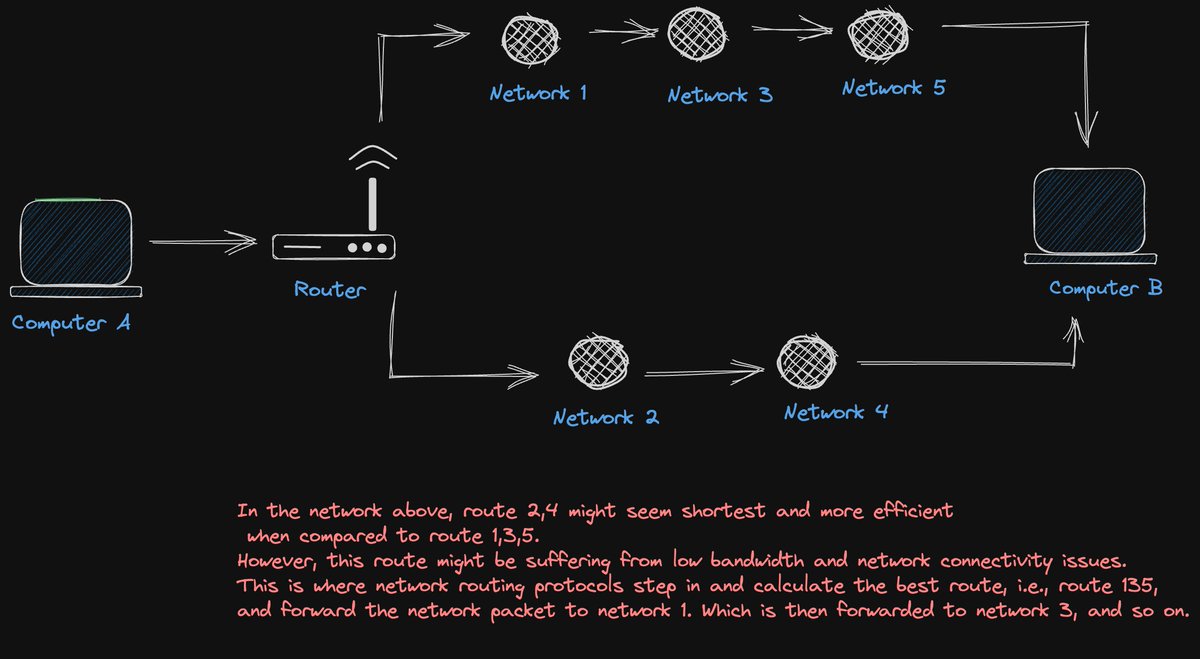
Routing in a nutshell:
1. What is Routing?
Routing is the process of directing data packets from one network node to another.
This involves making decisions about the best path for data to take through a network.
The primary goal of routing is to ensure that data packets reach their intended destination in a timely and efficient manner.
2. Components of Routing:
- Router:
A router is a network device that plays a central role in routing.
It examines the destination address of incoming data packets and decides how to forward them to the next hop on their journey.
- Routing Table:
Routers use routing tables to determine the best path for a data packet.
These tables contain information about network topology and are constantly updated to reflect changes in the network.
- Routing Protocols:
Various routing protocols, such as RIP, OSPF, and BGP, help routers communicate with each other to exchange information about network routes.
These protocols determine how routers discover and update routing information.
3. Routing Algorithms:
Routing algorithms are used to make decisions about the best path for data packets.
Several common routing algorithms include:
- Distance Vector:
This algorithm considers distance or cost to determine the best route.
RIP (Routing Information Protocol) is an example.
- Link State:
This algorithm maintains a detailed map of the network's topology, enabling more accurate routing decisions.
OSPF (Open Shortest Path First) is an example.
- Path Vector:
BGP (Border Gateway Protocol) is an example of a path vector protocol used for routing in the global Internet.
4. Types of Routing:
- Static Routing:
In static routing, network administrators manually configure routing tables, specifying the path for data packets.
It is simple but less adaptive to network changes.
- Dynamic Routing:
Dynamic routing protocols automatically update routing tables based on real-time network conditions.
This is more adaptable but requires configuration of the routing protocols.
5. Internet Routing:
The Internet relies on a hierarchical structure of routers and autonomous systems (ASes) to route traffic globally.
BGP is a crucial protocol for inter-domain routing on the Internet, used by ISPs to exchange routing information.
6. Routing Metrics:
Routing decisions are often based on metrics such as latency, bandwidth, cost, and hop count.
The choice of metric depends on the specific routing algorithm and network requirements.
7. Issues:
- As networks grow, routing tables become larger and more complex, posing scalability challenges.
- Routing protocols can be vulnerable to attacks, such as route hijacking and route poisoning.
- Rapidly adapting to network changes without introducing instability is a challenge for routing protocols.
8. Virtual Routing:
Virtual routing enables multiple virtual networks to coexist on a single physical network infrastructure, allowing for greater flexibility and network segmentation.
9. Quality of Service (QoS):
QoS routing aims to prioritize certain types of traffic based on defined criteria, ensuring a better user experience for applications like video conferencing or VoIP.
10. Routing in Wireless Networks:
Wireless networks, including Wi-Fi and mobile networks, have their own routing challenges, such as mobility management and interference.
11. Routing in IPv4 and IPv6:
Routing protocols and principles are applied to both IPv4 and IPv6 networks, with some differences due to the larger address space in IPv6.
If you're new in IT you need Linux Skills.
Here's a challenge:
> Download the resources in the link below 👇🏾
> Install VirtualBox
> Download RedHat Linux (Link on Google)
> Read and implement all the labs in RHCSA folder 📂
Thank me later 🙂
https://t.co/x6cwczI7EE
Most people only look for jobs on @LinkedIn and https://t.co/u5uHbF9tpg
Here are 7 job portals to get you hired faster for remote jobs! (Save the list)
A thread 🧵🧵