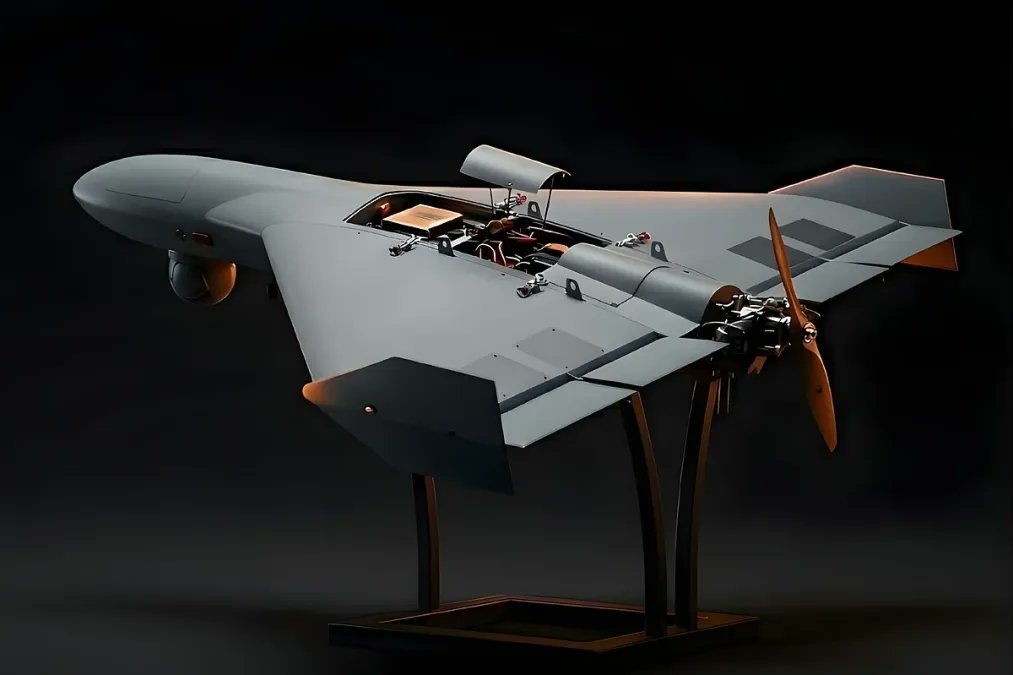
Divyastra Mk-1. Mk-2. Mk-3.
We are a fast-iteration team. We build, take it to the runway, fly, learn and improve.
Do it. See it. Make it better.
Loitering munitions are reshaping modern warfare and will be a critical future requirement for India. Building this capability indigenously requires speed, repeated testing, manufacturing discipline and teams willing to solve difficult problems on the ground.
Because every successful flight begins long before take-off.
Built in India. Tested in India. For India. 🇮🇳
#HoverIt #KawaUAV #Divyastra #LoiteringMunition #DefenceTechnology #IndianDefence #UAV #MilitaryDrones #DefenceInnovation #IndigenousDefence #MakeInIndia #AtmanirbharBharat #FlightTesting #Aerospace #FutureWarfare
#jaisalmer . The #thar . Alone.
#ambition doesn’t diminish after fifty. It becomes more personal. Solo ascents. High-stakes flying. Endurance runs. At some point, you stop asking what you can prove to the world — and start asking a harder question: what can I still demand of myself?
No crowd. No medal. No audience. Just the #desert , the distance, and a promise I had made to myself.
Comfort is a terrible way to grow old. Give me steeper #mountains , harder skies and longer roads.
I intend to age at the edge of my limits.
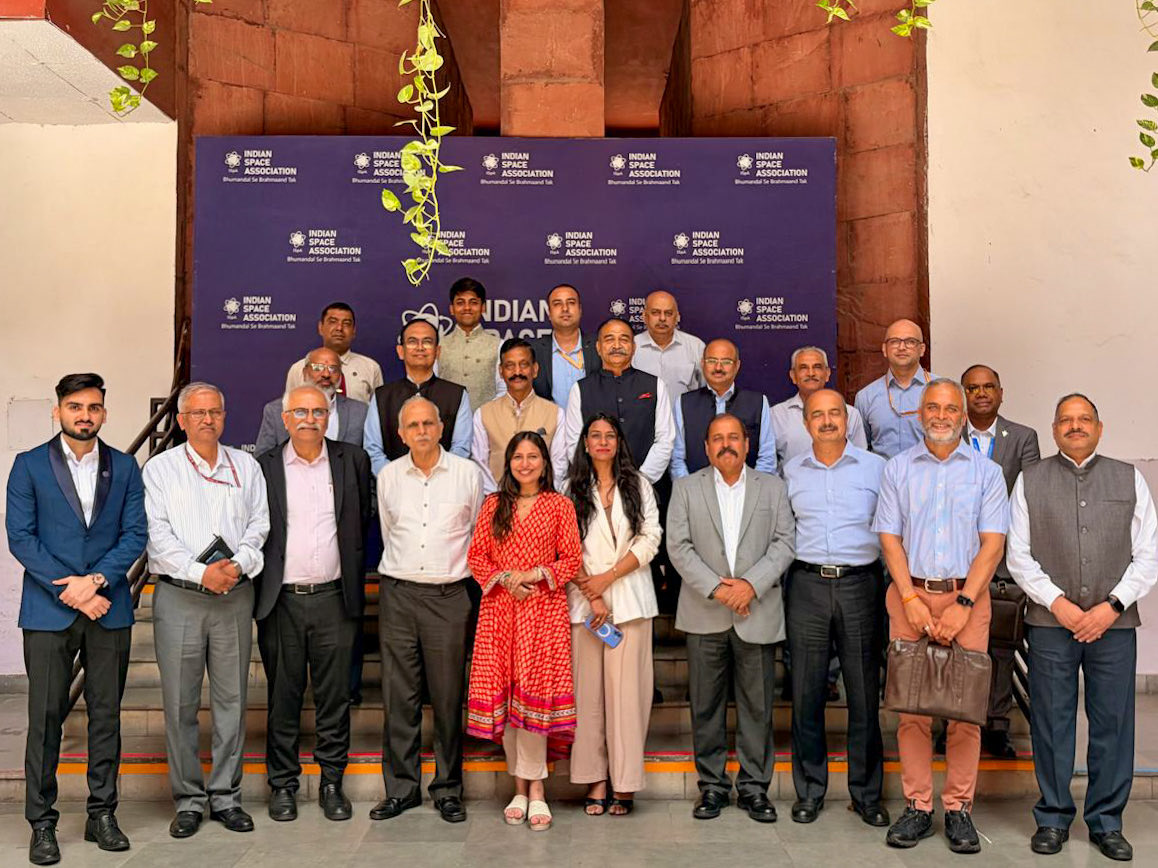
Some rooms do not issue press notes. They set the frame the press notes later live inside. @ISpA_India ’s National Advisory Committee is one of those rooms. It does not run the Indian space programme. It does something quieter and more consequential: long-term strategic guidance for the growth, security and sustainability of the ecosystem — policy, capital, industry structure, and the defence-civil seam that most forums treat as two different conversations.
At New Delhi, that seam was in the same frame. Departments and ministries. Relevant bodies. Industry. And all three Services. Not as guests of but as co-owners of the same problem set: how India funds, builds, protects and sustains space capability in a world that is re-pricing orbits as fast as it re-prices alliances.
I was asked to put capital on the table — not slogans. Investment structures as they actually work. What “sovereign” means when it meets a term sheet, a limited-partner mandate, an export-control regime, and a production timeline. Current realities: where Indian space startups can raise, where they stall, and why readiness (TRL and MRL) is still treated as a slide instead of a valuation instrument. And the part that will decide the next decade whether we write it into the model or not — geopolitics. #Quad, #BRICS, #IMEC, export regimes, contested #LEO, the tightening of #PNT and #ISR as national instruments. Groupings will shape who can sell to whom, who can fly with whom, and which Indian programmes remain Indian when the capital is foreign.
NavIC, DefSpace, startup funding — these are not separate agenda items. They are one system. A navigation constellation without a capital stack is a briefing. A startup without a sovereign definition is a valuation event waiting to be acquired. A defence requirement without an industrial path is a import by another name.
It was a privilege to watch that room stay on the hard questions. Quiet institutions, shared commitment, and the discipline to talk about money and power in the same sentence — that is how an ecosystem becomes durable.
मम हृदये वस देव, बुद्धिं देहि, बलं देहि, शान्तिं देहि॥
Dwell within me, O Lord. Grant me wisdom, strength, and peace.
May #wisdom guide your #path , courage strengthen your #journey , and #peace remain within. Wishing you a blessed #ganeshchaturthi 🙏
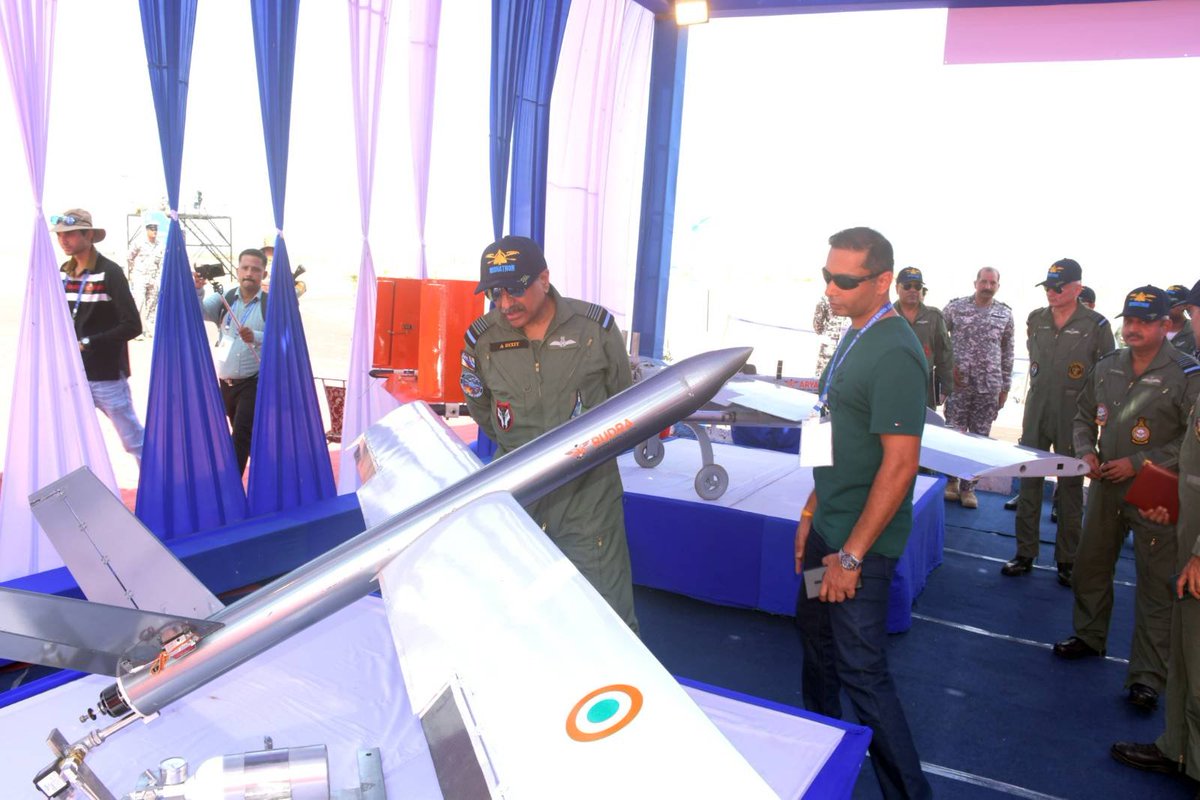
Air Marshal Ashutosh Dixit, Vice Chief of the Air Staff, inaugurated the maiden IAF Dronathon-2026 at the Pokhran Field Firing Range in Jaisalmer. Over 20 Indian defence companies, startups, MSMEs, DPSUs, and innovators are participating from 14–16 Sep 2026.
Live trials are putting emerging unmanned technologies to the test under realistic operational conditions, spanning UAS, CUAS, swarms, and EW. The event focuses on validating technology, identifying capability gaps, and accelerating operationalization.
‘Vayu UTtaM’, the IAF’s indigenous multi-mode Unmanned Traffic Management (UTM) system was also demonstrated, which is capable of real-time detection and management of military and civil UAS—moving towards a safer, smarter, and resilient airspace.
From technology to capability. From innovation to operational effect.
#Dronathon2026 #Atmanirbharta #UnmannedSystems #IndianAirForce
@DefenceMinIndia@SpokespersonMoD@HQ_IDS_India@adgpi@CareerinIAF@air_veterans
Jaisalmer, Rajasthan | Dronathon 2026, focused on enhancing Indian Air Force capabilities in the unmanned domain, inaugurated by Vice Chief of the Air Staff Air Marshal Ashutosh Dixit at Jaisalmer. The three-day event from September 14-16 features live demonstrations of UAS and counter-UAS technologies by Indian industry players at Pokhran Range.
The demonstrations include loitering munitions, logistics drones, counter-drone systems, AI-enabled technologies, autonomous navigation and advanced payloads for defence, border surveillance and civilian applications
(Source: Air Force)
The world formally recovers 22% of its e-waste. India reached 70.71% in FY2024-25. LOHUM is exhibiting at the World Circular Economy Forum 2026, Mahatma Mandir, Gandhinagar, 15 to 18 September.
🛑#Lucknow-based #HoverIt has demonstrated that its Divyastra Mk-1 loitering munition can operate in wind gusts of up to 80 km/h, highlighting its flight stability, control and battlefield usability in harsh weather conditions. @KAWAUAVPVTLTD@hoveritofficial
HoverIt has built an indigenous drone that can strike targets 2,000 km away. 🇮🇳
The Divyastra Mk2 just completed launch trials and is designed to outperform the Shahed-136 class drones reshaping modern warfare.
Here is what makes it genuinely dangerous. 👇
• Range of 2,000 km with a 3.2 metre wingspan
• Payload capacity of 50 to 100 kg, endurance of 8 to 12 hours
• Cruises at 180 km per hour, then accelerates to 300 to 400 km per hour in the terminal attack phase
• Around 95% indigenous content, built at roughly one third the cost of comparable foreign systems
• Operates in GPS denied environments using encrypted sovereign command and control links
• AI driven swarm intelligence lets multiple units coordinate saturation attacks together
• Vehicle based launch demonstrated, no runway needed anywhere
A drone that flies 2,000 km with a 100 kg warhead and cannot be jammed is not a tactical asset anymore.
That is a strategic strike platform.
Built by a private Indian startup out of Lucknow. 🇮🇳
Kawa UAV Pvt. Ltd. (HoverIt) has successfully conducted the maiden flight of Divyastra Mk3, described as India's first indigenous jet-powered loitering munition. 🚀🇮🇳
Powered by an indigenous jet engine developed by DG Propulsion, the Mk3 flew on August 11, 2026 from programme inception to maiden flight in just one year.
No imported jet engine. No foreign critical subsystem. Built in India. Flown in India.
India successfully tests the Divyastra Mk3 jet-powered drone, developed by Kawa UAV (HoverIt) , marking India’s first domestically developed UAV powered by a jet engine.
HoverIt’s Divyastra Mk-2 is being developed as a long-range loitering munition designed to outperform comparable systems while remaining highly cost-effective. The drone is expected to offer a range of 1,500–2,000 km, around eight hours of endurance, and a payload capacity of 50–100 kg. It features AI-enabled swarm capabilities and navigation systems that can function in GPS-denied environments. Recent vehicle-based launch and taxi trials have marked significant progress toward full flight testing and operational deployment. The indigenous platform could provide India with a powerful and affordable deep-strike capability while strengthening self-reliance in unmanned warfare.
#DivyastraMk2 #HoverIt #IndianDefence #LoiteringMunition #AtmanirbharBharat
PS : This is an AI generated video for illustration purposes
🚨🇮🇳 India’s 'Divyastra Mark-1' combat drone clears major testing milestone
India moves closer to fielding a home-grown long-range combat drone after the successful testing of Divyastra Mark-1, Hindustan Samachar reports.
🔸Developed by Lucknow-based defence startup HoverIT
🔸Successfully tested in Jodhpur’s extreme desert conditions
🔸500 km operational range and up to 5 hours endurance
🔸AI-enabled loitering munition with swarm attack capability
🔸Supports ISR, precision strikes, target tracking & tactical engagement
India is accelerating its indigenous drone program amid lessons from the Ukraine conflict and Iran war.
🇮🇳 Divyaastra Mk3 has taken its first flight.
Hoverit Mk3 completed its maiden flight on 11 August, powered by an indigenous jet engine developed by DG Propulsion.
So you have an Indian airframe, Indian propulsion and Indian autonomy coming together in one loitering munition.
But the pace is what really stands out.
Hoverit says the programme went from inception to maiden flight in just one year.
Most loitering munitions in this class still use propeller engines. Mk3 going with a jet engine makes this one worth watching.
Indian airframe,Indian engine, Indian autonomy.
Hats off to the teams behind it. All of this came together in just one year. 🇮🇳
Lucknow is building India’s next-generation defence story!
Lucknow-based HoverIt has successfully flown India’s first fully indigenous jet-powered loitering munition- Divyastra MK-3, featuring an in-house turbojet engine with no foreign components.
Developed in less than 8 months in the UP Defence Corridor, this is another strong testament to Lucknow’s rise as a defence-tech powerhouse.