Nothing filed is edited after argument; prompts, retrieved passages and responses are sealed by hash and released case by case on decision; the scoring rule was fixed on 4 October. Method: https://t.co/RjWOdVZXGr. With @GuentherLaurenz.
The November sitting is on the record: nine digital twins of the Justices, each built only from that Justice’s own opinions, have now predicted all eleven cases we set out to file, before argument. The last three — Nielsen, Hoffmann, Sun Valley — filed yesterday. https://t.co/pOs6hOgL3D
Twins: Nielsen Reverse 6–3; Hoffmann Reverse 6–3; Sun Valley Reverse 5–4 for the Department of Labor. For the first time the crowd disagrees on outcome: it has Hoffmann Affirm 5–4 and Sun Valley Affirm 6–3. Two genuine tests, scored when the Court decides.
Lots of debate this week on whether journals should ban AI in peer review.
We actually tested this in our new preprint, and the results were pretty clear to me.
For context, I've reviewed for most of the big journals and evaluated 1,000 human reviews as an editor. I love to read and evaluate science.
TLDR: From now on I won't do any peer review without AI. For clinical trials, I'd even call human-only review dangerous 🧵
I said I’d write again after #LLMSS2026 Hong Kong with whatever actually turned up.
200 people. 117 submissions, 21 countries. No discipline accounting for more than a fifth of the programme, and one paper in five that couldn’t be filed under any single field.
That last number is the one I’d point to.
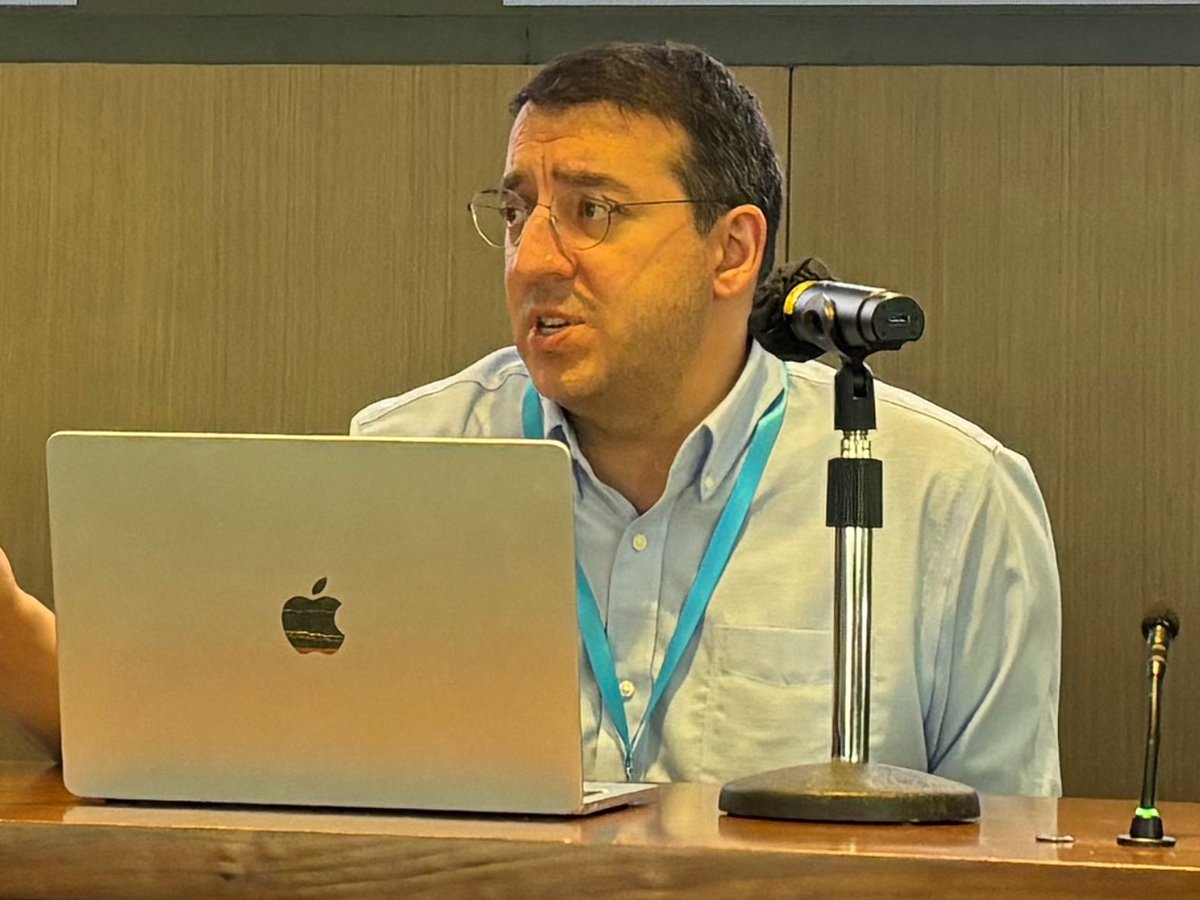
Closing keynote at #LLMSS2026 Hong Kong: Scott Hale (Oxford Internet Institute) on what four weeks with a relationship-seeking AI does to people.
They used steering vectors to dial the model’s warmth directly — the treatment is the model’s disposition, not the prompt. N=3,534, randomised, longitudinal.
Liking fell. Wanting rose.
https://t.co/E2w6OQHNup
Day 2 keynote at #LLMSS2026 Hong Kong: Issa Dahabreh (Harvard Chan) on augmenting randomized trials.
The question is old and the answer is hard: what are you entitled to conclude about a population you did not study? Epidemiology has twenty years on this. Most of us building synthetic samples are trying to re-invent it.
Keynote 2 at #LLMSS2026: Meng Tianguang (Tsinghua) on AI simulation and the black box of government responsiveness in China.
“For the central leader, the most important one is central–local alignment. It’s not stability.”
“A snapshot tells us where a person is — not how they got there.”
Zhongyu Wei (Fudan) opening #LLMSS2026 in Hong Kong — SocioVerse 2.0, and the problem of simulating a population that changes its mind. https://t.co/VRDKnqMntF
Tomorrow the first Large Language Models and the Social Sciences conference opens in Hong Kong. Three days on what these models can do as research instruments, what happens when you use them as subjects, and what they are doing to the things we study.
On one of those threads — using them as subjects — I’ve written up where I think the field actually stands. https://t.co/aYHZ6wgutK
#LLMSS2026
Reminder: Next week Talking to Machines (Oxford) and City University of Hong Kong host the first Large Language Models and the Social Sciences conference.
Three days on what happens when you put a language model where a research subject used to be — and whether the answer means anything.
14–16 October, Hong Kong https://t.co/biug7h5Qqh
On last Term's 58 cases the twins recovered 87.5% of individual votes — but those decisions may be in the model's training data, so we don't count it. Only undecided cases count. Next filings 11 Oct; hands-on session at #LLMSS2026, Hong Kong, 13 Oct. With @GuentherLaurenz.
The Supreme Court opens its October sitting today. Before it did, we put nine digital twins of the Justices — built only from their own opinions — on the record for the first four cases, filed before argument. The essay: https://t.co/RjWOdVZXGr
Twins and the FantasySCOTUS crowd agree on three of the four. The one to watch is Suncor v. Boulder County (climate suits in state court): crowd Reverse 5–3, twins Affirm 5–3, Alito recused. Every vote, hashed and released Sunday: https://t.co/q3GAup9WPw
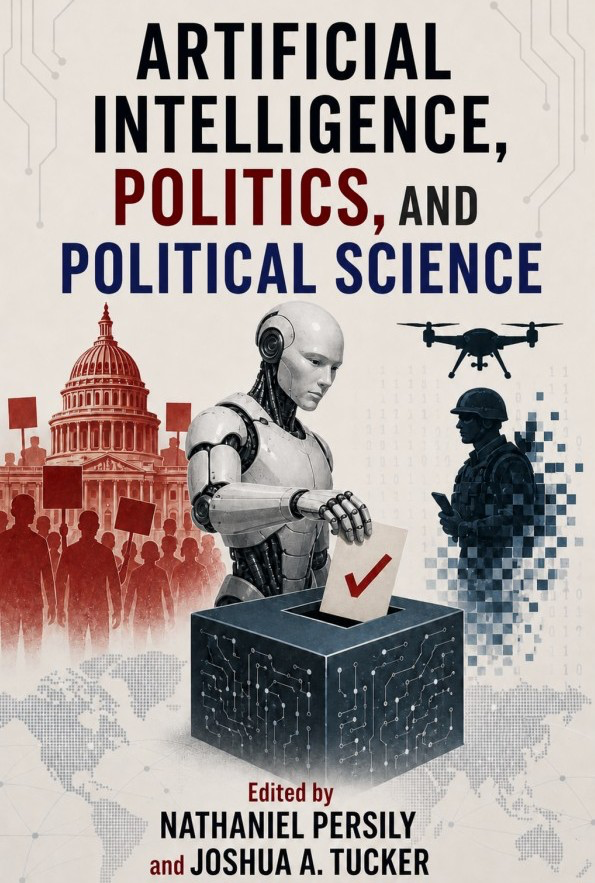
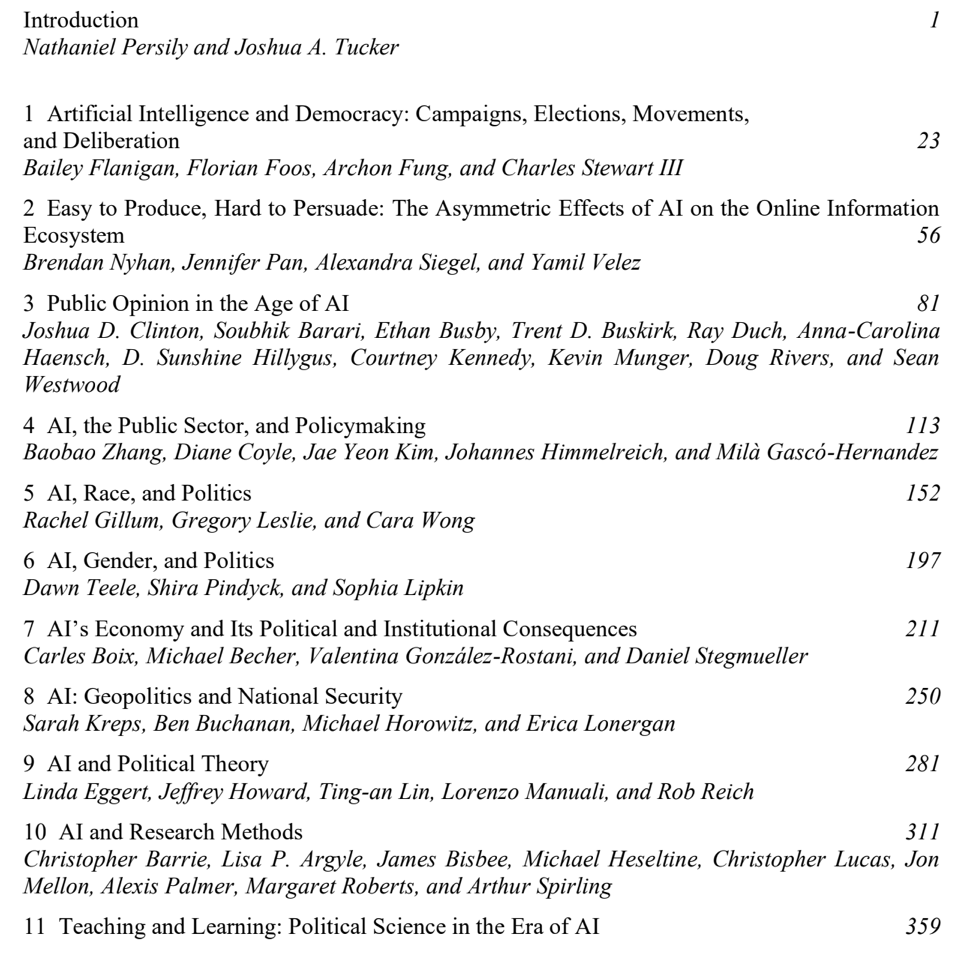
Now online: AI, Politics, and Political Science edited by @persily and @j_a_tucker with many chapters by great folks, including ours on the effects of AI on the online info ecosystem
Full essay: https://t.co/m2SFujHyin Paper (Bowles, Duch & Sorescu): https://t.co/PVn1edwiIx
And if you'd rather build it than read about it: three code-along workshops in Hong Kong on 13 Oct, before LLMSS 2026. Early registration closes 15 Sept. https://t.co/ifKF4ZUDM6
We built digital twins of 81 financial influencers and interviewed them every trading day for three months — a view on every large-cap stock, every day, timestamped before the market moved. The most interesting thing we measured was the silence. 🧵
Finance isn't where this started. The same instrument, pointed at voters, is our AI polling work with @robertocerina — 2024 state-level estimates as accurate as the best aggregators. Selective disclosure is everywhere. Elections and finance are just two examples.