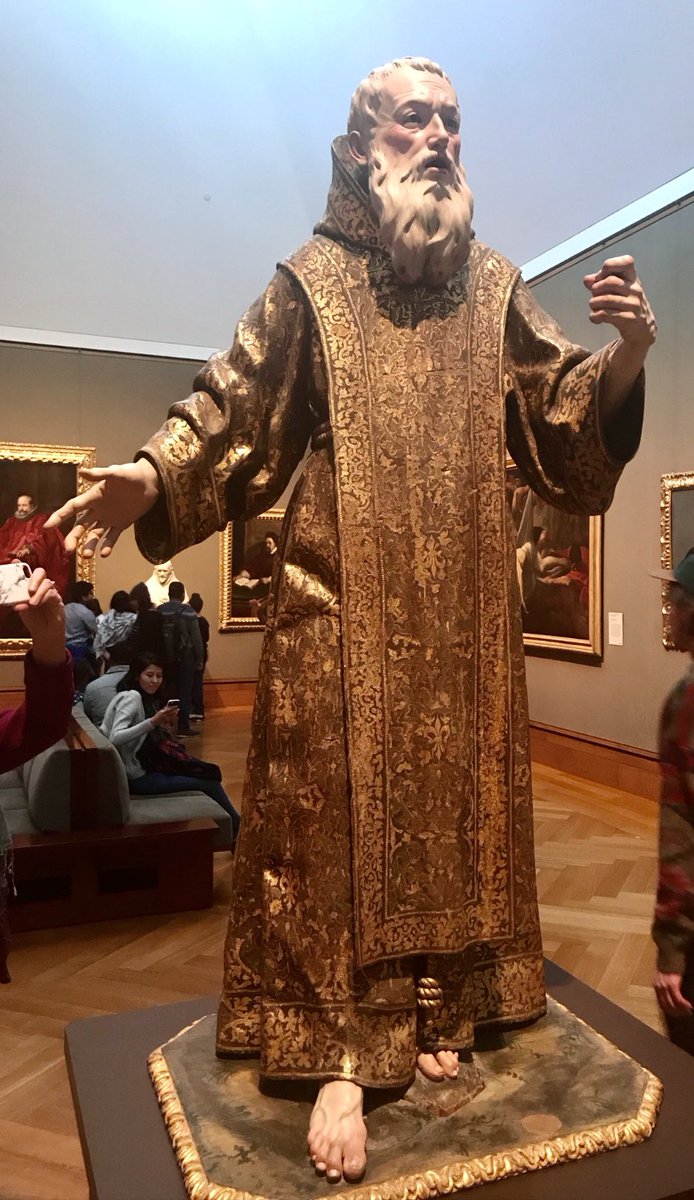
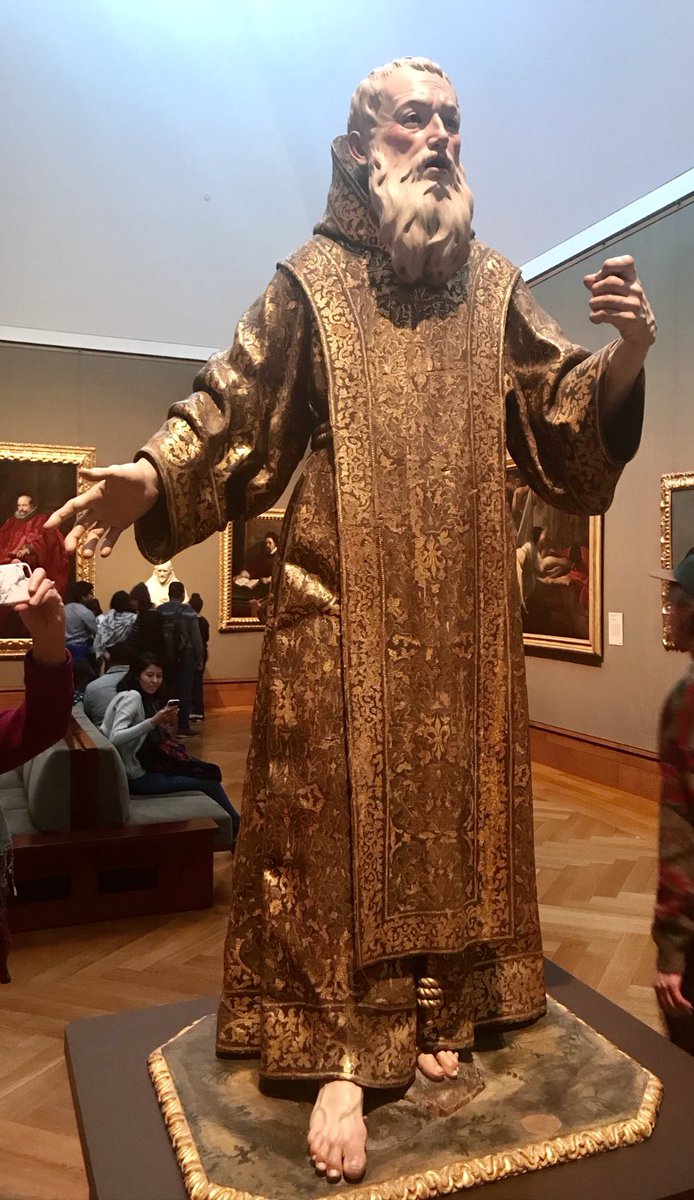
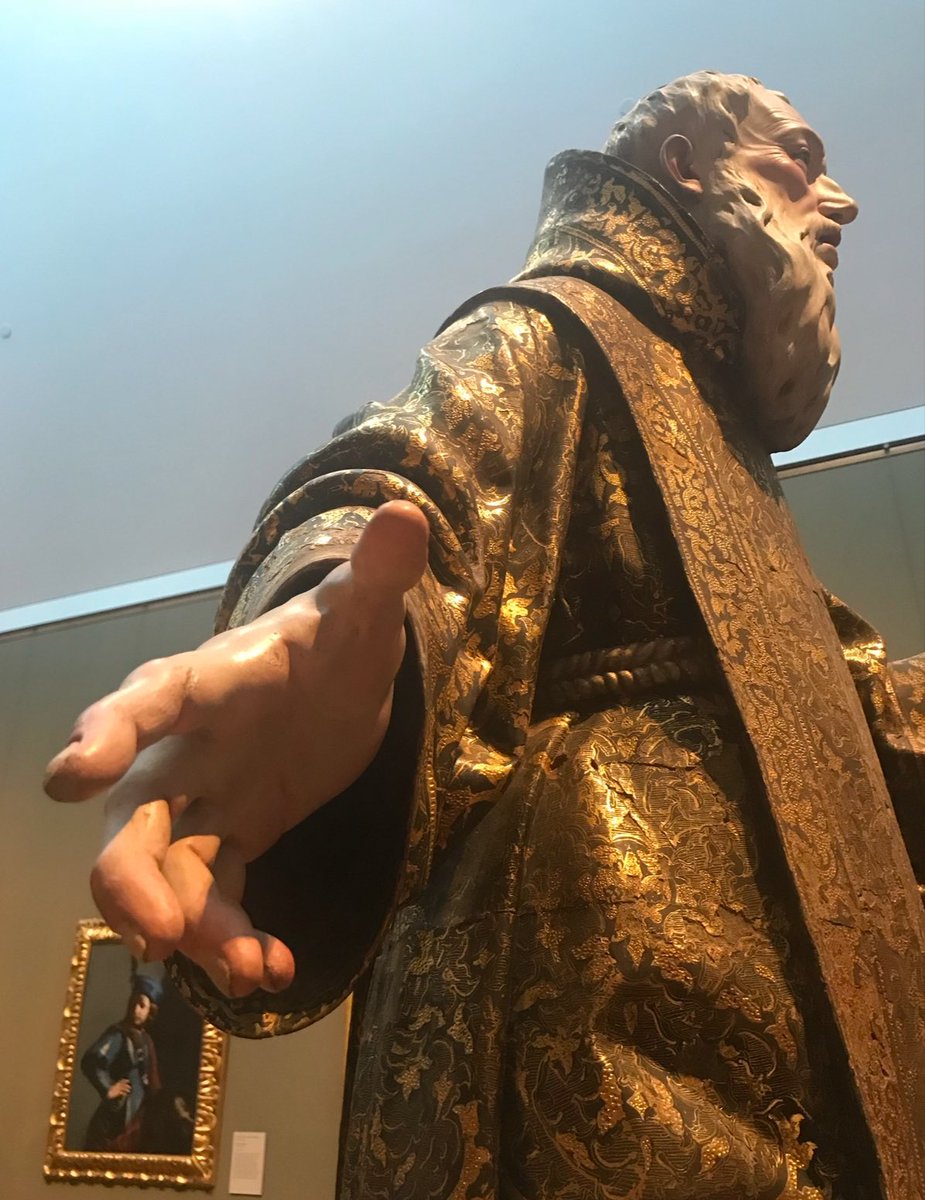
We saw this astonishing carved wood statue of St. Gines de la Jara at the Getty Museum, and it completely took my breath away. The details were so stunning, so lifelike….the museum information plaque didn’t include many details, so I wanted to know more about the artist who created this incredible carving.
As it turns out, this statue was carved in 1692 by….
Wait for it….
A woman?
It’s true. This incredible piece was carved by Luisa Roldán, or La Roldana, a 17th-century Spanish sculptor who broke barriers as the first female court sculptor for the kings of Spain. In the 17th century, women weren’t accepted as professional artists because society expected them to stick to domestic roles like running a household and raising children.
Training opportunities were scarce; women were often barred from workshops, guilds, and art academies, and they couldn’t study crucial subjects like anatomy, because it was considered “inappropriate” for a woman.
Sculpture, in particular, was considered too physical for women, and most patrons preferred commissioning men, assuming women lacked the skill and/or professionalism.
La Roldana defied all of that. She learned carving in her father’s workshop, honed her craft, and ultimately became the first female court sculptor to the kings of Spain.
Despite her obvious genius, Roldán lived much of her life in poverty, even as the court sculptor. She struggled financially despite her immense talent. This was partly because, even at the highest levels, artists of her time were often underpaid or faced delays in receiving payment for commissions. Additionally, as a woman, she faced extra hurdles in gaining consistent and lucrative work, as patrons consistently favored male artists.
Although she held a prestigious position, the court often failed to pay her regularly or adequately. Combined with the lack of a strong support system and her limited ability to advocate for herself in a male-dominated field, these factors left her in a state of near poverty throughout much of her life.
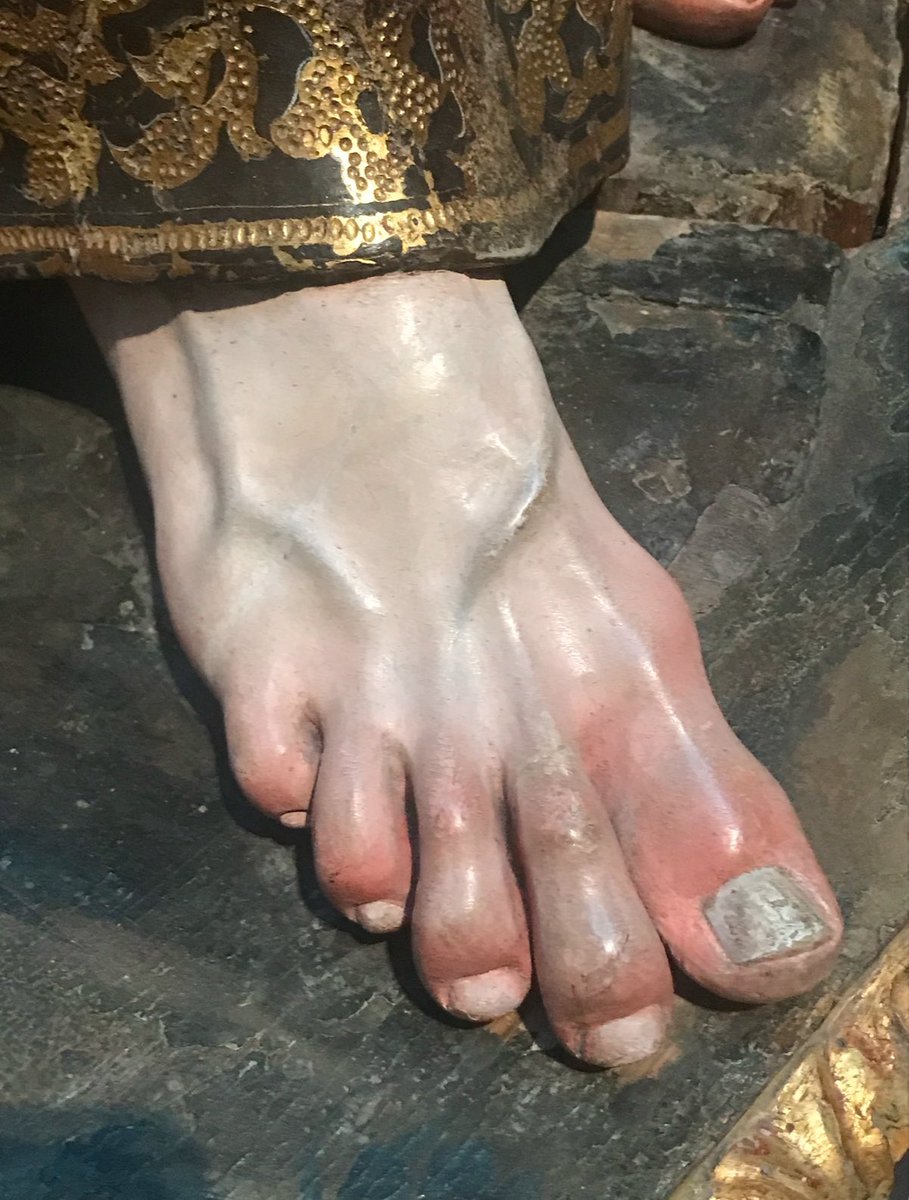
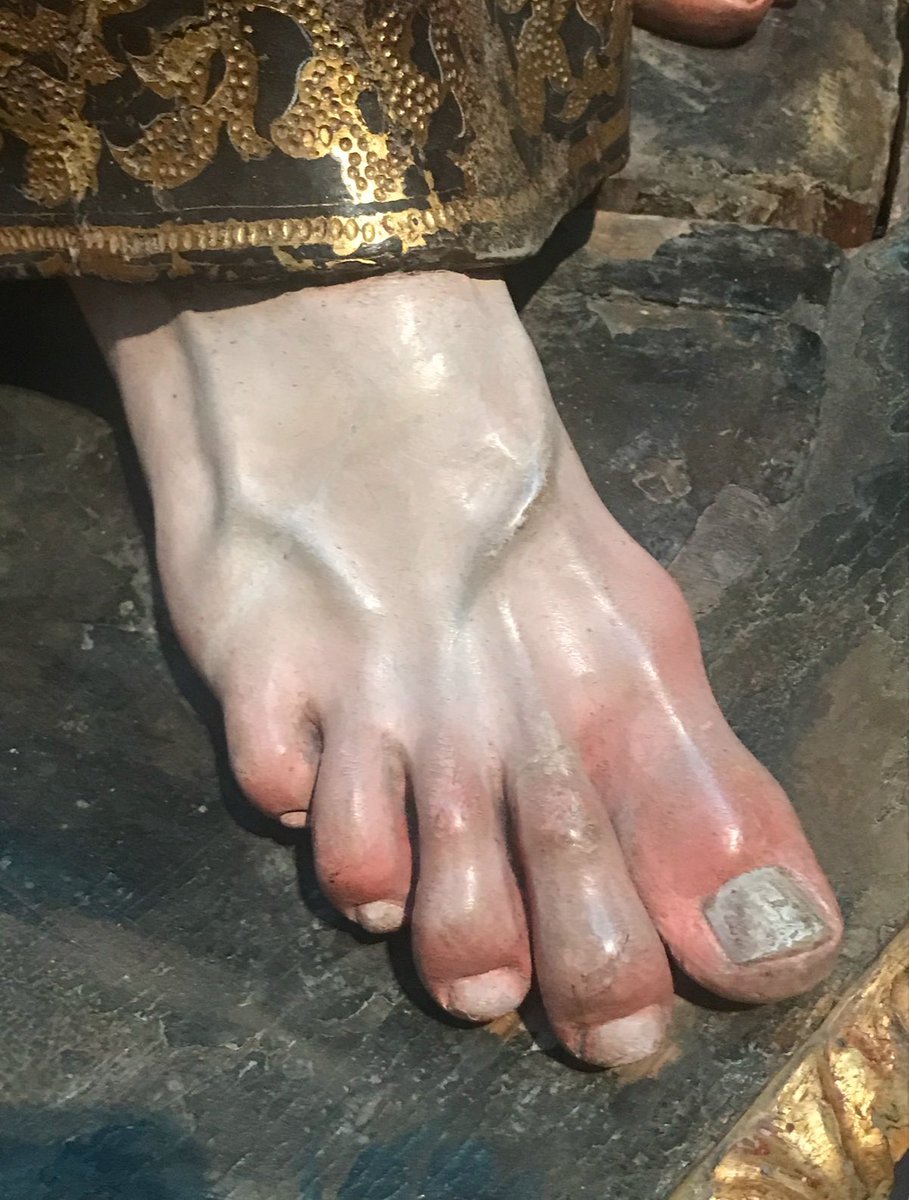
She was a master of polychrome sculpture, carving figures out of wood and bringing them to life with layers of intricate paintwork. Using a technique called encarnación, she created the illusion of translucent, living skin, even painting delicate blue veins beneath the surface. To heighten the realism, the statue also features glass eyes, which catch the light, making the figure feel almost alive.
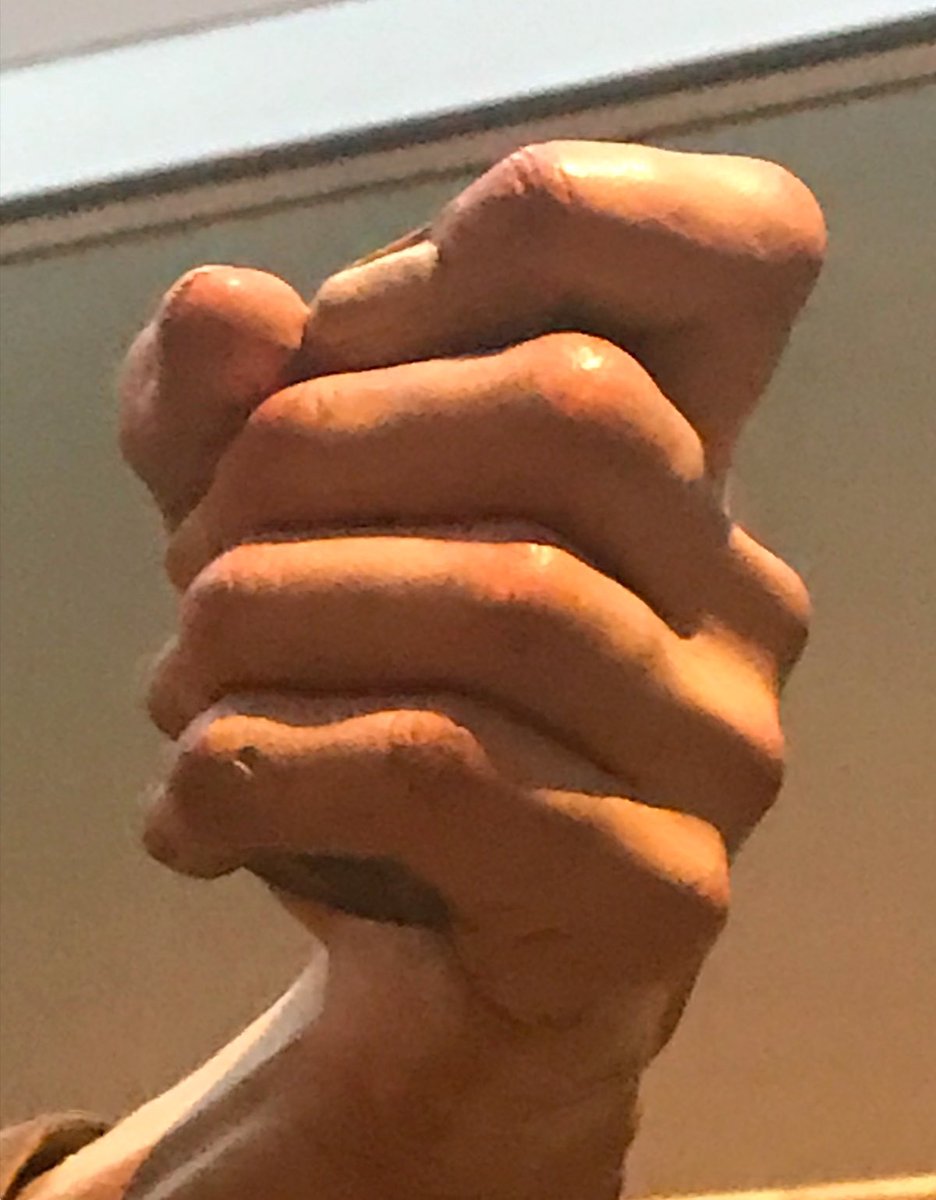
What’s really striking is her use of exaggeration. Hands and feet are really difficult to carve. The slightly oversized hands and feet of St. Gines amplify the emotional intensity and presence of this piece, right down to the tiniest details such as the toenail fungus. Notice how the knuckles are a tiny bit larger than in real life.
It appears to me that at one time this dude may have been holding something in his left hand but I couldn’t find any information about that.
#BaroqueArt #Sculpture #ArtHistory #WomenInArt #GettyMuseum #LaRoldana #SpanishArt #WoodSculpture #PolychromeSculpture #FemaleArtists
We saw this astonishing carved wood statue of St. Gines de la Jara at the Getty Museum, and it completely took my breath away. The details were so stunning, so lifelike….
The small museum information plaque didn’t include many details, so I wanted to know more about the artist who created this incredible carving.
As it turns out, this statue was carved in 1692 by….
Wait for it….
A woman?
It’s true. This incredible piece was carved by Luisa Roldán, or La Roldana, a 17th-century Spanish sculptor who broke barriers as the first female court sculptor for the kings of Spain. In the 17th century, women weren’t accepted as professional artists because society expected them to stick to domestic roles like running a household and raising children.
Training opportunities were scarce; women were often barred from workshops, guilds, and art academies, and they couldn’t study crucial subjects like anatomy, because it was considered “inappropriate” for a woman.
Sculpture, in particular, was considered too physical for women, and most patrons preferred commissioning men, assuming women lacked the skill and/or professionalism.
La Roldana defied all of that. She learned carving in her father’s workshop, honed her craft, and ultimately became the first female court sculptor to the kings of Spain.
Despite her obvious genius, Roldán lived much of her life in poverty, even as the court sculptor. She struggled financially despite her immense talent. This was partly because, even at the highest levels, artists of her time were often underpaid or faced delays in receiving payment for commissions. Additionally, as a woman, she faced extra hurdles in gaining consistent and lucrative work, as patrons consistently favored male artists.
Although she held a prestigious position, the court often failed to pay her regularly or adequately. Combined with the lack of a strong support system and her limited ability to advocate for herself in a male-dominated field, these factors left her in a state of near poverty throughout much of her life.
She was a master of polychrome sculpture, carving figures out of wood and bringing them to life with layers of intricate paintwork. Using a technique called encarnación, she created the illusion of translucent, living skin, even painting delicate blue veins beneath the surface. To heighten the realism, the statue also features glass eyes, which catch the light, making the figure feel almost alive.
What’s really striking is her use of exaggeration. Hands and feet are really difficult to carve. The slightly oversized hands and feet of St. Gines amplify the emotional intensity and presence of this piece, right down to the tiniest details such as the toenail fungus. Notice how the knuckles are a tiny bit larger than in real life.
It appears to me that at one time this dude may have been holding something in his left hand but I couldn’t find any information about that.
#BaroqueArt #Sculpture #ArtHistory #WomenInArt #GettyMuseum #LaRoldana #SpanishArt #WoodSculpture #PolychromeSculpture #FemaleArtists #Disney
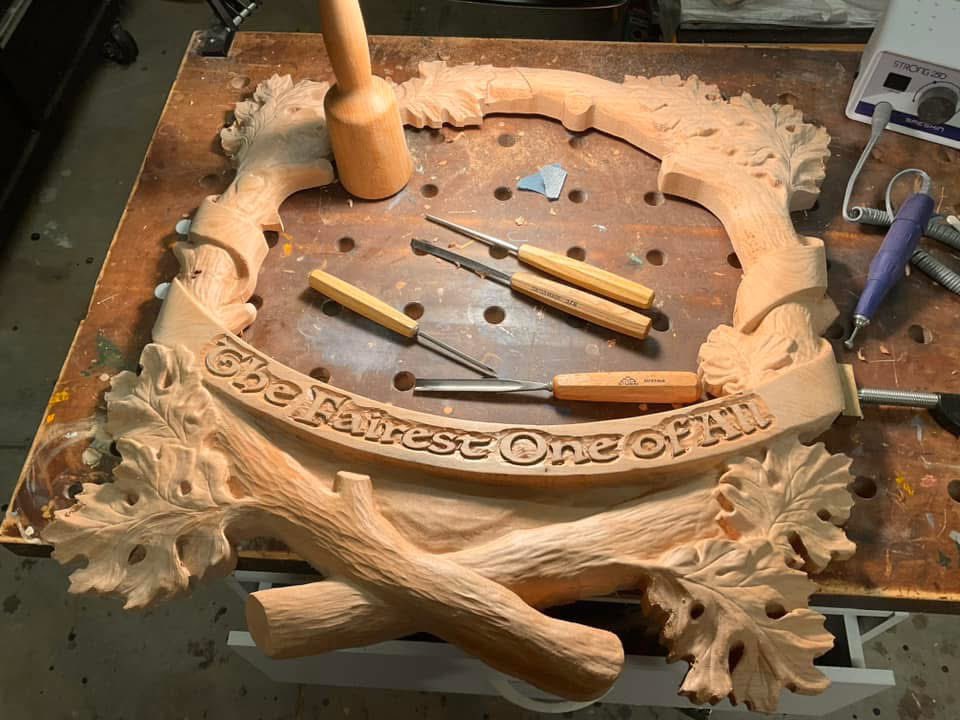
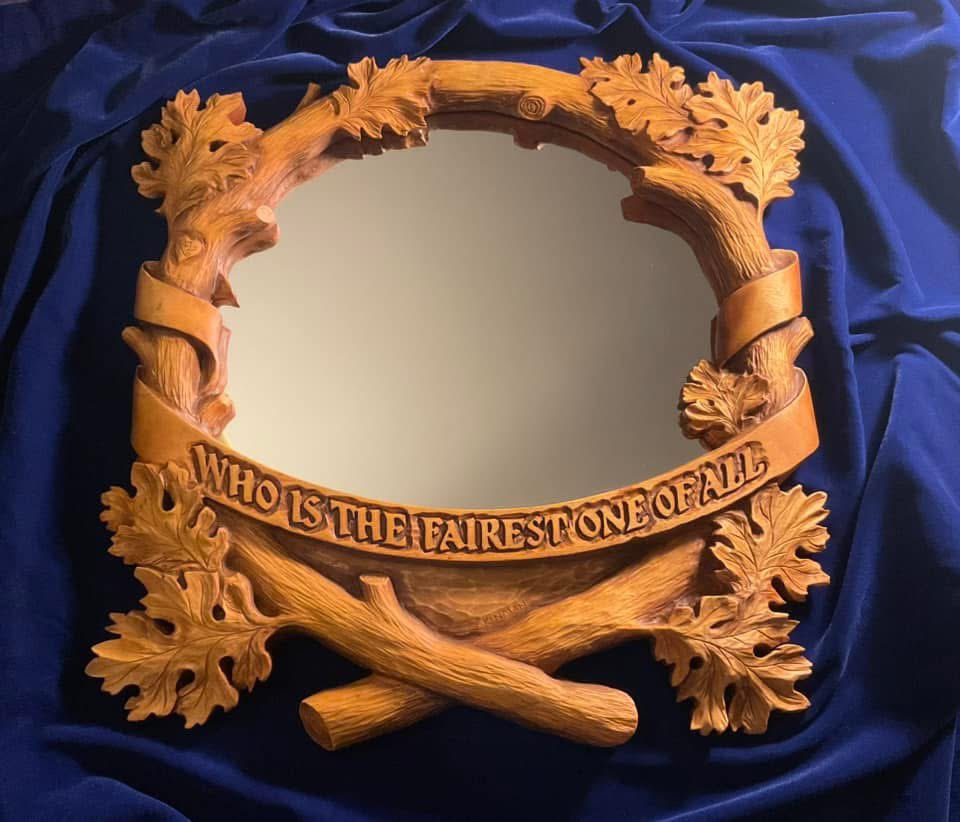
Marisa’s Valentines Day gift in progress. Still quite a bit of carving to do but the basic form is here. It’s a mirror frame.
Yep, she obviously knows about it already. Kinda hard to keep a secret like this one when you live and work together!
Meta’s algorithm lets creators grow big enough to build an audience, then chokes their exposure to force paid promotion. It’s a “pay to be seen” game, turning organic growth into a trickle. If I speak freely about this on FB it risks more reduced exposure—or worse—because they control the platform.
#freespeech #creators #makers
A couple of years ago, Marisa and I were exploring the streets and alleys of Salzburg, Austria and we ducked inside a little antique shop for kicks. I had never seen what a European version of an antique shop looked like and we wondered what might be inside.
There was the usual antique-ish stuff cluttered all over the shelves. Old bottles. Candlesticks. Decorative brooches. Nothing noteworthy. I was a little bored but, hey, we’re walking around the streets of Salzburg - how amazing is that?
Something caught my eye. Sitting way up there on the top shelf in between some old wind-up toy soldiers and a couple of desk clocks. Wait a minute…that looks….like….some kind of original art?
Probably not but…
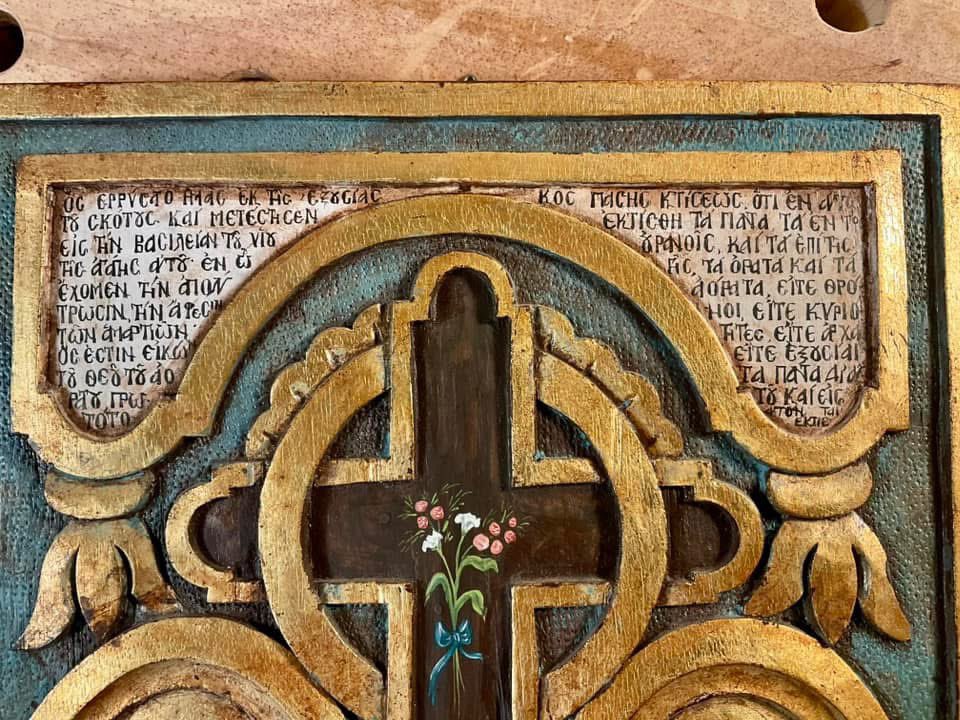
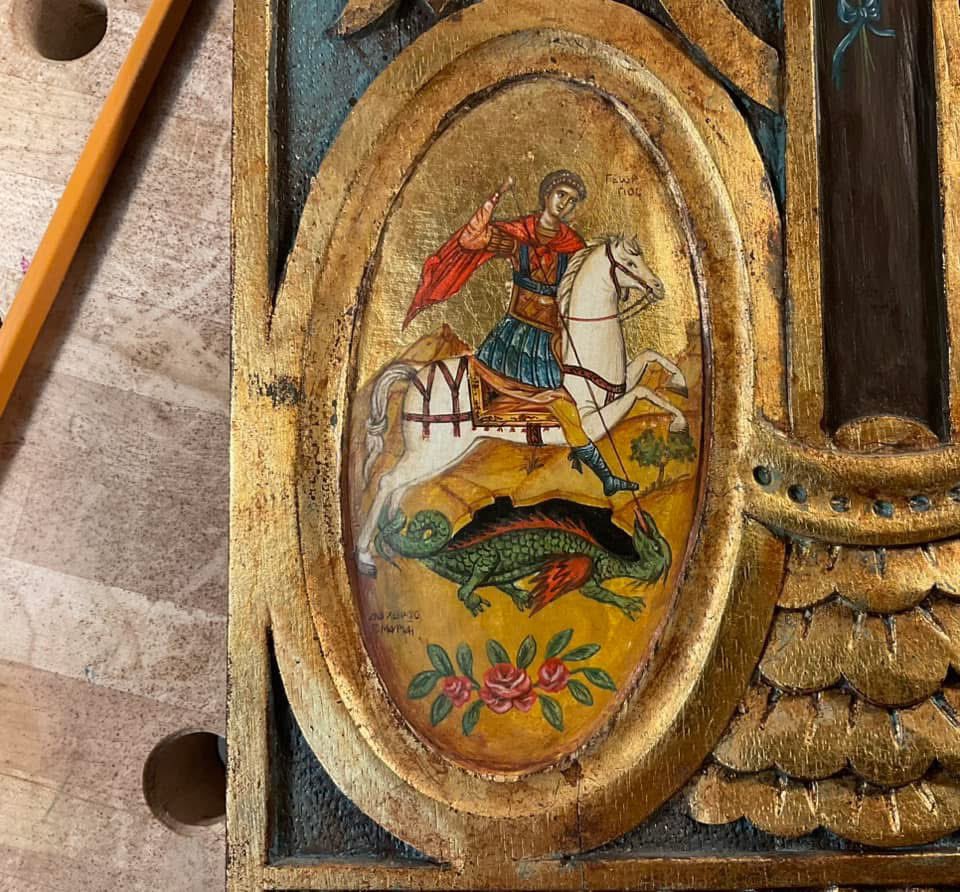
I reached up and took it off of the shelf. Holy Artifact, Batman…I know hand work when I see it and this was the real deal. The tiny, precise brush strokes. The hand lettered Greek writing. I didn’t really know what this was, but it was obviously some sort of religious artifact and the painting was exquisite.
Priced at 50 Euros. That seemed very, VERY low to me - I figured I had misread the price so I asked the store clerk. Yep. 50 Euros. OMG you’re kidding me? I paid up and figured I’d research this piece when we got home to California.
Researching this wasn’t easy. For starters, I had to find someone who could read Greek. Then a whole series of rabbit-holes. Super interesting stuff though!
Here’s what I found out:
This is an original Greek Icon carved and painted “By the hand of G.Mavridi”.
Greek Iconography: Greek icons go back to the Byzantine era and are considered “windows to heaven”, sacred art meant to connect the earthly and the divine. These paintings aren’t just decorations; they tell stories of faith and devotion.
The gold leaf represents divine light, and every tiny brushstroke has meaning. In Iconography, the figures are calm and still, often surrounded by symbolic details. Iconographers usually sign their work with “by the hand of” as an act of humility, dedicating the art as a spiritual offering rather than personal expression.
The artist: G. Mavridi: Based on the signature, this is likely attributed to Roula (Zacharoula) Chadoulia – Mavridi, a Greek engraver and icon painter born in Athens in 1941. She studied engraving at the Athens School of Fine Arts under K. Grammatopoulos from 1961 to 1965 and has presented her work in solo and group exhibitions, including several Pan-Hellenic exhibitions.
That’s all I could find out about her…The translation of the Greek Writing is as follows:
Left Panel Transcription (Greek): (Colossians 1:13-14):
“He has delivered us from the domain of darkness and transferred us to the kingdom of His beloved Son, in whom we have redemption, the forgiveness of sins.”
Right Panel Transcription (Greek): (Colossians 1:16):
“For by Him all things were created, in heaven and on earth, visible and invisible, whether thrones or dominions or rulers or authorities—all things were created through Him and for Him.”
The imagery in the scene is the story of St. George and the Dragon. I guess I’d heard of St. George and the Dragon but I didn’t really know the story. As far as Greek Inconography goes, George is often depicted as the fearless hero, a reminder that even the smallest of us can face down the “dragons” in our lives with faith and bravery.
What’s it worth? I dunno. I’ve been looking. There’s lots of cheap knock-off reproductions out there. Original hand painted icons are $300 to $500 or so. I’ve seen some as high as $1000. I have not found any engraved (carved) hand painted icons like this one out there. Not yet anyway.
Beautiful piece! Hangs in our kitchen now!
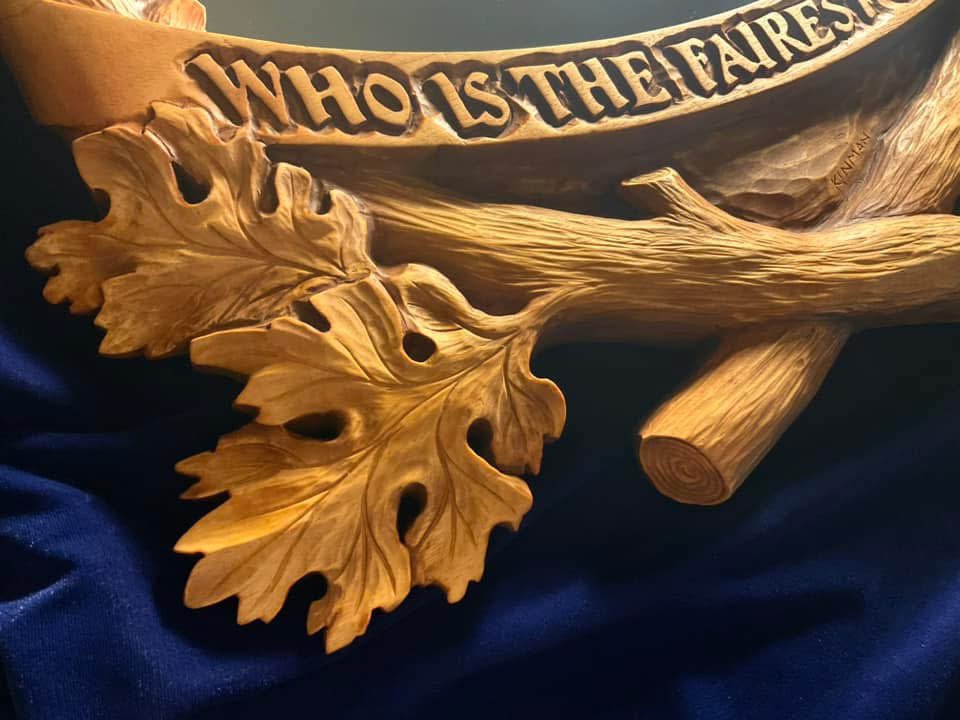
This hand carved mirror frame has a story to tell. There’s four parts to it…
Part One - Opening Scene:
This mirror frame was created as an original commission I carved back in the mid-90s. Recently, the client reached out to see if I could repair it…it had been badly damaged during a move and when it arrived at my studio it was in five pieces.
Sigh.
Part Two - The Restoration:
It was touch and go, but I managed to piece it back together. However, the damage was so extensive it became clear to me that I’d have to completely re-carve the entire frame. It needed it anyway….after all, I’m a better woodcarver now than I was in the 90s, so I gave it a fresh, updated life.
Part Three: A New Chapter:
The first piece in a new signed, limited edition series of this mirror frame is on my workbench right now. I’m keeping the first one (#1 of 195) as Marisa’s Valentine’s Day gift (yes, she knows!). Hers in the lower-right photo.
Part Four: The Plot Twist:
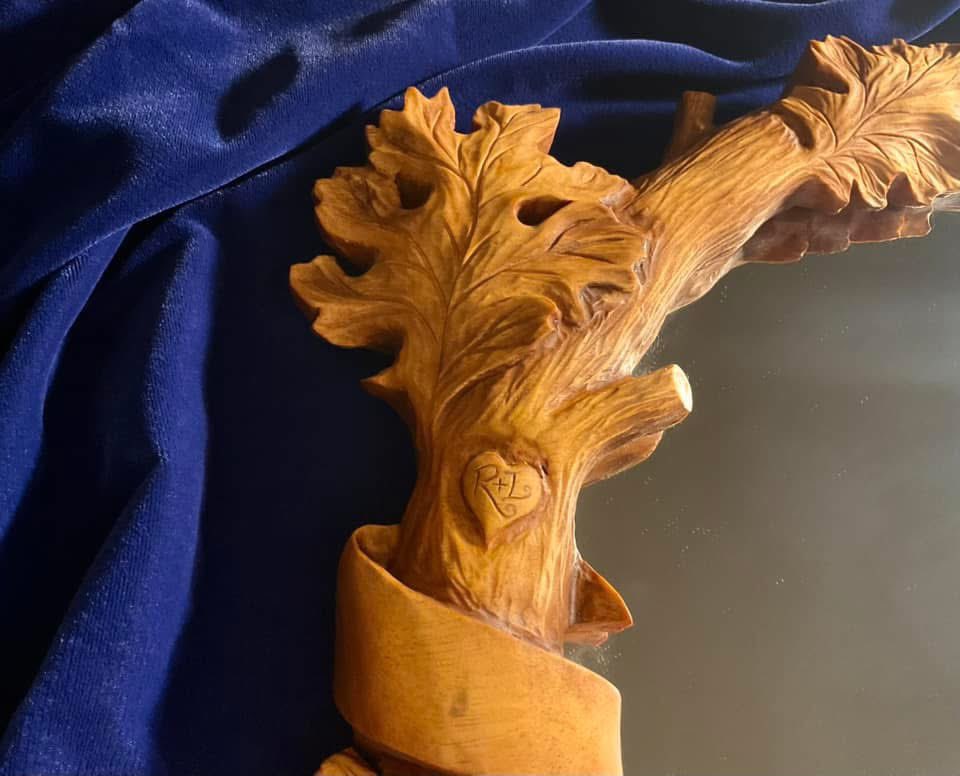
Check out the Valentine heart carved into the branch bark on the left side, much as young lovers might do, complete with initials.
For the original commission, the client requested the iconic phrase from Snow White without the question mark: “Who is the Fairest One of All.”
For Marisa’s mirror, I made a change. Hers says: “The Fairest One of All.”
#SnowWhite #Disney #Woodworking
@HoopMixOnly I don’t see why God was included in the question in the first place. I suppose the question implies that God must be watching me and if I don’t do the right thing, I will be punished?
You’ve probably heard that Perry, the donkey who was the inspiration for Donkey in Shrek, passed away at age 30. When I looked at these pictures, the first thing that stood out to me was how the animators moved the eyes from the sides of his head to being front-facing, making the character feel more human.
That got me curious, so I rewatched a few Shrek scenes to see what else they changed…
They also gave Donkey an expressive brow ridge so he could raise his brows and frown, perfect for showing a full range of emotions.
They also adjusted his nostrils, moving them inward and higher up toward the center of his snout. That little tweak makes his face look more “compact” and human-like, making it easier to read his expressions.
Then there’s the ears. Real donkeys have ears that stay mostly upright and don’t move much, but Donkey’s ears are always in motion—drooping when he’s sad, perking up when he’s excited.
Apparently it worked! I never noticed that stuff in the film before.
Here are some hashtags you can use:
#Shrek #Donkey #RIPDonkey #PerryTheDonkey #DreamWorks #BehindTheScenes #FunFacts
Our Disney Wall of Fame is looking amazing, thanks to you! We’ve got a couple hundred woodcarving selfies so far, but now we need reinforcements…We’re on a mission for more happy selfie faces in front of The Many Adventures of Winnie the Pooh at Disneyland.
This is your chance to be immortalized on our Disney Wall of Fame downstairs at The Puppet Inn….our Pinocchio/Geppetto-themed Airbnb. We’re building an epic photo montage, and you need to be in it!
Your assignment: Find Winnie the Pooh. Snap that pic. Make it happen, soldier.
#Disneyland #Disney #CaliforniaAdventure #MickeyMouse #WinnieThePooh #BigAl