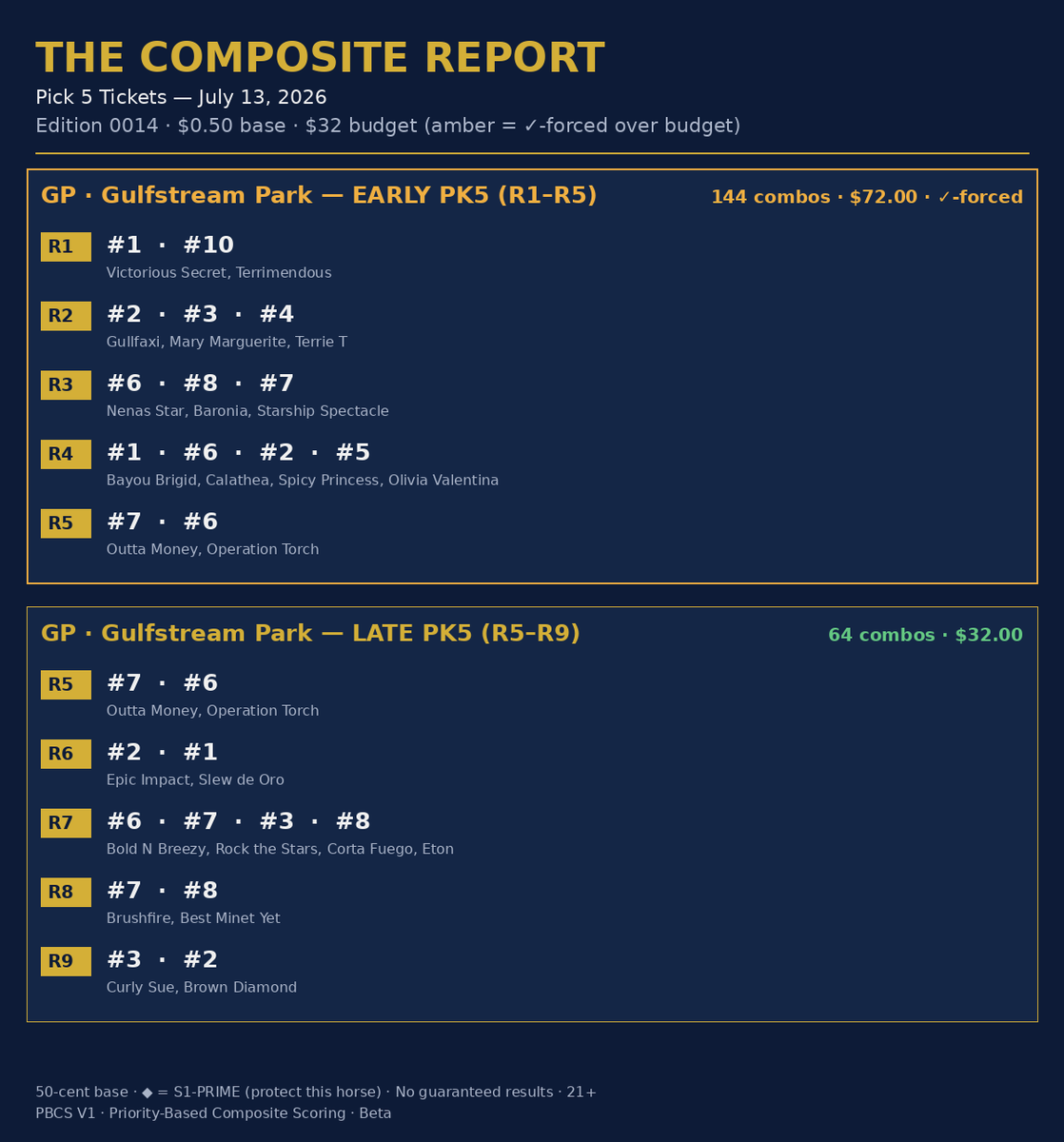
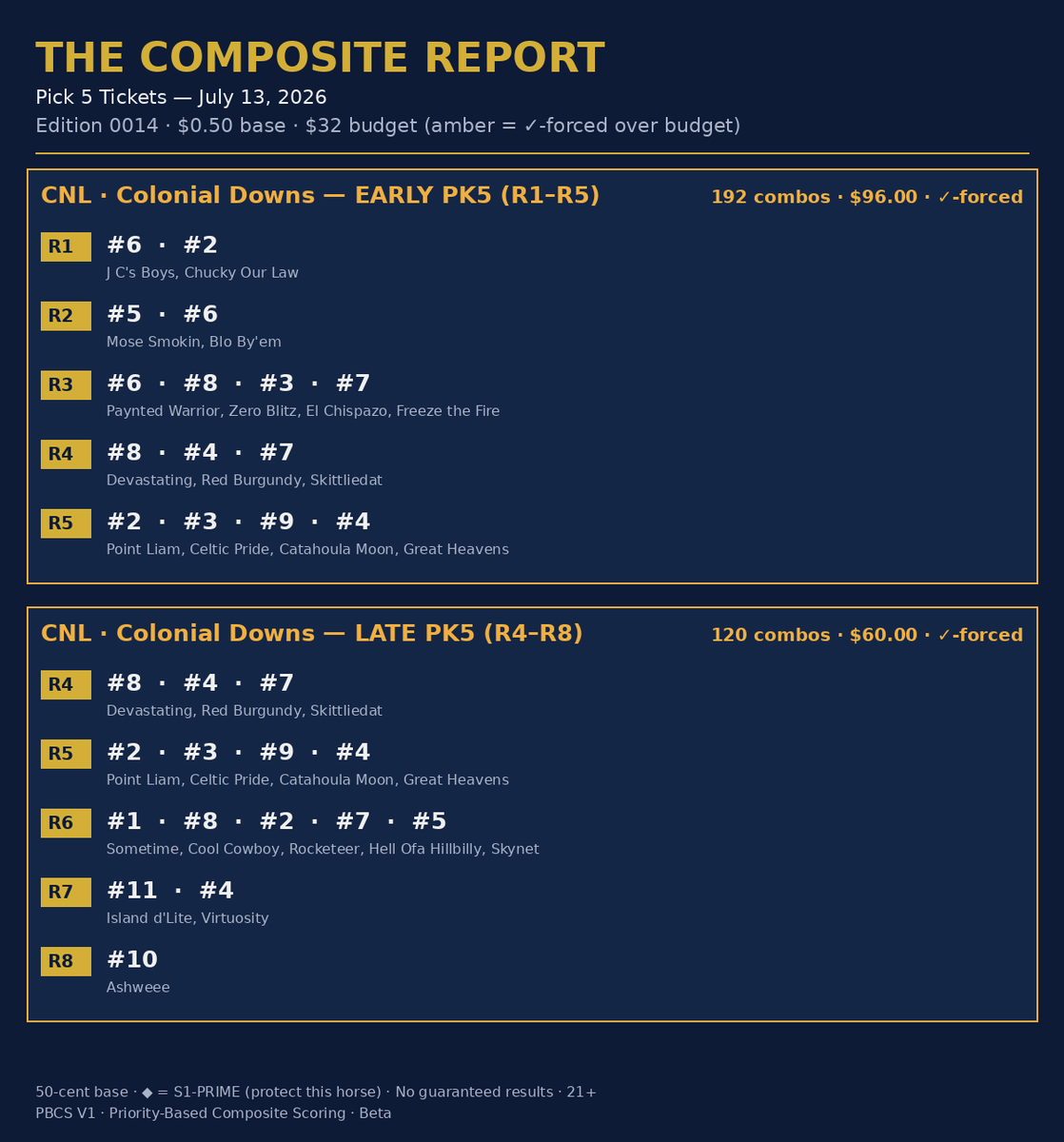
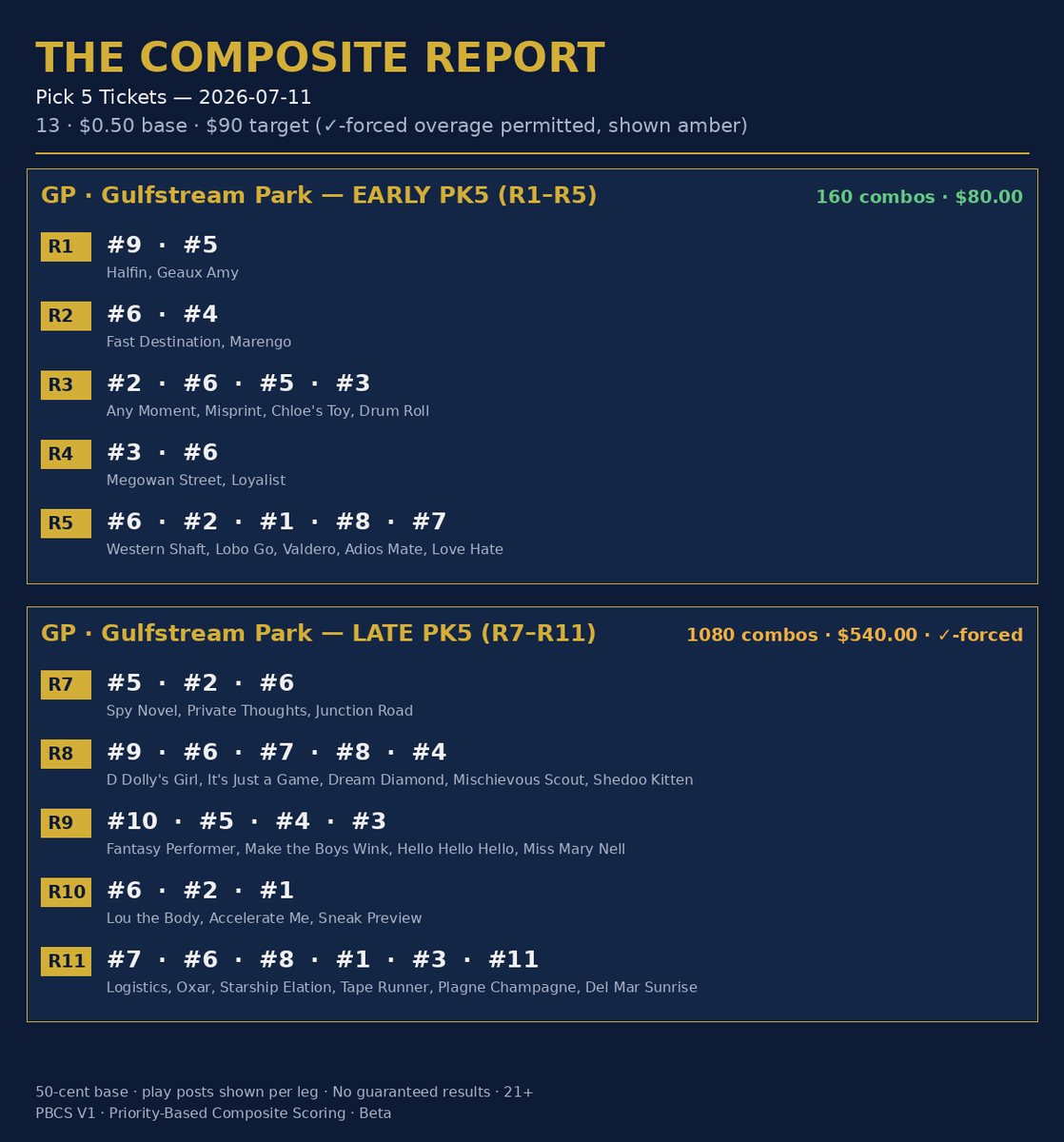
Launching a paid beta of my AI-assisted racing intelligence sheet.
Each card: top-4 contenders per race, one official win-bet opinion, PASS races marked, vulnerable-favorite and pace-shape warnings, Pick 3–6 coverage notes. A results audit is posted after every card — wins and losses.
Forward-logged testing has shown strong flat-win ROI over a meaningful sample. No guaranteed results. For informational and entertainment purposes only.
$9 single card · $29/mo founding beta (limited spots). DM "BETA".
Post Rain and new scratches and off the turf races 4,11, &12.
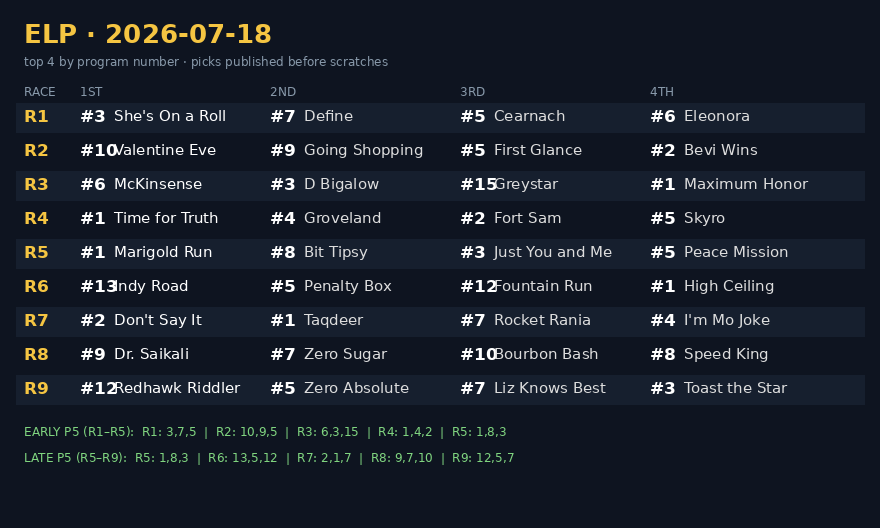
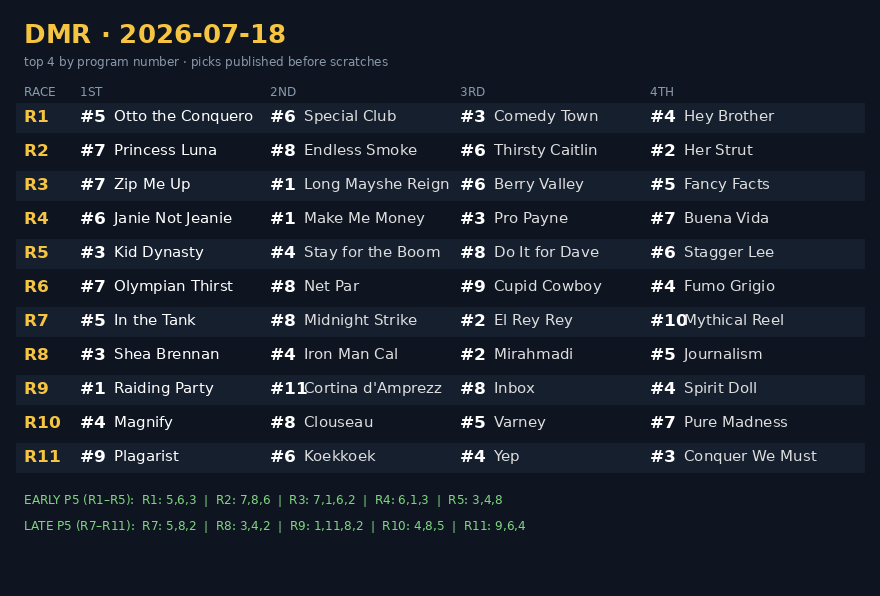
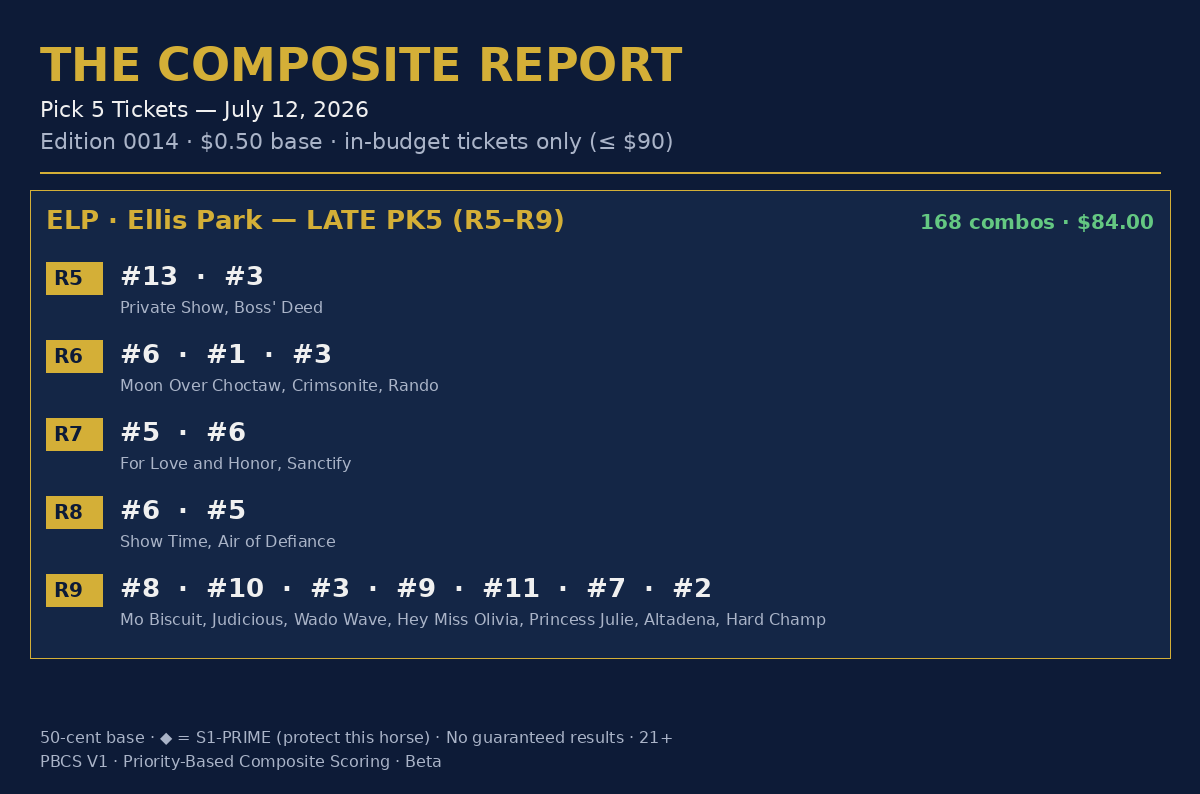
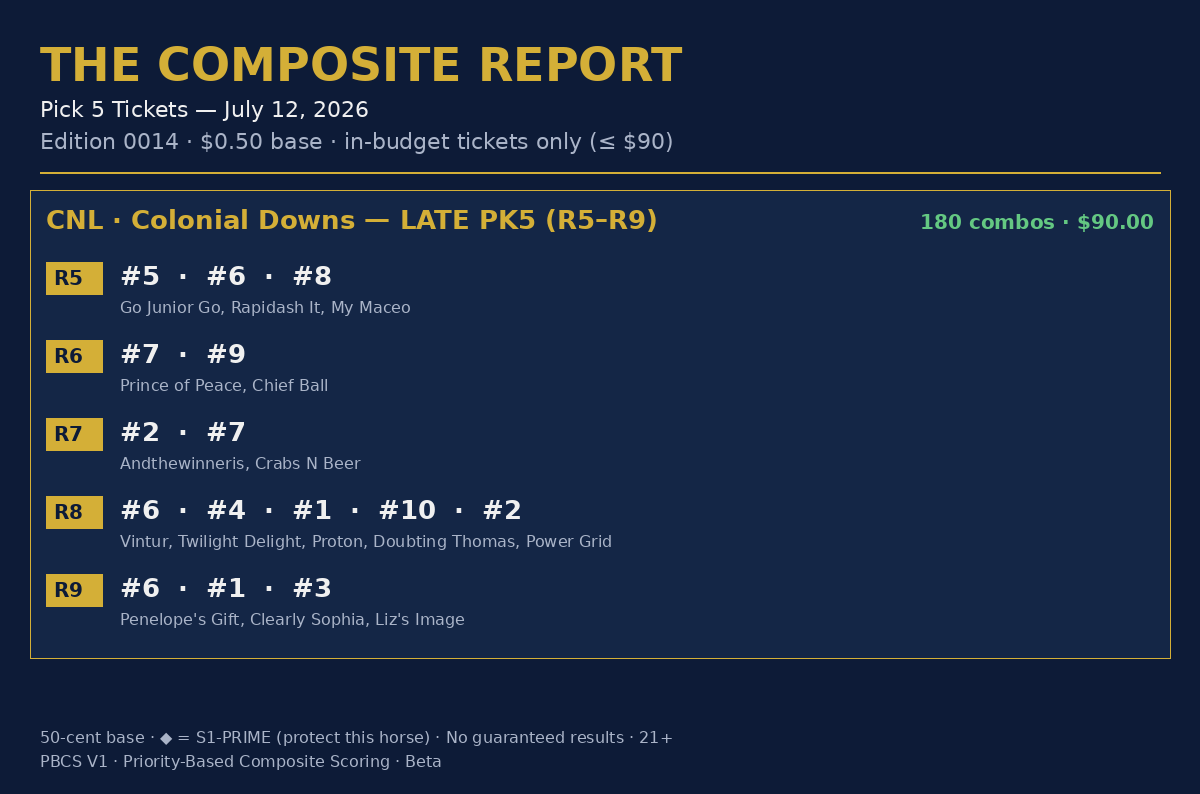
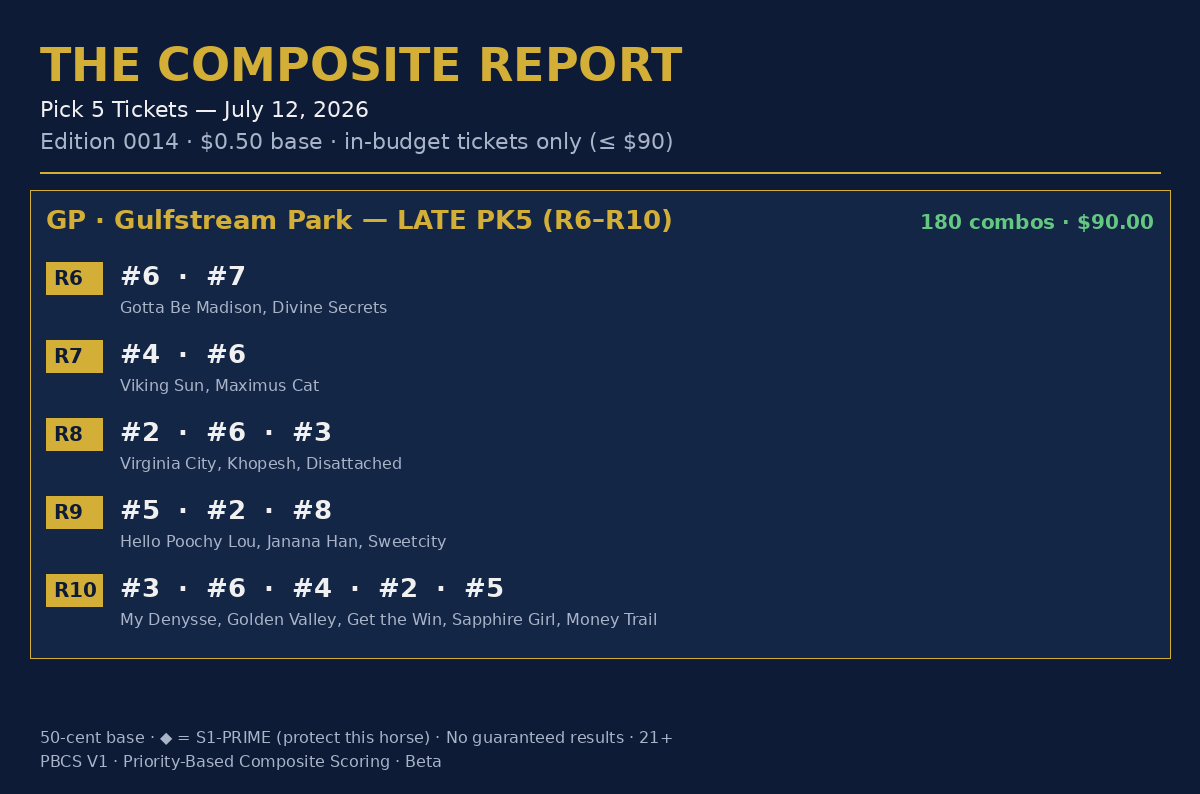
Free PK5 for Saratoga July 18th 2026 even though a bunch of scratches are coming with all the rain.
A gift for all my friends. For July 18th 2026
These are my most scrutinized selections. I've been testing this offline for two months now and finally ready to put it to the test. Good luck everyone!
Pace Handicapping Thought Of The Day!
The Race Determines What Evidence Is Admissible.
One of the biggest mistakes horseplayers make is believing every piece of handicapping information deserves equal consideration. They spend years collecting speed figures, trainer statistics, jockey percentages, class ratings, workouts, trip notes, pedigree, bias, and every angle imaginable. Before long, the toolbox is overflowing. Then they approach every race trying to use every tool they own, convinced that more information leads to better decisions.
It doesn’t.
Every race is different because every race creates its own demands. In a courtroom, a judge decides what evidence is admissible before a jury ever hears the case. If the evidence isn’t relevant, it never makes it into the trial. Horse racing works the same way. The projected pace, the amount of pressure, the distance, the surface, the makeup of the field, and the positional demands of the race determine what information actually matters. Those conditions become the judge. They decide which pieces of evidence deserve your attention and which should be dismissed before the gates even open.
Most horseplayers do exactly the opposite. They start with the horses. They ask who earned the biggest speed figure, who has the hottest trainer, who owns the best class line, or who gets the top jockey today. Only after they’ve built an opinion do they look at the race itself. By then, they’re trying to force the race to fit their opinion instead of allowing the race to shape it. They have already admitted evidence that never belonged in the case.
The race always comes first.
A race loaded with early speed demands something entirely different than one with very little pace. A twelve furlong turf race rewards different qualities than a six furlong dirt sprint. A projected pace battle asks whether a horse can survive sustained pressure, while an uncontested pace asks whether anyone is capable of applying enough pressure to make the leader uncomfortable. The questions change from race to race, and because the questions change, the evidence must change with them.
Once you understand that, handicapping becomes a process of elimination rather than accumulation. Instead of trying to use every statistic, you begin filtering them. Some factors become extremely important because they directly explain how a horse matches today’s projected race shape. Others become little more than noise. They may describe what a horse has done in the past, but they do not explain whether that horse is equipped to meet today’s demands. Information has value only when it helps explain suitability within the context of today’s race.
This is where discipline separates serious handicappers from everyone else. Discipline means refusing to become emotionally attached to information simply because it worked yesterday. It means rejecting hunches, favorite angles, popular narratives, and personal biases if they fail the test of relevance. Every opinion must earn its place by helping answer one question. Why is this horse suited to the race that is about to unfold? If the evidence cannot answer that question, it has no business influencing the wager.
The best handicappers are not the ones who know the most. They are the ones who know what to ignore. They understand that the race itself establishes the rules of the investigation. It determines what evidence is admissible, what evidence should be excluded, and ultimately which horse has the highest probability of satisfying today’s demands. Your job is not to defend your opinions. Your job is to let the evidence speak for itself.
@53Zenyatta19@OC15K
Launching a paid beta of my AI-assisted racing intelligence sheet.
Each card: top-4 contenders per race, one official win-bet opinion, PASS races marked, vulnerable-favorite and pace-shape warnings, Pick 3–6 coverage notes. A results audit is posted after every card — wins and losses.
Forward-logged testing has shown strong flat-win ROI over a meaningful sample. No guaranteed results. For informational and entertainment purposes only.
$9 single card · $29/mo founding beta (limited spots). DM "BETA".
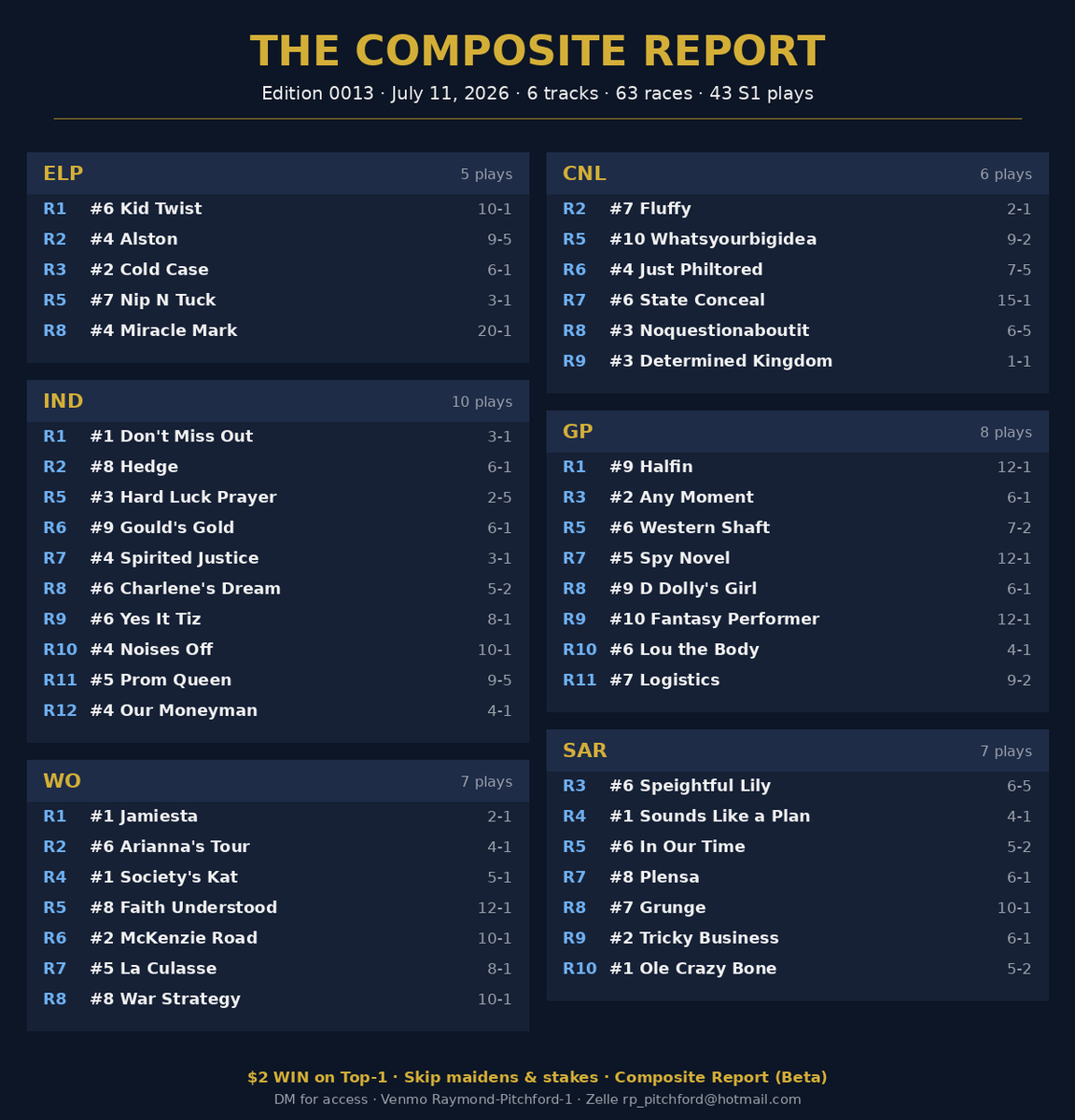
Free Picks for July 11th 2026. Lets have a great day. My selections should win somewhere around 28% of the time and pay an average of $9 to win. We should be able to eke out a 26% ROI. ---- Good luck to us!