"پٹرول کی قیمتوں میں اضافہ صرف معاشی فیصلہ نہیں، غریب کے چولہے پر حملہ ہے"
ہیومن رائٹس کونسل آف پاکستان (HRCPakistan) پٹرولیم مصنوعات کی قیمتوں میں حالیہ اضافے کی شدید مذمت کرتی ہے اور اس پر گہری تشویش و افسوس کا اظہار کرتی ہے۔
یہ اضافہ محض اعدادوشمار کی تبدیلی نہیں بلکہ لاکھوں غریب، مزدور اور متوسط طبقے کے خاندانوں کی روزمرہ زندگی پر براہِ راست حملہ ہے۔ پہلے ہی مہنگائی، بے روزگاری اور کم آمدنی کے بوجھ تلے دبے ہوئے عوام کے لیے یہ فیصلہ ناقابلِ برداشت ہے۔
جب ایندھن مہنگا ہوتا ہے تو صرف گاڑیاں نہیں رُکتیں، بلکہ آٹا، دال، سبزی، دودھ، ادویات اور دیگر اشیائے ضروریہ کی قیمتیں بھی آسمان کو چھونے لگتی ہیں۔ یہ فیصلہ خاص طور پر رکشہ ڈرائیوروں، ڈیلی ویجز مزدوروں، ٹرانسپورٹ ورکرز، طلبہ اور سفید پوش طبقے کے لیے تباہی کا باعث بن رہا ہے۔
غریب آدمی اب صرف معاشی دباؤ ہی نہیں، بلکہ شدید ذہنی تناؤ، بے بسی اور مستقبل کے خوف سے بھی دوچار ہے۔
ہمارے مطالبات:
پٹرولیم مصنوعات کی قیمتوں میں کیا گیا حالیہ اضافہ فوری طور پر واپس لیا جائے۔
اشرافیہ کی غیر ضروری مراعات کم کر کے عام عوام کو فوری ریلیف دیا جائے۔
ٹرانسپورٹ کرایوں اور اشیائے ضروریہ کی قیمتوں میں خود ساختہ اضافے کو روکا جائے۔
حکومت معاشی فیصلوں میں انسانی ہمدردی اور عوامی مشکلات کو ترجیح دے۔
انسانی حقوق صرف تقریروں اور قراردادوں تک محدود نہیں۔ یہ ہر شہری کے باوقار اور محفوظ زندگی گزارنے کا بنیادی حق ہے۔
ترجمان
ہیومن رائٹس کونسل آف پاکستان (HRCPakistan)
9 مئی 2026
@PMO_Pakistan@FinanceGovPk @PetroleumDivPk @OGRA_Pakistan @GovtofPakistan@PakPMO@jamshed_hrc
#مہنگائی_نامنظور #پٹرول_قیمتوں_میں_اضافہ #عوام_کو_ریلیف_دو #غریب_کا_چولہا #HRCPakistan #HumanRights #Pakistan #PetrolPriceHike #StandWithPeople
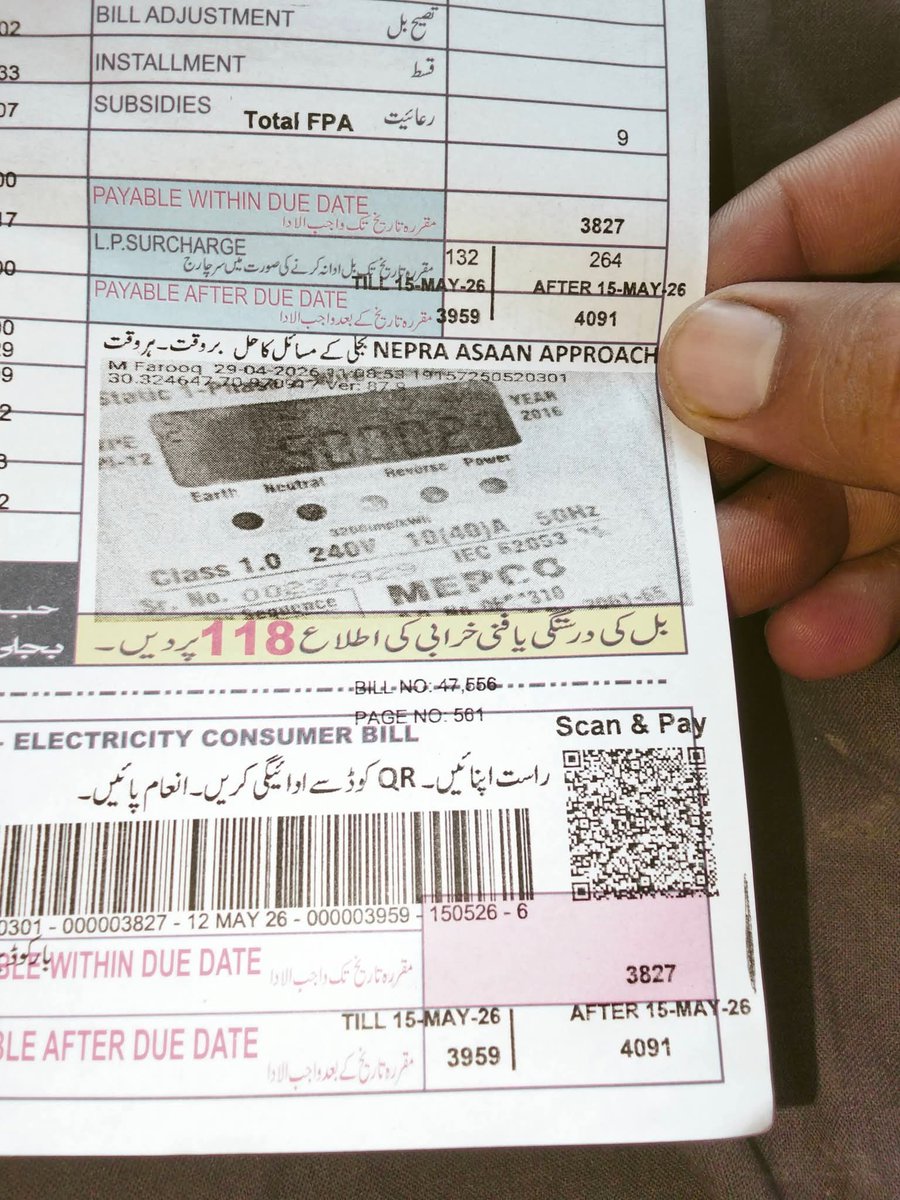
صرف 40 یونٹ استعمال ہوئے ہیں اور بجلی کا بل آیا ہے 3827 روپے
اس حساب سے غریب کو بجلی کا فی یونٹ 95 روپے کا مل رہا ہے، فارم 47 حکومت نے عوام کے خلاف اعلان جنگ کررکھا ہے
پاور پلانٹس کو گزشتہ 8 برس کے دوران "کپیسٹی چارجز" کی مد میں کتنے ہزار ارب روپے کی ادائیگیاں کی گئیں؟ پاور پلانٹس کو کپیسٹی چارجز کی مد میں کی گئی ادائیگیاں ڈالرز میں کتنی بنتی ہیں؟ مالی سال 2017-18ء سے مالی سال 2025ء تک کے تمام اعداد و شمار کی تفصیل۔۔۔
Just to understand the bijli ka bill requires a PHD... 15 taxes and charges added... Madness! Who does this???
And when all added up, my bill increases by 85% and the average per unit cost Rs 78.52 per unit!
1 Fixed charges
2 Fuel Price Adjustment (FPA)
3 FC Surcharge
4 Quarterly Tariff Adjustment
5 Electricity Duty
6 General Sales Tax (GST)
7 Income Tax (why???)
8 Extra Tax (really)
9 Further Tax (seriously)
10 RF Tax
11 GST on FPA
12 Extra Tax on FPA
13 Further Tax on FPA (really seriously)
14 Income Tax on FPA
15 Electricity Duty on FPA
Pakistan’s public debt 4 years ago was Rs 44 trillion which now stands at 81 trillion- an increase of 37 trillion . Thats 8.25 trillion per annum. Means 770 billion per month and Rs 25 billion per day.
And you are right zero reform @SaleemFarrukh
1. Pakistan buys at $115 a barrel
2. India buys at $115 a barrel
3. Bangladesh buys at $115 a barrel
4. In India, the oil shock sits on corporate balance sheets
5. In Bangladesh, the oil shock sits on the state
6. In Pakistan, the oil shock sits in the kitchen
On February 1, petrol in New Delhi was Indian Rs94.72 per litre. It remains Indian Rs94.72 per litre (approximately Rs280 in Pakistani rupees).
On February 1, petrol in Bangladesh was approximately BDT 130 per litre. It remains largely unchanged.
On the same day, petrol in Pakistan was Pakistani Rs257 per litre. It now stands at Rs399.86 — a 56 percent increase.
Meanwhile, Brent crude oil rose from $68–70 per barrel to $105–$115 — an increase of 54 to 64 percent.
Hard truth: Prices unchanged in India and Bangladesh. Pakistan up 56 percent.
How does India do it? The government cuts taxes, and state-owned oil companies — Indian Oil Corporation (IOCL), Bharat Petroleum (BPCL) and Hindustan Petroleum (HPCL) — absorb the losses. Prices are managed. The consumer is protected while the cost is shifted to company balance sheets.
How does Bangladesh do it? Prices are administered. The government-owned Bangladesh Petroleum Corporation (BPC) absorbs the shock, adjusting prices infrequently. The consumer is protected, while the cost is shifted to the public balance sheet.
Pakistan does it differently. Prices are passed through immediately, petroleum levy is raised, and domestic refineries — Pakistan Refinery Limited (PRL), National Refinery Limited (NRL), Attock Refinery Limited (ARL) and Cnergyico — are paid import parity prices. The consumer absorbs the shock, the government collects the tax, and refineries make billions.
The same pattern holds for diesel. On February 1, diesel in New Delhi was around Indian Rs88 per litre and remains unchanged. In Bangladesh, diesel was approximately BDT 109 per litre and is still at similar levels. In Pakistan, however, diesel has risen from about Rs267 per litre to around Rs399.58 — an increase of 50 percent.
Red alert: Three countries. One oil shock – different choices. The oil price is global. The pain is a policy choice.
https://t.co/COZouWIluM
This table, prepared and tweeted by energy expert @AsimRiaz1978, shows different pathways Pakistan and our neighbours India and Bangladesh took in light of rising energy costs. One benefit of passing on higher costs to consumers is that demand slows. However even that has not happened in Pakistan, due to hoarding by oil companies and petrol pumps. Also unlike our neighbours, our refineries have made huge profits, as also written by @AnsarAAbbasi in his article yesterday.
To summarise Asim sb’s findings, Pakistan has raised fuel prices by 50%, Bangladesh by 15% and India not at all.
This is why our inflation increased to 11% in April and SBP raised interest rates to 11.5%.
The most serious fuel price shock to hit Pakistan in more than half a century threatens to unleash a flood of cascading crises that could batter all aspects of the economy and undermine the gov't of PM Shehbaz Sharif https://t.co/rhcd1i1pXe
Ameer Log kaun hote ?
✅ Qarza avoid karte hain
✅ Purani gaari chalate hain
✅ Estate planning karte hain
✅ Zyada savings rakhte hain
✅ Extra paisa invest karte hain
✅ Hamesha seekhte rehte hain
✅ Long-term investment karte hain
✅ Seedha saadha ghar rakhte hain
✅ Multiple income sources rakhte hain
✅ Sahi career choose karte hain
✅ Proper insurance lete hain
✅ Strong network banate hain