If you change your business phone number, address, or name, don’t update only your website.
Check:
GBP
major directories
social profiles
industry listings
old citations
One change can leave dozens of outdated versions floating around online.
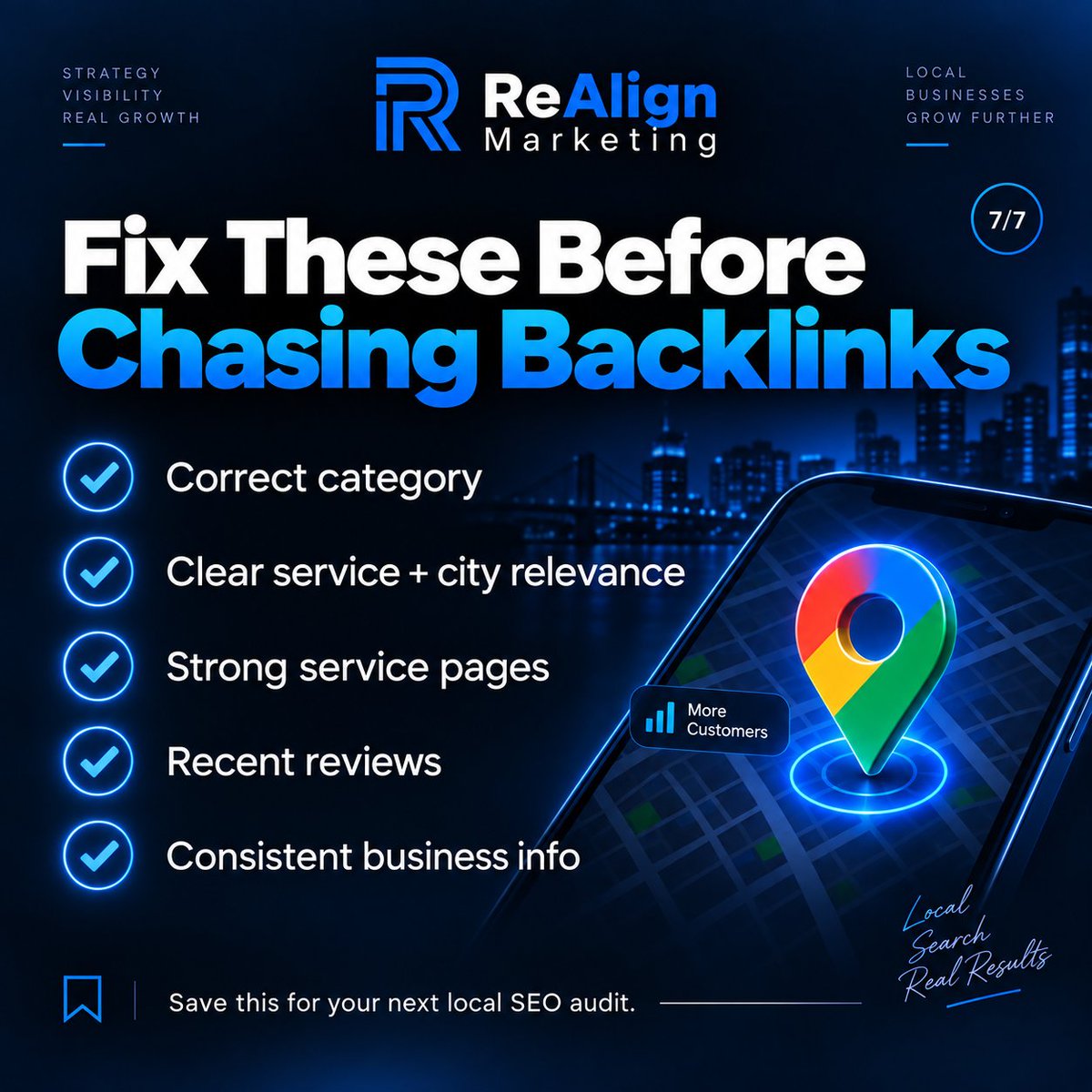
Before chasing backlinks, fix the fundamentals:
• correct category
• clear service + city relevance
• strong service pages
• recent reviews
• consistent business info
Local SEO gets a lot easier when the basics are clean.
If your business isn’t ranking in Google Maps, backlinks may not be the first problem.
There are 5 basic issues I’d check before doing anything advanced.
Thread 👇
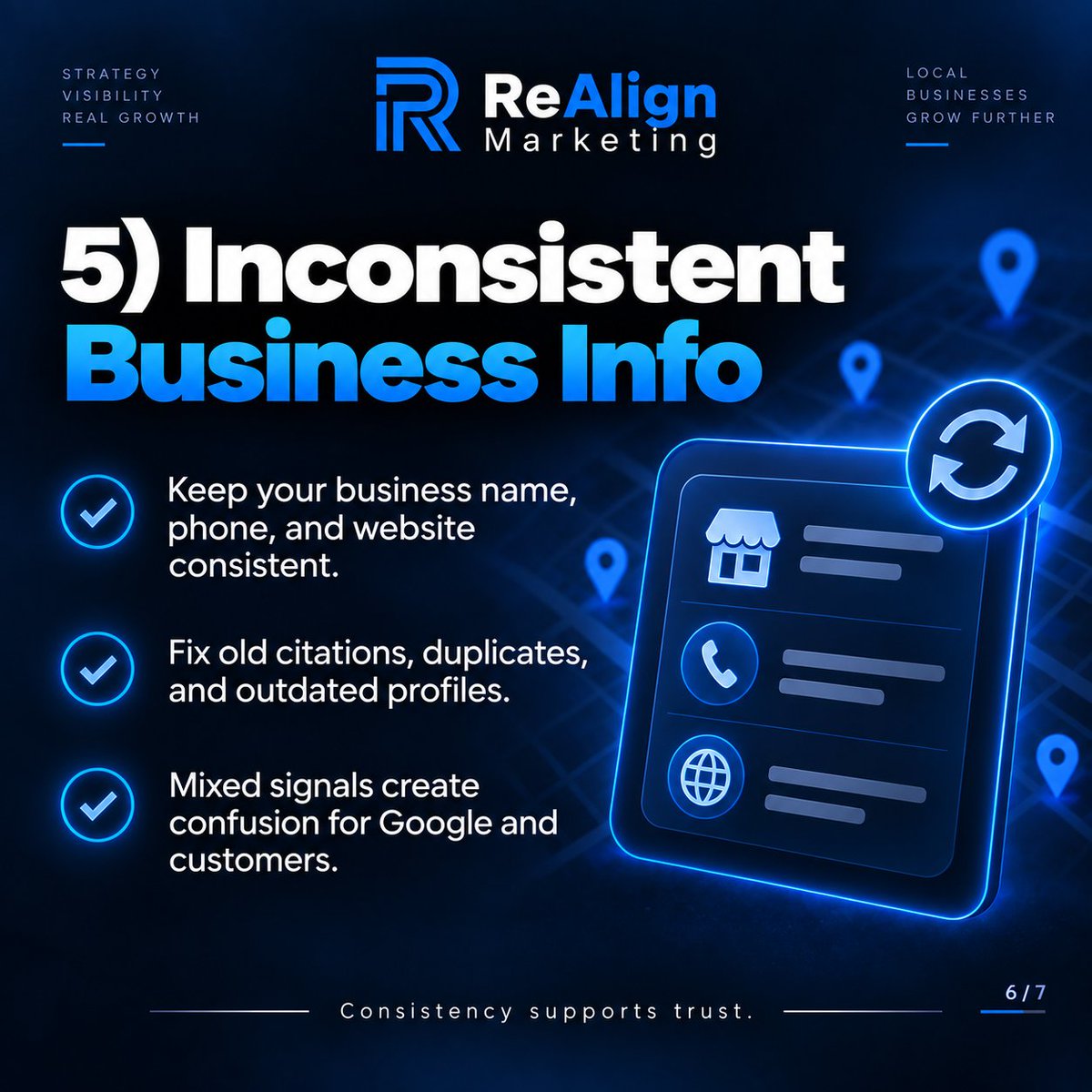
5/5 — Inconsistent business info
Old phone numbers, wrong addresses, outdated listings, and duplicate profiles create unnecessary confusion.
Keep your business name, phone, website, and location data consistent everywhere.
Internal links are not just navigation.
The words you use in the link give Google context about the destination page.
“Learn more” tells very little.
“Denver HVAC SEO services” tells quite a bit more.
Use descriptive anchors naturally.
SEO titles have two jobs:
Help Google understand the page.
Make a human want to click it.
“Home | Company Name” does neither.
A good title tells people exactly what they’ll find before they ever reach your site.
A local page can rank without mentioning the city 40 times.
Use the location where it actually helps:
title
H1
intro
service area
FAQs
supporting copy
Then write normally.
Relevance is not repetition.
Don’t hide your best pages 4 clicks deep.
If a service matters to your business, make it easy to reach from:
the homepage
navigation
related pages
relevant articles
Important pages should look important in your site structure.
A review saying:
“Great company!”
is nice.
A review saying:
“They replaced our furnace in Denver the same day”
contains far more context.
Never script reviews, but making it easy for customers to describe the actual service helps everyone.
Before creating new content, check Search Console.
You may already have pages sitting in positions 8–20.
Improving those pages can be far easier than starting from zero.
Sometimes the fastest SEO win is already indexed.
Your homepage does not need to rank for every service you offer.
That’s what service pages are for.
One page trying to target 20 services usually becomes vague.
Clear page purpose makes SEO easier for both Google and the visitor.
If you rank well but your phone never rings, inspect the SERP.
Your competitors may have:
better reviews
better photos
clearer offers
stronger titles
more trust
Ranking gets attention.
The listing still has to win the click.
A city page needs a reason to exist.
Good:
local services, neighborhoods, FAQs, examples, unique needs.
Bad:
same page copied 12 times with the city name swapped.
Google can tell the difference.
So can customers.
One underrated local SEO move:
Check your competitors’ H1s.
Not to copy them.
To see what Google is rewarding on page one.
You’ll quickly notice whether the SERP prefers service-first, city-first, or problem-first pages.
If your service area is huge, your relevance gets diluted fast.
“Serving all of Colorado” sounds impressive.
But a page built around one real market, one service, and one customer problem is usually much easier for Google to understand.
Google doesn’t rank “businesses.”
It ranks entities, pages, profiles, and signals that support each other.
That’s why your website, GBP, reviews, citations, and local content shouldn’t feel like separate projects.
They should tell the same story.