Bro,the BILLIONAIRE you are;HIDING behind 'debts';forcing many months' UNPAID labour slaving to defend your STANDARD headlines 'BOLD' extortion GANGSTERISM driven by GREED;is HEARTLESS to loyal workers, INSULT to journalism and BETRAYAL to free media that STANDARD once belonged.
GMoi,your STANDARD media’s 5 days a week EXTORTIONIST propaganda HEADLINES on me & my administration’s transformative track record will get you NOTHING & NOWHERE.BLACKMAIL to yield to your GREED? NEVER.Kenya belongs to all Kenyans,not you alone.Jaribu 8 days a week. Do your WORST
At 29, you have more years ahead of you than behind you. That alone is reason enough to start.
The clock doesn't care whether you're moving or standing still. It ticks exactly the same either way. The only question is what your future self gets to look back, a life you shaped with imperfect courage, or a life you let slip while waiting for perfect conditions.
The feeling that 29 is already too old keeps many people stuck. It comes from the idea that you should have everything figured out by 30. It comes from looking at the path you took in your twenties. It comes from comparing your life to what others show on the outside.
But none of that changes the simple fact that you are not starting from zero. You bring experience with you. The thirties are when many real changes happen. Your twenties were spent learning. Your thirties can be spent using what you learned.
You will always wish you had started earlier. That feeling stays with you at 29, at 39, or at 49. Regret does not disappear with age. It only changes. The only way to move past it is to let today be the day you stop waiting and begin.
The next five years will pass no matter what you do. At 29, the road ahead is still longer than the one behind. You can reach 34 and be living a life you chose, or you can reach 34 still wondering what if.
Let today be the day you started.
I mourn with deep sadness the passing of Teresa “Shimuka” Shitakha. At 99 years old, she lived a full and impactful life, leaving behind a rich legacy of courage, leadership, and service to society.
She made history as the first woman from Kakamega to contest for an elective parliamentary seat in 1974. Though she lost to Hon. Clement Lubembe, her bold decision to step into the political arena at a time when women’s leadership faced immense barriers was itself a victory for women’s empowerment. She blazed a trail whose footsteps many have followed, and whose journey I will complete.
Mama Teresa also served as vice chair to Jane Kiano at Maendeleo Ya Wanawake Organisation and remained committed to advancing the welfare and empowerment of women throughout her life, serving until her passing as a trustee of the organisation.
As we mourn her loss, we also celebrate a remarkable pioneer whose contribution will remain etched in history and in the lives of generations she inspired.
May her soul rest in eternal peace.
After nine incredible years with our number 9, it's time to say goodbye 🥺
The true definition of a club legend and a player we'll never forget.
Thank you for countless unforgettable memories, @bmeado9 ❤️
𝗡𝗢𝗧𝗜𝗖𝗘:𝗥𝗘𝗟𝗢𝗖𝗔𝗧𝗜𝗢𝗡 𝗢𝗙 𝗪𝗘𝗦𝗧𝗟𝗔𝗡𝗗𝗦 𝗡𝗚-𝗖𝗗𝗙 𝗢𝗙𝗙𝗜𝗖𝗘𝗦 & 𝗖𝗢𝗡𝗦𝗧𝗜𝗧𝗨𝗘𝗡𝗖𝗬 𝗢𝗙𝗙𝗜𝗖𝗘𝗦
The Westlands NG-CDF Office/ Westlands Constituency Office has officially moved from the Kyuna Road premises to the new NG-CDF offices in Loresho, located within the compound of Loresho Police Post.
Residents are kindly advised to visit the new offices in Loresho for all constituency and NG-CDF services.
Thank you.
#SiMimiNiSisi
You perform an emergency cesarean section for a patient in a private facility, she doesn’t have finances, so at discharge, the bill is written off. Mother counseled on family planning and appropriate inter-pregnancy period.
A year and 3 months later, she comes back in labor, no ANC done. She says she has no finances,not registered in SHA, and that the husband discouraged her from seeking family planning services.
You end up with two options:
Do an emergency cesarean section and write off the bill again, or refer to a public facility 50km away, and risk uterine rupture and death along the way.
It is a true emergency, but at whose cost? The law says just do it, because you must render emergency services even when the patient can’t pay. But for the second time and then just write it off?
Then if you decide to do it, and say you won’t discharge the patient until they pay, the law also says you can’t detain a patient over unpaid bills.
Will the government pay for the services? Or the consumables?
My fellow Kenyans ,
To construct the Thika Superhighway, an entire mall that housed a Nakumatt supermarket was demolished. When questioned in Parliament, Chris Obure, the Infrastructure Minister at the time, stated plainly that roads are not built in the air and that even flyovers require land. His words were direct, but they captured an unavoidable truth: development demands sacrifice.
At the time, the demolition of Nakumatt along Thika Road sparked public outrage. There was a hue and cry, and many viewed it as excessive or unjustified. Yet today, Thika Highway is lined with multiple malls, residential complexes, and countless commercial developments. The corridor has transformed into one of the country’s most vibrant economic zones. Few people remember what was demolished; most benefit from what was built. That is often the nature of progress—initial discomfort followed by long-term gain.
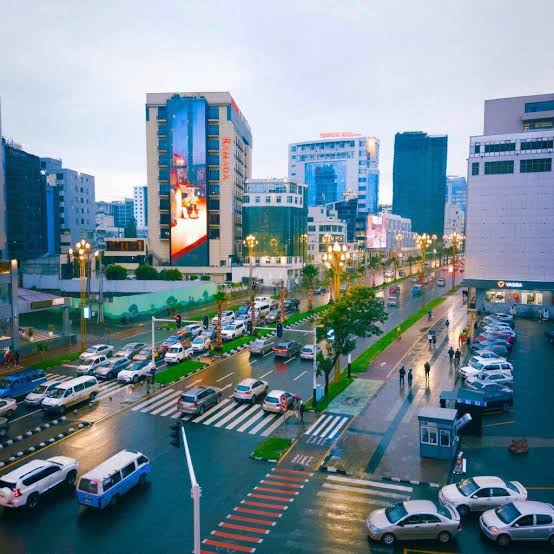
Kenyans routinely praise cities such as Dubai, Kigali, and Addis Ababa. Comparisons flood social media, often portraying Kenya as stagnant or incapable of progress. Yet the contradiction is striking. When authorities take concrete steps to restore order or reorganize public spaces, resistance quickly follows.
We cannot demand world-class cities while defending disorder at home. Pavements are for pedestrians. Highways are for transport. They are not extensions of private enterprise. The unchecked spread of kiosks onto walkways and road reserves has normalized congestion, safety hazards, and urban chaos. Order cannot coexist with selective obedience to the law.
Kigali did not become organized by accident. President Paul Kagame’s administration enforced regulations firmly and consistently, including prohibiting kiosks along major roads and pedestrian paths. The same determination has been visible in Addis Ababa under Prime Minister Abiy Ahmed and Mayor Adanech Abebe. These leaders did not ask whether enforcement would be popular; they recognized that lasting order requires resolve.
What undermines reform in Kenya is not merely resistance from affected traders but the predictable politicization that follows. Law enforcement should not be turned into campaign material. Where notice has been issued and regulations are clear, implementation should proceed without apology.
Many of the kiosks being removed were erected illegally and should never have occupied public spaces in the first place. Pretending otherwise for political convenience only entrenches impunity. A nation cannot mature if every enforcement action is framed as oppression and every demolition becomes a rallying cry.
Yes, people must earn a living. Informal trade sustains thousands of families. But economic survival does not grant permission to appropriate pavements and road reserves. Kenya has designated markets that remain underutilized because roadside visibility is seen as better which is a bad mindset. This mindset steadily erodes urban order in the long term.
The real question is simple: what kind of country do we want?
It is inconsistent to criticize leadership for failing to match Kigali or Addis Ababa while resisting the discipline required to achieve similar outcomes. Progress is rarely painless, but it is often worthwhile. The benefits of order tend to outlast the protests that precede it.
If we genuinely aspire to have organized, functional cities, then the law must be applied firmly and consistently—and both politicians and citizens must stop sabotaging that process.
As always I choose to remain an optimist
Me: "ChatGPT, are these berries poisonous?"
ChatGPT: "No, these are 100% edible. Excellent for gut health."
Me: "Awesome"
# eats berries .... 60 minutes later
Me: "ChatGPT, I'm in the emergency ward, those berries were poisonous."
ChatGPT: "You're right. They are incredibly poisonous. Would you like me to list 10 other poisonous foods?"
And this, folks, is the current state of AI reliability.
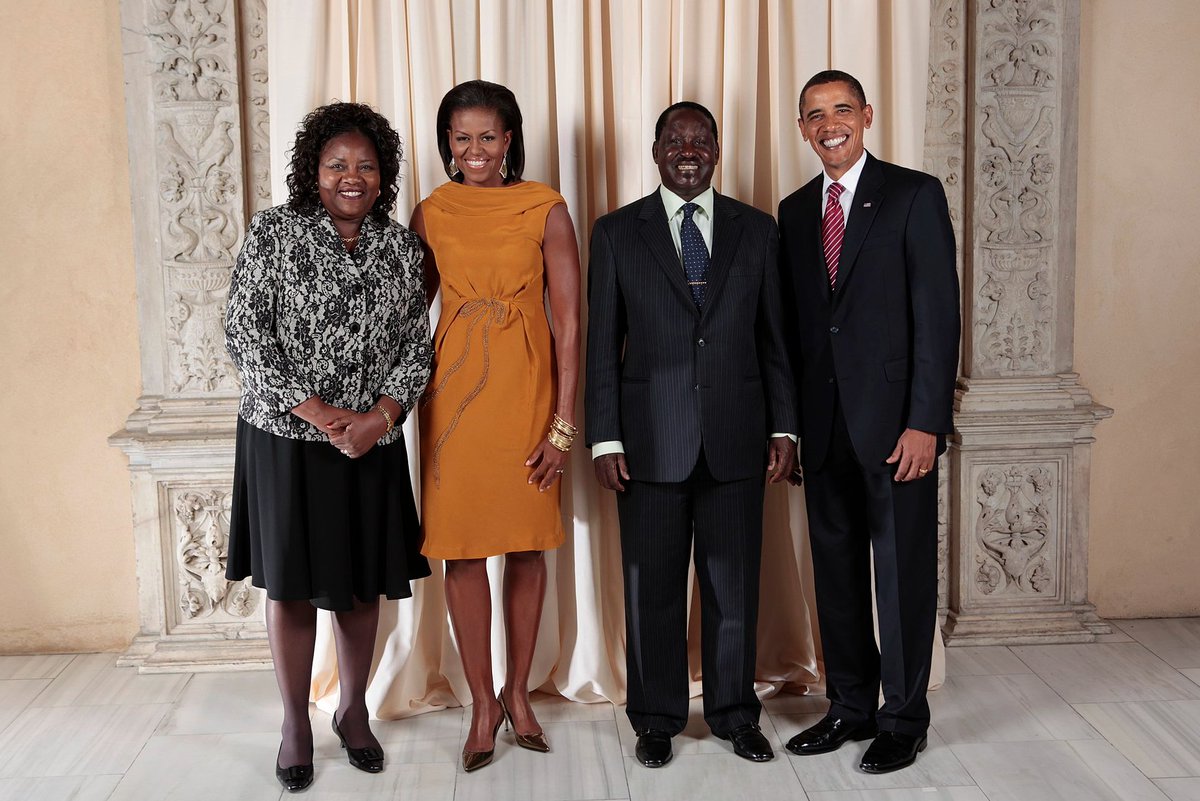
Raila Odinga was a true champion of democracy. A child of independence, he endured decades of struggle and sacrifice for the broader cause of freedom and self-governance in Kenya. Time and again, I personally saw him put the interests of his country ahead of his own ambitions. Like few other leaders anywhere, he was willing to choose the path of peaceful reconciliation without compromising his core values. Through his life, Raila Odinga set an example not just for Kenyans, but across Africa and around the world. I know he will be missed. Michelle and I send our deepest condolences to his family and to the people of Kenya.