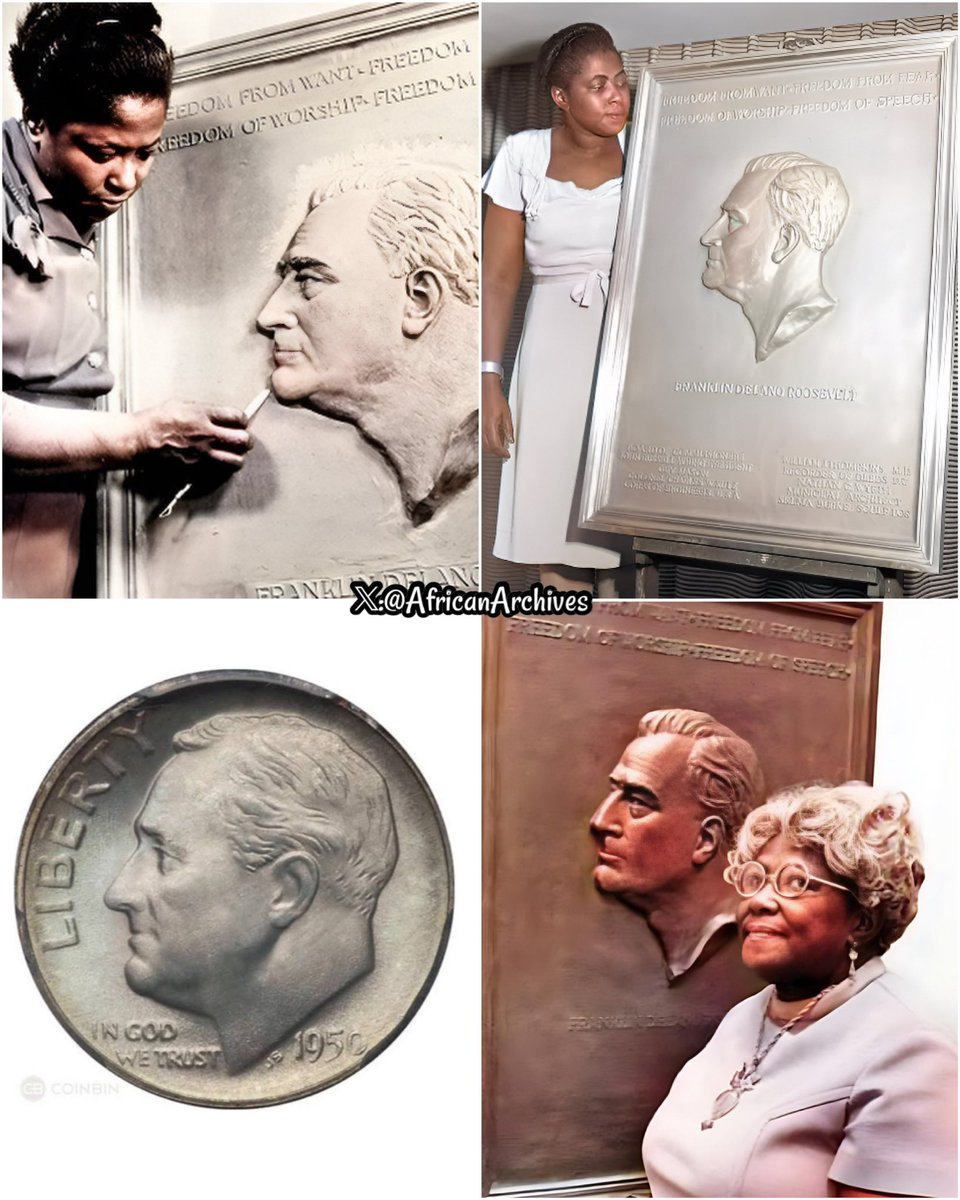
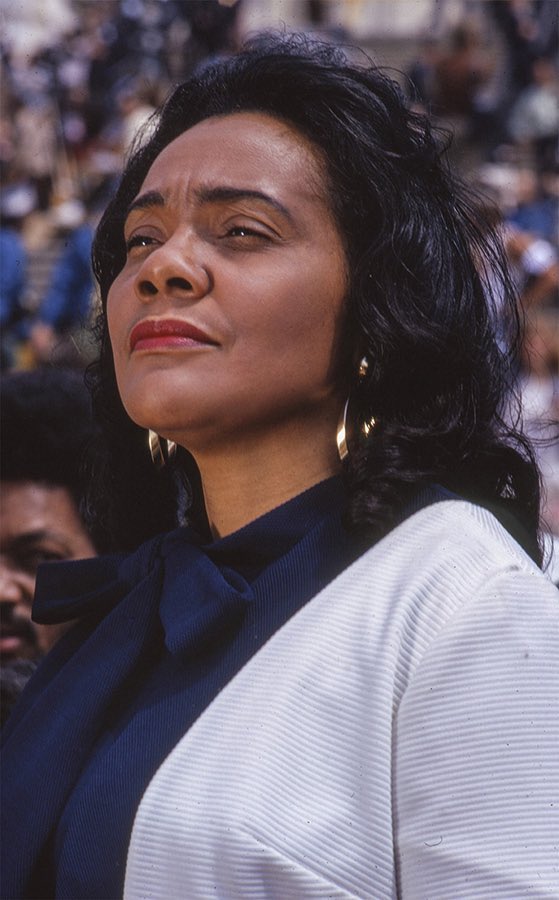
Selma Burke was a sculptor & member of the Harlem Renaissance movement, best known for her bas-relief portrait of President Franklin D. Roosevelt
She never received credit for her portrait of President Franklin D. Roosevelt which was later featured on the US dime.
—In 1943, Franklin D. Roosevelt sat for a portrait by a young African-American artist from Mooresville. That artist was Selma Burke.
However, John R. Sinnock’s signature is on the dime, and he receives credit for the work while Burke’s portrait, which she spent two years working on, is only recognized as an inspiration and model for the final image used on the coin. According to Lisa E. Farrington, author of “Creating Their Own Image, The History of African-American Women Artists,” Sinnock made “barely perceptible alterations.”
HONORS
As well as a sculptor, Burke was also a lifelong student and educator, winning numerous awards and fellowships. She earned her first degree from Winston-Salem State University in North Carolina and eventually graduated with a Master of Fine Arts from Columbia.
She started her first art school in 1940, eventually starting her second in 1946, and opened the Selma Burke Art Center in Pittsburgh, which operated from 1968 to 1981.
Burke is an honorary member of Delta Sigma Theta sorority. She received several honorary doctorate degrees during her lifetime, including one awarded by Livingston College in 1970 and one from Spelman College in 1988.
Milton Shapp, then-governor of Pennsylvania, declared July 29, 1975, Selma Burke Day in recognition of the artist's contributions to art and education. Her papers and archive are in the collection of Spelman College.
Burke was a member of the first group of women – along with Louise Nevelson, Alice Neel, Georgia O'Keefe, and Isabel Bishop – to receive lifetime achievement awards from the Women's Caucus for Art, in 1979. She received the award from President Jimmy Carter in a private ceremony in the Oval Office.
She received a Candace Award from the National Coalition of 100 Black Women in 1983 and the Pearl S. Buck Foundation Women's Award in 1987.
She died in 1995 at the age of 94.
🖊️As the only admin behind this page, I try to research to educate. If you appreciate this effort, you can support to help the page thrive on https://t.co/HHs3SgCItN. Your support is deeply appreciated! (Or just the ko-fi page for articles/posts roundup)
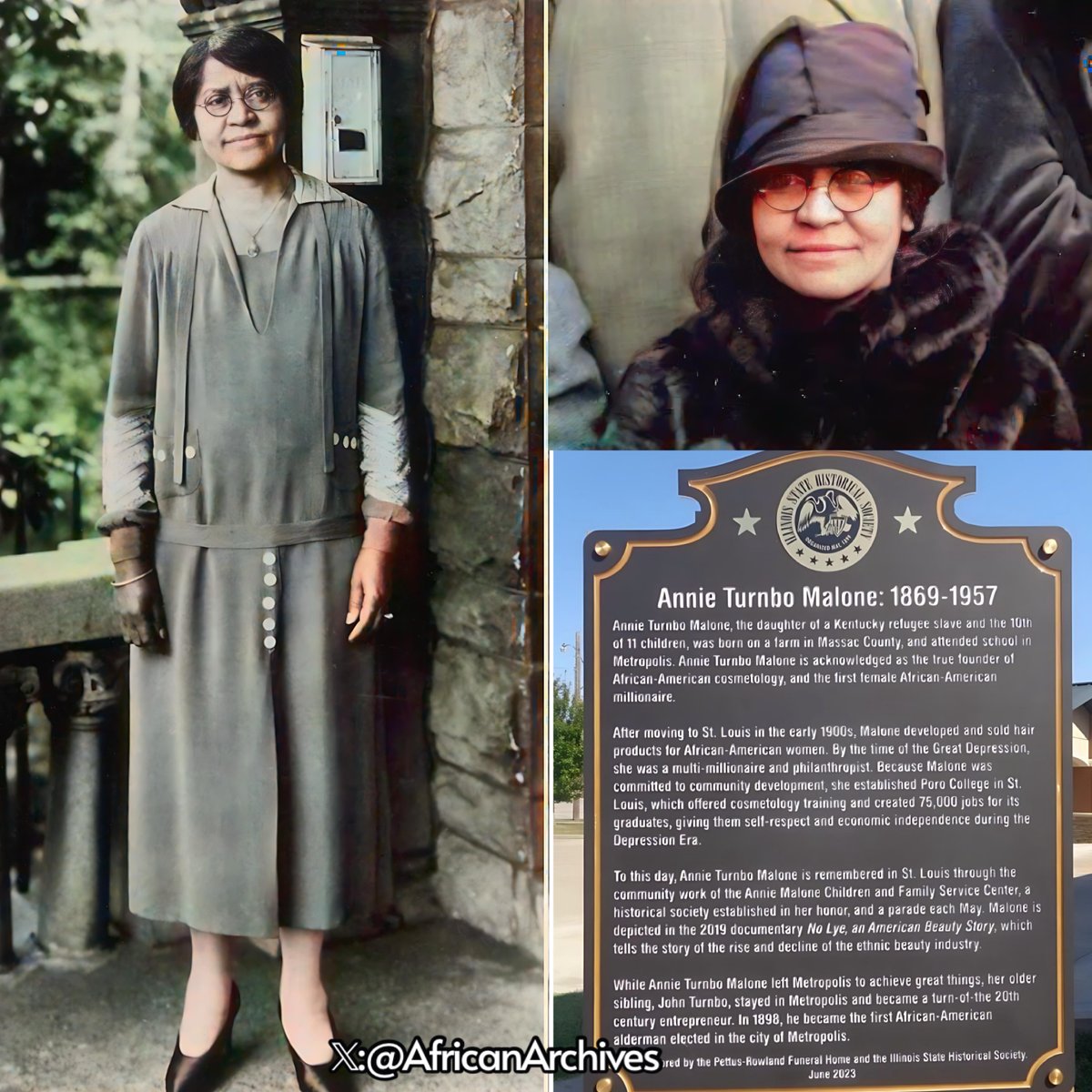
Annie Minerva Turnbo Malone was the first Black, female millionaire with a reported $14 million in assets, generated from her beauty and cosmetics company in 1920. She employed Madame C.J Walker! Annie Malone was a chemist entrepreneur, philanthropist, educator and lived up until the grand age of 87.
In the 1900s, Annie moved with her older siblings to Lovejoy, (now known as Brooklyn, Illinois.) While experimenting with hair and different hair-care products, she developed and manufactured her own line of non-damaging hair straighteners, special oils, and hair-stimulant products for black women. She named her new product “Wonderful Hair Grower”. To promote her new product, Turnbo sold the Wonderful Hair Grower door-to-door. Her products and sales began to revolutionize hair-care methods for all Black Americans.
In 1902, Turnbo moved to a thriving St. Louis, where she and three employees sold her hair-care products door-to-door. As part of her marketing, she gave away free treatments to attract more customers.
Due to the high demand for her product in St. Louis, she opened her first shop in 1902 at 2223 Market Street. She also launched a wide advertising campaign in the black press, held news conferences, toured many southern states, and recruited many women whom she trained to sell her products.
One of her selling agents, Sarah Breedlove Davis, later known as Madam C. J. Walker, operated first in St. Louis and later in Denver, Colorado, until a disagreement led Walker to leave the company. Walker allegedly took the original Poro formula and created her own brand of it (this is disputed). This development was one of the reasons which led then Turnbo to copyright her products under the name "Poro" because of what she called fraudulent imitations and to discourage counterfeit versions.
Poro may have received this name from a Mende word for devotional society or it may be a combination of the married names of Annie Pope and her sister Laura Roberts. Due to the growth in her business, in 1910 Turnbo moved to a larger facility on 3100 Pine Street.
n 1917, Malone opened the Poro College in St. Louis, the first institution devoted to the study and teaching of black cosmetology. The school had over 75,000 trained agents worldwide. Even Madam C.J. Walker once worked as one of Malone’s Poro agents.
By the 1920s, Malone was a multi-millionaire and deeply ingrained in philanthropy. She served on the board of the St. Louis Colored Orphan’s Home and financed two full-time scholarships for at each Historically Black College and University in the country. She also made a $25,000 donation to help build the St. Louis Colored YWCA.
Hey everyone! I have a Ko-fi page where you can support my page. If you appreciate my work, your support would mean the world to me. https://t.co/vf5SMSPu4z .Together, let’s keep these important stories alive. Thank you! 📚💫
35 years ago today, Janet Jackson released Rhythm Nation 1814.
•7 Top 5 hits on BB Hot 100.
•1st album to produce 4 #1 hits in 3 separate calendar years.
•Topped the BB 200 for 4 weeks.
•Sold 12M+ copies WW.
•Added to the National Recording Registry.
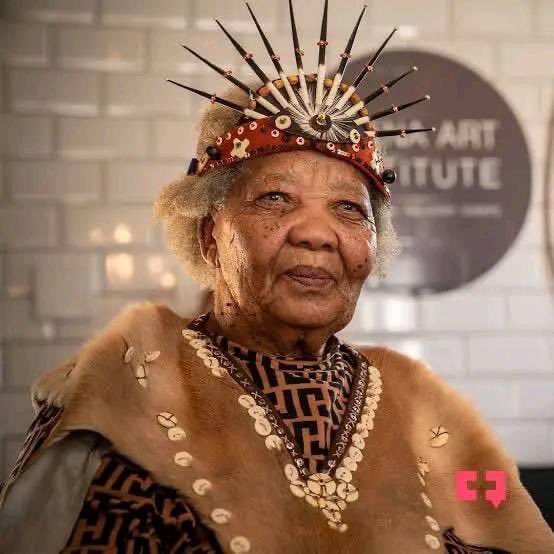
Can you imagine being the only one to speak an ancient language?
Xuu Katrina Esau, is the last South African who speaks the ancient Khoisan San language N|uu, which is thought to be over 25 000 years old.
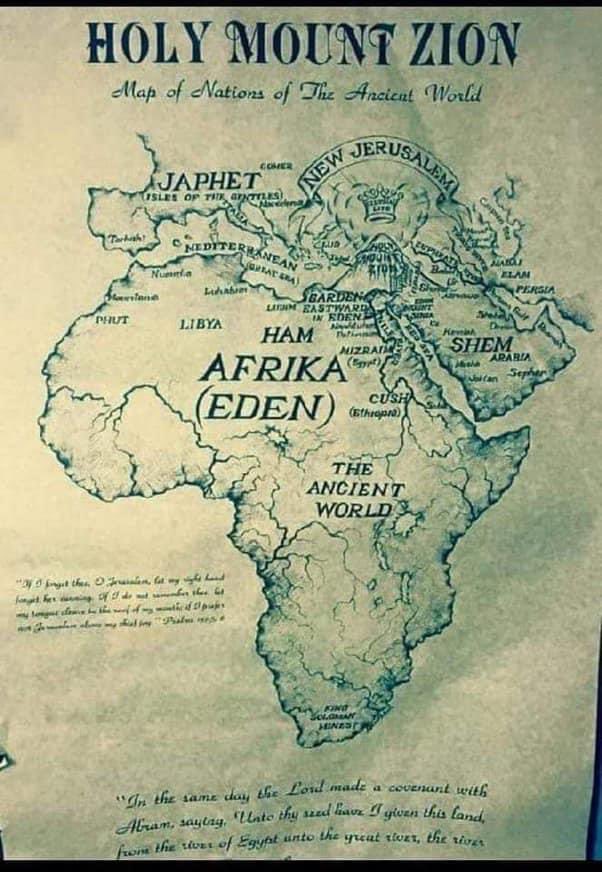
Please who can help me with the source for this map. I really need more details about it.
The map right here depicts Africa has Eden and also the Ancient World. Anyone with more details?
YOU WILL NEVER LEARN THAT IN SCHOOL!!!
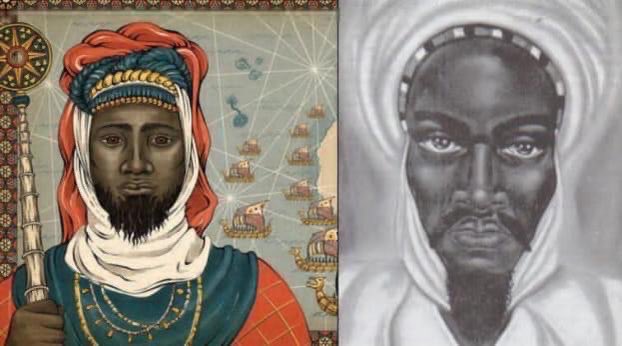
ABUBAKAR KEITA II
Sultan Abubakr Keita II of the Mali Empire, the predecessor of Mansa Musa, sailed to America 180 years before Christopher Columbus.
The court tradition of Mali and documents in Cairo tell of an African king, Mansa Abubakr (Abubakar) Keita II, setting out on the Atlantic in 1311.
He commandereed a fleet of large ships, well stocked with food, gold and water and embarked from the Senegambia coast, the Western borders of this west African empire, entering the Canaries current 'a river in the middle of the sea' ... as the captain of a preceding fleet (of which only one ship returned), described it.
Neither of the two Mandingo fleets came back to Mali to tell their story, but around this same time evidence of contact between West Africans and Mexicans appears in strata in America in an overwhelming combination of artifacts and cultural parallels.
A black haired, black bearded figure in white robes, one of the representations of Quetzalcoatl, modeled on a dark-skinned outsider, appears in paintings in the valley of Mexico while the Aztecs began to worship a Negroid figure mistaken for their god Tezcatlipoca because he had the right ceremonial color.
#Africa
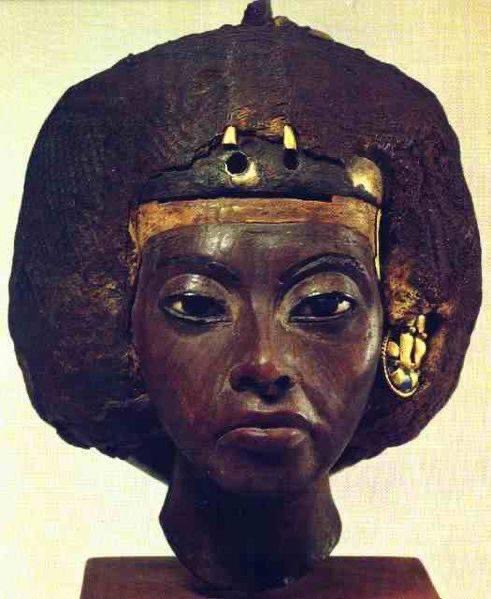
QUEEN TIYE
___
Queen Tiye was the Great Royal Wife of Amenhotep III, mother of Amenhotep IV (later known as Akenhaton), and mother-in-law of Nefertiti. Highly prestigious during the reign of both her husband and son, she exerted her influence as queen consort and queen mother of Kemet (Today Egypt) over a fifty-year period.
In addition, she shaped Kemet fashion and altered the prevailing view regarding royal women. Married at an early age, her husband fiercely admired her and displayed his love lavishly by building temples and massive statues where she sits by him as an equal, a feat unparalleled in that time; dedicated a number of shrines to her; and even created a monumental artificial lake for her.
She was glorified by her husband as "... The most praised, the lady of grace, sweet in her love, who fills the palace with her beauty, the Regent of the North and South, the Great Wife of the King, the lady of both lands..." Wielding her power and taking charge at this juncture in the nation's history, she used her political influence and astute decisions to maintain Egypt's authority.
She averted key national crises by becoming Secretary of State when her husband's physical and mental powers deteriorated with age; and redirected political decisions to her attention when her son Akenhaton neglected his political duties while preoccupied with his religious innovation (named the Heretic King, Akenhaton was the first ruler in recorded history to believe in monotheism).
#Africa