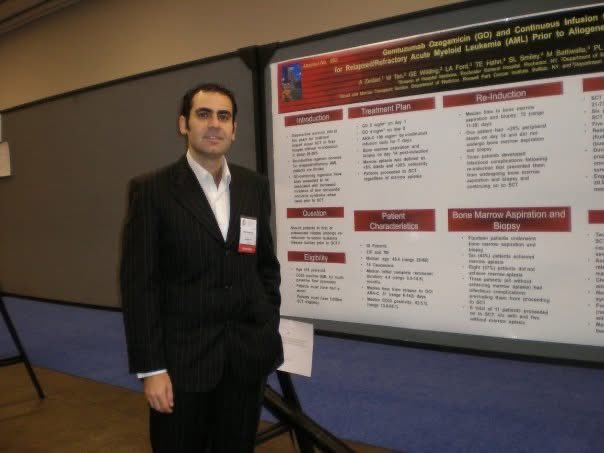
Concluding another amazing #ASH2025@ASH_hematology meeting. The picture is me attending my first ASH meeting with my first poster in San Francisco in 2008 and I have been to every single ASH meeting since then. When was your first ASH?
@McDonalds_SA@McDonalds Please don’t forget the anniversary of the first McDonalds to open in Jhb, South Africa 30 years ago! 11.11.1995! I’m ready to celebrate.
@McDonalds_SA@McDonalds Hey McD! Don’t forget the anniversary of the first McD opening in South Africa on 11.11.1995… it’s only been 30 years! PS: I can help celebrate next week Tues https://t.co/b3SIrwBEYG
Big news from @JTHjournal: a NEW Educational Review Series designed to break down the fundamentals of key topics in thrombosis & hemostasis!🔬
These reviews are must-read resources for clinicians, researchers & healthcare professionals. Learn more here: https://t.co/DccOSZ5cvN
my prediction is that the alcohol-driven culture of nightlife is going to go though a huge upending
Now is a good time to open that late night decaf tea house, evening bathhouse, game board parlor, or cozy cafe that closes at 2am
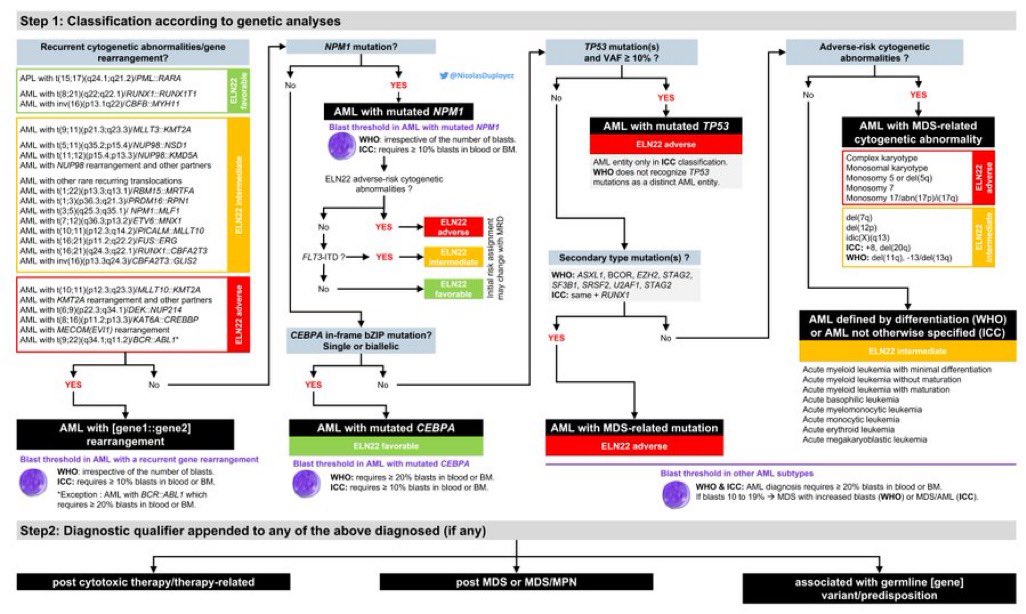
“🩸 Comprehensive Algorithm for AML Classification (WHO & ICC Guidelines) 🔬💉
Step 1: Classification Based on Genetic Analysis
1️⃣ Recurrent Cytogenetic Abnormalities/Gene Rearrangements
•💡 Key Features:
•AML subtypes with specific translocations or inversions, classified regardless of blast percentage.
•🚩 Blast threshold not required for these subtypes under WHO and ICC.
•🧬 Examples:
•APL with t(15;17)/PML-RARA → Treat with ATRA/arsenic.
•AML with t(8;21)/RUNX1-RUNX1T1 → Favors favorable risk (ELN).
•AML with inv(16)/CBFB-MYH11 → Core-binding factor AML, often favorable risk.
•Clinical Notes:
•Always confirm rearrangements with FISH or PCR.
•Monitor for co-existing mutations impacting prognosis.
2️⃣ NPM1 Mutation
•🧬 Mutation in NPM1 Gene → Most common in de novo AML.
•If NPM1 mutation present:
•Classified as AML with mutated NPM1, irrespective of blast percentage.
•🔍 Risk Stratification (ELN 2022):
•🟥 Adverse Risk: Co-occurrence with FLT3-ITD (high allelic burden) or adverse cytogenetics.
•🟨 Intermediate Risk: FLT3-ITD with low allelic burden.
•🟩 Favorable Risk: No FLT3-ITD or adverse cytogenetics.
•Clinical Notes:
•Check FLT3 mutation and allelic ratio.
•Favorable-risk cases have higher cure rates with chemotherapy alone.
3️⃣ TP53 Mutation
•🔬 Mutation in TP53 Gene (VAF ≥10%):
•Classified as AML with mutated TP53.
•🚩 ELN Risk: Always adverse.
•WHO recognizes TP53 mutations only with cytogenetic abnormalities (e.g., complex karyotype).
•Clinical Notes:
•Poor prognosis; consider clinical trials or novel agents (e.g., APR-246).
•Monitor for additional mutations that may alter treatment strategies.
4️⃣ CEBPA Mutation
•🧬 In-Frame bZIP Mutations of CEBPA Gene:
•Single Mutation → Not classified as CEBPA-mutated AML.
•Biallelic Mutation → Classified as AML with mutated CEBPA (ELN 2022: favorable risk).
•Clinical Notes:
•Often associated with younger patients and better outcomes.
•Ensure comprehensive genetic analysis to confirm biallelic status.
5️⃣ MDS-Related Mutations
•🧬 Mutations in secondary-type genes (e.g., ASXL1, RUNX1, SRSF2, EZH2):
•Classified as AML with MDS-related mutations.
•🚩 ELN Risk: Always adverse.
•Clinical Notes:
•Commonly seen in older patients or secondary AML.
•Higher resistance to standard chemotherapy; consider hypomethylating agents or venetoclax-based regimens.
6️⃣ MDS-Related Cytogenetic Abnormalities
•🧬 Examples:
•Complex karyotype (≥3 unrelated abnormalities).
•Monosomy 7, del(5q), or isochromosome 17q.
•🚩 ELN Risk: Always adverse.
•Clinical Notes:
•Associated with poor prognosis; consider transplantation if remission is achieved.
•Use supportive care (e.g., transfusions, growth factors) while preparing for intensive therapy.
7️⃣ AML Defined by Differentiation (WHO)
•Subtypes:
•AML with minimal differentiation.
•Acute monoblastic/monocytic leukemia.
•Acute erythroid leukemia.
•Acute megakaryoblastic leukemia.
•🚦 ELN Risk: Usually intermediate unless genetic abnormalities are present.
•Clinical Notes:
•Ensure flow cytometry and IHC to identify lineage.
•Consider differentiation markers (e.g., CD13, CD33, MPO).
Step 2: Diagnostic Qualifiers
•Append these qualifiers to any diagnosis when relevant:
•🔬 Post-Cytotoxic Therapy or Radiation-Related AML: Secondary to prior treatment.
•🧬 Post-MDS or MDS/MPN: AML evolving from prior myelodysplastic syndrome or myeloproliferative neoplasm.
•Associated with Germline Predisposition: e.g., germline RUNX1, CEBPA, or DDX41 mutations.
Blast Thresholds for Diagnosis
•WHO: Requires ≥20% blasts in blood or bone marrow for AML diagnosis, except for cases with recurrent cytogenetic abnormalities.
•ICC: Allows 10–19% blasts for MDS/AML classification in certain settings (e.g., MDS with excess blasts progressing to AML
#AML #WHOClassification #ICCClassification #ELN22
Our work is about research, care, but also compassion and empathy!
«Delivering bad news in clinical hematology: a personal perspective» published in Clin Hematol Int, the official peer-reviewed academic open-access journal of @TheIACH https://t.co/xP7lIYJB8g