SURPRISE! Breeding is coming Update 15! 🥚🦖
Tune into this month's Dev Diary to learn more about fertility, courtship and the nesting system coming to Prehistoric Kingdom in August.
➡️Latest Dev Diary: https://t.co/uRaQtxegnL
📝Patreon: https://t.co/Em5znwC3g4
୨୧ SHORT GIVEAWAY ୨୧
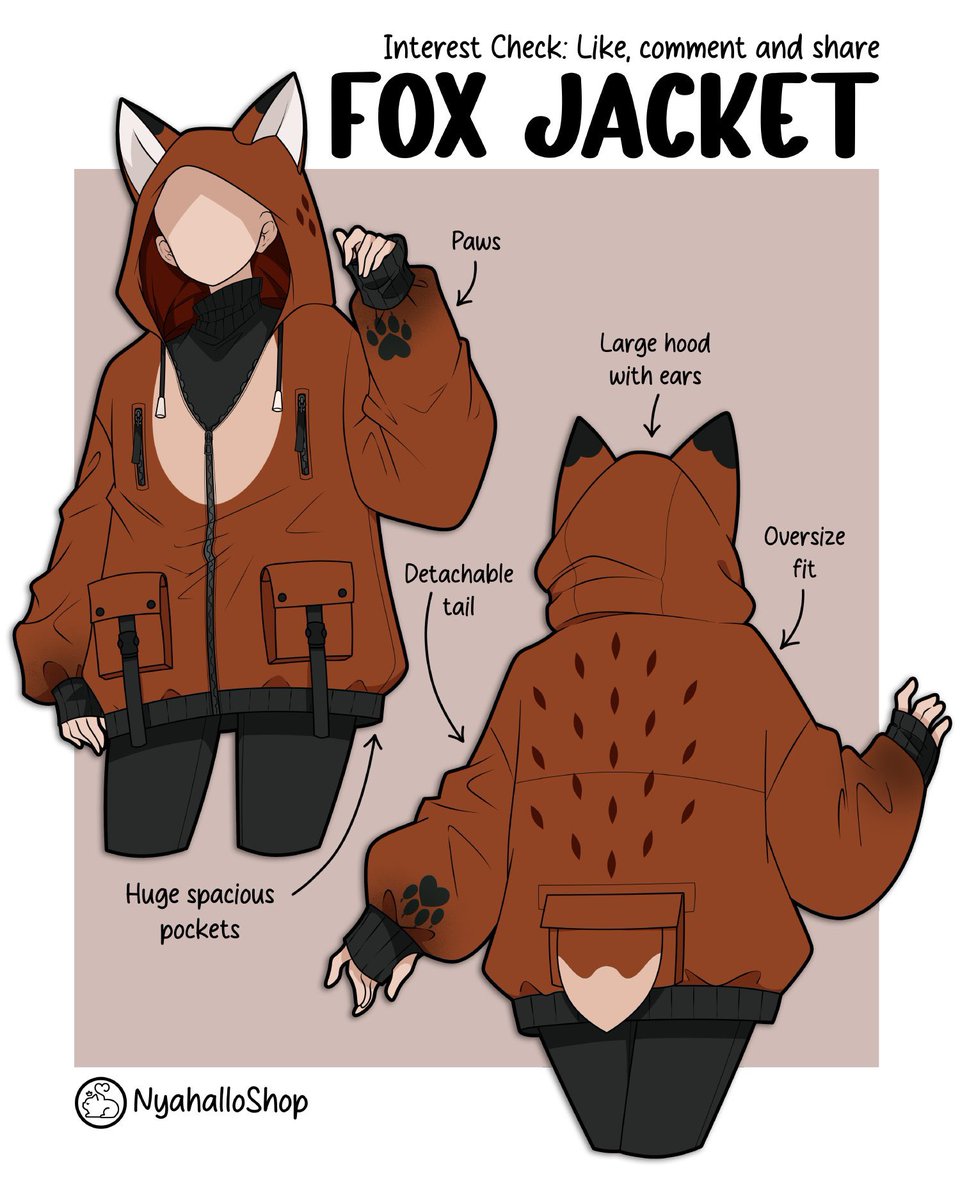
Giving away 2 $50USD gift cards to my main shop @NyahalloShop
── Follow me and repost
── Comment NYA NYA
Ends Feb 14th 11:59PM EST
Hi hello here’s your annual reminder that “Adopt Don’t Shop” started as a campaign against puppy mills.
“Shop” meaning buying dogs from literal pet stores and websites. Not reputable breeders.
⟡ BIG GIVEAWAY ⟡
Giving away 2 preorders of each jacket, for a total of 4 jackets. A ✨$600USD+✨ value!!!
Follow me and repost
Comment which jacket you’d like to win
That’s it! 🦊 ALL ARE WELCOME 🦈
Ends Jan 30 11:59PM EST
EARLY BLACK CAT FRIDAY GIVEAWAY 🎊
To celebrate the most successful quarter ever so far in my small business, I am hosting another giveaway 🥹
🛍️WIN A $250USD GIFT CARD TO MY SHOP🛍️
RT & FOLLOW🫂
LIKES ARE APPRECIATED🫶
OPEN INTERNATIONALLY📷
ENDS DEC 1 11:59PM EST ❄️
Unfortunately, the fitness girlies were right, yet again. Walking really is that babe. Stressed? Take a brisk walk. Overthinking? Take a slow walk. Too full? Take a walk. Wanna cry? Take a walk. Need to blow off some steam? Take a long walk.
With ±95 million eligible presidential candidates in the US (naturally born citizens over the age of 35), it's astonishing that the DNC and RNC have narrowed it down to Trump and Biden again.
This isn't the best America has to offer. It's not even close.
We are GIVING AWAY a LAMB PC with @aftershockpcAU !
✨️✨️✨️✨️
As a thank you to all the new Cult followers even if we're concerned about what you'll do with it if you win.🫡
❤️Like 🔁 Retweet 👤 Be Following us for a chance to win!
dormant interests are literally so real. every single time i get into a new thing the 10 year old me in my brain awakens without fail and whispers ”but what if... they were warrior cats instead”
Would killing wolves save deer fawns? The group that put up this billboard just south of our area stated the intent of the billboard was to support wolf management and wolf hunting, presumably to save deer fawns from being devoured by wolves.
The general idea—wolves kill fawns ergo by killing wolves we save fawns—put forth by this group is, at its essence, a scientific statement that can be examined objectively. And that is our intent in this post. Does the evidence indicate that hunting wolves would increase deer fawn survival in any significant way?
And for today, lets forget about the ">54,000 fawns" estimate. We will examine that estimate in another post soon. The number of fawns killed by wolves each year is actually quite irrelevant to this discussion. The real metric of interest here should be fawn survival (the percent of fawns that survive until a certain point in time).
The evidence indicates that killing wolves will almost certainly have no impact on the number of surviving deer fawns. Fawns die from multiple causes and the causes of mortality can compensate for one another.
Increased mortality due to one source often means less mortality from a different source and–very importantly here–overall fawn survival can remain unchanged. This process is referred to as “compensation” or “compensatory mortality" by biologists.
Put another way, if wolves and hunters don’t get them, then coyotes and bears will, and the same number of fawns will survive either way. There is appealing and persistent thinking that because wolves and other predators kill fawns, fewer wolves/predators will therefore increase fawn survival. Such reasoning is as faulty as it is appealing.
Studies of fawn survival illustrate this well:
Two studies in wolf range in Minnesota found that 47-49% of fawns survive past the first 3-4 months of life, when fawns are particularly vulnerable. In wolf range in northern Wisconsin and the Upper Peninsula of Michigan, fawn survival was 45% and 49%, respectively
Now those numbers from wolf range might seem low but context is crucial here. The reality is that most deer fawns are born to die—whether there are wolves or not.
A study in 2018 examined/synthesized all fawn survival studies in North America and determined that fawn survival in forested ecosystems averages 41%—a survival rate less than that found in wolf range.
In fact, the lowest fawn survival rates were in the southwestern US. Consistent with this trend was a study published just a few weeks ago from Northern Georgia where only 16% of fawns survived their first 12 weeks of life.
And a study published in 2020 found that in a predator-free area of Delaware—i.e., an area with NO wolves, NO coyotes, NO bears, NO bobcats— only 44% of fawns survived their first 3 months of life.
And importantly, in every study of fawn survival in wolf range that we are aware of, wolves killed a smaller percentage of fawns than other predators in all of these studies but 1. And in that one study wolves and bears killed a similar percent of fawns.
The point is that if we reduced wolf populations, fawn survival would almost certainly remain unchanged. Part of this is because coyotes and bears are primarily responsible for fawn deaths in wolf range, not wolves.
Now, some might struggle to understand how this is possible given the “overpopulation” of wolves. Well, it is really quite simple to a degree: coyotes and bears can occur at much higher densities than wolves do.
Translation: even if an individual coyote or bear kills less fawns than an individual wolf, there are still many more coyotes and bears around so cumulatively coyotes and bears kill a larger percent of fawns than wolves.
For instance, coyotes in wolf range can exist at densities 10 times that of wolves. Lets say the typical coyote kills 1 fawn a year and the typical wolf kills 5 (we are not saying this is actually how many they kill…these numbers are simply to illustrate our point.)
In this scenario, the coyote population kills twice as many fawns as the wolf population even though each individual coyote only kills 20% the number of fawns an individual wolf does.
And take a guess at what predator will most likely fill the ecological void left if we start substantially reducing wolf populations? You guessed it: coyotes. So by reducing one predator, we very likely increase the densities of another…and predation on fawns remains the same.
Ok, we will stop there for today before this post gets way too long. There are other aspects of this billboard that we are looking forward to examining in the coming days.
But, our conclusion is that there is very little objective, scientific information to indicate that killing wolves via a wolf hunt will have any impact on fawn survival. In fact, all the evidence we are aware of clearly indicates killing wolves will do nothing.
Sources referenced:
Carstensen et al. 2009. Survival, birth characteristics, and cause specific mortality of white-tailed deer neonates. Journal of Wildlife Management.
Kunkel and Mech. 1994. Wolf and bear predation on white-tailed deer fawns in northeastern Minnesota. Canadian Journal of Zoology.
Warbington et al. 2017. Cause-specific neonatal mortality of white-dailed deer in Wisconsin, USA. Journal of Wildlife Management.
Kautz et al. 2022. Compensatory human and predator risk trade-offs in neonatal white-tailed deer. Global Ecology and Conservation.
Dion et al. 2020. White-tailed deer neonate survival in the absence of predators. Ecosphere.
Gingery et al. 2018. Landscape-level patterns of fawn survival across North America. Journal of Wildlife Management.
Edge et al. 2023. White-tailed deer fawn survival and the influence of landscape characteristics on fawn predation risk in the Southern Appalachian Mountains, USA. PLoS One.
you're worthy of being loved no matter if
- you need to heal before you can truly engage physically with someone
- your upbringing has traumatized you
- you got lost somewhere on the way and fell with the wrong crowd
- you eat shoes for breakfast
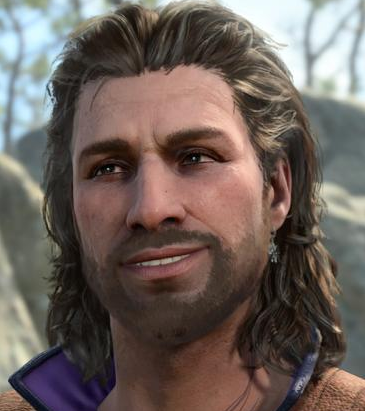
#BaldursGate3