The fact that America has such ready access to wild land and outdoor sports that we can sustain giant, affordable chain stores centered around hunting and fishing—pursuits that remain quarantined to the rich in much of the rest of the world—is a great national achievement.
I really wish economists could have predicted this about tariffs before they were enacted. It really could have saved a lot of trouble if we had been able to warn Trump about them.
A rice that prevents childhood blindness has been ready since the mid-2000s. It grows nowhere.
Vitamin A deficiency blinds up to 500,000 children a year. Half die within twelve months. To help, scientists added beta-carotene, the pigment that turns carrots orange, to rice. It cooks and tastes the same, though the grain is yellow. They called it Golden Rice and licensed it free to any farmer earning under $10,000.
Greenpeace spent twenty years fighting it country by country. Activists destroyed test fields. Lawyers got approvals revoked. A hundred Nobel laureates asked them to stop. They did not stop.
I spent weeks calculating what the delay cost. My estimate is 110,000 dead children. Roughly 15 a day, every day, for two decades.
The same technology did reach American grocery stores. It makes a pink pineapple that sells for up to $50.
The pineapple has a corporation rolling out a new fruit, with the profit margins to take on critics and market the science. Golden Rice had no profit margin to defend itself.
“tariffs on steel and aluminum have hit the company particularly hard, fueling its $82 million first-quarter loss. Steel makes up around half of washers’ content, rendering US producers of these and other large appliances highly exposed to the high prices”
John Adams was a lawyer. He defended the British soldiers after the Boston Massacre but was clearly aligned with the Patriot cause. In 1776, he firmly believed that Independence was the only solution and was one of the drafters of that declaration. He signed his name to the Declaration of Independence. He went to Europe to get an alliance from the French and money from the Dutch. He returned, helped Massachusetts with their Constitution, became Vice President, and then President. He died July 4th, 1826, 50 years after Independence.
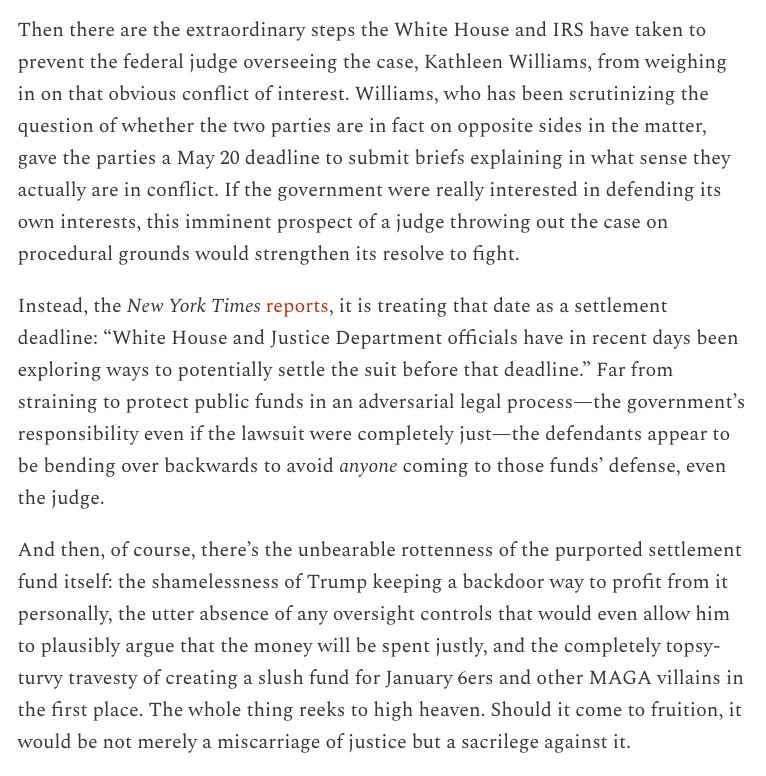
Read @EggerDC on the utter foulness of the Trump IRS settlement fund. Truly the type of rank corruption we have not really witnessed before. Plundering at its finest
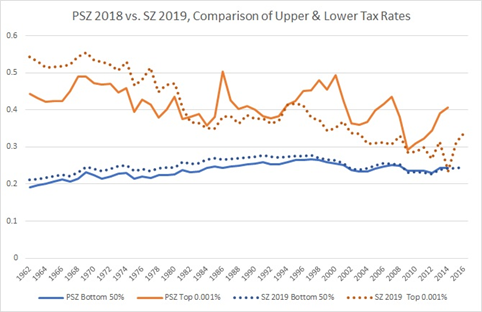
The published academic work of Piketty, Saez, and Zucman (QJE in 2018) contradicts the trends shown in the NY Times chart. Oddly enough, the NY Times chart comes from Saez and Zucman, but not from their published academic work!
(chart by @PhilWMagness)
lol let me rephrase this: once he gave up some of the big fantasy projects he ran on and he was bailed out by the state of NY and postponed pension contributions, he brought the deficit to zero.
“Tell him to enter the password he knows is correct. Inform him it is incorrect. Invite him to reset it. Watch as he enters the password he believed it to be all along. Then tell him he cannot use it… because it is his current password.”
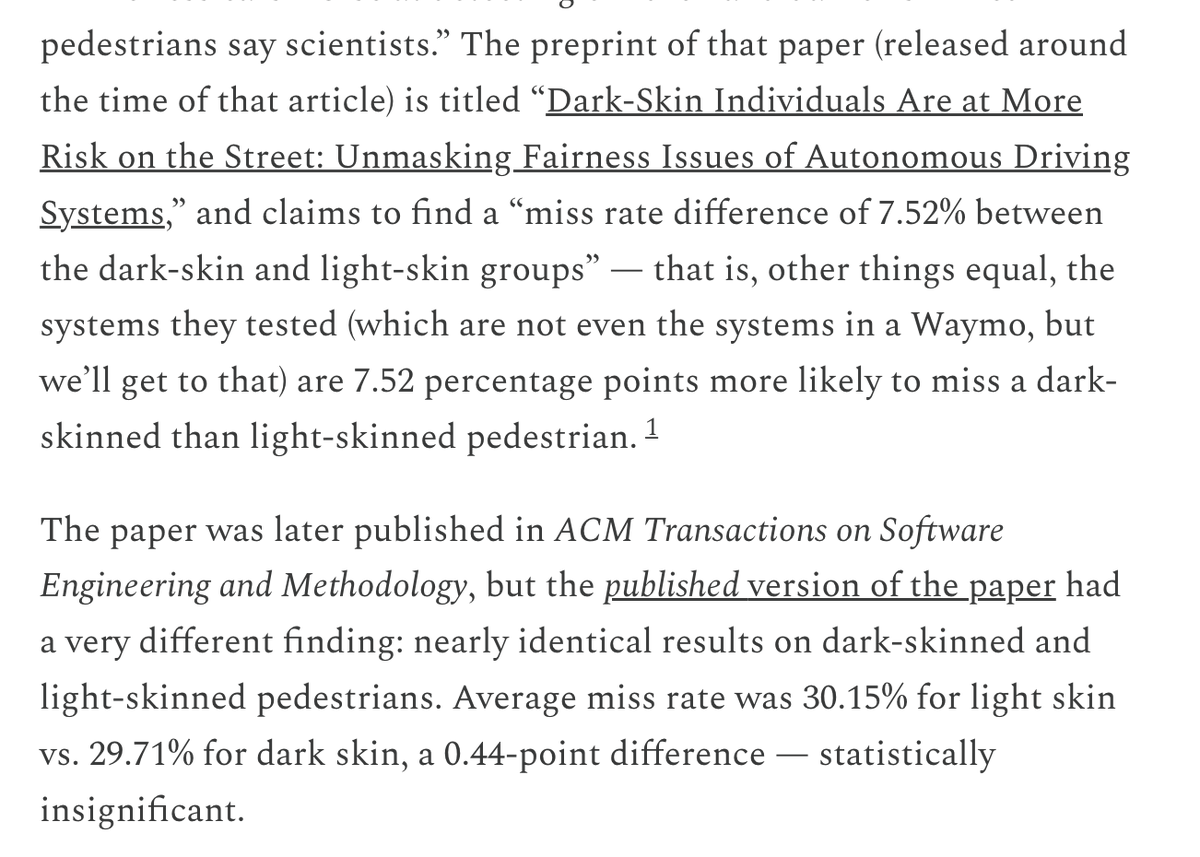
Are autonomous vehicles (self-driving cars) “less able to detect people of color”? That’s what I read in The Atlantic this weekend, in Xochitl Gonzalez’s “People Who Don’t Like People Are Making All of Our Decisions.”
It appears to be entirely false.
New pod: THE SMARTEST CASE AGAINST THE AI JOBS APOCALYPSE
AI is the first technology that seems to automate the same cognitive sectors that absorbed work during previous waves of automation. For that reason, many people worry that it will destroy tens of millions of jobs imminently.
But after I review the evidence showing that AI is not clearly destroying work today—and might even be stimulating demand for certain tech jobs— I brought on the great @alexolegimas to talk about the best reasons to doubt the doomsday narrative.
We talk about all sorts of economic principles—lump of labor fallacy, income elasticity, Jevon's Paradox—but maybe his most interesting point is about the nature of desire and status.
Desire is insatiable, and technology will never solve for status. Even in a world where AI can automate many tasks, status might go up rather than down or flat. And status motivates a lot of economic activity. So even in a world where AGI is very good at 99% of existing tasks is still a world where people will want to send their money to things that are perceived as "scarce" and "status-enhancing." You can create a lot of jobs on this basis alone.
You could argue that this is how economic transformations have always worked. Our economy is a rough register of human desires. And in a world where artificial intelligence automates some tasks, it might not destroy work so much as it moves dollars and labor toward new desires in new sectors of the economy. The pet care economy wasn't really a thing in 1800. Now it's a >$100 billion business, made possible by the fact that a richer country moved dollars and workers from corn farms to bespoke poodle manicure spas.
It is easy to imagine that AI could automate many tasks and even some jobs. What's harder to imagine is that we'll be permanently stuck in an disequilibrium where people with disposable income aren't trying to satisfy their desires and burnish their status. And in a world where AI is abundant, the question we should be asking about the future of work is: What will be scarce? What will be kind of jobs will be produced as desire and status shift, once again?
https://t.co/UFBRn4sELO