They know Tshisekedi's properties in Belgium are being investigated for money laundering, they know Belgium authorities have been investigating that case for a while, yet, they have chosen to play numb and indifferent.
Imagine, in the event it was about anybody in the leadership of Rwanda, Internet would have been blown with sensational headlines and incessant smears on our Head of State and his immediate family members.
Thus, dear anti-Rwanda reactionaries, just know that clucks of a hen do not scare away the soaring ego. You have entirely been exposed and stripped naked, your so called campaigns are not for truth, democracy or anything good for that matter, it is about sustaining IMPERIALISM, and it will not work anymore.
We are not the idiots you dealt with five decades ago.
@michelawrong@JudiRever@soniarolley@Smith_JeffreyT@geoffreyyork@freyntje
Just another day, another bribe. The Congolese president’s mafia circle has allegedly bribed Trump’s supporters with interests in DR Congo mining.
In the meantime, the same corruptocratic regime is also under fire after Belgian police raided its luxurious properties—where millions of dollars, gold bars, and other luxury items were allegedly found.
Lt.Gen @Tumukunde_ and safeguarding of workers wealth: A Blueprint for @nssfug independence and National growth.
===========================
The National Social Security Fund’s (NSSF) historic declaration of a 22.53% interest rate—crediting UGX 5.44 trillion to member accounts as total assets touched UGX 32.8 trillion—should have been a moment of pure institutional pride.
Yet, the commanding posture of Lt. Gen. Henry Tumukunde introduced a troubling political counter-current. Dismissing critiques of his heavy-handed tone with the remark that at 69 years, his approach to public affairs is unchangeable, the General laid bare a persistent threat: political overreach.
This moment demands a constitutional sanity check.
When high-ranking state actors issue political directives to institutional investors, the damage reverberates beyond domestic borders.
The NSSF is not merely a local deposit box; it is an international financial player with over UGX 10 trillion invested in regional equities, sovereign debt, and cross-border capital markets across Kenya, Tanzania, and Rwanda.
In global debt markets, perception is reality. When political rhetoric signals that a $9 billion fund’s allocation decisions can be coerced by executive fiat rather than governed by risk-adjusted yields, sovereign risk premiums rise.
Foreign co-investors, rating agencies, and cross-border bondholders grow anxious. The fear of arbitrary capital redirection scares away global institutional partners and risks depressing the prices of regional debt instruments where NSSF invests.
To mitigate these shocks, the NSSF Board must strictly stick to its mandate as articulated in the NSSF Act. This statutory anchor is their legal protection.
If the Board becomes wobbly and allows itself to be arm-twisted, they will stand entirely on their own when accountability calls.
Fortunately, the Fund retains embedded safeguards. With professional independence, the Board must demonstrate the requisite backbone and stomach lining to hold steady.
It remains an inescapable truth of modern Ugandan history that NSSF’s growth—from a modest scheme into a UGX 32.8 trillion powerhouse generating UGX 6.51 trillion in annual revenue—is a direct dividend of President Yoweri Kaguta Museveni’s strategic stewardship.
Under his leadership, legislative stability allowed private savings to aggregate into a regional financial giant. Because this Fund is a crowning achievement of his governance, the President has a duty to protect it from political interference.
Ugandan workers are already heavily taxed. Through Pay As You Earn (PAYE) deductions, value-added taxes, and fuel levies, formal sector employees surrender a large share of their income to fund government operations.
Their NSSF savings represent deferred private consumption for old-age survival. Converting these private assets into unhedged political projects is unfair double taxation.
Yet, addressing Lt. Gen. Tumukunde’s concern on public investment reveals a vital economic truth: beyond individual prosperity, a robust social security fund acts as a catalyst for Uganda’s broader economy.
As a deep pool of domestic patient capital, the Fund provides sovereign independence, reducing reliance on expensive foreign debt while stabilizing local markets.
When savings are prudently channelled into growth-enhancing infrastructure, the economic multiplier takes hold. Modern roads, efficient transport corridors, and reliable energy lower business costs, stimulate productivity, and create employment.
The key lies in balancing nation-building with fiduciary duty. Infrastructure projects demand heavy upfront capital and pay out over decades.
By keeping public infrastructure allocations structured through sovereign-backed, inflation-linked bonds—rather than taking direct equity risk—the Fund can finance Uganda's economic transformation while safeguarding high liquid yields for its members. This guarantees the President’s vision.
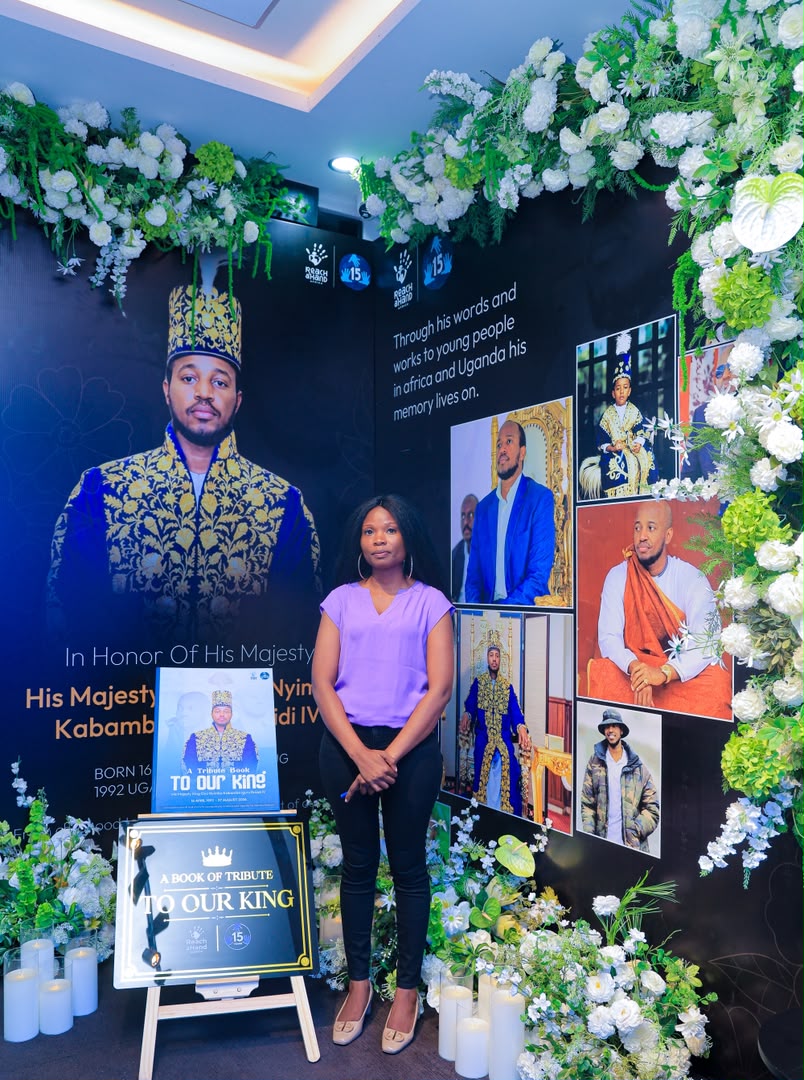
In times of mourning, Keeping memories alive matters. Deep appreciation to @reachahand for giving Ugandans and the Global Community a space to honor our fallen King. King Oyo Nyimba Kabamba Iguru Rukidi IV. @HumNabimanya Your Efforts are truly valued
Amit Bhatia has expressed ‘huge privilege and excitement’ to be part of the future of Liverpool FC amid 1892 Holdings' new minority investment into the club 🗣️
Read more: https://t.co/xv2CsFjGOS
أنا عارف إنكم لسه زعلانين، بس وعد مني إني هعمل كل اللي في قدرتي عشان أضمن إن دي تكون بداية جديدة للكورة المصرية على الساحة الدولية. التأهل لكأس العالم مش هيكون كفاية، والمشاركة كمان مش كفاية. الفريق ده يستاهل ثقتكم