incredibly proud and happy to share CAPITAL DOREMI published today in @NEJM ! couldn't be more grateful to our fearless leader @benhibbertMDPhD and friend and colleague @DiSantoPietro! a true labour of love ...of cardiogenic shock :)
Proud to announce the publication of CAPITAL DOREMI in @NEJM - a comparison of milrinone and dobutamine in cardiogenic shock. Contrary to the hypothesis milrinone was not superior to dobutamine in this randomized double blind comparison. https://t.co/XUz7fCR2GG
Another output from superstar fellow @JungRichardG - Prognostic factors associated with mortality in septic shock: a systematic review and meta-analysis - out in @LancetRespirMed
Downloadable: https://t.co/JJ3Yzm3Sqc
Kudos to @SameerKadri12 for the accompanying editorial.
In fields like cardiogenic (https://t.co/Qm5v2D2ucM) and septic shock we generate large amounts of prognostic data that live individually in studies published across time, journals etc. These findings have important implications for clinical and research applications but it can be difficult to understand these factors comparatively.
In our publication, we boiled the data down to 95 eligible studies that included 4.8 million eligible patients. We divided the analysis into patient, presentation factors and biochemical markers as they related to in-hospital or 30-d mortality.
Significant patient factors included black race, history of cirrhosis or malignancy.
Significant presentation risk factors included respiratory source, AKD or elevated risk score (SOFA>APACHE>SAPSII)
Significant treatment/biochemical risk factors included need for NE or mechanical ventilation.
The identification of these prognostic factors could aid in clinical risk application, goals of care discussions, and identifying the subset of patients at highest and lowest risk of early mortality for patients with septic shock.
Kudos to co-authors and collaborators @shanfernands@rebeccamathewmd@Bram_Rochwerg@PietroDiSantoMD@PietroDiSantoMD@GProsperiPorta@cameron_stotts
#SEPSIS #SpesisAwareness #StopSepsis #critcare #criticalcare #ICU #CICU @MayoClinicCV@mayoclinicCCM@MayoPCCM@MayoCCJC@UOHI
Just released! Check out the trailer for our brand new podcast "Pre-Rounds" delivering bite-sized, high-yield episodes designed for medical students, residents, fellows, early-career cardiologists, allied health professionals + all enthusiasts of critical care cardiology navigating the complexities of the field. Episode 1 to be released in August!
https://t.co/JYQtJoBIbr
Sharing what we hope is an important paper in #SHOCK out today in @NEJMEvidence by @JungRichardG (who just matched to cardiology!).
Prognostic Factors Associated with Mortality in Cardiogenic Shock — A Systematic Review and Meta-Analysis | NEJM Evidence https://t.co/Qm5v2D1Wne
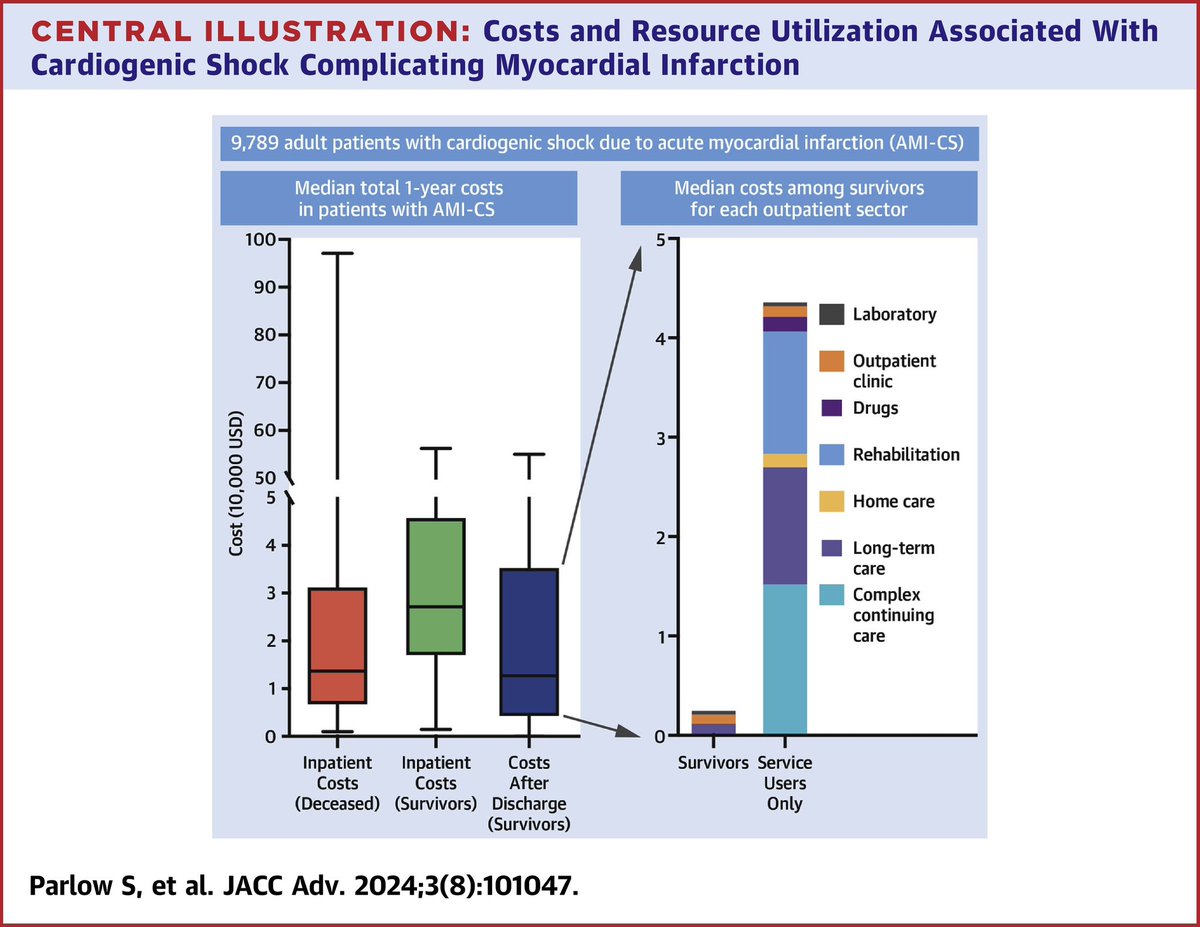
#Cardiogenicshock is associated with high morbidity/mortality but little is known about associated costs. Our analysis of 9,789 AMI-CS patients in Ontario reveals SIGNIFICANT associated cost - both in hospital and post discharge @JACCJournals@rebeccamathewmd@shanfernands
exciting to see this work published! thanks to @shanfernands for his leadership and commitment to understanding life after surviving CS for our patients.
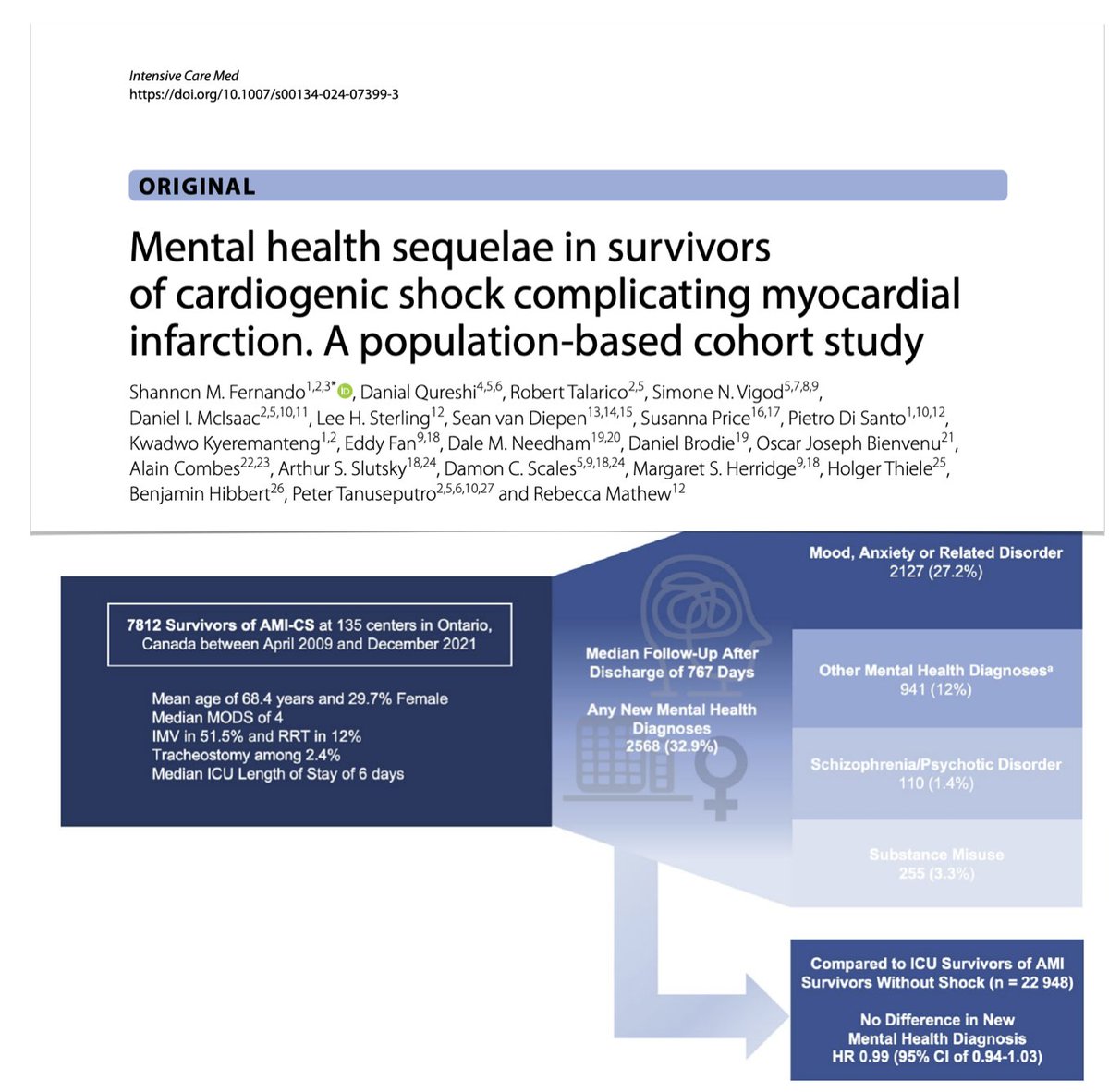
Mental health in AMI-CS survivors
🔍substantial mental health morbidity but no ⬆️new diagnoses vs survivors w/o shock; ⬆️risk of self-harm
⚠️prognostic factors: pre-existing mental health morbidity, female, discharge to long-term hospital/rehab
#ICUrehab
🔓https://t.co/oE6YoBB1of
🎉Announcing the 2024 Ottawa Cardiovascular Trainee of the Year Award🎉
These awardees are recognized for their outstanding productivity and exceptional leadership in the research community.
👏Yena Oh, PhD Candidate
👏Pietro Di Santo, MD & PhD Candidate
🔗https://t.co/7r6YOhgNhi
📣 #Tweetorial: The @SCC_CCS@CANCARESociety Clinical Practice Update “Optimal Post Cardiac Arrest and Refractory Cardiac Arrest Patient Care” has been published. See all expert opinions here 👉 https://t.co/LwJbx7ZhF2 #CJC 1/11 🧵
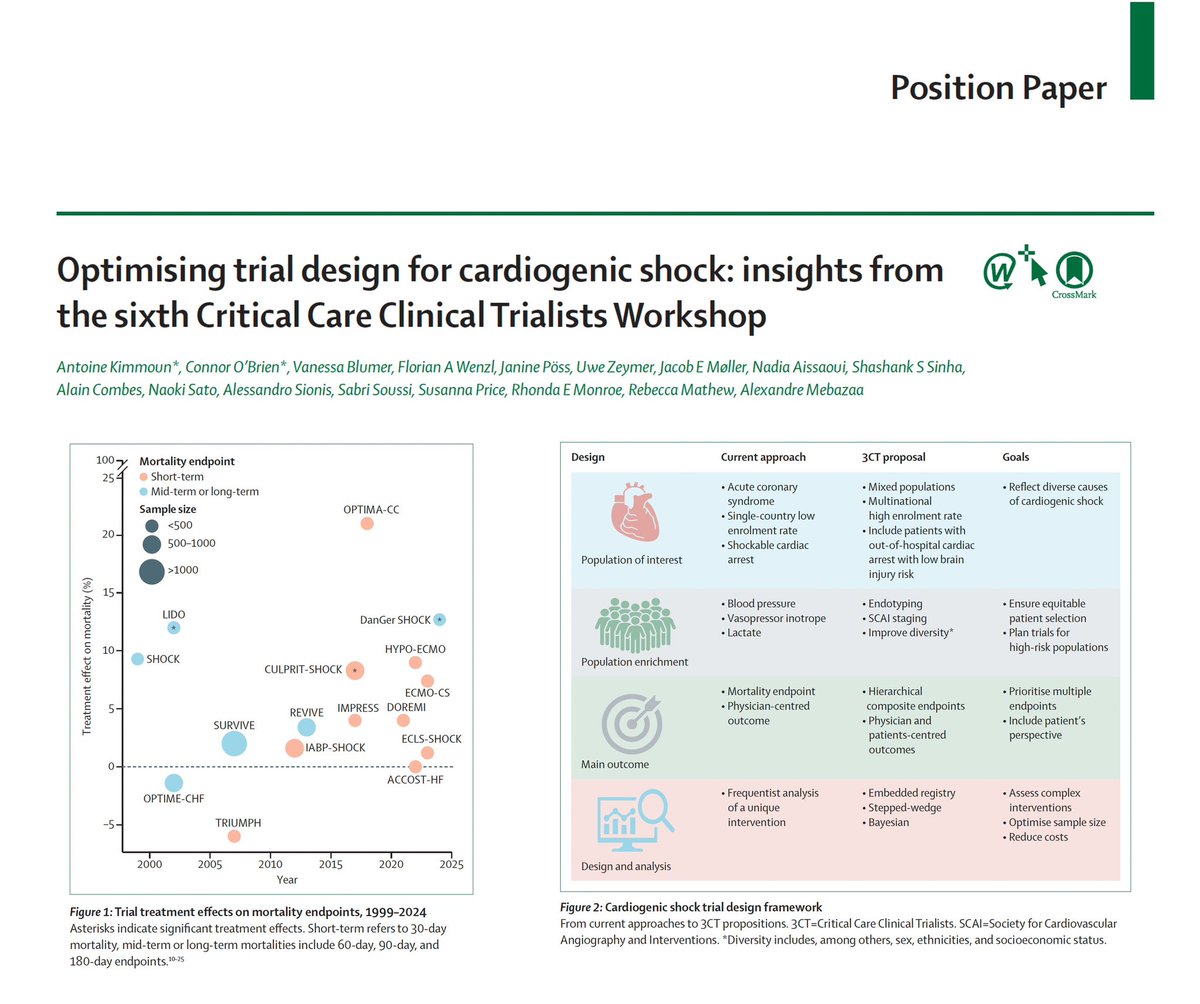
In the DanGer trial the primary outcome is death at 180 days. Composite safety outcome is bleeding/vasc injury/device malfunction/damage to AoV/sig hemolysis. What will the trial show at ACC24? Lets see if we can guess...
#acc24 late breaking trials out. For shock aficionados DANGER trial results being presented. After the ECLS results - this will be the next test of MCS with impella. Big year of landmark trials for MCS. Iabp and ecmo are already a bust - can’t wait for the results. @thiele_holger@rebeccamathewmd@shanfernands@seanvandiepen @susannaprice @SVRaoMD
🍂How old is too old for #ECMO in cardiogenic shock? In the age of #machinelearning medicine remains art of probability & science of uncertainty.
Editorial
🔓 https://t.co/tagu0kk4kP
Refers to @ELSOOrg Registry study on age & outcomes for VA #ECLS in CS
🔓https://t.co/vRVnqou4et
STRATUS Trial published @JAMA_current
🩸Cluster trial 25 ICUs >27,000 patients
🩸Switch to “small-volume” tubes that⬇️blood drawn for lab tests may⬇️RBC transfusion↔️effect on testing
🩸Available, cost-neutral, compatible with analyzers – will you switch?
https://t.co/sTkJVyfrgS
Age & associated outcomes among pts receiving VA #ECMO, analysis of @ELSOOrg Registry:
🏥 > 15K pts/440 centers
📈 increasing age strongly associated with higher risk of mortality or complications
📈 statistically higher risk emerging as early as 40 y
🖇️ https://t.co/GjkYG50X9K
Our SR/MA of dobutamine vs milrinone in CS. No difference between the 2 in RCTs. A signal for decreased mortality with milrinone and shorter LOS with dobutamine in observational data worth examining in larger studies. @benhibbertMDPhD@rebeccamathewmd
https://t.co/Yev5GXZbpW
another impactful and novel study led by @shanfernands and @Lee_HSterling!! very proud to call these two colleagues and friends. in so many ways, 'graduation' out of the ICU is just one of many hurdles for our patients.
Long-term outcomes of cardiogenic shock after AMI (AMI-CS) are unknown. In this population-based study, 1-yr mortality among AMI-CS pts was 40.9%. Among survivors to discharge, 42% required increased support at home from baseline. https://t.co/UzrSChP59p
#JACC#CardioTwitter