This is 🤯 !
Exclusive GPS data from Ross Herridge & @CricketAus
The physical requirements of being a bowler in international cricket are WILD.
@7Cricket | #AUSvWI
🆕Peak movement and impact characteristics of different training methods in professional rugby union
💥When comparing between training methods, small-sided games drills produced the greatest peak movement characteristics
By @Rebecca_jayde and colleagues
https://t.co/4AmyMRJG1N
Peak movement analysis from games is often used as a benchmark for training prescription in elite Rugby Union, but how do current training methods actually stack up? #RugbyAU
https://t.co/CtRwfNLtX0
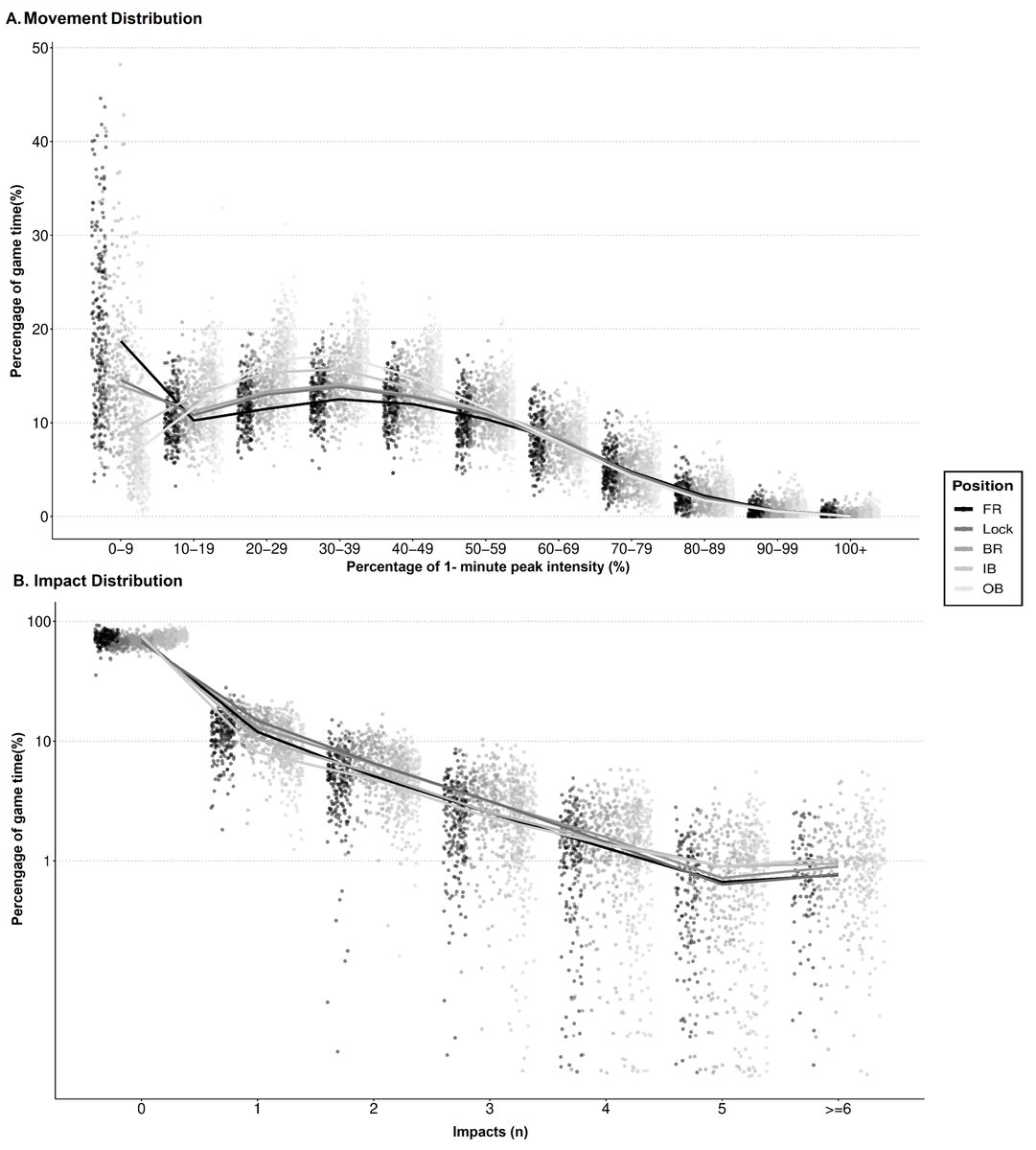
Peak periods are a useful tool for benchmarking game characteristics in training, but how long and often are we reaching these peak intensities in #rugbyunion game play?
https://t.co/PCcTeaJ8uS…
And just like clockwork post #ESSCT21 here it is our most recent publication in @JSCRonline highlighting the association between impact and movement characteristics in professional RU!
@pauldevs@FlemGPSAnalyst@DrAntheaClarke@PaulGastin@david_carey1@KaneJMiddleton @LaTrobe_SES @MelbourneRebels Hey Paul, thanks for the feedback. We agree that in rugby acceleration based metrics are important for capturing movement intensity, but like other recent research we found accels incredibly variable and not that consistent - therefore harder to accurately use with peak periods
Peak periods only occur once during a game and therefore may not be reflective of overall game-play. So why do we focus on them so heavily to identify fluctuations in game intensity and prescribe specific “worst case” training?
#ESSTC21
1/6
Thank you @ESSASpSc for the opportunity to share our work on the distribution and proportion of peak running and impact characteristics. We hope this helps practitioners better prepare their rugby union athletes. Please contact me for any questions or discussions.
#ESSTC21
6/6
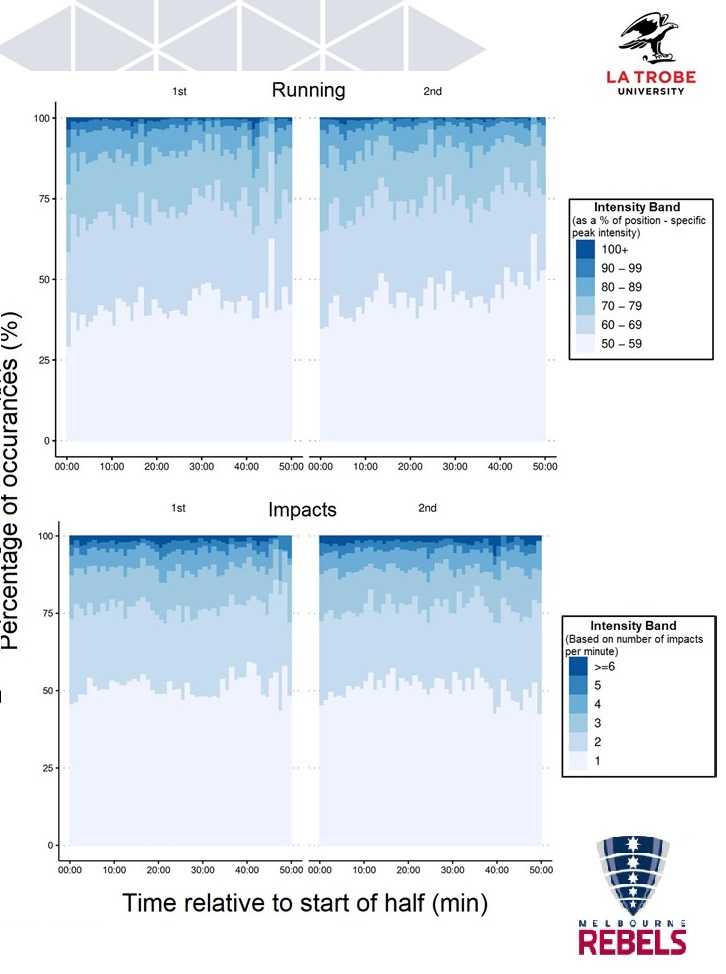
When focussing on >50% peak speed and > 0 impacts (harder periods)
-Majority (41%) are spent at 50-59% of positional peak in the 1st half, increasing in the 2nd (43%)
-Periods with 1 impact contribute majority of occurrences (51%) and are consistent across halves
#ESSTC21
5/6