Historical Research into the Silk Road, Japan, China, & Korea PRE-858 AD. My High-Definition Timeline Charts are Available for FREE on my Proton Drive Account.
What exactly is the Chrysanthemum Throne 皇位?
Is the Japanese Hō-ō 鳳凰 (Phoenix), that sits atop of the throne, just a modern rendition of the older Xiongnu Bird/Eagle, that once sat atop of an ancient crown of a Xiongnu King?
The design is too similar to be coincidence. The shape, stance, and even the color of the neck/head is the same. The only real difference is that the modern one has more intricate details.
The name "Japan" is derived from Nihon/Nippon 日本 ("sun origin"), written in Chinese characters. The name was adopted sometime between 661–672, apparently coming into official use during the reign of Tenji Tennō 天智天皇 (668–671). Prior to this, "Japan" was known as Wakoku 倭國. Wakoku is an ambiguous toponym, but closer to the sixth or seventh century it was used by the increasingly centralized state ruling over what is now the Kansai area. The indigeneous name was Yamato.
Kobayashi Toshio 小林敏男 points out that "Nippon" was probably first used by scribes from the kingdom of Baekje on the Korean peninsula (in fact, much material culture in early Japan comes from Baekje). He draws attention to the funerary stele of a military general named Mi Junwen (Kor. Ni Gun’on 祢軍溫; 613–678), who originally hailed from Baekje. On the stele inscription we read, "At the time the remaining people from Nippon went to Fusang and thereby escaped punishment." 于時日本餘噍據扶桑以逋誅. This could possibly refer to the defeat of the forces of Yamato and Baekje at the Battle of Baekgang 白村江 in 663. Here "Fusang" 扶桑 is a general reference to landmasses in the east, especially the Japanese archipelago. Based on this line, it is probable that the state in the Japanese archipelago could be called "Nippon" as early as the 660s, but as Kobayashi further explains, this identification of Nippon and Fusang with the Japanese archipelago is somewhat uncertain, since names could refer to lands along the southern coast of the Korean peninsula.
Korean history reflects this change of the state's name in Japan. Written in 1145 by Kim Pusik 金富軾 (1075–1151), the Samguk sagi 三國史記 ("History of the Three Kingdoms") records that around the year 671, "Wakoku renamed themselves to Nippon; they said that they took the name since they are close to where the Sun rises." 倭國更號日本自言近日所出以爲名.
Chinese diplomatic records also record a change of names. In 670, the Tang court received envoys from Wakoku, but in 703 we see envoys from Nippon arriving. In the tenth century, some historians were confused, assuming that Wakoku and Nippon were separate countries, but a visit in 984 by the Japanese monk Chōnen 奝然 (938–1016) seems to have clarified the issue.
@ishiwinozomu@GrwaNnKqMn5nG68 I never asked who was the first Ōkimi (大王).
I asked who was the first Tennō (天皇)?
So I ask again…
Who was the first Tennō (天皇)?
Another issue is most peoples absolute refusal to read primary source materials. Or read any non-fictional book in general and rely on AI, Google, YouTube videos, or social media posts.
If someone is not Japanese then they likely haven’t even read even a portion of the Nihon Shoki and are just regurgitating shit they heard/read other people say without forming an original genuine opinion of their own.
—————-
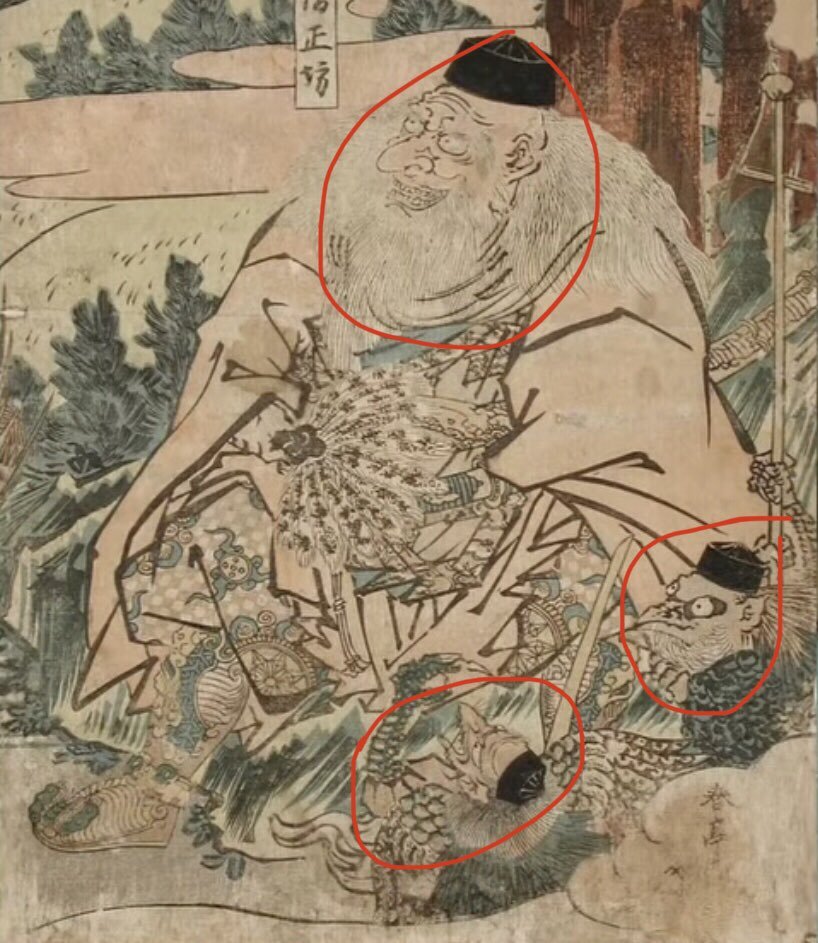
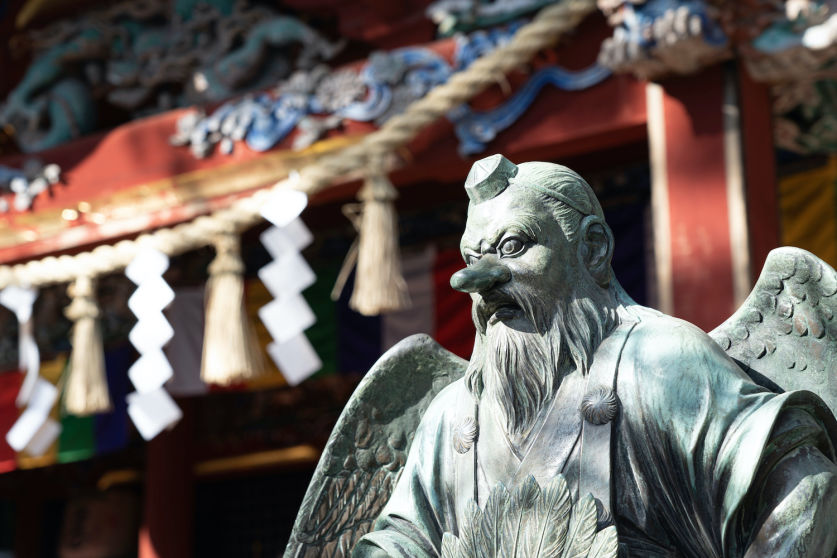
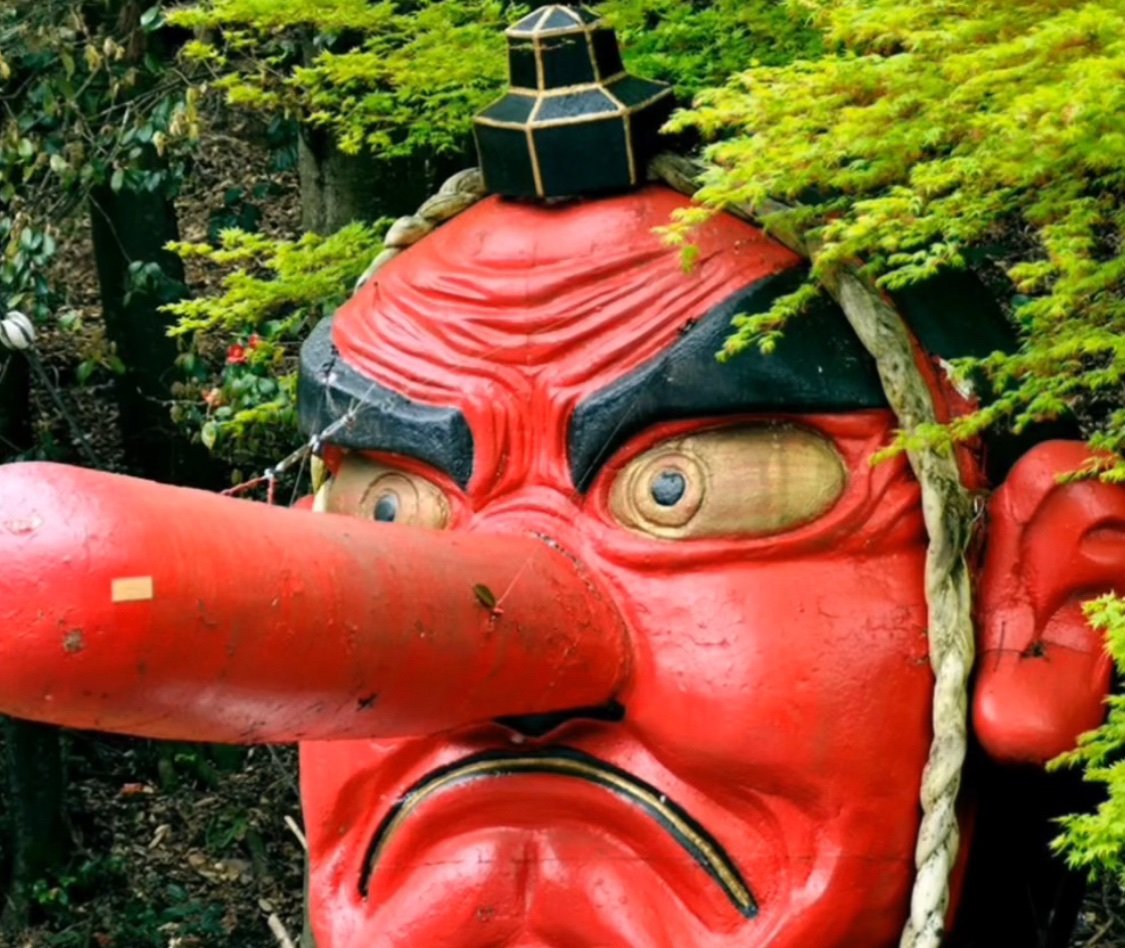
A good example of people only caring about post 1300’s AD history is the Tengu 👺 lore.
A lot of people regurgitate shit they read online about it and have literally only maybe skimmed the Wikipedia about it. Then all of a sudden they’re an expert. Most don’t realize that the iconic modern image of the Tengu is a post 1300’s AD amalgamation. Non will say that though.
They are quick to say “according to Japanese folklore/mythology” but all this indicates to me is that they DO NOT have any idea what the source is of whatever it is they are talking about. I’ve linked an example, notice no source is provided. Idiots gobble this shit up though.
The scholarship on the Tengu shows that it evolved and adapted from earlier models. But people will never cite these or let alone even know about them because the Wikipedia article doesn’t go into detail about it.
People just don’t read historical books like that. But ironically, they will eagerly read the entire game of thrones fictional story though and know every inch of its lore.
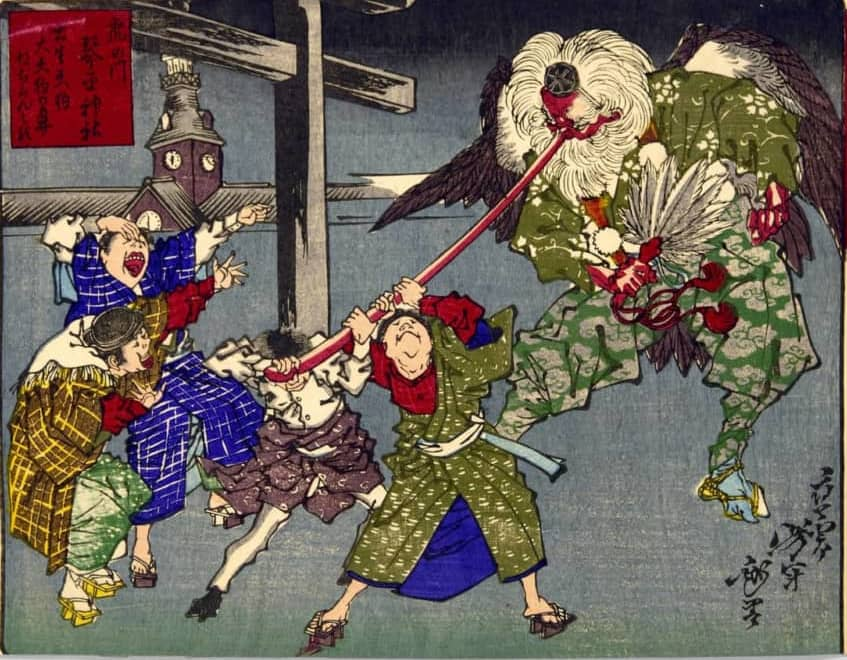
The Japanese Tengu is an ancient demon in Japanese mythology, with origins tracing back over 1,300 years.
According to folklore, the Tengu was known for having a big nose, tiny hat, inciting wars amongst local populations, and kidnapping children from villages at night.
You guys will never know how hard I laughed when I read this. The comedic timing of this author when he needed to remind the reader where tf this play was being preformed and who was in attendance.
“…amputating his penis. To reiterate…”
Oh I lost it!
🤣 🤣 🤣
Gigaku 伎楽 - “Japan’s First Masked Performance Genre”
Introduced into Japan by Buddhist Missionaries in the 6th or 7th Centuries AD.
“Gigaku featured an exotic cast of characters, including a supernatural lion, Buddhist divine guardians, the Hindu deity Garuda, a Brahman priest, a superhuman brute of a mythical race, and an intoxicated barbarian king. The assembly of such diverse roles in a single theatre genre attests to the eclectic and cosmopolitan ambiance of Sui and Tang society, from which gigaku probably emerged.”
“The most important historical treatise on the genre, the Kyōkunshō (A manual of instruction for the performing arts), takes the characterisation beyond mere humour into the realm of lewd behaviour and shocking violence.”
“Buddhist temples were the primary sponsors of gigaku in Japan.”
“A separate entry in the Nihon shoki also describes the first recorded performance of gigaku, conducted in the 14th year of the reign of Emperor Tenmu (686) during a reception for dignitaries from the Shilla Kingdom.”
“Gigaku was soon adopted at major temples as an official performing art, and its popularity steadily increased, peaking around the 3rd year of Hakuchi (752) when it was enacted during the consecration ceremony for the statue of the Great Buddha at Tōdaiji, a major temple in Nara.
—-
“Graphic Sex and Violence at Buddhist Temples”
“According to the Kyōkunshō, a climactic scene in a gigaku performance featured Gojo, Konron, and Rikishi. The beautiful, aristocratic Gojo attracts the unwanted attention of the brutish Konron. He becomes physically aroused, which the actor pantomimes using a folding fan, and attempts to rape Gojo. The divine guardian Rikishi comes to Gojo’s rescue and severely punishes Konron by binding his genitals tightly with a cord and mutilating them or, according to one interpretation, amputating his penis.
To reiterate, the primary venue of gigaku performances was a Buddhist temple. In the 4th year of Tenpyō Shōhō (752), an enormous bronze statue of the Buddha was consecrated at Tōdaiji. In addition to the emperor, empress, and all senior clerics, thousands of monks, Buddhist priests, and scholars from China and India reportedly attended the ceremony, which ranks as the most important religious event in Japan of the 8th century. Four separate performances of gigaku (six based on one source) entertained this vast, ecclesiastical audience.”
“The pornographic explicitness and shocking violence of gigaku’s climatic scene, as described in the Kyōkunshō, are wholly unprecedented in the recorded history of Japan’s traditional masked performance.”
Marvin, Stephen. (2022). “The structure and iconography of gigaku masks and implications for performance”
—-
ME: The paper and author I quote makes very good and compelling arguments in his paper as to why all the graphic sexual elements of Gigaku performances were a LATER addition, not present in the original 6th/7th century version of Gigaku. Please read his paper to read all those arguments (it’s a short paper so it won’t take long to read.)
His main arguments -
1. These sexual and violent acts could not have been original as they would have been preformed at Buddhist temples/holy sites. In front of the local and visiting foreign elites/diplomats no less.
2. No other surviving examples of other preforming arts in the same era depict such acts at Buddhist temples.
3. No extant records of the 7th century or 8th centuries AD record anything about the performance itself and the main text that survives today to describe the Gigaku play itself was written ~600 years after the first performance in the 7th century AD.
ME: Pretty good arguments if you ask me, BUT I’m going to have to disagree. Degenerate, Sexual, Money-Lending, Tax Evading, Corrupt, Merchant/Buddhists are well attested to in the 7th, 8th, & 9th centuries AD in China’s capital. Look at my other posts discussing these “Buddhists.” There is hardly anything “holy’ about these people.
-
I do apologize though for my behavior.
In all honesty.
I should know better than to get into a debate with a guy who practically lives on X (this is like your home basically.)
479,000 posts on X.
Holy guacamole!
You created your account in 2012 so that means you post nearly 90 times per day on average. I should have known to not get in a debate with a professional X power poster.
Have you been outside this week bro? Do you remember what the outside world looks like?
Okay, I’ll stop.
Goodbye… Try to get some Sun this year!
Here is the first confirmed image of emperor Jimmu.
Dating to the 1660’s AD.
Like I said before, cartoon ass emperor.
It took nearly a thousand years after the Nihon Shoki was written for an actual image of the emperor to emerge and it’s this cartoon ass mf.
660 BC foundation - yeah right! 🤣
Like no one today even believes that fake story anymore.
Here is the first confirmed image of emperor Jimmu.
Dating to the 1660’s AD.
Like I said before, cartoon ass emperor.
It took nearly a thousand years after the Nihon Shoki was written for an actual image of the emperor to emerge and it’s this cartoon ass mf.
660 BC foundation - yeah right! 🤣
Like no one today even believes that fake story anymore.
@ishiwinozomu@GrwaNnKqMn5nG68 Just like emperor Jimmu right? No basis in fact.
Pure imagination. A total fake.
You must of been talking about emperor Jimmu! Don’t worry I corrected you!
@ishiwinozomu@GrwaNnKqMn5nG68 Some of us actually do our homework and continue to research. I understand if you are too busy on X talking about silly politics and reposting and liking your own posts.
You can leave the history to me! You can count on me!
“The Chronicles of Japan 日本書紀” -
A New Modern English Translation in 2026 by Matthieu Felt.
It includes the original Chinese characters next to the English translated portion. Why other translations of historical works don’t do this is beyond me.
Nice try buddy. Just because you haven’t studied the Nihon Shoki like some of us doesn’t mean you get to dismiss the scholarship on it. People like you who don’t do your homework always say things like that.
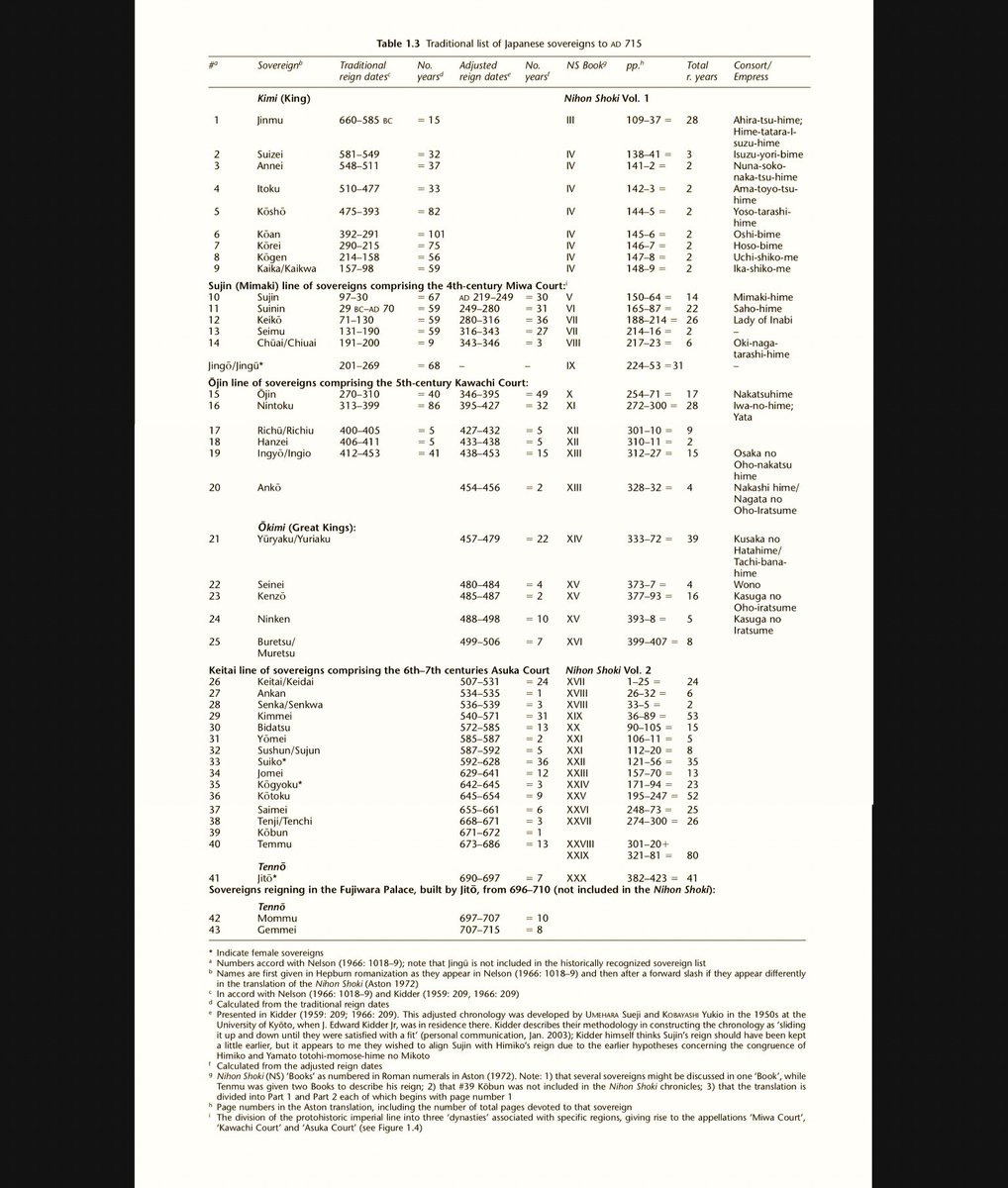
Mizuno Yi in 1968 already concluded that there are 3 distinct lineages in the Nihon Shoki.
The Sujin lineage
The Ojin lineage
And the Keitai lineage
The Ojin lineage is the original Yamato dynasty.
The Late 7th Century AD Coverup & Corruption of the Kingly Lineages of Early Japanese Sovereigns -
“The two court histories, Kojiki and Nihon Shoki, were compiled in the late 7th century… These texts were centrally approved, politically inspired documents designed to legitimize the ruling imperial line and integrate the aristocratic clans into an interwoven genealogy reflecting their relative ranks at court.”
“These specifically political aims in compiling the chronicles have contributed to innumerable textual problems, mainly concerning chronology and, not surprisingly, kinship relations. Some of these are fairly easily solved, as with the ‘assignment’ of ancestors to the courtly clans. In the Kojiki, for example, many of the genealogical specifications occur as interlinear glosses (Philippi 1969: 189). In other instances, the narrative genealogies are inconsistent enough to give us an instant glimpse of their falsehood (ibid.: 229, ftn.10). The revealing of such systematic manipulation of the texts for genealogical purposes is one kind of textual criticism that allows understanding of the compilers’ biases and aims.”
“Two further examples of master detective work in the 1950s by MIZUNO Yi (cf. Mizuno 1992) and KANDA Hideo (1959) concern entire dynasties of sovereigns, revealing interesting aspects of the social structures in the period covered… Kanda investigated the succession of the eight kings between the legendary Jinmu and the first sovereign, Sujin – generally agreed to probably have been a real historical figure, and decided that the intervening rulers were not successive at all but were probably contemporaneous leaders whose mutual marriage and kinship relationships had been reworked to show genealogical descent (Kanda 1959).”
“Mizuno further demonstrated that the imperial line as recorded in the 8th-century chronicles EVEN THEN incorporated three distinct lines of kings which he terms the Old (beginning with Sujin), Middle (beginning with
Ojin) and New (beginning with Keitai) Dynasties (Mizuno 1968). Furthermore, each of these kingly lineages has been associated with a specific locus of rule: the Sujin Dynasty at Miwa, the Ojin Dynasty at Kawachi and the Keitai Dynasty at Asuka as discussed earlier.”
“The post-war scholarly works of Mizuno and Kanda thus challenged the claim of the absolute continuity of Japanese imperial rule – at least from these early centuries; instead, a picture of discontinuous shifts of power emerged through their analyses of the documents. Due to the contents of the chronicles having been compiled for political reasons – with events telescoped back in time, international and domestic information separated into different periods, and fictional genealogical relationships created with past rulers and gods – they cannot be used as a chronologically accurate account; instead each grain of information must be evaluated for its degree of reality, appropriate dating and cultural context.”
- “State Formation in Japan, Emergence of a 4th Century Ruling Elite” Gina L. Barnes. 2007
—-
My Commentary -
When the Kojiki & Nihon Shoki were complied, the 2 kingly lineages stemming from “Sujin” & “Ojin” were long gone.
The newest lineage stemming from “Keitai” was made to look as if were older than what it actually was. In fact, it is very likely that the people group that Keitai belonged to, had only arrived in Japan from roughly 400 AD & onward. Allowed to settle the lands during the reign of Ojin (r.390 AD) & his kin.
The narrative of Keitai and Kinmei shows that in the EARLY-TO-MID 6th Century AD, the International Sogdian Buddhist Religio-Trading Cartel had finally managed to infiltrate Japan, & install their own King, friendly to Buddhism, along with their Hata clansmen, installed to control the Treasury.
The Nihon Shoki & Kojiki are clear products of their time which was the during HEIGHT of Foreign Influence in China, Korea, and Japan that would be unmatched until the modern era.
-
@ishiwinozomu@GrwaNnKqMn5nG68 Ojin sent 4 generals in 391. Clear as day.
How fast of a turnaround was it for hideyoshi after defeating the hojo clan to invade Korea?
Less than 2 full years.
Homuda conquered Yamato and within a year sent his fleet to invade Korea.
Yoshi Kuno knew this a long time ago.
@ishiwinozomu@GrwaNnKqMn5nG68 You are debating one of the most well read individuals on this topic.
I know my Japanese chronology.
I beg you to make a chronological statement again and watch me use your own national Japanese historians to refute you.
1. Again. Because you are so fixated on horses. It’s the only thing you have going for yourself. A naval conquest does not need horses. Idk what you don’t understand about that. Homuda commanded fleets of ships from Kyushu. Your precious Nihon Shoki even states that he was born in Kyushu. The invasion began from Kyushu!
I am not pushing egami’s version of the conquest theory. I am pushing the updated improved version.
“The maritime naval conquest theory.”
But it seems that Egami is always in the back of your mind is he? I bet you dream about refuting him.
2. You want to talk about archaeology. Tell your government to open the keyhole tombs that they refuse to open. Only then can we really get to the bottom of this. Or do you want to talk about that archeologist that was caught planting false items at archaeological sites. We can talk about that if you want.
3. “Evidence of large foreign invasion.” Again, you are picturing a cartoon version of the actual event in your head. Is Kyushu foreign to you? Yes or no? I honestly believe you think it was something like when Genghis khan sent his ships to invade Kyushu. Tell the truth, is that what you are picturing? How many historic battles before the Nara period would even leave artifacts to discover in the first place? I could make the same argument about many battles and events in Japanese history. Not all leave clear artifacts of some specific battle or event. What exactly do you even expect to find from the late 4th century AD? Bones? Mass graves? There are very few artifacts that date to that period and before, in general, let alone from any battle. Also because “invasion” to you apparently means all out slaughter when no invasion in history is ever so black and white. You claim I am pushing speculation when you yourself are speculating on something I am not even putting forth. How long do a people have to live in a certain area to no longer be considered foreign? 50 years, 150 years, 500 years? This is what I have to deal with with you. I’m talking about people from Kyushu. You are the one applying the “foreign” label to this argument. I am saying that there was a Baekje colony in Kyushu that has been there for decades at the very least, but not exclusively people from Baekje. There were locals in this colony. This isn’t speculation. There is archaeological evidence of Korean presence in Kyushu since ancient times. I’m advocating that Homuda had Baekje lineage, NOT that he arrived fresh from Baekje and conquered Yamato the following day. Which is what I assume you think with your cartoon invasion theory.
4. If we disregard the mythical Nihon Shoki and Kojiki, the harima fudoki is filled with accounts of locals that remember Homuda centuries after his death and that he was not always associated with violence. Homuda conquered with diplomacy at times. Hachiman worship is evidence enough that Homuda was seen as a war general in the earliest times. By the end of the 9th century AD, Homuda/Hachiman was the 2nd most important Shinto deity to the imperial court. Compare that to Emperor Jimmu who was a nobody. No one cared about him.
5. You know what there is none of… there no emperor Jimmu imagery prior to the mid-17th century AD, when the first cartoon image of Jimmu was created. That’s a fact. There is no evidence of any kind that dates to the bc era that provides evidence for the existence of emperor Jimmu. But your precious Nihon Shoki dates his reign to the 7th century BC. Maybe because he never existed. Or the 8 emperors that come after him. All fake. That’s your Nihon Shoki.
6. Prior to the composition of the Nihon Shoki, emperor tenmu and Jito ordered that the original genealogical records of ancient families to be submitted to them so that they could “correct” them. In reality they completely corrupted the original records.
Naturally, you can’t even produce your source correctly. S3E5 did not have anything about the tengu.
Plus that show is ga* a*s f**k. I can’t believe I actually sat through 5 minutes scrubbing through that garbage.
You and I, are fundamentally different people, my illiterate friend. You watch f*gs like Josh gates and his “expert mike DEE” on the goy box and say sh*t like “jUsT gOogLe iT bRo” because you fundamentally don’t know wtf you’re talking about.
In fact, I think you may actually not be smart enough to actually read that paper as it requires the reader to be actually literate. So I apologize for assuming you would be able to do so. My mistake.
I’ll let myself out.