This is just a failure to understand a complex causal chain. Seems worrying that we have an energy secretary that doesn’t have access to thinking mode.
🚨 NEW: Energy Secretary Miatta Fahnbulleh is reportedly set to reject Rosebank for oil drilling in the North Sea
She believes it would do less for UK energy security than Jackdaw as most of its oil would be exported
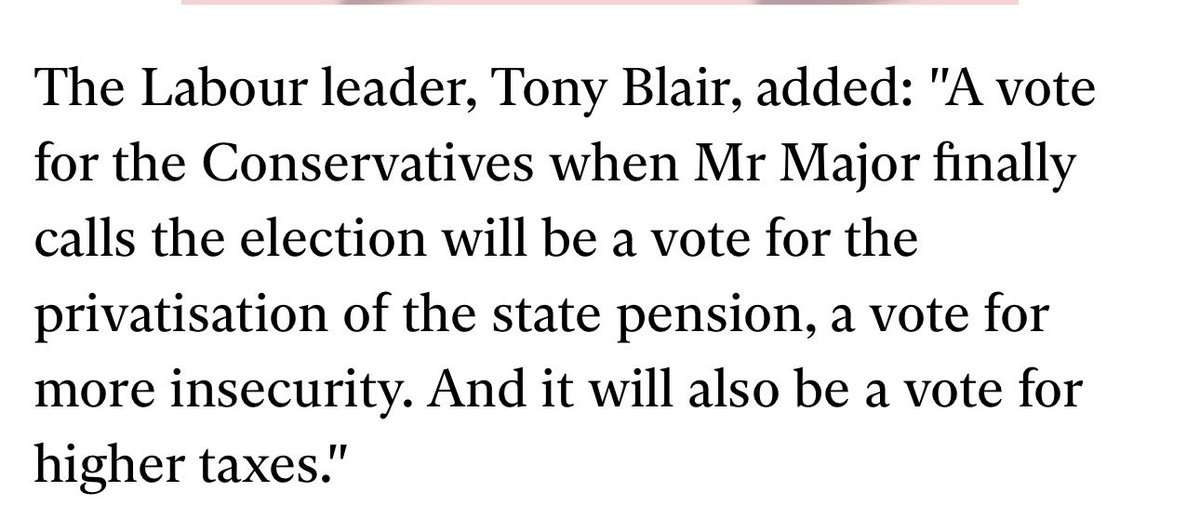
For those who don’t know, this very idea was proposed by Major in 97. Blair and Brown objected to it, saying the transition costs to a state pension funded on actual savings were too high.
Sovereign wealth fund respecters when you suggest that perhaps some of the NI contributions of British workers could have been invested in the stock market over the last 30 years.
Nobody seems to be aware that the Norwegian SWF only started receiving capital in 1996
The chancellor is unwittingly implying that the 1997-2010 Blair era didn’t practice enough austerity.
‘We'd have a British sovereign wealth fund now that will be worth probably a trillion pounds’
Chancellor @JohnHealey_MP suggests what Britain could have gained if it had set up an energy wealth fund like Norway’s back in the 1980s
#Peston
@prolzate@echetus I agree that there is little to no chance of Russia successfully invading, though that doesn’t change the fact that SC is wrong about preferring Russian rule.
@echetus Crimea was taken with very little fighting and the Russian state has eliminated the Ukrainian language in education and engaged in forced conscription in the region. You would become a tool of a brutal system that has little respect for any notion of human rights.
@orthogonal_j@mattyglesias Goods wise it’s: more housing on net, less of the other things the government would have spent money on (welfare, healthcare). Distribution wise it’s: more to young homebuyers, less to those that usually receive things from the government.
Both are positive in the long term
@dioscuri I thought this until I found out about subtropical highlands that do everything the British climate does but better.
Addis Ababa solves Britain’s winter sunlight problem by being more equatorial, yet maintains consistently mild temperatures due to 2,000m+ altitude.
Great post. V important to explain the issues with ‘media pundit economics’, a set of ideas that have a disturbingly large influence despite being mostly incorrect.
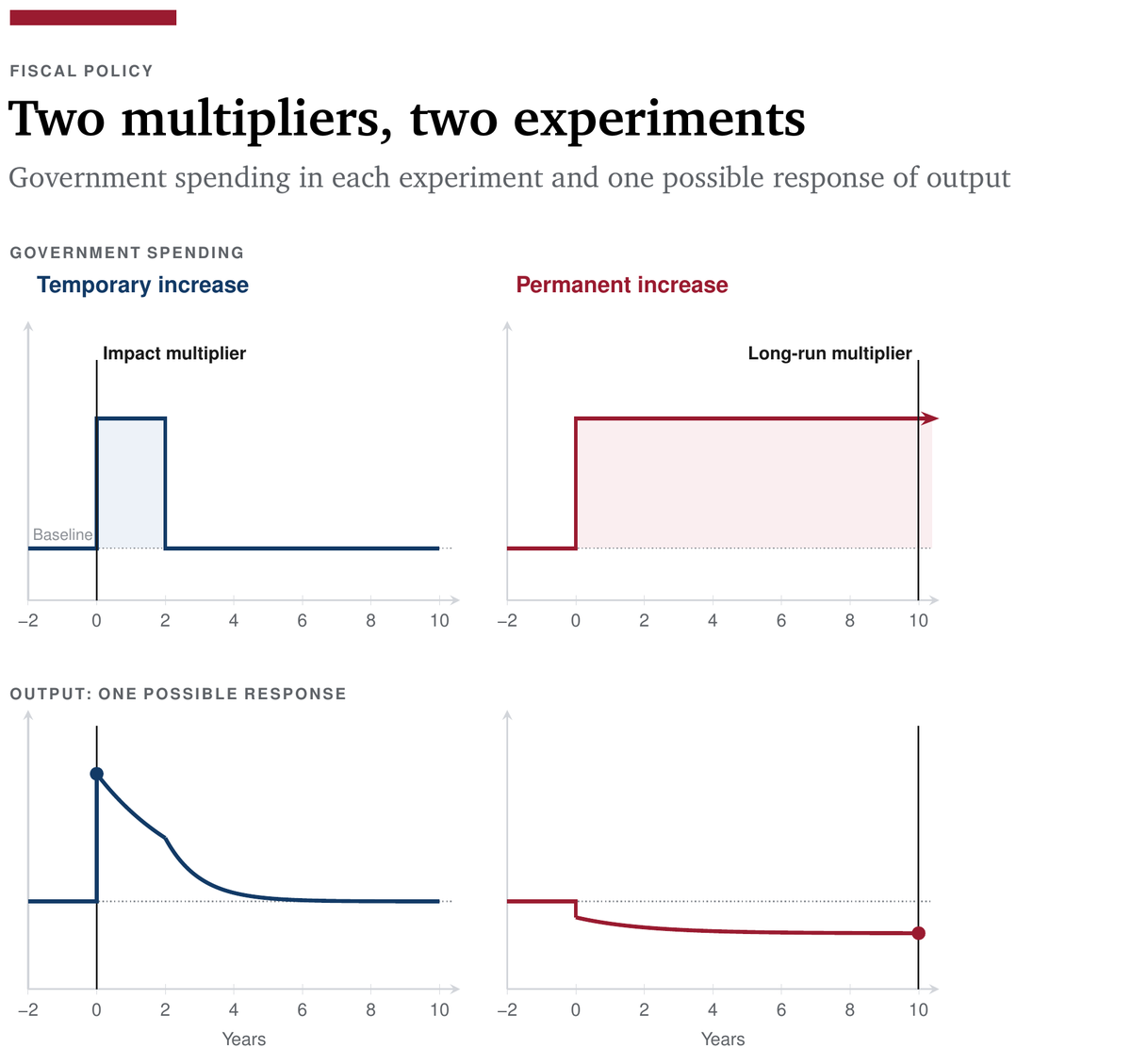
The U.S., France, and Spain will soon hold elections, and much of the debate is about how large government should be. Almost every fiscal multiplier cited in those debates answers a question the debates are not asking.
Why? Because the impact multiplier of a temporary increase in government spending, the number nearly always cited, and the long-run multiplier of a permanent increase in government spending, the relevant number for this discussion, are two very different objects.
The first measures how much output changes in the very short run when government spending goes up for some time. The second measures how much output changes in the very long run when government spending goes up permanently.
The distinction should be obvious. Unfortunately, the distinction is not obvious, even to many economists.
Why are the two multipliers so different?
First, taxes. Temporary and permanent increases in government spending have very different tax implications.
Second, slack. In the short run, output can rise because there are idle workers and machines, and because the central bank may not react. In the long run, output depends on the total levels of labor, capital, and technology, and government spending can affect all three.
Third, what the government buys. Building a new highway today (a temporary increase) has very different implications than lowering Social Security retirement age (a permanent increase).
Fourth, evidence. Nearly all our estimates come from episodes that were temporary by design: wars, stimulus packages, or federal money flowing to one state while the rest of the country pays the bill. Those episodes tell us little about a permanent, national, tax-financed program.
People can reasonably disagree about the right level of government spending. The question has a positive side (what are the short- and long-run consequences of spending more or less?) and a normative side (should the government provide transfer x?). I might have some answers on the positive side. You do not need to share my normative views.
But if you want to argue for a permanent increase in government spending and its consequences ten years from now, please do not cite models or evidence about the short-run effects of a temporary increase. Those models and that evidence answer a different question.
Many of the policies the manifesto proposed read as far ahead of their time.
There was the ‘pension plus’, a plan to slowly transition the unfunded state pension to a savings based scheme. The fiscal time bomb of the state pension would have been self solving by 2040
And…
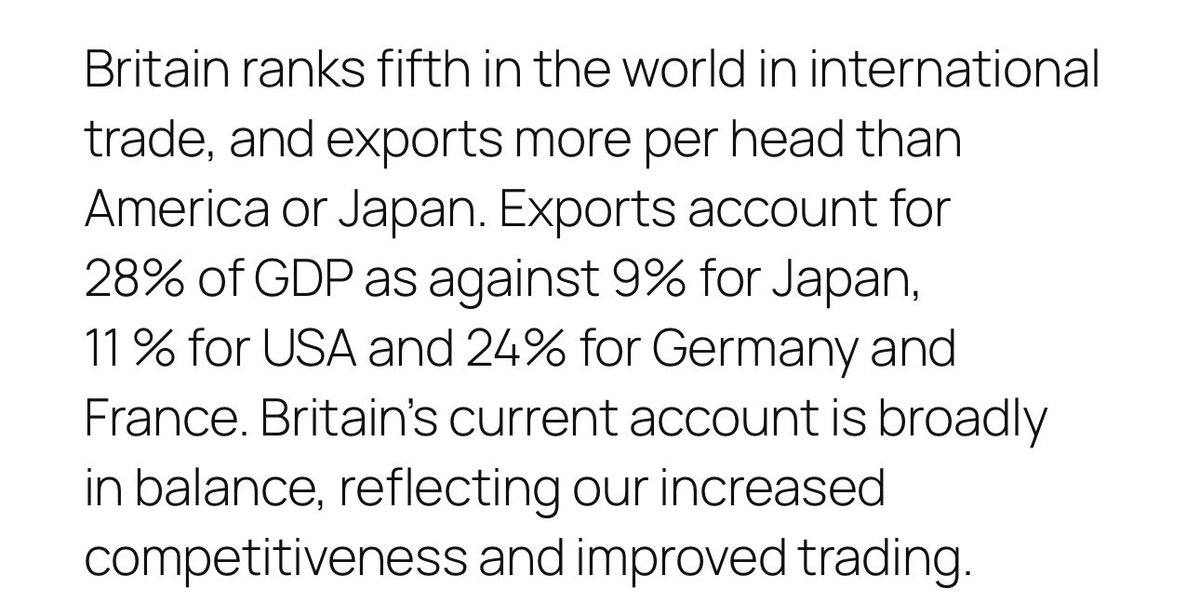
The Britain the ‘97 Conservative manifesto describes is shockingly functional. World leading in fiscal prudence and economic success:
More exports per capita than America, more pension savings than the entire EU, an entire section called “the best place in the world to live”