I have really not known how to feel about the public execution, but I know that I don't want to watch it.
I'm certainly not going to judge people who DO watch it, though. I see a lot of mutuals I respect very supportive of this, and I totally get it and I wouldn't project my sensibilities onto others or insist they be as sensistive as I am. (I have a hard time watching people die in movies even though I know it's fake.)
Public executions used be common in the US up until the 1930s, and I don't look back on that pre-1930s era with disgust. I think the people involved felt it was a deterrant, and thus important - the same way people now feel about it.
Were they right? Did our society become more dangerous and violent after the 1930s because we stopped executing people publicly? I honestly have no idea. If someone has data on that, it would be really interesting to see.
All of that said - I have zero optimism that this public execution is going to serve as a deterrant to jihadists, specifically. They like death. They are obsessed with it and they glory in martyrdom. They film and record their own suffering and martyrdom all the time and use it as propaganda, so I worry a little that they're going to enjoy this as much as the proponents will and use it for their own purposes. "Look at how evil the West is, look at their bloodlust, look at how the rejoice over killing Allah's brave martyr" and gin up their global network of jihadists who hope to be "honored" as this man was.
Let me tell you how this happened
America’s defense corporations are hopelessly exposed to the Peoples’ Republic of China (PRC) in a multitude of ways.
It’s hard to imagine that the same companies that build fighter jets, missiles, and radar for the US and its allies, also depend on official business inside China.
Lockheed Martin, which makes the F-35, has registered entities in the PRC. An “entity” is a legal company such as a subsidiary, a factory, a sales office, or a joint venture. It has a Chinese business license, a Chinese bank account, and has to follow Chinese laws.
The company also employs personnel who are listed on the Chinese state insurance roll. China requires every formal employer to register workers in the national social insurance system so we can see how many personnel inside China they officially employ.
In other words, the Chinese government has a roster of every employee at Lockheed and through the National Security and Data Law, has legal power over the parent company that they work for.
Their physical presence in China creates several types of risks:
> Information risk
People and computers inside China can see designs, shipping schedules, supplier lists, or test data. Chinese law can compel them to share it.
> Leverage risk
Beijing can threaten the local company or its employees (“pay a fine, lose your license, or help us”) to get what it wants from the parent company in the US
> Supply chain risk
Buying metals and parts that China manufactures presents huge vulnerabilities. Combined with local entities and staff, it becomes easier for China to see and squeeze the system
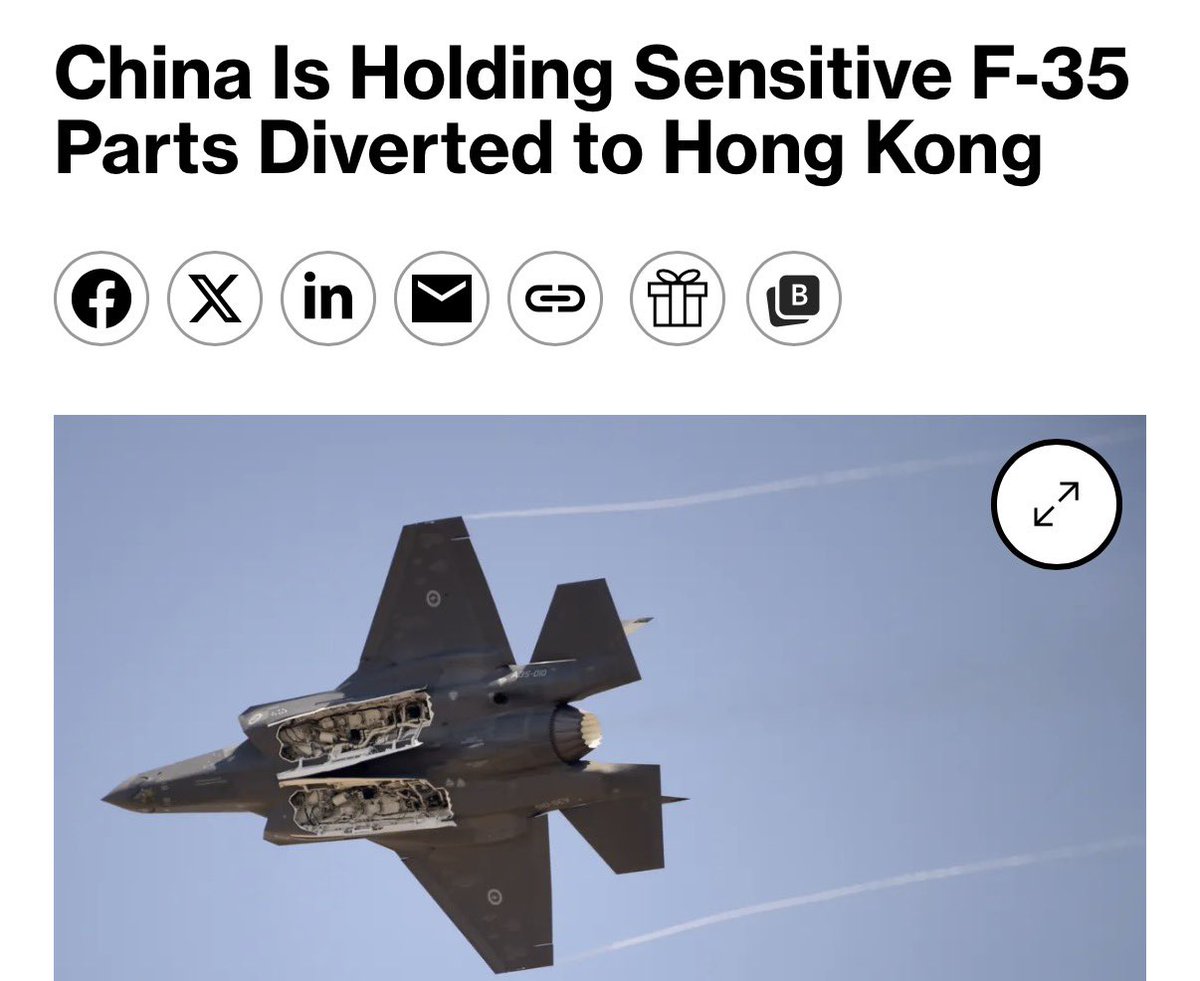
This stolen F-35 cockpit canopy came from Australia, which like Canada, is highly compromised and penetrated.
From South Korea it was diverted to Hong Kong, which sadly is no longer secure as a hub. Commercial tracking data, freight-forwarder systems, and the presence of PRC-linked logistics partners make high-value military shipments visible. Given Lockheed’s legal entities and employees inside the PRC, the intelligence picture gets even clearer.
This is how “they” knew the schedule.
It’s long past due to gut the foothold our defense companies have inside the adversary’s system.
Btw Lockheed Martin, according to our data, is actually ca lot less exposed to the PRC than Boeing, RTX (Raytheon) and Honeywell is.
Nine months after September 11, a village in Kenya with no electricity, no running water, and no roads gave America the most valuable thing it had.
Fourteen cows.
This is not a joke. It is one of the most serious gifts this country has ever received.
Kimeli Naiyomah grew up in Enoosaen, a Maasai village near the Tanzanian border. His family was so poor they owned no cattle. Among the Maasai, that is the bottom. A family without cows is barely counted as a family.
At fourteen he ran away to a school where the lessons were held under a tree. He walked. He had no shoes, no books, no money. He asked to be let in anyway.
Years later he was a student at Stanford, in California, studying to be a doctor.
On September 11, 2001, he happened to be in New York City.
He watched the towers fall.
He was a Maasai warrior. Warriors are trained from childhood to run toward danger. He wanted to run to the pile. He could not help there. He did not know what to do with what he had seen.
Months later he went home to Enoosaen.
The elders had heard something on the radio. Vaguely. A place called New York. Buildings. Some of them had not heard at all. Nobody in the village had ever seen a skyscraper. Nobody had been on an airplane. The idea of a building a hundred stories tall, full of thousands of people, falling down, was not something the language had words for.
Kimeli sat with them and explained. Slowly. What a tower was. How many people. What it looked like when it came down. He told them what he had seen with his own eyes.
The elders listened. When he finished, one of them asked a question.
"What can we do for these poor people?"
Kimeli had already decided. He had saved money in America. He wanted to buy a cow, the first cow his family had ever owned, and he wanted to give it to the United States.
To the Maasai, a cow is not livestock. A cow is life. It is wealth, food, standing, survival. An elder explained it to a reporter in one sentence. A cow is the handkerchief we Maasai use to wipe away tears.
Kimeli asked the elders for their blessing to give his one cow to America.
Then, one by one, the elders stood up.
They wanted to give too.
In the end, fourteen families pledged fourteen cows. In a community of about ten thousand people who owned almost nothing else.
On June 3, 2002, the United States chargé d'affaires in Kenya, William Brencick, traveled to Enoosaen. A flight, then more than half a day by road across terrain that barely counts as road. When he arrived, hundreds of Maasai in red robes were waiting. Some held hand-lettered banners.
"To the people of America, we give these cows to help you."
The elders presented the fourteen cows. Brencick accepted them on behalf of the United States. He called it the highest expression of regard and sympathy.
Then there was a practical problem. How do you ship fourteen sacred cows to New York?
The answer the two sides arrived at was better than shipping them.
The cows would stay in Kenya. They would belong to the United States of America. The Maasai would care for them, forever, as America's herd.
They are still there.
The original fourteen have multiplied into dozens. Each one carries a mark carved into its ear, the outline of two towers. Their offspring fund scholarships for the children of the village. The U.S. embassy built a school there, and a water project.
When the story reached America, forty thousand people wrote letters to the village. A painting of the fourteen cows hangs in the 9/11 Memorial Museum. A children's book about them became a national bestseller.
Kimeli's own explanation was the shortest.
To heal a sorrowing heart, give something that is dear to your own.
A village that had never seen a skyscraper, that could not have found New York on a map, that owned almost nothing, gave America the one thing it valued most.
Somewhere in Kenya tonight, there are cows with towers carved into their ears.
They are ours.
They were given to wipe our tears. 🇺🇸🇰🇪
The Trump checks would cost about $1.3 trillion. @jdvance says tariffs have brought in tons of money, but in 2025 they generated just $195 billion, per @USAFacts. This is exactly why we've got $40 trillion in debt, with much more to come.
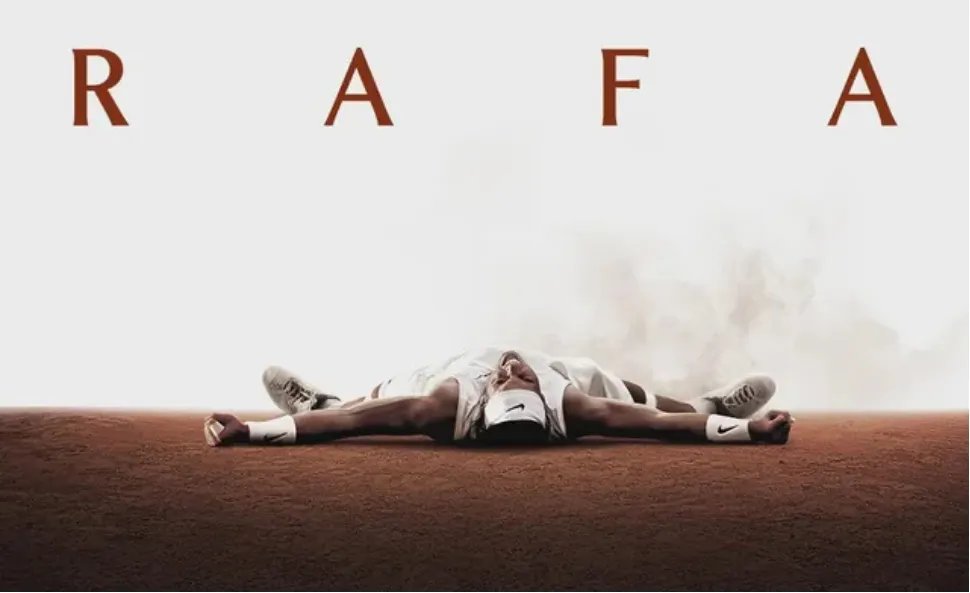
The “RAFA” documentary speaks to something in all of us: it’s riveting when you have the guts to step into the arena, risk failure, and give something your all, even if you know you’re going to leave it behind.
Rafael Nadal loved to win, but what he really loved was the feeling of pushing against meaningful struggle.
He loved the grind.
He loved the process.
He loved exploring his limits.
“Victory lasts only so long; it’s momentary,” says Nadal. “What has always motivated me is the desire to keep fighting, because satisfaction comes from difficulty.”
🎶 So fill to me the parting glass
And drink a health whate'er befalls
Then gently rise and softly call
Good night and joy be to you all 🎶
Good night, Glen and Sláinte. 🥃💚
#GlenHansard
Sometimes I would wonder if Glen Hansard really existed….
Seriously, he was such an angelic presence… not otherworldly…in fact, very present this presence…
A smiling rascal if you needed him to be… this most musical and mischievous archangel of Ballymun… no airs, plenty of graces...
Of course, Glen was the shining star of the Christmas Eve busk… sometimes the only one reminding the rest of us that Christmas began with a refugee born in a manger, which is hardly a step from living on the street.
To be utterly yourself by being more interested in others - a clue for any of us trying out different personas. He really was who you thought he was. He could never walk by a person living rough without checking they were OK… and more than that, he worked very hard so that less people had to live on the streets in the first place.
When the crowds got bigger and for safety’s sake Glen had to agree to move the busk to a stage kindly provided outside The Gaiety Theatre, he would say 'we’ll give it our best but it’s not a busk if we’re not on the street!’ …because that’s who he was - a performer at eye level in any situation. The stage was a separation he wouldn’t recognize. Of all the grand and gigantic venues he and The Frames played, you sensed the street was his most favoured place to perform. And street people, his favourite audience.
Voice of the streets. A choir of angels in one man. The rest of us blessed to stand there beside our very own and very earthed Angel Gabriel… All of us welcome in his choir, whatever shape or form.
….and I’m telling myself this morning that if he never existed, then he can never cease to exist. For me, he will always be everywhere I see a coin spinning into an open guitar case.
May you rest in the peace you gave to so many.
Bono
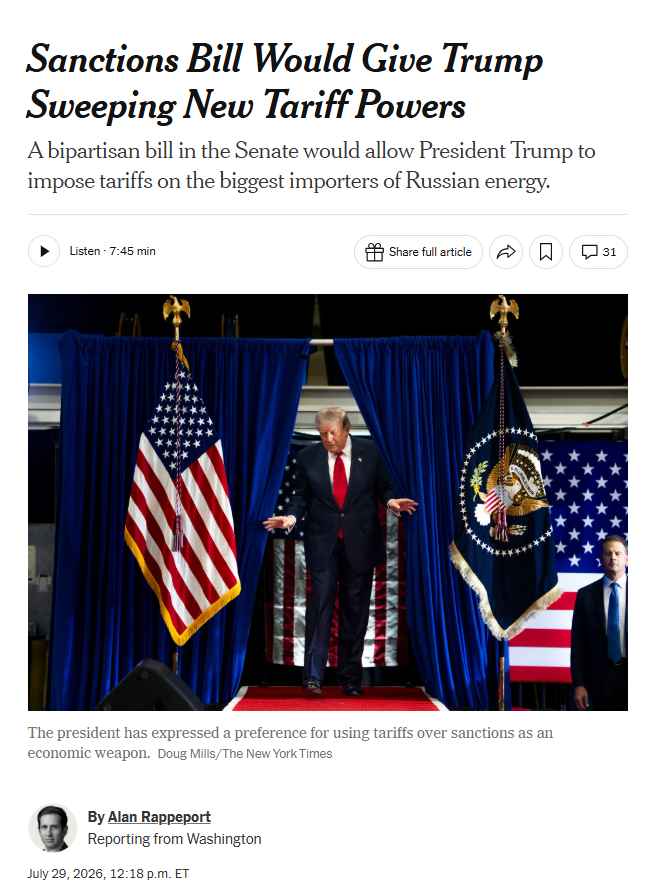
Glad to be quoted here, but the NYT sadly omitted my immediate, on-the-record reaction:
"Has the Senate lost its freaking mind?!" https://t.co/rfqgemEpzl