INSTEAD OF WATCHING AN HOUR OF NETFLIX TONIGHT.
This 60-minute Cambridge lecture by Demis Hassabis will teach you more about the future of AI than most people will learn in the next 5 years.
Bookmark it and give it an hour, no matter what.
A news reporter asked Michael Jordan if he thought the ’90s Bulls could beat LeBron’s Lakers.
MJ: Yes.
Reporter: By how much?
MJ: Two or three points.
Reporter: Why so close?
MJ: Most of us are almost 60 now.
in 1985, someone filmed what it actually looked like to trade billions of dollars in currencies across London, New York, and Hong Kong in a single day.
a 24-year-old in Hong Kong trading on pure instinct. a London dealer "bashing" the pound for profit. a New York speculator running 100% pure speculation for wealthy clients.
this is one of the rarest trading documentaries ever made. bookmark it.
Navinder Sarao triggered the 2010 flash crash-US lost $1 TRILLION in 5-min while he was lying in bed
- he made ~$70 million on all this deal
you will watch 40-minute investigation of that day - filmed before the trader was ever caught.
Bookmark - this is the best documentary on US algorithm failures.
Rick Rubin has low heart rate variability.
So he looked up everything that raises it, picked one technique, and started doing it every day.
It worked.
The technique: coherence breathing. 10 to 20 minutes a day, at least once, sometimes twice.
Now he and @hubermanlab do it together on camera so you can follow along:
Market Wizard Linda Raschke's 12 Technical Trading Rules
1. Buy the first pullback after a new high. Sell the first rally after a new low.
2. Afternoon strength or weakness should have follow‑through the next day.
3. The best trading reversals occur in the morning, not the afternoon.
4. The larger the market gaps, the greater the odds of continuation and a trend.
5. The way the market trades around the previous day’s high or low is a good indicator of the market’s technical strength or weakness.
6. The previous day’s high and low are two very important “pivot” points, for this was the definitive point where buyers or sellers came in the day before. Look for the market to either test and reverse off these points, or push through and show signs of continuation.
7. The last hour often tells the truth about how strong a trend truly is. “Smart money” shows their hand in the last hour, continuing to mark positions in their favor. As long as a market is having consecutive strong closes, look for the up‑trend to continue. The up‑trend is most likely to end when there is a morning rally first, followed by a weak close.
8. High volume on the close implies continuity the next morning in the direction of the last half‑hour. In a strongly trending market, look for resumption of the trend in the last hour.
9. The first hour’s range establishes the framework for the rest of the trading day.
10. A greater percentage of the day’s range occurs in the first hour than was the case in the past, and thus it has become increasingly important to trade aggressively if there are early signs of a strong trend for the day.
11. There are four basic principles of price behavior which have held up over time. Confidence that a type of price action is a true principle is what allows a trader to develop a systematic approach.
The following four principles can be modeled and quantified and hold true for all time frames, all markets. The majority of patterns or systems that have a demonstrable edge are based on one of these four enduring principles of price behavior. Charles Dow was one of the first to touch on them in his writings.
Principle One: A Trend Has a Higher Probability of Continuation than Reversal
Principle Two: Momentum Precedes Price
Principle Three: Trends End in a Climax
Principle Four: The Market Alternates between Range Expansion and Range Contraction
In the world of money, which is a world shaped by human behavior, nobody has the foggiest notion of what will happen in the future. Mark that word – Nobody! Thus the successful trader does not base moves on what supposedly will happen but reacts instead to what does happen.
This 1 hour MIT lecture by Jim Simons (Quant King) will teach you more about quantitative trading than most people learn in their entire career at Wall Street.
Bookmark this & watch, no matter what. It’s the most productive start you can give your week. Then read article below.
BREAKING: The Shiller CAPE just hit 40x.
Higher than 1929.
Higher than 2007.
Only one period in history was more expensive:
The dot-com bubble.
And that ended with the S&P 500 $SPY getting cut in half.
Memory Loss Breakthrough
New study reverses memory loss by reactivating the gut–brain connection and achieving a full cognitive reset.
Stanford researchers discovered that age-related decline may start in the gut, not the brain, and can potentially be reversed.
This groundbreaking study revealed that aging gut bacteria can silence the vagus nerve, effectively "switching off" the brain's memory center. Researchers found that specific microbes, particularly Parabacteroides goldsteinii, produce metabolites that trigger intestinal inflammation.
This inflammation interferes with vagus-nerve signaling, reducing communication between the gut and brain and weakening activity in the hippocampus, the brain's memory center.
By restoring vagus-nerve activity and correcting the gut microbiome, scientists were able to make the brains of old mice function like those of 2-months old mice.
This "remote control" strategy suggests that memory loss may not be an inevitable brain disease, but a communication failure that can potentially be repaired through the digestive system.
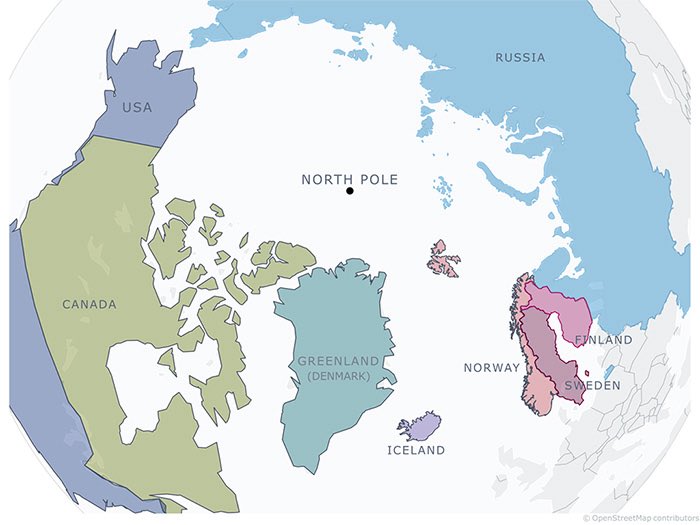
Trump just closed a deal on Greenland.
With someone who doesn’t own Greenland.
NATO Secretary General Mark Rutte sat across from Trump in Davos.
NATO doesn’t own Greenland. Denmark does.
Denmark wasn’t in the room.
Greenland wasn’t in the room.
When reporters asked Greenland’s Prime Minister what’s in the “framework deal” about his own country, he said:
“I don’t know what there is in the agreement, or the deal about my country.”
Read that again.
The leader of the territory being “dealt” doesn’t know what the deal says.
NATO’s official spokesperson confirmed Rutte “did not propose any compromise to sovereignty.”
Danish PM Frederiksen: “We cannot negotiate on our sovereignty.”
There is no written document.
Nothing signed.
No terms agreed.
Trump told Fox the deal lasts “forever.”
Forever on what paper?
Signed by whom?
Meanwhile, Critical Metals stock is up 158% this month.
The Tanbreez mine won’t hit 85,000 tonnes annual production until late 2026 at earliest.
Total development cost: $290 million.
80% of Greenland is covered in ice.
Arctic extraction runs 5-10x the cost of mining anywhere else on Earth.
One researcher called the plan “completely bonkers” and said you might as well mine on the moon.
But the stock keeps climbing.
Because the headline says “deal.”
Here’s what actually happened:
The 1951 Defense Agreement already gives America the right to build bases, move military assets, and operate freely across Greenland’s defense areas.
In perpetuity.
Trump negotiated enhanced access to something America already has access to.
This is like announcing you’ve secured “total access” to a gym you’ve had a membership to since 1951.
The pattern:
Threaten the impossible.
Create crisis.
Accept what was always available.
Declare unprecedented victory.
Watch the stocks move.
Repeat.
Kill conditions to monitor:
No signed agreement by Q2 2026 = thesis confirmed.
Sovereignty concessions from Denmark = thesis dead.
CRML production delays beyond Q4 2026 = 20% correction incoming.
The Arctic isn’t going anywhere.
Neither is Danish sovereignty.
But the narrative already moved on.
That’s the deal.
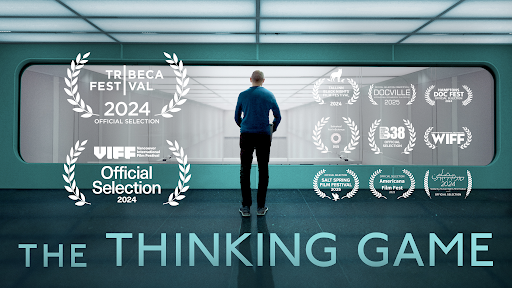
‘The Thinking Game’ documentary has just passed 200M views on YouTube in just 4 weeks! 🤯Perfect holiday viewing if you’re interested in a behind-the-scenes look at how an AGI lab works, or what goes into making a Nobel Prize winning project like AlphaFold happen.🧬🚀