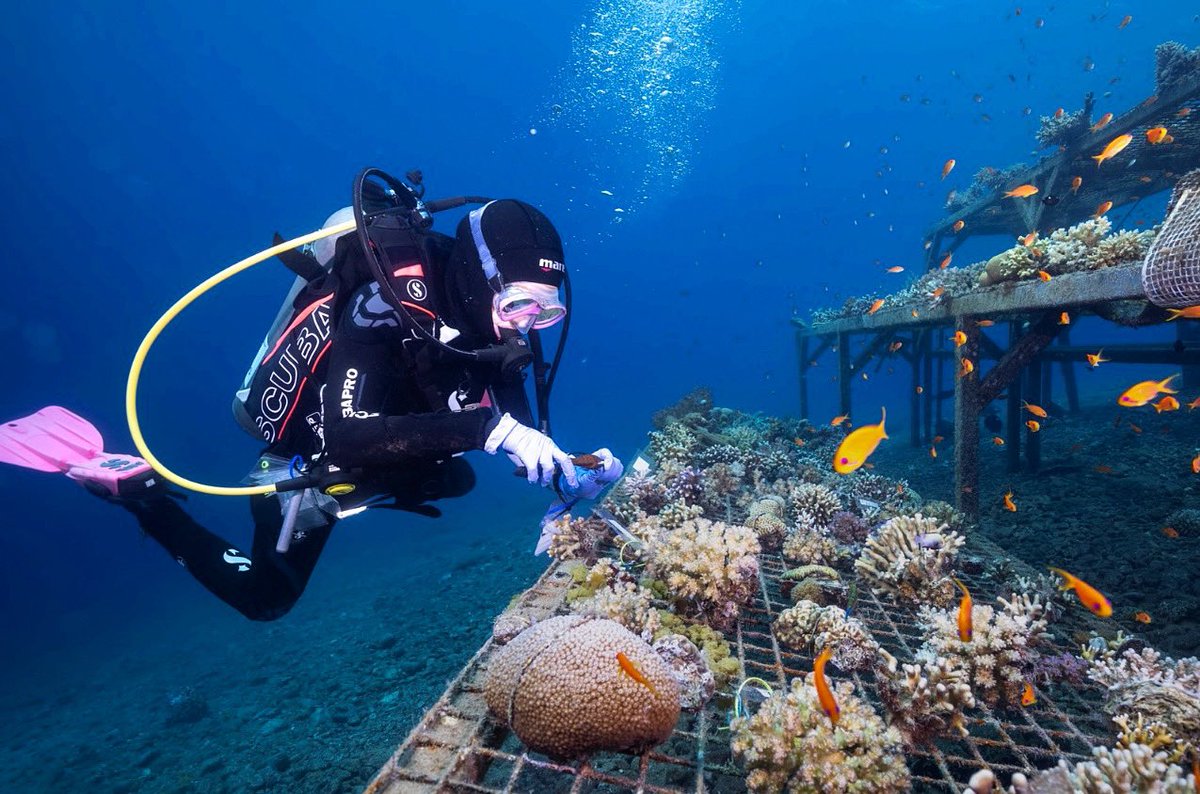
Supporting groundbreaking research on the Red Sea’s uniquely resilient corals & promoting regional and global collaboration to advance coral conservation. 🌊
USAID commits $15 million for coral reef-positive economic growth and conservation finance in the Egyptian Red Sea with GFCR. Egypt's reefs generate the most tourism income in the world, and contain corals that are resilient to rising ocean temperatures. https://t.co/6DK1COnK6e
Great news! Mission Blue declared the Great Fringing Reef of the Red Sea a Hope Spot in support of its full protection. Critical considering that its northern section is projected to be among the last reefs to survive this century due resilience to rising global sea temperatures!
The UN announced pledges of $75 million to offload 1.1 million barrels of oil from the deteriorating Safer oil storage vessel off of Yemen. Hopefully the emergency operation begins immediately to avert an environmental and humanitarian catastrophe. https://t.co/5HwyU66UIP
Egypt's reefs are resistant to climate changes but vulnerable to oil spills. Critical they be named a World Heritage Site for maximum protection. The Egyptian and global conservation communities must aggressively protect these beautiful & valuable reefs.https://t.co/N2TGX6vfIJ
We're so proud to have helped support installation of Aqaba, Jordan's Coral Monitoring Station! It's the 2nd high-tech continuous coral monitoring station in the Red Sea and part of a growing network (1st is in Eilat, Israel). Such an amazing asset for researchers and managers of
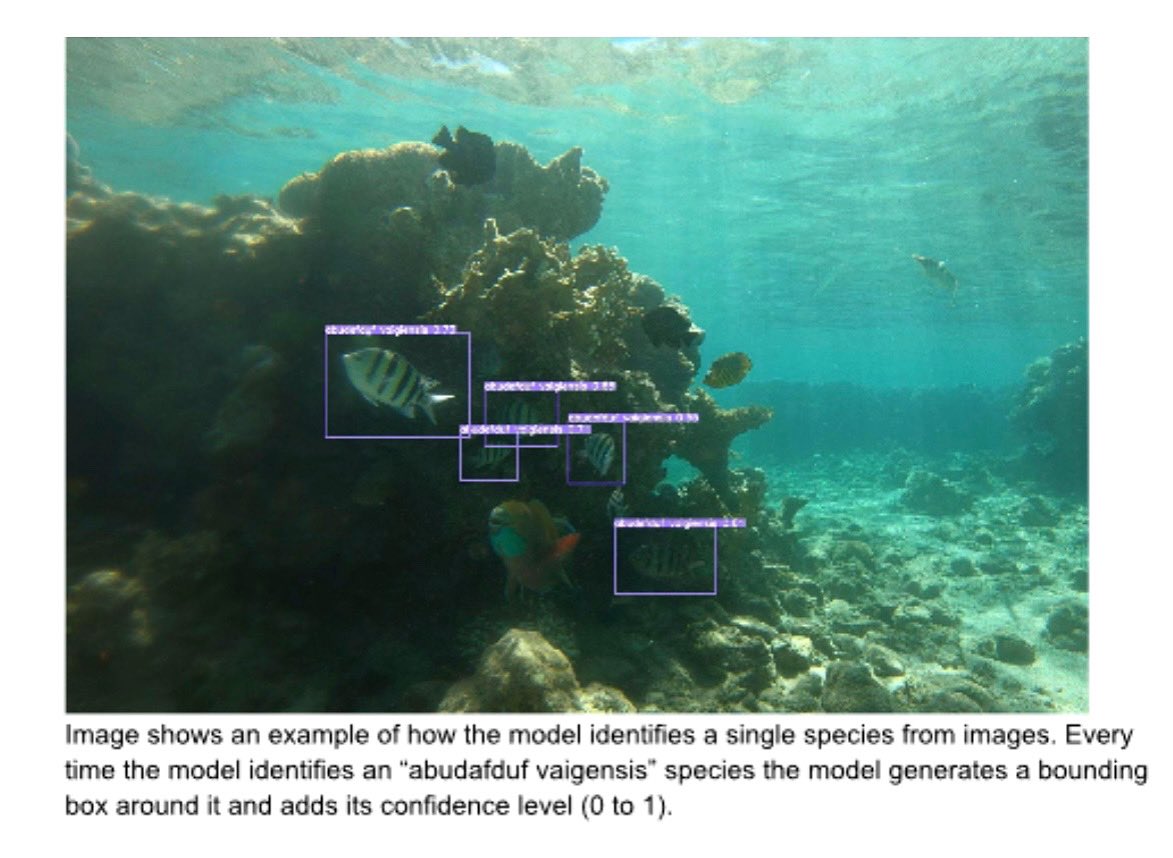
What's new for RSRF grant winner Victor China, a postdoc student at Tel Aviv University? Dr. China used the RSRF grant to support his work with public data and AI to learn about coral reef fish species in the Red Sea.
His goal is to establish an automatic flow of data from
What's new for RSRF grant winner Natalie Levy, PhD candidate at Bar-Ilan University? This year her RSRF grant helped her explore the ecobiome (invertebrates, microbes, and associated nutrients) of healthy and degraded coral reefs to determine if healthy reef ecobiomes could
The Red Sea Reef Foundation would like to highlight the research of last year's grants winners, starting with PhD candidate Naama-Rose Kochman of Hebrew University, Israel. Naama's RSRF grant helped support her study of the energetic state and function of Red Sea corals under the
Students from the @somas.sbu at @stonybrooku are studying coral holobiont interactions as part of their MAR 550 course in the Red Sea. They join students from six Israeli universities to study the biology & conservation of corals at #IUI, on thermally re… https://t.co/ayOHXBOQjD
This week's #coralcritter is the Pygmy Seahorse or Hippocampus bargibanti. Pygmy Seahorses get their name from their tiny size, as they grow on average between .5 to 1 inch ! As they are so small, for protection, Pygmy Seahorses spend their entire adult life in camouflage, and
live on various #SeaFan corals. Recently, scientists discovered that the color #tubercles of the Pygmy Seahorse change based on the sea fan color they inhabit. As the oceans are warming, threats to their habitats grow as the health of coral reefs is declining.
Planting "super corals" won't work, a new study shows. Reefs are too large and dying too quickly. Instead, lets protect reefs likely to survive warming waters by mitigating local threats! For example, let's stop spilling sewage onto the Red Sea's reefs.
https://t.co/HDzflIZf3p
10 years on from the Horizon oil spill, oil is still detectable in Gulf fish, emphasizing long-term implications of a spill in any marine ecosystem. Hoping the UN gets the Safer tanker emptied soon before we face a similar massive spill in the Red Sea.
https://t.co/YBE3WPNppC
~32% of methane emissions related to human activity. WE CAN MEANINGFULLY REDUCE GLOBAL WARMING via less beef consumption and mandating use of newer animal feeds that create less cow farts. Global warming is decimating the world's iconic coral reefs so let's get on this!
For the 2nd year in a row, NOAA scientists observed a record annual increase in atmospheric levels of methane, a powerful, heat-trapping greenhouse gas that’s the second biggest contributor to human-caused global warming after carbon dioxide. Cow poop and cow farts account for