In conclusion, the Prosperity Party’s campaign against #Eritrea is a naked attempt to externalize a deep-seated domestic crisis and can neither hoodwink its domestic constituency nor the international community.
If the Daily Mail is going to boldly identify this convicted criminal as #Eritrean and bring the Eritrean diaspora in the UK into disrepute, the least they can do is investigate the real identity of this criminal.
Only because he sought asylum as an #Eritrean doesn't make him Eritrean, it actually opens a Pandoras box of the amount of all non-Eritreans who sought asylum as Eritreans.
1) The fact that his name is Bruke Desalegn Demisie,(a quintessential Ethiopian name), makes it impossible to make him Eritrean.
2) The fact that he asked for Amharic (#Ethiopia's official language) translator.
There is one simple test the Daily Mail can do to ascertain his identity. Ask the prosecutor ask for deportation of the criminal to Eritrea and see how quickly he will tell his real identity!
The Weaponization of Victimhood: How Ethiopia’s Prosperity Party Trapped itself in Its Own Regional Expansionist Ploys
Ministry of Foreign Affairs
Research and Documentation Division
18 August 2026
*"...For the past three years, the PP has been openly threatening the sovereignty and territorial integrity of its neighbors; questioned the very existence of sovereign states; and, through its collusion with disruptive external actors, systematically contributed to the destabilization of the Horn of Africa. Yet today, it cries foul, manufacturing a narrative of 'encirclement and external conspiracy' to conceal its own crippling domestic shortcomings and regional failures".
*"...the Prosperity Party’s campaign against Eritrea is a naked attempt to externalize a deep-seated domestic crisis and can neither hoodwink its domestic constituency nor the international community".
*"...Eritrea’s sovereignty is not a bargaining chip, nor is it a historical inconvenience to be corrected according to the miscalculations of a reckless neighbor. It is an immutable fact of international law and African political history. Duplicitous attempts of manufacturing a narrative of encirclement by hostile alliances, and portrayal of the primary initiator of regional tensions as the 'the innocent victim' cannot alter that reality".
"ጭጉራፍ'ሲ ባዕላ ሃሪማ ተእዊ!" እዩ እቲ ነገሩ።
https://t.co/H7oFKZwUk2
It is Friday, and what a week it has been for the folks at FANA and the PP cadres. I am accustomed to receiving from Member States their priorities for UNGA 81, but this week’s output from the PP has been something of an overload.
Eight years after Prime Minister Abiy Ahmed came to power, 2026 may well be the year in which the rhetoric, acronyms and strategic formulations finally lay bare what has long been hiding in plain sight: the ambitions of his government for #Ethiopia, the implications for its neighbors, and the formidable challenge this presents to an international community seeking to build lasting peace and stability in the #Horn of #Africa.
In a region where strategic doctrines come and go with remarkable speed, one might reasonably hope that Ethiopia’s foreign policy could survive a Thursday without acquiring another acronym. Perhaps the PP might give its audience a little time to digest its growing collection of increasingly elaborate formulations before unveiling the next one.
Otherwise, in the rush to introduce yet another strategic concept, it may risk another strategic miscalculation, and deepen the very self-created quagmire it is now working so hard to explain. But before we get to this week’s latest formulations, let us go back a little bit.
Prime Minister Abiy Ahmed introduced Ethiopia, and at times the region, to መደመር, Medemer, in its first and second iterations, presenting it as a new political philosophy and, ultimately, as the only viable path for Ethiopia and the region: addition, convergence, cooperation and the pooling of strengths. But the Ethiopian experience has increasingly produced a rather different vocabulary.
Instead of መደመር (Medemer), there has been far too much መደናገር (Medenager): confusion, disorientation and a country struggling to find its way through one crisis after another. And instead of adding to the lives and security of its citizens, there has been መቀነስ (Mequenes): a grim process of subtraction, as Ethiopian lives have been lost in violence across different parts of the country.
People have been killed in cold blood. Communities have been devastated. Families have disappeared into grief. And much of the international community has watched with a silence that has sometimes been difficult to distinguish from indifference. One is left wondering whether Ethiopian lives have been valued differently depending on where those lives were lost.
The irony is difficult to miss. A philosophy premised on adding together was supposed to strengthen the Ethiopian state and bring its peoples closer together. Yet the country has repeatedly experienced fragmentation, violence, displacement and deepening mistrust.
Perhaps the real test of any political philosophy is not how elegantly it is written in books, nor how compellingly it is presented from podiums. It is whether ordinary people are safer, whether their children are alive, whether communities can live without fear, and whether a citizen’s life is treated as having equal value regardless of ethnicity, region or political affiliation.
Last month, we were introduced to the 3Ms: Mequaquam, Metekem and Megrat. This week, the PP brought us the 4As of Ethiopia’s diplomatic doctrine: Active, Alternative, Adaptive and Agenda-Setting. And now we have the latest PP-created concept: “compound pressure.” One almost wonders when the PowerPoint will run out of letters, or whether every familiar principle of statecraft will eventually acquire its own acronym.
As Prime Minister Abiy put it:
“...ለዚህ ምንከተለው መንገድ፣ በኛ ሳይድ ሶስት መ ብለን አስቀምጠናቸዋል። አንደኛው መቋቋም ነው... ሁለተኛ መጠቀም ነው። ፈተናን ወደ እድል መቀየር። ሶስተኛው መግራት ነው። በሰው አጀንዳ መገራት ሳይሆን አሁን የራስ አጀንዳ ፈጥሮ መግራት ነው...”
Translated by @HOAAffairs as:
“…The path we follow on our side we have set as the ‘Three Ms’. The first is Mequaquam (to withstand): building resilient institutions and a nation. The second is Metekem (to exploit): turning challenges into opportunities. The third is Megrat (to tame): rather than being tamed by others’ agendas, creating our own agenda and taming [the region] …”
There is, of course, nothing inherently objectionable about a state developing strategic doctrines or giving familiar ideas new terminology. States are entitled to think strategically. They are entitled to develop doctrines. They are even entitled to create acronyms. But beneath the acronyms remain a few rather unfashionable concepts that PP cadres continue to ignore: sovereignty, territorial integrity, sovereign equality and international law. Strategies evolve. Acronyms come and go. Sovereignty is not a passing trend.
And this is where the latest formulation, “compound pressure”, deserves closer attention. The PP presents Ethiopia’s security environment in terms of multiple pressures: the unresolved political and security challenges surrounding the Tigray transition, the Nile Basin and GERD dispute, and wider questions concerning Red Sea access and frontier security. These developments may indeed impose a cumulative strategic burden on Ethiopia.
There is also nothing inherently wrong with analyzing a country’s security environment in terms of cumulative pressure. Strategic planners do this all the time. But such an analysis must be accompanied by accountability, honesty and a clear distinction between perception and fact.
The problem begins when strategic analysis is transformed into a legal argument. Several developments may have a cumulative effect on #Ethiopia. That does not establish that they are coordinated. It does not establish that they have a single author. It does not establish that they constitute one dispute. And, most importantly, it does not give Ethiopia additional legal rights.
Each issue has its own history, its own actors, its own facts and its own applicable law. Strategic accumulation is not legal aggregation. Or, as I would describe it, a self-created quagmire compounded by arrogance and hubris is still a quagmire. It is reassuring, at least, to know that the PP understands the predicament it has created for itself.
But a quagmire is a predicament, not a title deed. A difficult strategic environment does not give Ethiopia a legal right to resolve it by imposing costs on its neighbors. Feeling being constrained does not confer the right to constrain others. The PP may feel strategically constrained by several separate developments. It cannot convert that cumulative constraint into a legal basis for overriding the sovereign rights of its neighbors.
PM Abiy cannot convert cumulative strategic pressure into cumulative sovereign rights. Strategic pressure may explain behavior; it does not legalize it. #Eritrea|s decisions regarding foreign military bases, maritime policy, relations with other states and territorial integrity may be inconvenient to Ethiopian strategy. But, inconvenience is not illegality.
On the issue of establishing a naval base on the Red Sea, the presence of foreign military facilities in the region does not change the equation. They exist because a sovereign state, permits them. #Eritrea has chosen otherwise. Presence by consent is not entitlement by proximity. International law does not operate on a “me too” principle.
The same applies to claims involving proxies, conspiracies and regional alignments. Tigrayan politics have their own history and agency. Egypt, Sudan and the Gulf states have their own interests and calculations. #Eritrea has its sovereign interests. #Ethiopia has its own. There is a word for states pursuing overlapping interests: international relations.
And if “compound pressure” simply means that Ethiopia is surrounded by sovereign states whose independent decisions sometimes constrain Ethiopian choices, Eritrea can offer a modest reminder: that is what having neighbors means.
Eritrea does not oppose Ethiopia’s aspirations. It does not oppose peaceful access to international markets or mutually beneficial regional trade. What it rejects is the progression from access to entitlement, entitlement to control, and control to historical or security necessity. That progression is not inevitable. It is a political choice.
Eritrea also understands perfectly well the economic value of Massawa, Assab, the Dahlak Islands and its Red Sea coastline. Thank you for the business advice. Eritrea will decide how to manage its sovereign assets.
There is also a certain irony in Ethiopia’s invocation of “sovereignty of decision.” Ethiopia has sovereignty of decision. So does Eritrea. Ethiopia deserves strategic freedom. So does Eritrea. Ethiopia deserves security. So does Eritrea. Freedom from the agendas of others cannot mean the subordination of neighbors to one’s own agenda. That is not strategic freedom. What the PP is seeking is strategic privilege.
The #Horn of #Africa does not need another war to establish this rather obvious proposition. A stable, prosperous Ethiopia is in Eritrea’s interest. A stable, prosperous Eritrea is in Ethiopia’s interest. The sensible path is reciprocity: equal sovereignty, negotiated access, lawful commerce and respect for established borders. If #Ethiopia wants trade, it should build partnerships. If it wants regional influence, it should exercise diplomacy. If it wants access, it should negotiate access. But if access becomes a demand that Eritrea surrender its sovereign discretion, then the issue is no longer maritime access. It is hierarchy.
And hierarchy is not the same thing as regional cooperation.
The #Horn has suffered enough from attempts to resolve political and strategic problems through force, coercion and unilateral calculations of entitlement. There is another path. It begins with accepting a rather simple proposition: #Ethiopia can pursue its interests without denying the interests of its neighbors. It can seek access without claiming ownership. It can pursue security without making insecurity for others the price of its own. It can exercise influence without demanding hierarchy.
The PP can develop as many strategic doctrines and invent as many acronyms as it wishes. But none of them changes the underlying rules. Acronyms can describe a strategy; they cannot amend international law. And there remains one inconvenient constraint that no PP acronym can overcome: international law applies to #Eritrea too. But it also applies to #Ethiopia.
Have a great weekend, folks. Hopefully, the PP cadres will take a break too, if only to give us all a chance to catch up with the latest acronym on Monday…
#Eritrea's detractors (እፍሊ ሓንጨመንጪ) have gone completely berserk these days.
This time round, the event that has aroused their irrational tantrums is the nomination, and subsequent appointment, of Eritrea's Charge d'Affaires as Chair-Rapporteur of the 2026 UNHRC Social Forum by the Africa Group.
As it will be recalled, Eritrea's appointment to UNICEF's Executive Board and its recent election to the Vice-Presidency of the 81st UN General Assembly had triggered similar commotion in these feckless groups in the past months.
For two principal reasons: i) any limelight/recognition of Eritrea's voice in the international stage and appreciation of its contributions to multilateral diplomacy pokes a huge hole in their wicked and relentless demonization campaigns; ii) it will ultimately impact on their hefty lobbyists' fees.
As the saying goes: "the camel marches as the dog barks!" - ፈኮስቲ፥ ጃንዳ ርእሲ ኹቦ !
I have not seen a single person from the member of the public post a photo planting the said 800,000,000 trees. All I see is PP top brass protected by security entourage posing for photo ops. Aye Potemkin Party always living up to their name. Always distracting the public in a daily basis from the real existential issues facing #Ethiopia.
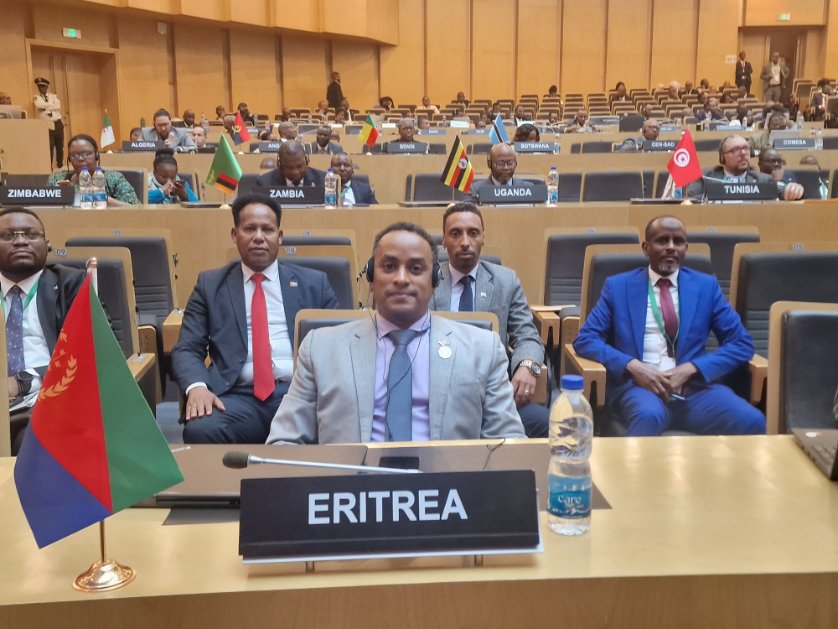
Eritrean Delegation Participates in AU Executive Council Session
An Eritrean delegation led by Mr. Biniam Berhe, Chargé d’Affaires at the Eritrean Embassy in Ethiopia and Eritrea’s Permanent Representative to the African Union and the United Nations Economic Commission for Africa, participated in the 49th Ordinary Session of the African Union Executive Council.
The session, convened at the AU Headquarters in Addis Ababa on 28 and 29 July, was held under the theme “Assuring Sustainable Water Availability and Safe Sanitation Systems to Achieve Agenda 2063.”
Addressing the session on Eritrea’s policies and positions regarding the main topics under discussion, the Eritrean delegation noted that, since Eritrea is located in the Sahel Belt, where water scarcity is prevalent, ensuring an adequate water supply is one of the country’s main national development priorities. The delegation further stated that Eritrea is making substantial, forward-looking investments in sustainable water management, backed by firm political commitment.
The delegation also stated that potable water coverage, which stood at less than 13% in 1991, has now reached 85% as a result of substantial investments in the construction of water reservoirs and related infrastructure. It added that the number of dams has increased from 138 to 850.
The delegation further noted that Eritrea is working toward the implementation of the 2030 Sustainable Development Goals and Agenda 2063 and has so far registered encouraging results.
After reviewing progress made during the first half of the year in programs aimed at ensuring access to potable water, the session proposed measures to be taken in the future.
"Mayor Adanech Abebe promised to provide them with jobs if I helped bring more Tegaru out of Tigray. I appreciate the offer, but what I truly want is to return to Tigray."
— Tsadkan Gebretensae 🤔
⚠️Welcome to Ethiopia.⚠️
A tourist says he was shot at by federal police near the Awash–Djibouti junction. Already injured in an earlier militant attack, he fled through the desert and was later detained for six days. He also says all his belongings were stolen from his vehicle.
Travelling to Ethiopia is no longer safe.
🎦 Charlesworldtravel.
#Ethiopia #VisitEthiopia #flyethipoia #Tourist #AddisAbaba #Charlesworldtravel
#BREAKING : 𝗡𝗲𝘄 𝗘𝘁𝗵𝗶𝗼𝗽𝗶𝗮𝗻 𝗠𝗶𝗹𝗶𝘁𝗮𝗿𝘆 𝗢𝗳𝗳𝗲𝗻𝘀𝗶𝘃𝗲 𝗶𝗻 𝗧𝗶𝗴𝗿𝗮𝘆 𝗮𝗻𝗱 𝗡𝗲𝗮𝗿 𝗦𝘂𝗱𝗮𝗻 𝗕𝗼𝗿𝗱𝗲𝗿
ETHIOPIA — 🚨 TPLF authorities in Tigray claim that federal forces have launched a new offensive involving artillery, drones, and infantry against TPLF forces through Shererina, a region near the Tigray—Sudanese border.
(See the attached press release)
At the same time, Sudanese sources report that Ethiopian forces have advanced toward the Um Barakit border sector, in what they describe as an apparent effort to strengthen Ethiopia's position around the disputed Al-Fashiga region from both the Um Barakit and Tigray fronts.
The latest military movements are being interpreted by some observers as a potential expansion of tensions beyond Ethiopia's internal conflicts, raising concerns about wider regional instability.
Some Sudanese and regional sources further allege that the operation was coordinated or encouraged by the UAE following recent battlefield gains by the Sudanese Armed Forces and allied groups in North Kordofan against UAE-Ethiopia backed RSF militia.
(Developing story)
Potemkin Party's official media outlets - Ethiopian News Agency (ENA), EBC, and FANA among others - are yet again on overdrive mode this week to churn out, particularly in their domestic broadcasts, fallacious and incendiary vitriol against Eritrea on a daily basis.
The stale and obsolete themes, the inflammatory and provocative packaging, remain the same; i.e.
1. Denigration and denial of Eritrea's hard-won independence that was achieved through precious sacrifices in Africa's longest liberation struggle when its right to decolonization was suppressed in the 1940s on the altar of "overarching" geopolitical interests of some global powers;
2. Repeated and bellicose pronouncements, accompanied by incessant saber-rattling, on the Potemkin Party's inexorable quest for "sovereign access to the sea... through negotiations if possible and force if necessary";
3. Rationalization of a "wider war that would expand to Eritrea's Dahlak Islands for reasons of strategic depth", in order to project and guarantee, in its convoluted views, "viable maritime power";
4. Banal and spurious "economic arguments" for rationalizing war and invasion in order to avoid exorbitant "port fees"; etc.
These are red lines and political blasphemies that should not be countenanced by any normal country.
The sad fact is these are normative for a callous and reckless Potemkin Party that seems to specialize in incubating endless conflicts both at home and in the wider Horn of Africa region (illicit MoU with Somaliland; active and surrogate role in the exacerbation of the conflict in Sudan etc.).
https://t.co/GkuVblIueE
Dr. Ruth Ghirmay, works as a physician in the Department of Obstetrics and Gynecology at Orotta National Referral Hospital. Born in 1991 in the historic hills of Ararib in the Sahel region, she came into the world three months after Eritrea gained its independence. Due to her mother's profession as a teacher, her family moved frequently. Dr. Ruth Ghirmay attended school in Keren until the third grade before continuing her education in Asmara. Education has always been the most valued legacy in her family; she was a prize-winning student and actively participated in school debating and presentation contests. Her parents are her greatest inspiration. They instilled in her the belief that “success is the fruit of hard work,” a principle that remains at the core of her life. She recalls her father taking her through the corridors of the University of Asmara, and in those moments, she promised herself that she would one day walk those halls as a student. Holding onto that conviction, she went to Sawa to complete her high school education and training as part of the national service. Her academic journey in college was demanding, requiring immense energy, determination, discipline, and, most importantly, vision. Guided by these principles, she achieved a perfect 4.0 GPA in her second semester, which allowed her to join the College of Medicine. She chose to pursue medicine because her father’s discussions about the field had exposed her to it from an early age. After eight years of rigorous study, she graduated in 2019 and was assigned to Dekemhare Hospital.
يُعد تخرج الدكتورة حبن داويت كأول طبيبة #إريتريا تنال شهادة التخصص في علم الأمراض (Pathology) إنجازاً تاريخياً لـكلية أورتا للطب والعلوم الصحية وللقطاع الصحي في إريتريا بأكمله. يُمثل هذا الحدث خطوة استراتيجية نحو توطين الكفاءات الطبية النادرة فى الأمراض المعقدة
#Eritrea 🇪🇷 🙌🏾
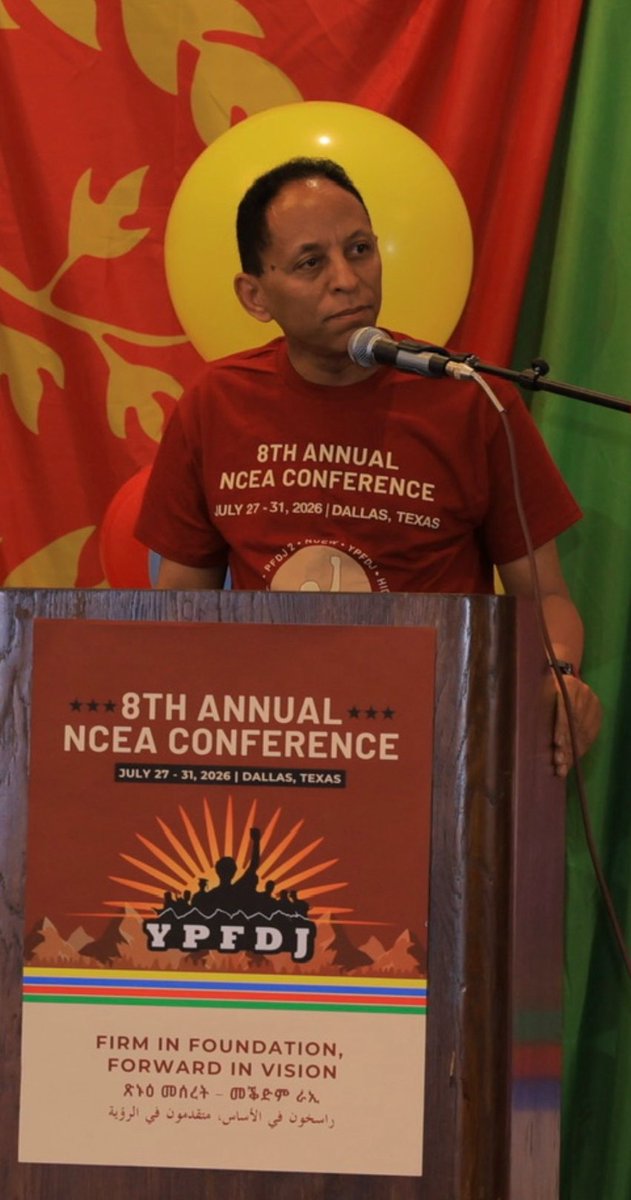
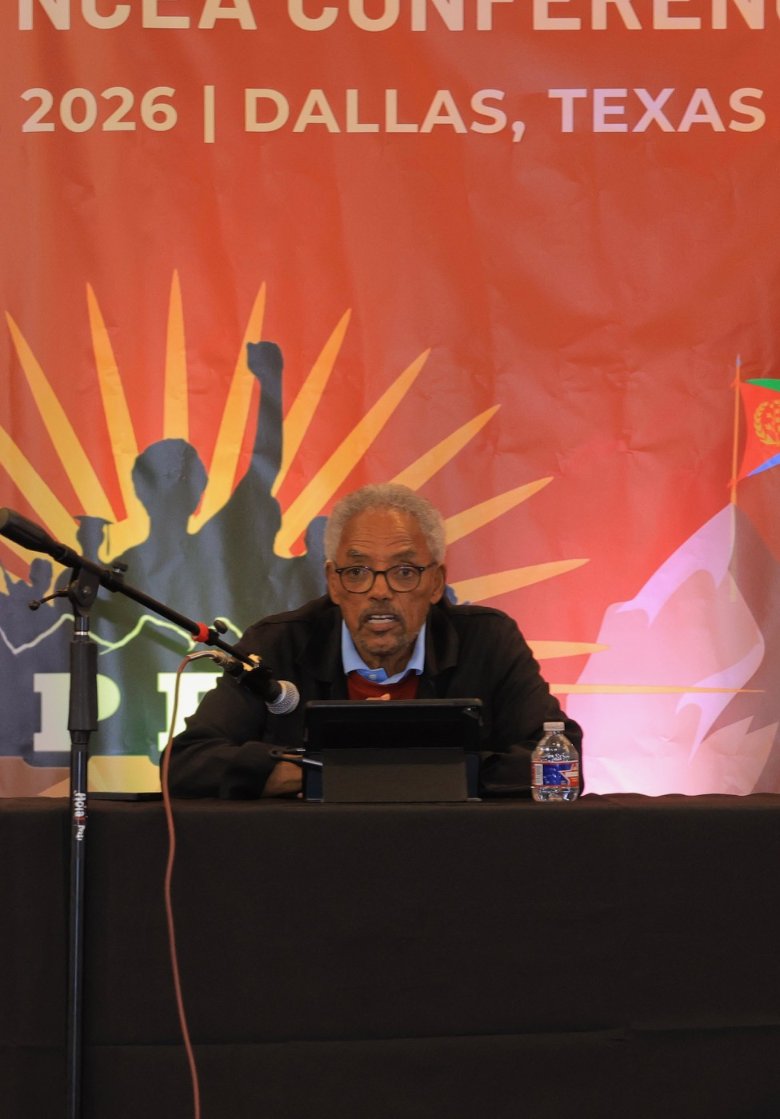
8th Annual NCEA Conference underway in Dallas, Texas, under the theme: " Firm Foundation, Forward in Vision".
Keynote address by Mr. Yosuf Saiq, Head of PFDJ Organizational Affairs, on current situation at home within the context of unfolding regional and global developments and trends; and, remarks on organizational matters by Mr. Berhane Ghebrehiwot, Charge d 'Affairs at the Eritrean Embassy in the US.
Annual Activity Reports by the youth and women segments of NCE; discussion papers on the experience, foresight and vision of the EPLF on education; ownership of national narrative as an element of strategic communication are some of the main events conducted so far in the ongoing four-day Conference.
Unfortunately decades of the @WhiteHouse and @StateDept treating #Ethiopian leadership with Kids gloves has made them act as petulant brats who throw tantrums if anyone in the Horn of #Africa is holding bilateral/multilater meetings. They think everyone is conspiring against them...
𝗘𝗻𝘁𝗶𝗿𝗲 𝗘𝘁𝗵𝗶𝗼𝗽𝗶𝗮𝗻 𝗬𝗼𝘂𝘁𝗵 𝗙𝗼𝗼𝘁𝗯𝗮𝗹𝗹 𝗧𝗲𝗮𝗺 𝗗𝗶𝘀𝗮𝗽𝗽𝗲𝗮𝗿𝘀 𝗮𝗳𝘁𝗲𝗿 𝗚𝗼𝘁𝗵𝗶𝗮 𝗖𝘂𝗽 𝗙𝗼𝗼𝘁𝗯𝗮𝗹𝗹 𝗧𝗼𝘂𝗿𝗻𝗮𝗺𝗲𝗻𝘁
🚨 BREAKING | SWEDEN — Twenty Ethiopian players from a youth football team have reportedly gone missing in Gothenburg on the day of the final of this year’s 𝗚𝗼𝘁𝗵𝗶𝗮 𝗖𝘂𝗽.
According to Swedish police, the missing boys are aged between 14 and 17. One or more team leaders are also reportedly missing.
𝗚𝗼𝘁𝗵𝗶𝗮 𝗖𝘂𝗽 organisers alerted police, who subsequently filed a missing-persons report.
The disappearance has also raised speculation that the teenagers may have chosen not to return to #Ethiopia, potentially seeking asylum in Sweden amid the country’s ongoing political and economic difficulties.
However, their motives have not been confirmed by authorities.


![AmbStesfamariam's tweet photo. It is Friday, and what a week it has been for the folks at FANA and the PP cadres. I am accustomed to receiving from Member States their priorities for UNGA 81, but this week’s output from the PP has been something of an overload.
Eight years after Prime Minister Abiy Ahmed came to power, 2026 may well be the year in which the rhetoric, acronyms and strategic formulations finally lay bare what has long been hiding in plain sight: the ambitions of his government for #Ethiopia, the implications for its neighbors, and the formidable challenge this presents to an international community seeking to build lasting peace and stability in the #Horn of #Africa.
In a region where strategic doctrines come and go with remarkable speed, one might reasonably hope that Ethiopia’s foreign policy could survive a Thursday without acquiring another acronym. Perhaps the PP might give its audience a little time to digest its growing collection of increasingly elaborate formulations before unveiling the next one.
Otherwise, in the rush to introduce yet another strategic concept, it may risk another strategic miscalculation, and deepen the very self-created quagmire it is now working so hard to explain. But before we get to this week’s latest formulations, let us go back a little bit.
Prime Minister Abiy Ahmed introduced Ethiopia, and at times the region, to መደመር, Medemer, in its first and second iterations, presenting it as a new political philosophy and, ultimately, as the only viable path for Ethiopia and the region: addition, convergence, cooperation and the pooling of strengths. But the Ethiopian experience has increasingly produced a rather different vocabulary.
Instead of መደመር (Medemer), there has been far too much መደናገር (Medenager): confusion, disorientation and a country struggling to find its way through one crisis after another. And instead of adding to the lives and security of its citizens, there has been መቀነስ (Mequenes): a grim process of subtraction, as Ethiopian lives have been lost in violence across different parts of the country.
People have been killed in cold blood. Communities have been devastated. Families have disappeared into grief. And much of the international community has watched with a silence that has sometimes been difficult to distinguish from indifference. One is left wondering whether Ethiopian lives have been valued differently depending on where those lives were lost.
The irony is difficult to miss. A philosophy premised on adding together was supposed to strengthen the Ethiopian state and bring its peoples closer together. Yet the country has repeatedly experienced fragmentation, violence, displacement and deepening mistrust.
Perhaps the real test of any political philosophy is not how elegantly it is written in books, nor how compellingly it is presented from podiums. It is whether ordinary people are safer, whether their children are alive, whether communities can live without fear, and whether a citizen’s life is treated as having equal value regardless of ethnicity, region or political affiliation.
Last month, we were introduced to the 3Ms: Mequaquam, Metekem and Megrat. This week, the PP brought us the 4As of Ethiopia’s diplomatic doctrine: Active, Alternative, Adaptive and Agenda-Setting. And now we have the latest PP-created concept: “compound pressure.” One almost wonders when the PowerPoint will run out of letters, or whether every familiar principle of statecraft will eventually acquire its own acronym.
As Prime Minister Abiy put it:
“...ለዚህ ምንከተለው መንገድ፣ በኛ ሳይድ ሶስት መ ብለን አስቀምጠናቸዋል። አንደኛው መቋቋም ነው... ሁለተኛ መጠቀም ነው። ፈተናን ወደ እድል መቀየር። ሶስተኛው መግራት ነው። በሰው አጀንዳ መገራት ሳይሆን አሁን የራስ አጀንዳ ፈጥሮ መግራት ነው...”
Translated by @HOAAffairs as:
“…The path we follow on our side we have set as the ‘Three Ms’. The first is Mequaquam (to withstand): building resilient institutions and a nation. The second is Metekem (to exploit): turning challenges into opportunities. The third is Megrat (to tame): rather than being tamed by others’ agendas, creating our own agenda and taming [the region] …”
There is, of course, nothing inherently objectionable about a state developing strategic doctrines or giving familiar ideas new terminology. States are entitled to think strategically. They are entitled to develop doctrines. They are even entitled to create acronyms. But beneath the acronyms remain a few rather unfashionable concepts that PP cadres continue to ignore: sovereignty, territorial integrity, sovereign equality and international law. Strategies evolve. Acronyms come and go. Sovereignty is not a passing trend.
And this is where the latest formulation, “compound pressure”, deserves closer attention. The PP presents Ethiopia’s security environment in terms of multiple pressures: the unresolved political and security challenges surrounding the Tigray transition, the Nile Basin and GERD dispute, and wider questions concerning Red Sea access and frontier security. These developments may indeed impose a cumulative strategic burden on Ethiopia.
There is also nothing inherently wrong with analyzing a country’s security environment in terms of cumulative pressure. Strategic planners do this all the time. But such an analysis must be accompanied by accountability, honesty and a clear distinction between perception and fact.
The problem begins when strategic analysis is transformed into a legal argument. Several developments may have a cumulative effect on #Ethiopia. That does not establish that they are coordinated. It does not establish that they have a single author. It does not establish that they constitute one dispute. And, most importantly, it does not give Ethiopia additional legal rights.
Each issue has its own history, its own actors, its own facts and its own applicable law. Strategic accumulation is not legal aggregation. Or, as I would describe it, a self-created quagmire compounded by arrogance and hubris is still a quagmire. It is reassuring, at least, to know that the PP understands the predicament it has created for itself.
But a quagmire is a predicament, not a title deed. A difficult strategic environment does not give Ethiopia a legal right to resolve it by imposing costs on its neighbors. Feeling being constrained does not confer the right to constrain others. The PP may feel strategically constrained by several separate developments. It cannot convert that cumulative constraint into a legal basis for overriding the sovereign rights of its neighbors.
PM Abiy cannot convert cumulative strategic pressure into cumulative sovereign rights. Strategic pressure may explain behavior; it does not legalize it. #Eritrea|s decisions regarding foreign military bases, maritime policy, relations with other states and territorial integrity may be inconvenient to Ethiopian strategy. But, inconvenience is not illegality.
On the issue of establishing a naval base on the Red Sea, the presence of foreign military facilities in the region does not change the equation. They exist because a sovereign state, permits them. #Eritrea has chosen otherwise. Presence by consent is not entitlement by proximity. International law does not operate on a “me too” principle.
The same applies to claims involving proxies, conspiracies and regional alignments. Tigrayan politics have their own history and agency. Egypt, Sudan and the Gulf states have their own interests and calculations. #Eritrea has its sovereign interests. #Ethiopia has its own. There is a word for states pursuing overlapping interests: international relations.
And if “compound pressure” simply means that Ethiopia is surrounded by sovereign states whose independent decisions sometimes constrain Ethiopian choices, Eritrea can offer a modest reminder: that is what having neighbors means.
Eritrea does not oppose Ethiopia’s aspirations. It does not oppose peaceful access to international markets or mutually beneficial regional trade. What it rejects is the progression from access to entitlement, entitlement to control, and control to historical or security necessity. That progression is not inevitable. It is a political choice.
Eritrea also understands perfectly well the economic value of Massawa, Assab, the Dahlak Islands and its Red Sea coastline. Thank you for the business advice. Eritrea will decide how to manage its sovereign assets.
There is also a certain irony in Ethiopia’s invocation of “sovereignty of decision.” Ethiopia has sovereignty of decision. So does Eritrea. Ethiopia deserves strategic freedom. So does Eritrea. Ethiopia deserves security. So does Eritrea. Freedom from the agendas of others cannot mean the subordination of neighbors to one’s own agenda. That is not strategic freedom. What the PP is seeking is strategic privilege.
The #Horn of #Africa does not need another war to establish this rather obvious proposition. A stable, prosperous Ethiopia is in Eritrea’s interest. A stable, prosperous Eritrea is in Ethiopia’s interest. The sensible path is reciprocity: equal sovereignty, negotiated access, lawful commerce and respect for established borders. If #Ethiopia wants trade, it should build partnerships. If it wants regional influence, it should exercise diplomacy. If it wants access, it should negotiate access. But if access becomes a demand that Eritrea surrender its sovereign discretion, then the issue is no longer maritime access. It is hierarchy.
And hierarchy is not the same thing as regional cooperation.
The #Horn has suffered enough from attempts to resolve political and strategic problems through force, coercion and unilateral calculations of entitlement. There is another path. It begins with accepting a rather simple proposition: #Ethiopia can pursue its interests without denying the interests of its neighbors. It can seek access without claiming ownership. It can pursue security without making insecurity for others the price of its own. It can exercise influence without demanding hierarchy.
The PP can develop as many strategic doctrines and invent as many acronyms as it wishes. But none of them changes the underlying rules. Acronyms can describe a strategy; they cannot amend international law. And there remains one inconvenient constraint that no PP acronym can overcome: international law applies to #Eritrea too. But it also applies to #Ethiopia.
Have a great weekend, folks. Hopefully, the PP cadres will take a break too, if only to give us all a chance to catch up with the latest acronym on Monday…](https://pbs.twimg.com/media/HPtVWIxXsAA5l_n.jpg)
![AmbStesfamariam's tweet photo. It is Friday, and what a week it has been for the folks at FANA and the PP cadres. I am accustomed to receiving from Member States their priorities for UNGA 81, but this week’s output from the PP has been something of an overload.
Eight years after Prime Minister Abiy Ahmed came to power, 2026 may well be the year in which the rhetoric, acronyms and strategic formulations finally lay bare what has long been hiding in plain sight: the ambitions of his government for #Ethiopia, the implications for its neighbors, and the formidable challenge this presents to an international community seeking to build lasting peace and stability in the #Horn of #Africa.
In a region where strategic doctrines come and go with remarkable speed, one might reasonably hope that Ethiopia’s foreign policy could survive a Thursday without acquiring another acronym. Perhaps the PP might give its audience a little time to digest its growing collection of increasingly elaborate formulations before unveiling the next one.
Otherwise, in the rush to introduce yet another strategic concept, it may risk another strategic miscalculation, and deepen the very self-created quagmire it is now working so hard to explain. But before we get to this week’s latest formulations, let us go back a little bit.
Prime Minister Abiy Ahmed introduced Ethiopia, and at times the region, to መደመር, Medemer, in its first and second iterations, presenting it as a new political philosophy and, ultimately, as the only viable path for Ethiopia and the region: addition, convergence, cooperation and the pooling of strengths. But the Ethiopian experience has increasingly produced a rather different vocabulary.
Instead of መደመር (Medemer), there has been far too much መደናገር (Medenager): confusion, disorientation and a country struggling to find its way through one crisis after another. And instead of adding to the lives and security of its citizens, there has been መቀነስ (Mequenes): a grim process of subtraction, as Ethiopian lives have been lost in violence across different parts of the country.
People have been killed in cold blood. Communities have been devastated. Families have disappeared into grief. And much of the international community has watched with a silence that has sometimes been difficult to distinguish from indifference. One is left wondering whether Ethiopian lives have been valued differently depending on where those lives were lost.
The irony is difficult to miss. A philosophy premised on adding together was supposed to strengthen the Ethiopian state and bring its peoples closer together. Yet the country has repeatedly experienced fragmentation, violence, displacement and deepening mistrust.
Perhaps the real test of any political philosophy is not how elegantly it is written in books, nor how compellingly it is presented from podiums. It is whether ordinary people are safer, whether their children are alive, whether communities can live without fear, and whether a citizen’s life is treated as having equal value regardless of ethnicity, region or political affiliation.
Last month, we were introduced to the 3Ms: Mequaquam, Metekem and Megrat. This week, the PP brought us the 4As of Ethiopia’s diplomatic doctrine: Active, Alternative, Adaptive and Agenda-Setting. And now we have the latest PP-created concept: “compound pressure.” One almost wonders when the PowerPoint will run out of letters, or whether every familiar principle of statecraft will eventually acquire its own acronym.
As Prime Minister Abiy put it:
“...ለዚህ ምንከተለው መንገድ፣ በኛ ሳይድ ሶስት መ ብለን አስቀምጠናቸዋል። አንደኛው መቋቋም ነው... ሁለተኛ መጠቀም ነው። ፈተናን ወደ እድል መቀየር። ሶስተኛው መግራት ነው። በሰው አጀንዳ መገራት ሳይሆን አሁን የራስ አጀንዳ ፈጥሮ መግራት ነው...”
Translated by @HOAAffairs as:
“…The path we follow on our side we have set as the ‘Three Ms’. The first is Mequaquam (to withstand): building resilient institutions and a nation. The second is Metekem (to exploit): turning challenges into opportunities. The third is Megrat (to tame): rather than being tamed by others’ agendas, creating our own agenda and taming [the region] …”
There is, of course, nothing inherently objectionable about a state developing strategic doctrines or giving familiar ideas new terminology. States are entitled to think strategically. They are entitled to develop doctrines. They are even entitled to create acronyms. But beneath the acronyms remain a few rather unfashionable concepts that PP cadres continue to ignore: sovereignty, territorial integrity, sovereign equality and international law. Strategies evolve. Acronyms come and go. Sovereignty is not a passing trend.
And this is where the latest formulation, “compound pressure”, deserves closer attention. The PP presents Ethiopia’s security environment in terms of multiple pressures: the unresolved political and security challenges surrounding the Tigray transition, the Nile Basin and GERD dispute, and wider questions concerning Red Sea access and frontier security. These developments may indeed impose a cumulative strategic burden on Ethiopia.
There is also nothing inherently wrong with analyzing a country’s security environment in terms of cumulative pressure. Strategic planners do this all the time. But such an analysis must be accompanied by accountability, honesty and a clear distinction between perception and fact.
The problem begins when strategic analysis is transformed into a legal argument. Several developments may have a cumulative effect on #Ethiopia. That does not establish that they are coordinated. It does not establish that they have a single author. It does not establish that they constitute one dispute. And, most importantly, it does not give Ethiopia additional legal rights.
Each issue has its own history, its own actors, its own facts and its own applicable law. Strategic accumulation is not legal aggregation. Or, as I would describe it, a self-created quagmire compounded by arrogance and hubris is still a quagmire. It is reassuring, at least, to know that the PP understands the predicament it has created for itself.
But a quagmire is a predicament, not a title deed. A difficult strategic environment does not give Ethiopia a legal right to resolve it by imposing costs on its neighbors. Feeling being constrained does not confer the right to constrain others. The PP may feel strategically constrained by several separate developments. It cannot convert that cumulative constraint into a legal basis for overriding the sovereign rights of its neighbors.
PM Abiy cannot convert cumulative strategic pressure into cumulative sovereign rights. Strategic pressure may explain behavior; it does not legalize it. #Eritrea|s decisions regarding foreign military bases, maritime policy, relations with other states and territorial integrity may be inconvenient to Ethiopian strategy. But, inconvenience is not illegality.
On the issue of establishing a naval base on the Red Sea, the presence of foreign military facilities in the region does not change the equation. They exist because a sovereign state, permits them. #Eritrea has chosen otherwise. Presence by consent is not entitlement by proximity. International law does not operate on a “me too” principle.
The same applies to claims involving proxies, conspiracies and regional alignments. Tigrayan politics have their own history and agency. Egypt, Sudan and the Gulf states have their own interests and calculations. #Eritrea has its sovereign interests. #Ethiopia has its own. There is a word for states pursuing overlapping interests: international relations.
And if “compound pressure” simply means that Ethiopia is surrounded by sovereign states whose independent decisions sometimes constrain Ethiopian choices, Eritrea can offer a modest reminder: that is what having neighbors means.
Eritrea does not oppose Ethiopia’s aspirations. It does not oppose peaceful access to international markets or mutually beneficial regional trade. What it rejects is the progression from access to entitlement, entitlement to control, and control to historical or security necessity. That progression is not inevitable. It is a political choice.
Eritrea also understands perfectly well the economic value of Massawa, Assab, the Dahlak Islands and its Red Sea coastline. Thank you for the business advice. Eritrea will decide how to manage its sovereign assets.
There is also a certain irony in Ethiopia’s invocation of “sovereignty of decision.” Ethiopia has sovereignty of decision. So does Eritrea. Ethiopia deserves strategic freedom. So does Eritrea. Ethiopia deserves security. So does Eritrea. Freedom from the agendas of others cannot mean the subordination of neighbors to one’s own agenda. That is not strategic freedom. What the PP is seeking is strategic privilege.
The #Horn of #Africa does not need another war to establish this rather obvious proposition. A stable, prosperous Ethiopia is in Eritrea’s interest. A stable, prosperous Eritrea is in Ethiopia’s interest. The sensible path is reciprocity: equal sovereignty, negotiated access, lawful commerce and respect for established borders. If #Ethiopia wants trade, it should build partnerships. If it wants regional influence, it should exercise diplomacy. If it wants access, it should negotiate access. But if access becomes a demand that Eritrea surrender its sovereign discretion, then the issue is no longer maritime access. It is hierarchy.
And hierarchy is not the same thing as regional cooperation.
The #Horn has suffered enough from attempts to resolve political and strategic problems through force, coercion and unilateral calculations of entitlement. There is another path. It begins with accepting a rather simple proposition: #Ethiopia can pursue its interests without denying the interests of its neighbors. It can seek access without claiming ownership. It can pursue security without making insecurity for others the price of its own. It can exercise influence without demanding hierarchy.
The PP can develop as many strategic doctrines and invent as many acronyms as it wishes. But none of them changes the underlying rules. Acronyms can describe a strategy; they cannot amend international law. And there remains one inconvenient constraint that no PP acronym can overcome: international law applies to #Eritrea too. But it also applies to #Ethiopia.
Have a great weekend, folks. Hopefully, the PP cadres will take a break too, if only to give us all a chance to catch up with the latest acronym on Monday…](https://pbs.twimg.com/media/HPtVWIiXYAEB_RW.jpg)
![AmbStesfamariam's tweet photo. It is Friday, and what a week it has been for the folks at FANA and the PP cadres. I am accustomed to receiving from Member States their priorities for UNGA 81, but this week’s output from the PP has been something of an overload.
Eight years after Prime Minister Abiy Ahmed came to power, 2026 may well be the year in which the rhetoric, acronyms and strategic formulations finally lay bare what has long been hiding in plain sight: the ambitions of his government for #Ethiopia, the implications for its neighbors, and the formidable challenge this presents to an international community seeking to build lasting peace and stability in the #Horn of #Africa.
In a region where strategic doctrines come and go with remarkable speed, one might reasonably hope that Ethiopia’s foreign policy could survive a Thursday without acquiring another acronym. Perhaps the PP might give its audience a little time to digest its growing collection of increasingly elaborate formulations before unveiling the next one.
Otherwise, in the rush to introduce yet another strategic concept, it may risk another strategic miscalculation, and deepen the very self-created quagmire it is now working so hard to explain. But before we get to this week’s latest formulations, let us go back a little bit.
Prime Minister Abiy Ahmed introduced Ethiopia, and at times the region, to መደመር, Medemer, in its first and second iterations, presenting it as a new political philosophy and, ultimately, as the only viable path for Ethiopia and the region: addition, convergence, cooperation and the pooling of strengths. But the Ethiopian experience has increasingly produced a rather different vocabulary.
Instead of መደመር (Medemer), there has been far too much መደናገር (Medenager): confusion, disorientation and a country struggling to find its way through one crisis after another. And instead of adding to the lives and security of its citizens, there has been መቀነስ (Mequenes): a grim process of subtraction, as Ethiopian lives have been lost in violence across different parts of the country.
People have been killed in cold blood. Communities have been devastated. Families have disappeared into grief. And much of the international community has watched with a silence that has sometimes been difficult to distinguish from indifference. One is left wondering whether Ethiopian lives have been valued differently depending on where those lives were lost.
The irony is difficult to miss. A philosophy premised on adding together was supposed to strengthen the Ethiopian state and bring its peoples closer together. Yet the country has repeatedly experienced fragmentation, violence, displacement and deepening mistrust.
Perhaps the real test of any political philosophy is not how elegantly it is written in books, nor how compellingly it is presented from podiums. It is whether ordinary people are safer, whether their children are alive, whether communities can live without fear, and whether a citizen’s life is treated as having equal value regardless of ethnicity, region or political affiliation.
Last month, we were introduced to the 3Ms: Mequaquam, Metekem and Megrat. This week, the PP brought us the 4As of Ethiopia’s diplomatic doctrine: Active, Alternative, Adaptive and Agenda-Setting. And now we have the latest PP-created concept: “compound pressure.” One almost wonders when the PowerPoint will run out of letters, or whether every familiar principle of statecraft will eventually acquire its own acronym.
As Prime Minister Abiy put it:
“...ለዚህ ምንከተለው መንገድ፣ በኛ ሳይድ ሶስት መ ብለን አስቀምጠናቸዋል። አንደኛው መቋቋም ነው... ሁለተኛ መጠቀም ነው። ፈተናን ወደ እድል መቀየር። ሶስተኛው መግራት ነው። በሰው አጀንዳ መገራት ሳይሆን አሁን የራስ አጀንዳ ፈጥሮ መግራት ነው...”
Translated by @HOAAffairs as:
“…The path we follow on our side we have set as the ‘Three Ms’. The first is Mequaquam (to withstand): building resilient institutions and a nation. The second is Metekem (to exploit): turning challenges into opportunities. The third is Megrat (to tame): rather than being tamed by others’ agendas, creating our own agenda and taming [the region] …”
There is, of course, nothing inherently objectionable about a state developing strategic doctrines or giving familiar ideas new terminology. States are entitled to think strategically. They are entitled to develop doctrines. They are even entitled to create acronyms. But beneath the acronyms remain a few rather unfashionable concepts that PP cadres continue to ignore: sovereignty, territorial integrity, sovereign equality and international law. Strategies evolve. Acronyms come and go. Sovereignty is not a passing trend.
And this is where the latest formulation, “compound pressure”, deserves closer attention. The PP presents Ethiopia’s security environment in terms of multiple pressures: the unresolved political and security challenges surrounding the Tigray transition, the Nile Basin and GERD dispute, and wider questions concerning Red Sea access and frontier security. These developments may indeed impose a cumulative strategic burden on Ethiopia.
There is also nothing inherently wrong with analyzing a country’s security environment in terms of cumulative pressure. Strategic planners do this all the time. But such an analysis must be accompanied by accountability, honesty and a clear distinction between perception and fact.
The problem begins when strategic analysis is transformed into a legal argument. Several developments may have a cumulative effect on #Ethiopia. That does not establish that they are coordinated. It does not establish that they have a single author. It does not establish that they constitute one dispute. And, most importantly, it does not give Ethiopia additional legal rights.
Each issue has its own history, its own actors, its own facts and its own applicable law. Strategic accumulation is not legal aggregation. Or, as I would describe it, a self-created quagmire compounded by arrogance and hubris is still a quagmire. It is reassuring, at least, to know that the PP understands the predicament it has created for itself.
But a quagmire is a predicament, not a title deed. A difficult strategic environment does not give Ethiopia a legal right to resolve it by imposing costs on its neighbors. Feeling being constrained does not confer the right to constrain others. The PP may feel strategically constrained by several separate developments. It cannot convert that cumulative constraint into a legal basis for overriding the sovereign rights of its neighbors.
PM Abiy cannot convert cumulative strategic pressure into cumulative sovereign rights. Strategic pressure may explain behavior; it does not legalize it. #Eritrea|s decisions regarding foreign military bases, maritime policy, relations with other states and territorial integrity may be inconvenient to Ethiopian strategy. But, inconvenience is not illegality.
On the issue of establishing a naval base on the Red Sea, the presence of foreign military facilities in the region does not change the equation. They exist because a sovereign state, permits them. #Eritrea has chosen otherwise. Presence by consent is not entitlement by proximity. International law does not operate on a “me too” principle.
The same applies to claims involving proxies, conspiracies and regional alignments. Tigrayan politics have their own history and agency. Egypt, Sudan and the Gulf states have their own interests and calculations. #Eritrea has its sovereign interests. #Ethiopia has its own. There is a word for states pursuing overlapping interests: international relations.
And if “compound pressure” simply means that Ethiopia is surrounded by sovereign states whose independent decisions sometimes constrain Ethiopian choices, Eritrea can offer a modest reminder: that is what having neighbors means.
Eritrea does not oppose Ethiopia’s aspirations. It does not oppose peaceful access to international markets or mutually beneficial regional trade. What it rejects is the progression from access to entitlement, entitlement to control, and control to historical or security necessity. That progression is not inevitable. It is a political choice.
Eritrea also understands perfectly well the economic value of Massawa, Assab, the Dahlak Islands and its Red Sea coastline. Thank you for the business advice. Eritrea will decide how to manage its sovereign assets.
There is also a certain irony in Ethiopia’s invocation of “sovereignty of decision.” Ethiopia has sovereignty of decision. So does Eritrea. Ethiopia deserves strategic freedom. So does Eritrea. Ethiopia deserves security. So does Eritrea. Freedom from the agendas of others cannot mean the subordination of neighbors to one’s own agenda. That is not strategic freedom. What the PP is seeking is strategic privilege.
The #Horn of #Africa does not need another war to establish this rather obvious proposition. A stable, prosperous Ethiopia is in Eritrea’s interest. A stable, prosperous Eritrea is in Ethiopia’s interest. The sensible path is reciprocity: equal sovereignty, negotiated access, lawful commerce and respect for established borders. If #Ethiopia wants trade, it should build partnerships. If it wants regional influence, it should exercise diplomacy. If it wants access, it should negotiate access. But if access becomes a demand that Eritrea surrender its sovereign discretion, then the issue is no longer maritime access. It is hierarchy.
And hierarchy is not the same thing as regional cooperation.
The #Horn has suffered enough from attempts to resolve political and strategic problems through force, coercion and unilateral calculations of entitlement. There is another path. It begins with accepting a rather simple proposition: #Ethiopia can pursue its interests without denying the interests of its neighbors. It can seek access without claiming ownership. It can pursue security without making insecurity for others the price of its own. It can exercise influence without demanding hierarchy.
The PP can develop as many strategic doctrines and invent as many acronyms as it wishes. But none of them changes the underlying rules. Acronyms can describe a strategy; they cannot amend international law. And there remains one inconvenient constraint that no PP acronym can overcome: international law applies to #Eritrea too. But it also applies to #Ethiopia.
Have a great weekend, folks. Hopefully, the PP cadres will take a break too, if only to give us all a chance to catch up with the latest acronym on Monday…](https://pbs.twimg.com/media/HPtVTxWXoAA3ULg.jpg)





![AmbStesfamariam's tweet photo. It is Friday, and what a week it has been for the folks at FANA and the PP cadres. I am accustomed to receiving from Member States their priorities for UNGA 81, but this week’s output from the PP has been something of an overload.
Eight years after Prime Minister Abiy Ahmed came to power, 2026 may well be the year in which the rhetoric, acronyms and strategic formulations finally lay bare what has long been hiding in plain sight: the ambitions of his government for #Ethiopia, the implications for its neighbors, and the formidable challenge this presents to an international community seeking to build lasting peace and stability in the #Horn of #Africa.
In a region where strategic doctrines come and go with remarkable speed, one might reasonably hope that Ethiopia’s foreign policy could survive a Thursday without acquiring another acronym. Perhaps the PP might give its audience a little time to digest its growing collection of increasingly elaborate formulations before unveiling the next one.
Otherwise, in the rush to introduce yet another strategic concept, it may risk another strategic miscalculation, and deepen the very self-created quagmire it is now working so hard to explain. But before we get to this week’s latest formulations, let us go back a little bit.
Prime Minister Abiy Ahmed introduced Ethiopia, and at times the region, to መደመር, Medemer, in its first and second iterations, presenting it as a new political philosophy and, ultimately, as the only viable path for Ethiopia and the region: addition, convergence, cooperation and the pooling of strengths. But the Ethiopian experience has increasingly produced a rather different vocabulary.
Instead of መደመር (Medemer), there has been far too much መደናገር (Medenager): confusion, disorientation and a country struggling to find its way through one crisis after another. And instead of adding to the lives and security of its citizens, there has been መቀነስ (Mequenes): a grim process of subtraction, as Ethiopian lives have been lost in violence across different parts of the country.
People have been killed in cold blood. Communities have been devastated. Families have disappeared into grief. And much of the international community has watched with a silence that has sometimes been difficult to distinguish from indifference. One is left wondering whether Ethiopian lives have been valued differently depending on where those lives were lost.
The irony is difficult to miss. A philosophy premised on adding together was supposed to strengthen the Ethiopian state and bring its peoples closer together. Yet the country has repeatedly experienced fragmentation, violence, displacement and deepening mistrust.
Perhaps the real test of any political philosophy is not how elegantly it is written in books, nor how compellingly it is presented from podiums. It is whether ordinary people are safer, whether their children are alive, whether communities can live without fear, and whether a citizen’s life is treated as having equal value regardless of ethnicity, region or political affiliation.
Last month, we were introduced to the 3Ms: Mequaquam, Metekem and Megrat. This week, the PP brought us the 4As of Ethiopia’s diplomatic doctrine: Active, Alternative, Adaptive and Agenda-Setting. And now we have the latest PP-created concept: “compound pressure.” One almost wonders when the PowerPoint will run out of letters, or whether every familiar principle of statecraft will eventually acquire its own acronym.
As Prime Minister Abiy put it:
“...ለዚህ ምንከተለው መንገድ፣ በኛ ሳይድ ሶስት መ ብለን አስቀምጠናቸዋል። አንደኛው መቋቋም ነው... ሁለተኛ መጠቀም ነው። ፈተናን ወደ እድል መቀየር። ሶስተኛው መግራት ነው። በሰው አጀንዳ መገራት ሳይሆን አሁን የራስ አጀንዳ ፈጥሮ መግራት ነው...”
Translated by @HOAAffairs as:
“…The path we follow on our side we have set as the ‘Three Ms’. The first is Mequaquam (to withstand): building resilient institutions and a nation. The second is Metekem (to exploit): turning challenges into opportunities. The third is Megrat (to tame): rather than being tamed by others’ agendas, creating our own agenda and taming [the region] …”
There is, of course, nothing inherently objectionable about a state developing strategic doctrines or giving familiar ideas new terminology. States are entitled to think strategically. They are entitled to develop doctrines. They are even entitled to create acronyms. But beneath the acronyms remain a few rather unfashionable concepts that PP cadres continue to ignore: sovereignty, territorial integrity, sovereign equality and international law. Strategies evolve. Acronyms come and go. Sovereignty is not a passing trend.
And this is where the latest formulation, “compound pressure”, deserves closer attention. The PP presents Ethiopia’s security environment in terms of multiple pressures: the unresolved political and security challenges surrounding the Tigray transition, the Nile Basin and GERD dispute, and wider questions concerning Red Sea access and frontier security. These developments may indeed impose a cumulative strategic burden on Ethiopia.
There is also nothing inherently wrong with analyzing a country’s security environment in terms of cumulative pressure. Strategic planners do this all the time. But such an analysis must be accompanied by accountability, honesty and a clear distinction between perception and fact.
The problem begins when strategic analysis is transformed into a legal argument. Several developments may have a cumulative effect on #Ethiopia. That does not establish that they are coordinated. It does not establish that they have a single author. It does not establish that they constitute one dispute. And, most importantly, it does not give Ethiopia additional legal rights.
Each issue has its own history, its own actors, its own facts and its own applicable law. Strategic accumulation is not legal aggregation. Or, as I would describe it, a self-created quagmire compounded by arrogance and hubris is still a quagmire. It is reassuring, at least, to know that the PP understands the predicament it has created for itself.
But a quagmire is a predicament, not a title deed. A difficult strategic environment does not give Ethiopia a legal right to resolve it by imposing costs on its neighbors. Feeling being constrained does not confer the right to constrain others. The PP may feel strategically constrained by several separate developments. It cannot convert that cumulative constraint into a legal basis for overriding the sovereign rights of its neighbors.
PM Abiy cannot convert cumulative strategic pressure into cumulative sovereign rights. Strategic pressure may explain behavior; it does not legalize it. #Eritrea|s decisions regarding foreign military bases, maritime policy, relations with other states and territorial integrity may be inconvenient to Ethiopian strategy. But, inconvenience is not illegality.
On the issue of establishing a naval base on the Red Sea, the presence of foreign military facilities in the region does not change the equation. They exist because a sovereign state, permits them. #Eritrea has chosen otherwise. Presence by consent is not entitlement by proximity. International law does not operate on a “me too” principle.
The same applies to claims involving proxies, conspiracies and regional alignments. Tigrayan politics have their own history and agency. Egypt, Sudan and the Gulf states have their own interests and calculations. #Eritrea has its sovereign interests. #Ethiopia has its own. There is a word for states pursuing overlapping interests: international relations.
And if “compound pressure” simply means that Ethiopia is surrounded by sovereign states whose independent decisions sometimes constrain Ethiopian choices, Eritrea can offer a modest reminder: that is what having neighbors means.
Eritrea does not oppose Ethiopia’s aspirations. It does not oppose peaceful access to international markets or mutually beneficial regional trade. What it rejects is the progression from access to entitlement, entitlement to control, and control to historical or security necessity. That progression is not inevitable. It is a political choice.
Eritrea also understands perfectly well the economic value of Massawa, Assab, the Dahlak Islands and its Red Sea coastline. Thank you for the business advice. Eritrea will decide how to manage its sovereign assets.
There is also a certain irony in Ethiopia’s invocation of “sovereignty of decision.” Ethiopia has sovereignty of decision. So does Eritrea. Ethiopia deserves strategic freedom. So does Eritrea. Ethiopia deserves security. So does Eritrea. Freedom from the agendas of others cannot mean the subordination of neighbors to one’s own agenda. That is not strategic freedom. What the PP is seeking is strategic privilege.
The #Horn of #Africa does not need another war to establish this rather obvious proposition. A stable, prosperous Ethiopia is in Eritrea’s interest. A stable, prosperous Eritrea is in Ethiopia’s interest. The sensible path is reciprocity: equal sovereignty, negotiated access, lawful commerce and respect for established borders. If #Ethiopia wants trade, it should build partnerships. If it wants regional influence, it should exercise diplomacy. If it wants access, it should negotiate access. But if access becomes a demand that Eritrea surrender its sovereign discretion, then the issue is no longer maritime access. It is hierarchy.
And hierarchy is not the same thing as regional cooperation.
The #Horn has suffered enough from attempts to resolve political and strategic problems through force, coercion and unilateral calculations of entitlement. There is another path. It begins with accepting a rather simple proposition: #Ethiopia can pursue its interests without denying the interests of its neighbors. It can seek access without claiming ownership. It can pursue security without making insecurity for others the price of its own. It can exercise influence without demanding hierarchy.
The PP can develop as many strategic doctrines and invent as many acronyms as it wishes. But none of them changes the underlying rules. Acronyms can describe a strategy; they cannot amend international law. And there remains one inconvenient constraint that no PP acronym can overcome: international law applies to #Eritrea too. But it also applies to #Ethiopia.
Have a great weekend, folks. Hopefully, the PP cadres will take a break too, if only to give us all a chance to catch up with the latest acronym on Monday…](https://pbs.twimg.com/media/HPtVWMDXoAAvh5p.jpg)