@yeoncho15 Sorry bud I'm no longer at Usual/Fira.
Here was my final post in the discord before I left. I'm no longer in the discord so not sure if it's still there
https://t.co/ZTlq2Og2f0
@JJJchain You can't delete your data from deciml as the privacy email in the policy doesn't work: https://t.co/vxvGNJsUcM
Try for yourself: [email protected]
/ risk has repriced fast and most “easy yield” has been arbitraged away.
Fira UZR remains structurally different. Borrowing is zero-rate, and $bUSD0 can still be deployed with 20%+ returns, depending on position.
Want to test a position? now you can 🤝
https://t.co/eKl2bDKzpE
$bUSD0 trades at a discount to par. At maturity, it redeems at 1:1.
The gap between current price and par is the return. The dominant strategy in UZR has always been to scale into that gap.
Until now, doing that efficiently required manual assembly.
With Multiply now live on Fira, that all changes
https://t.co/W3bK5C0FjO
BYD just did something the West kept calling “impossible”:
10% → 97% in 9 minutes.
In winter.
On a mass-produced car.
While Western consumers complain EVs charge too slow, China quietly rebuilt the entire charging ecosystem, 20,000 flash-stations by year’s end, a charger every 100 km, and batteries so advanced Tesla is literally buying from BYD.
The narrative of “China only copies” collapsed the moment China, started innovating faster than the West can explain.
This is not a product upgrade, but a paradigm shift:
fast charging and long range are no longer a trade-off.
The EV future will be written by the country that engineers the infrastructure,
not the one that tweets about it.
Here are the monthly reports we've been pushing recently, plus the on/off-ramp announcement from a couple of days ago.
We are here and not going anywhere 🤝
November: https://t.co/lsovtGLvxH
December: https://t.co/wB1GcBdNVP
January: https://t.co/VBttSrec2l
February: https://t.co/ZMrqLTcQN5
And the on/off-ramps from 2 days ago: https://t.co/HEi35xvNkf
Feel free to join the discord and ask questions there too!
🗓️ Here's what happened at Usual in January:
- Launched Fira and the UZR market, enabling a credit layer for Usual Protocol
- Reached $400m in TVL on @Fira_Lend, marking a major protocol milestone.
- Added UZR tracking in the Usual dApp, making it easier to monitor positions directly in-app.
- Launched $USD0a Redeem Choice, letting users dictate time and cost.
- Brought Borrow and Repay live on UZR, unlocking the core credit actions on Fira.
- Ratified UIP-16, advancing the next phase of protocol and governance alignment.
- Ratified UIP-17, formalising the DAO’s position on protocol ownership and structure.
- Launched a $7.5m bug bounty with @sherlockdefi , strengthening security guarantees across the protocol.
- Opened the $UsualX unlock window, executing the provision included in UIP-11.
We are very much still here and shipping.
Check the last few monthly reports we've been pushing, plus the on/off-ramp announcement from a couple of days ago.
November: https://t.co/lsovtGLvxH
December: https://t.co/wB1GcBdNVP
January: https://t.co/VBttSrec2l
February: https://t.co/ZMrqLTcQN5
And the on/off-ramps from 2 days ago: https://t.co/HEi35xvNkf
We’re keeping the momentum, you should keep checking in 🤝
🗓️ Here's what happened at Usual in January:
- Launched Fira and the UZR market, enabling a credit layer for Usual Protocol
- Reached $400m in TVL on @Fira_Lend, marking a major protocol milestone.
- Added UZR tracking in the Usual dApp, making it easier to monitor positions directly in-app.
- Launched $USD0a Redeem Choice, letting users dictate time and cost.
- Brought Borrow and Repay live on UZR, unlocking the core credit actions on Fira.
- Ratified UIP-16, advancing the next phase of protocol and governance alignment.
- Ratified UIP-17, formalising the DAO’s position on protocol ownership and structure.
- Launched a $7.5m bug bounty with @sherlockdefi , strengthening security guarantees across the protocol.
- Opened the $UsualX unlock window, executing the provision included in UIP-11.
The project is very still going. Fira is owned by the Usual DAO, and we’ve actually been leaking product changes directly in the community.
You should check in more often- there are still a few misconceptions floating around that don't match the reality.
Check the latest monthly report here: https://t.co/Tezws77pTH
And we just rolled out the on/off-ramps a few days ago: https://t.co/B8iYzK5Tmj
The borrow rate is locked in- it can’t be changed. Fira is offering a UZR (Usual Zero Rate) for bUSD0, which effectively gives you up to 40% APY.
A lot has shifted since the early days, so I’d definitely suggest coming back to take a fresh look. There are a few misconceptions floating around that don't really reflect where the product is at now.
@4413Phunk@dcfgod Appreciate the support. If you’ve been tracking since ++ , you’ve seen the UIPs, the transparent responses in the community, and more clarity on the vision (with plenty more coming.)
Not perfect, but we’ve turned a corner- and definitely appreciate you sticking with us.
@OlimpioCrypto@dcfgod In this instance, the borrow rate on Fira isn't updatable. So, can you show where you’re seeing in the code that it can be changed 'one day'.
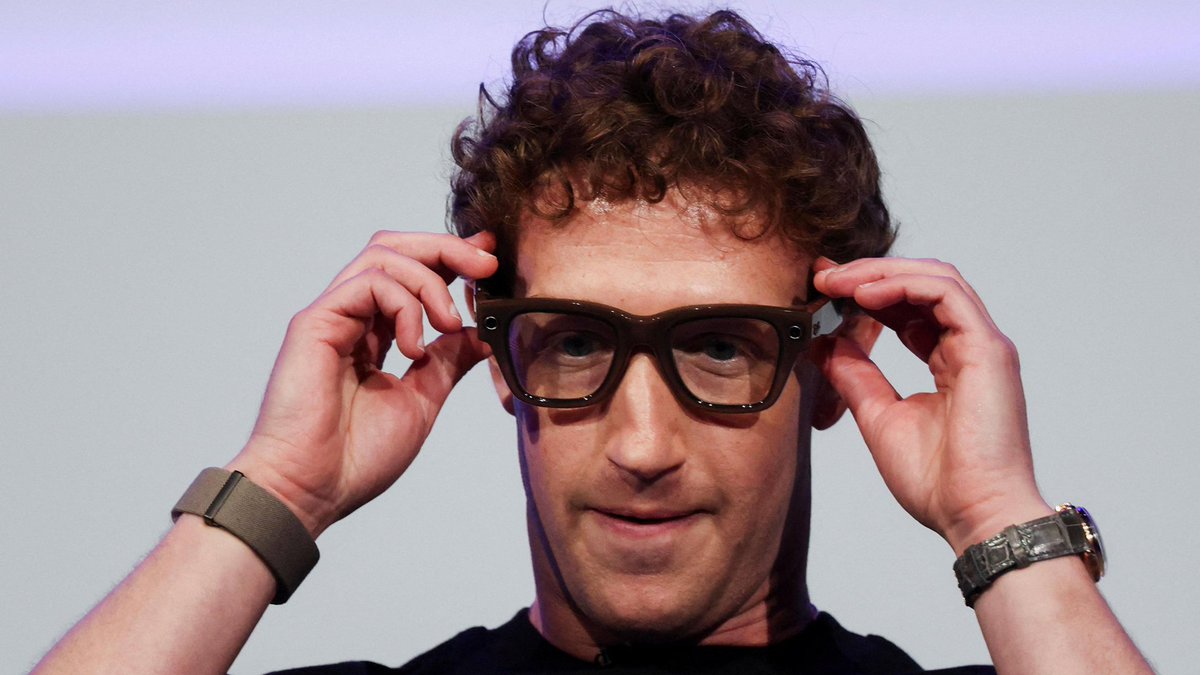
JUST IN: Meta sold 7 million Ray-Ban smart glasses in 2025 alone.
Workers in Kenya are watching the footage.
Not metadata. Not anonymized clips. The actual videos. People undressing. People in bathrooms. People having sex. Bank cards. Medical documents.
The blurring is supposed to protect privacy. It fails constantly. The contractors see everything.
Here is the part that should stop you cold: You did not buy the glasses. You did not agree to the terms of service. You did not consent to anything. But if someone wearing Meta glasses walks into your bedroom, your bathroom, your doctor's office, your home, a contractor on the other side of the world may be watching you right now.
The person wearing the glasses consented. Everyone else in the room did not.
Meta's defense is that this is all disclosed in the privacy policy. They are technically correct. Buried in language so dense that 99% of users never read it. And even if they did, it would not matter, because the terms govern the wearer's data. Not yours. You are not a party to the contract. You are the product being annotated.
Millions of AI-enabled cameras walking around in public. Recording constantly. Uploading to servers. Reviewed by humans earning a few dollars an hour to label your most intimate moments so the algorithm gets smarter.
This is not a bug. This is the business model.
The EU is already asking questions. MEPs submitted formal inquiries to the Commission this week demanding answers on GDPR compliance. The problem is obvious: European data protection law requires consent from data subjects. Bystanders are data subjects. Bystanders never consented. The entire architecture violates the regulation by design.
Meta's response has been silence and a reference to terms of service that do not apply to the people actually being filmed.
Google Glass died because people called the wearers "Glassholes" and banned them from bars. Meta solved the social problem by making the glasses look normal. They did not solve the privacy problem. They hid it.
Seven million units sold in 2025. The installed base is accelerating. Every unit is a potential surveillance node operated by someone who may not understand what they are feeding into the system and reviewed by contractors who see everything the algorithm cannot process.
The question is not whether this becomes a scandal. The question is whether the scandal arrives before or after the glasses are on 50 million faces.
Watch the EU. If Brussels moves on GDPR enforcement, Meta faces a choice: disable human review in Europe and cripple the AI training pipeline, or accept fines that could reach billions. Neither outcome is priced into the stock.
The glasses are selling faster than ever.
The contractors keep watching.
And somewhere right now, someone you have never met is looking at footage of you that you never knew existed.