Announcing our $20M Series A led by @Lux_Capital with participation from @sequoia and @starship_vc. We truly couldn’t be building this with better partners.
The sun will power ~everything until we outgrow this solar system, and we are taking the first practical steps to increase its utility.
We will start by providing light similar to a full moon, and build to full noon. Anywhere on earth, on demand.
We're grateful to the @FCC for granting our application to fly our test mission!
This ruling is hugely validating for our company and reflects America's leadership in testing innovative space technology.
We're excited to validate the guardrails we have built into our technology to mindfully operate our test satellite. Being good stewards of space is critical to the success of this incredible technology. Reflect Orbital is earning the right to operate and we do not take our responsibility lightly.
Reflect Orbital exists to demonstrate that sunlight from space can be an important part of humanity's clean-energy future and provide critical lighting at night to save lives.
Thank you to FCC for recognizing our responsible approach to development and deployment, and we’re so excited to have the opportunity to start demonstrating the significant benefits of our technology to the world.
How do you raise money for something that doesn't exist yet?
Ben Nowack (@bennbuilds) went out to raise with no product to show and no real answer for how the thing would even work. The pitch came down to one idea: “sunlight is going to power the world”, and he'd figure out the rest. Most investors passed. A few didn't. One of those early checks was $350k, written to a guy still working out of his garage.
In this clip, Ben on getting funded for a vision, back when there was nothing to point at.
When Ben Nowack (@bennbuilds) was an engineer on SpaceX's Dragon 2, he was sure it would ship later than Boeing's Starliner. Everything was late, broken, changing by the day. "I was like, there's no way this works."
It turned out SpaceX was about five years ahead. Dragon 2 now flies astronauts - some of whom Ben has since met.
In this clip, the one thing he'd leave behind from SpaceX, and the lesson he kept: you need a very high pain tolerance to get hard things done.
Sunlight powers plant growth, but it is important to understand which plants need light, and when. We're excited to partner with @ucdavis to research how sunlight on demand can optimize plant growth over the entire field.
Solar is now among the cheapest power on the grid.
The catch: it only works half the day.
In the hours after sunset, that cheap, clean power simply isn't available, so the grid relies on other energy sources to fill in.
Closing that gap is why @bennbuilds started @reflectorbital. He wanted to produce something that was cheaper than using fossil fuels and worked around the clock.
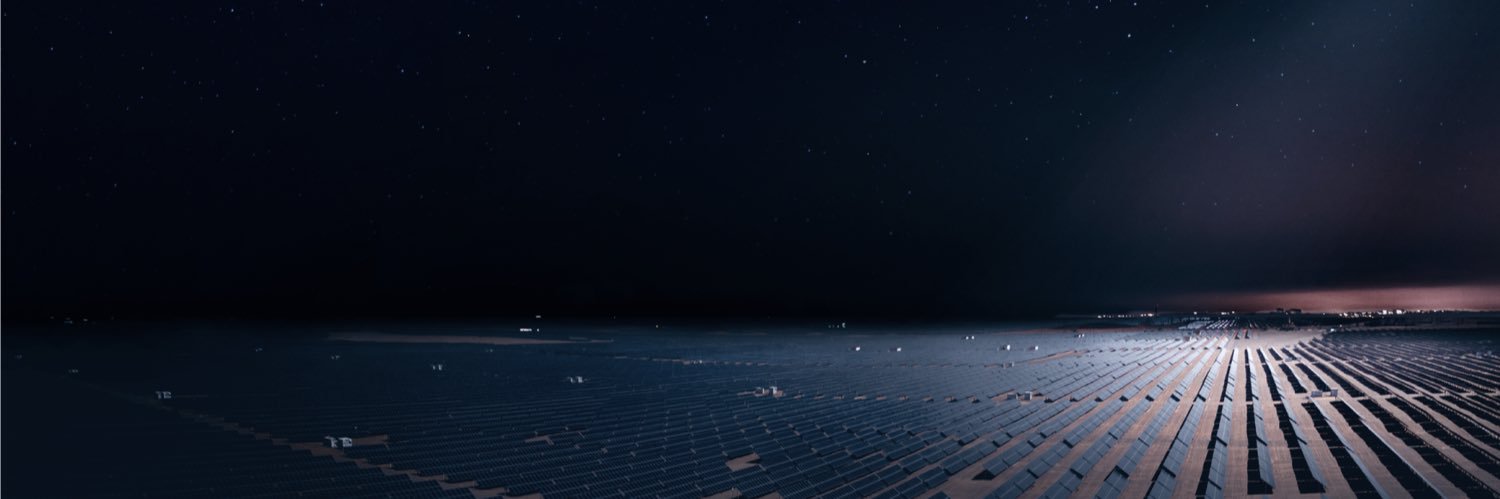
Mirrors in orbit that redirect sunlight back down to Earth, with the long-term goal of keeping solar farms generating energy after dark. In this clip: why the hours solar can't cover are the biggest opening in energy.
For months, Ben Nowack (@bennbuilds) was trying to build something cheaper than a solar panel. It wasn't working, and he knew the idea was bad.
Then it hit him on a run. Stop competing with solar panels. Their real problem is they don't work at night, and putting mirrors in space fixes that directly by sending sunlight down to the solar farms that already exist.
That was the moment @reflectorbital actually became a business.
How to: Build the Future of Sunlight.
Listen to @bennbuilds share our story with @fortworthchris on the Powers Podcast. Episode is live now! https://t.co/a8zJylhUfS
This week's guest is Ben Nowack (@bennbuilds), co-founder and CEO of @reflectorbital, one of the first companies building satellites that redirect sunlight from orbit to specific spots on Earth - with the goal of delivering sunlight on demand, 24/7.
Why would you want sunlight 24/7? Agriculture and farming, construction projects, rescue missions, military operations, powering solar panels closer to 100% of the time instead of ~30%, etc.
Ben started Reflect in 2021. He spent the first year in a garage, $60k in credit card debt, before a $350k raise came in. Reflect has now raised more than $35 million - Sequoia led the seed (its first space investment since SpaceX), Lux Capital led the $20M Series A - and launches its first satellite later this year.
We discuss:
- A speech Gwynne Shotwell gave during his tenure at SpaceX that he will never forget
- What he learned while working at SpaceX that he implements at Reflect
- The story of building the actual company and why building hardware is hard
- How they think about vertical integration
- The trillion $ business case for redirecting sunlight
- How he recruits technical talent - what works and what doesn’t
Timestamps:
(0:00) Intro
(1:07) "Rockets Are Cool, But They're Not the Big Money Makers"
(7:00) Lessons from SpaceX: What Ben Took (and Left Behind)
(16:35) The Origin: From High School Fusion Reactors to Reflect Orbital
(25:10) The Fossil Fuel Problem and Why It's So Hard to Beat
(28:37) "By 3 AM You Have a Minimum Viable Financial Model"
(35:44) The Breakthrough: Putting Mirrors in Space
(41:00) Building the First Satellite
(51:03) First Satellite and Seven-Figure Demand Nobody Expected
(57:00) The Constellation Plan: 18 Satellites, Global Coverage
(1:10:00) What It's Like to Order Sunlight
(1:22:00) Why Fashion Designers Build Better Spacecraft Than JWST Engineers
(1:25:36) The 10-Year Vision: Starship, Scale, and Powering the Earth
Tomorrow I'm sitting down with Ben Nowack (@bennbuilds), co-founder and CEO of @reflectorbital - a company putting mirrors in space to beam sunlight down to Earth at night.
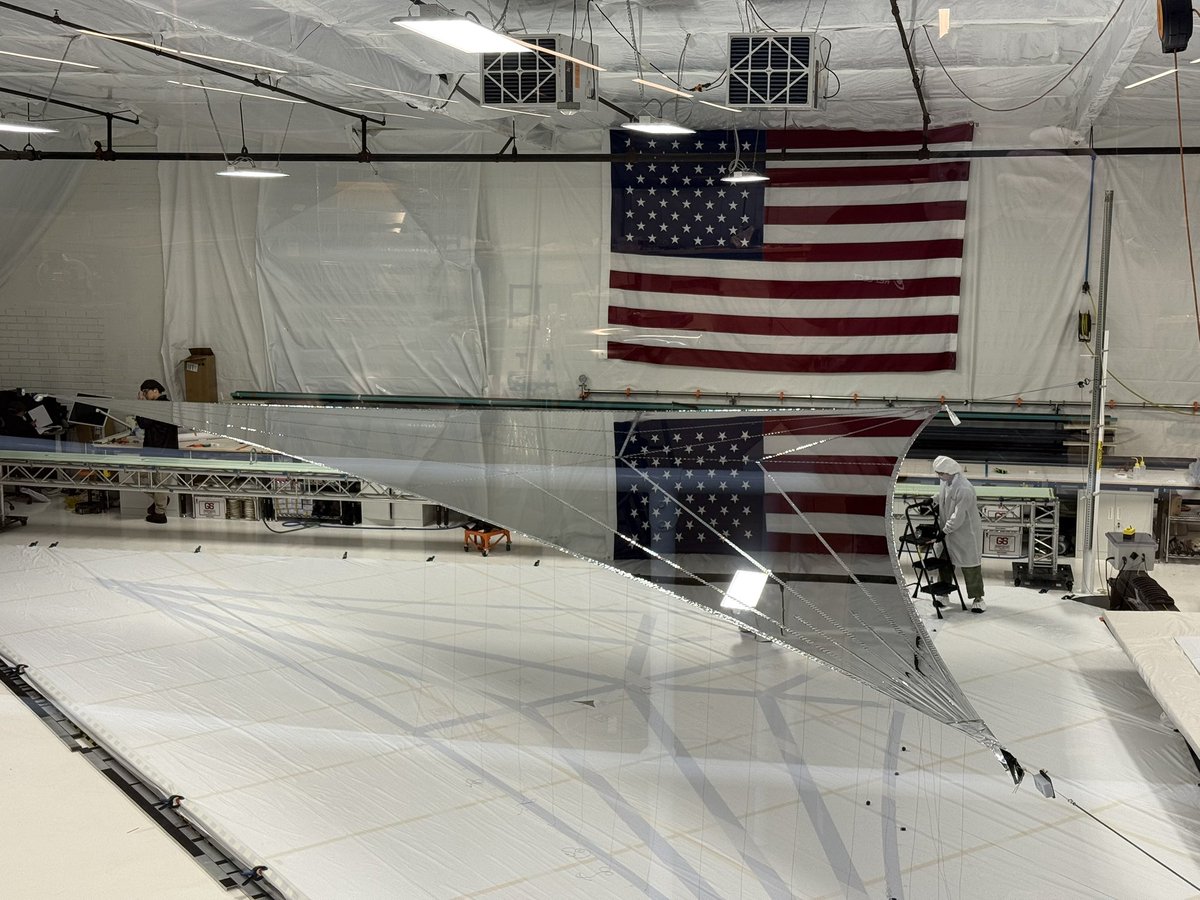
The reflector that makes it work is the same kind of mirror NASA spent 25 years building for the James Webb telescope. It delayed that $10 billion program for a year and a half because it kept failing. Ben's team builds a new one every three and a half days.
This clip is how they pulled it off.
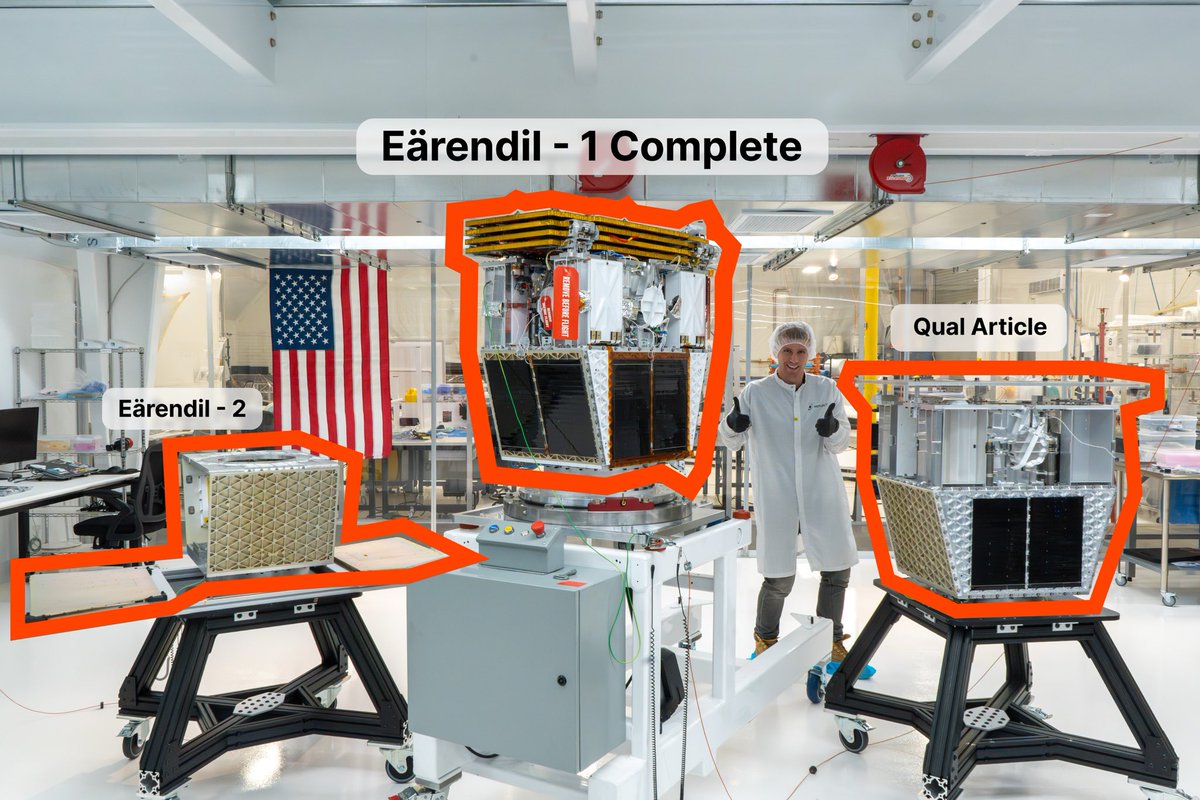
We’ve completed build on our 1st satellite and have a 2nd and 3rd on the way! Every component has been talked to. Once in space it will deploy a reflector as wide as a basketball court. The goal of the Eärendil program is to deliver full moon brightness to 6,000 acres.
The world has been negotiating a false choice for 50 years: economic growth or a healthy planet. We believe that trade-off is no longer necessary.
In our newest blog post, we explore how Reflect Orbital plans to deliver clean and abundant energy by extending solar generation beyond sunset: Link below ⬇️⬇️⬇️