En el idioma español, las palabras «rayo» y «radio» comparten la raíz etimológica latina radius, la cual describe de manera abstracta las líneas que divergen desde un centro geométrico hacia el exterior. El náhuatl clásico construyó un paralelismo conceptual equivalente fundamentado en la observación directa de su entorno biológico. La estructura geométrica de la luz se explicó a través de la anatomía del agave.
La palabra para designar al maguey es metl. En los procesos de derivación y composición gramatical, este sustantivo pierde su terminación absolutiva -tl, aislando la raíz productiva me-. El maguey se caracteriza morfológicamente por desplegar sus gruesas pencas en un patrón radial desde un núcleo central (meyōllōtli).
A partir de la raíz me-, la lengua estructuró el sustantivo meyotl añadiendo el sufijo de cualidad abstracta -yotl. Esta nueva palabra define literalmente la propiedad de extenderse como el maguey. Los hablantes nahuas la utilizaron para nombrar una emanación radiante, un haz de luz o un halo resplandeciente, trazando una equivalencia visual entre la forma de la planta y la propagación lumínica.
La aplicación definitiva de esta metáfora se observa en la descripción de los fenómenos celestes. Al aglutinar el concepto de la luz solar o el calor del día (tonalli) con la emanación radial (meyotl), se forma la palabra tonalmeyotl. El vocablo designa el rayo de sol. El idioma náhuatl concibe el resplandor solar bajo la imagen de unas inmensas pencas luminosas proyectadas hacia el firmamento por un maguey celestial.
#Náhuatl
One of the petroglyphs at Tanum depicts warriors with swords and the heads of birds.
Several Vendel-era pressblechs depict bird-crested helmets, and a bird-shaped headdress was found in a Copper Age Khvalynsk Culture burial. Totemic bird warriors reached back to the Copper Age.
Isa is the eleventh rune in the Elder Futhark, and the Icelandic Rune Poem refers to its Younger Futhark descendant, Íss, as jöfurr; a term meaning boar, which was applied to heroes in skaldic poetry, likely a reference to their totemic boar-crested helmets. ᛁ
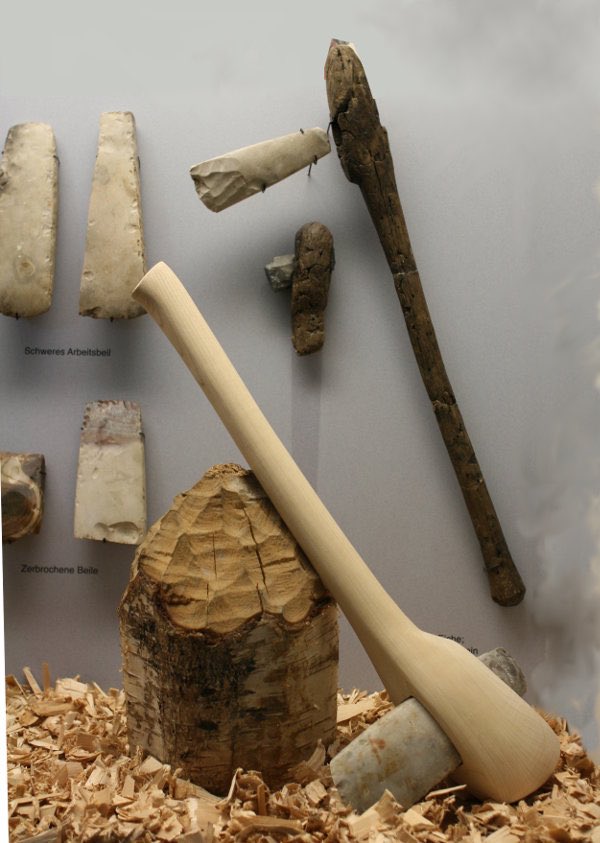
Club-or axe?
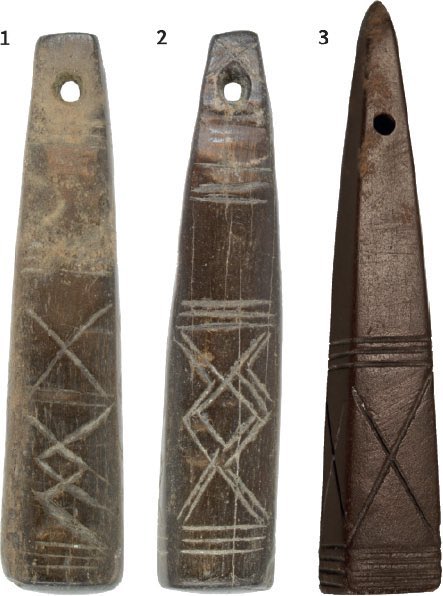
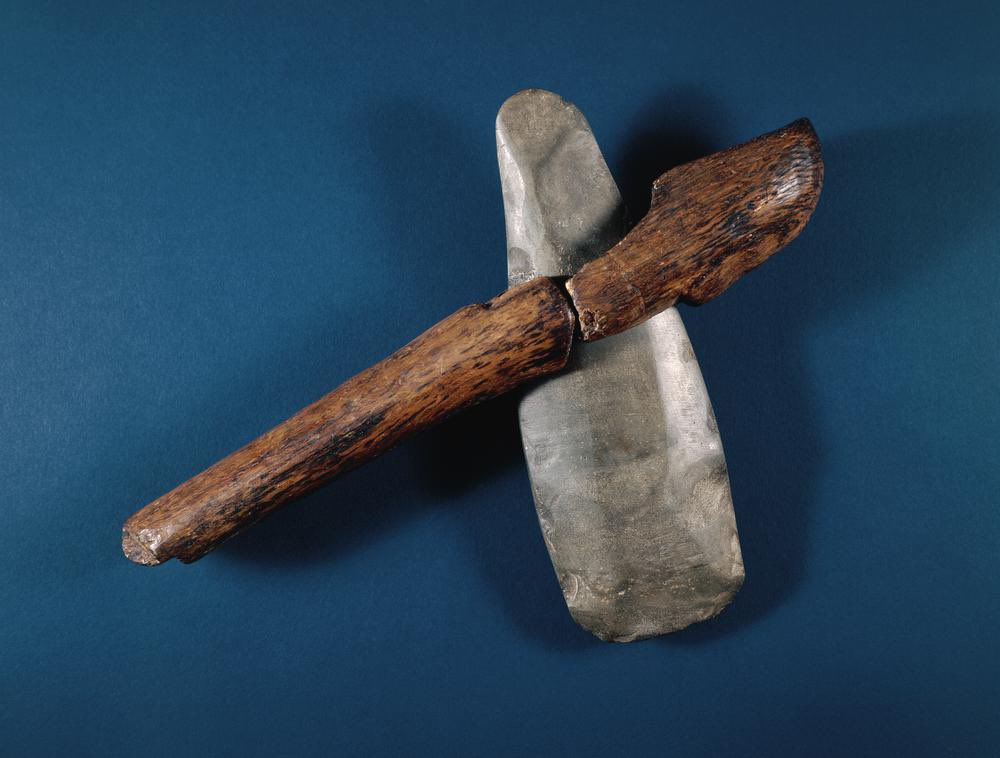
Several so-called Donarkeule (Þonar club) amulets closely resemble Neolithic polished axes, which were associated with the cult of Thor, as they were uncovered or washed up after storms, and kept in houses to bring good fortune and keep out evil spirits. 𐘾
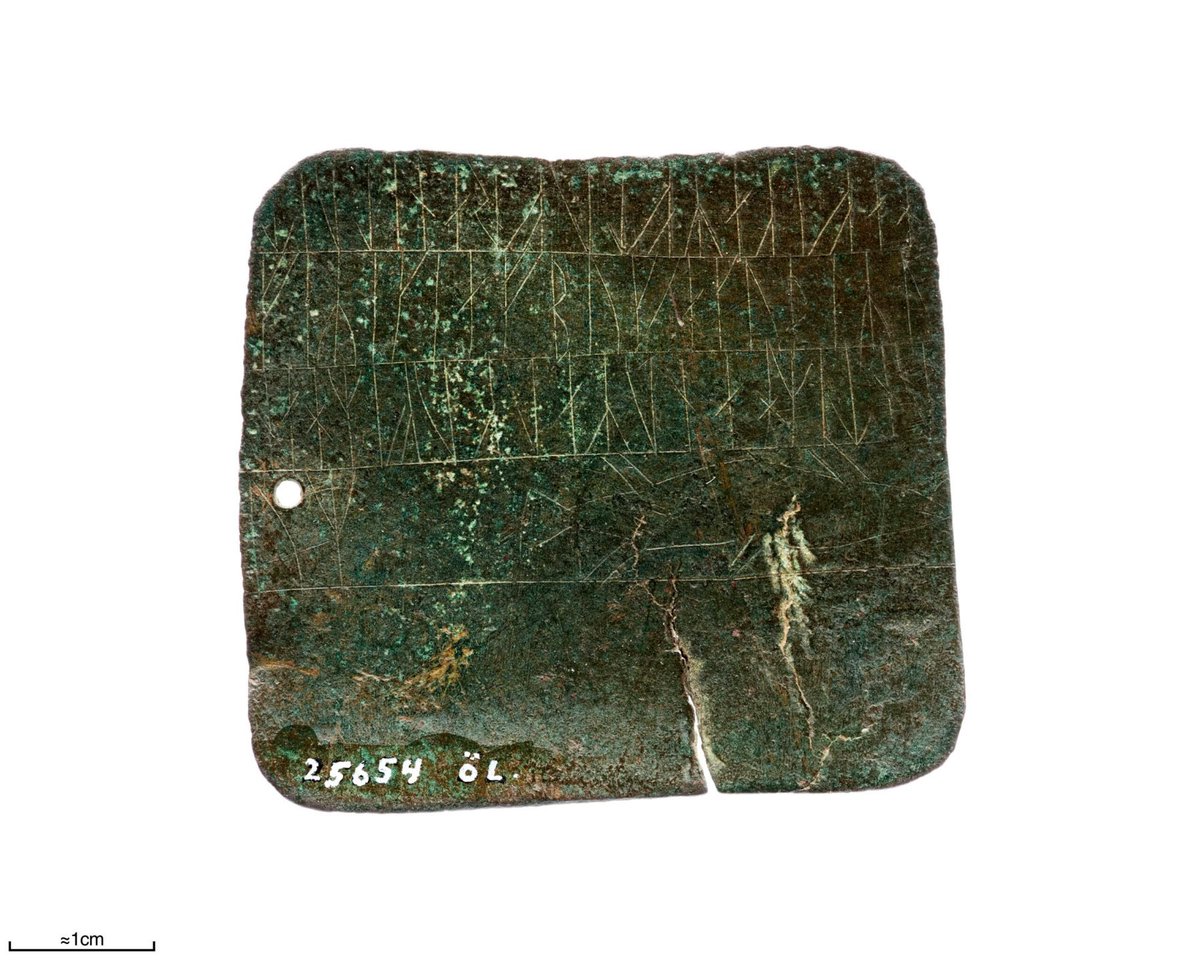
A runic amulet from Kvinneby, Sweden, directly connects Thor’s hammer to Neolithic axe-hammers; part of the inscription reads “May Thor protect him with that hammer which came from out of the sea”, referring to how Neolithic axes, or thunderstones, washed up on shores in storms…
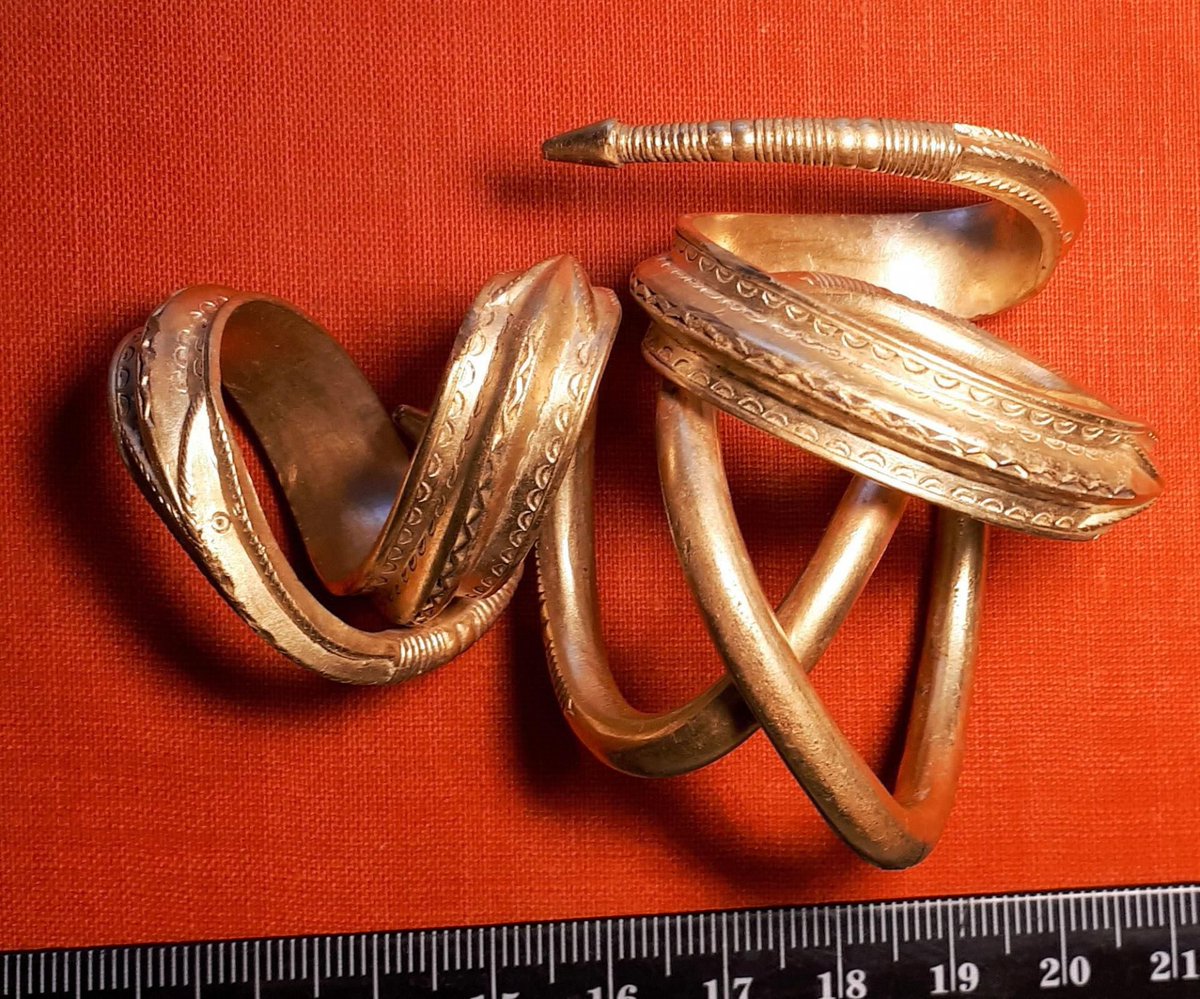
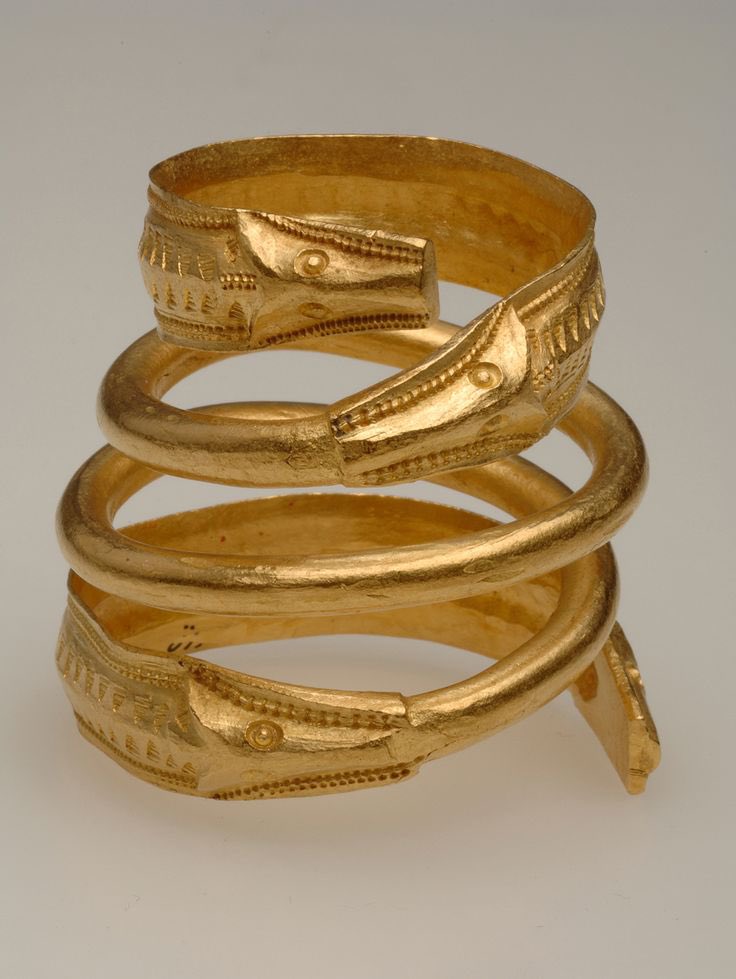
S-shaped brooches from Denmark.
A theory I heard is these represent the serpent as a symbol of renewal, one head in the overworld, emerging like they do in spring, and one in the underworld. Some examples have the jaws clasped around the body, like a snake eating its shed skin.
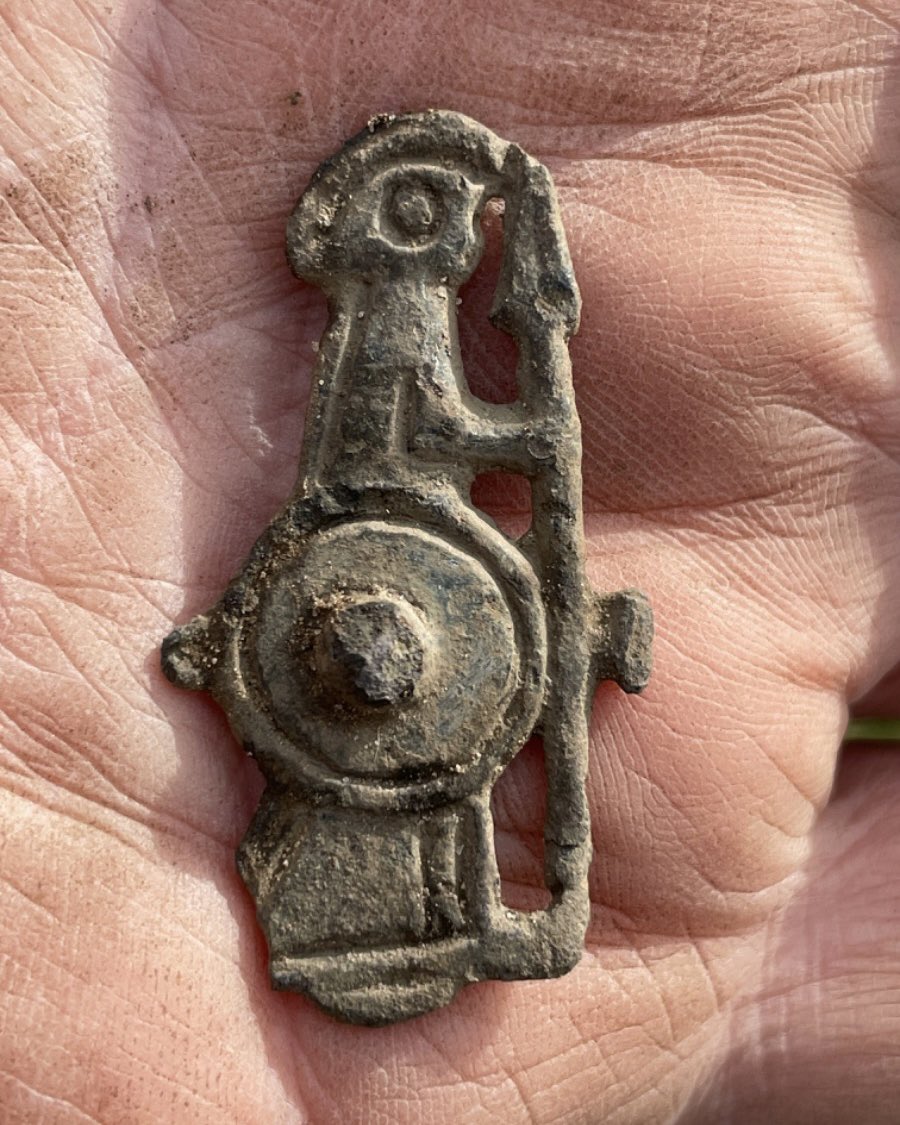
Valkyrie motifs often utilized the nine-square grid motif; in the Færeyinga Saga, Þrandr performs a ritual using a grid of nine squares on the floor to summon the dead from the underworld; this motif appears to represents this liminality. 𐘾
The origin of the triskelion?
A prehistoric sea creature called the Tribachidium left these distinct fossils in the Dniester River basin; the lands of the Yamnaya Culture.
The fossil’s cup-shaped form is reflected in how triskelion was used to decorate Celtic hanging bowls…
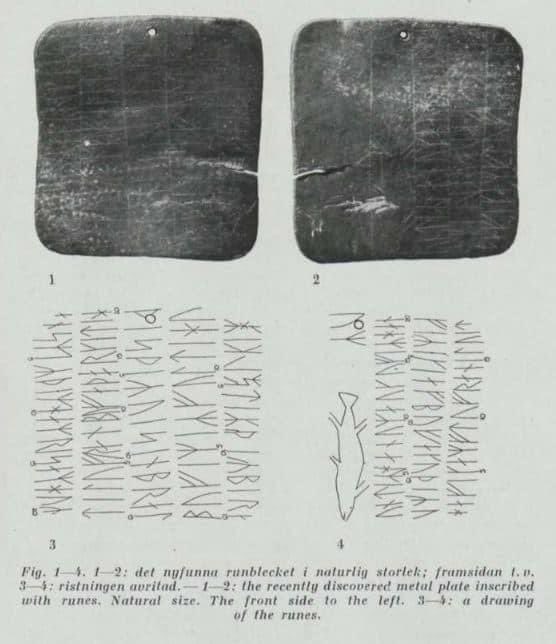
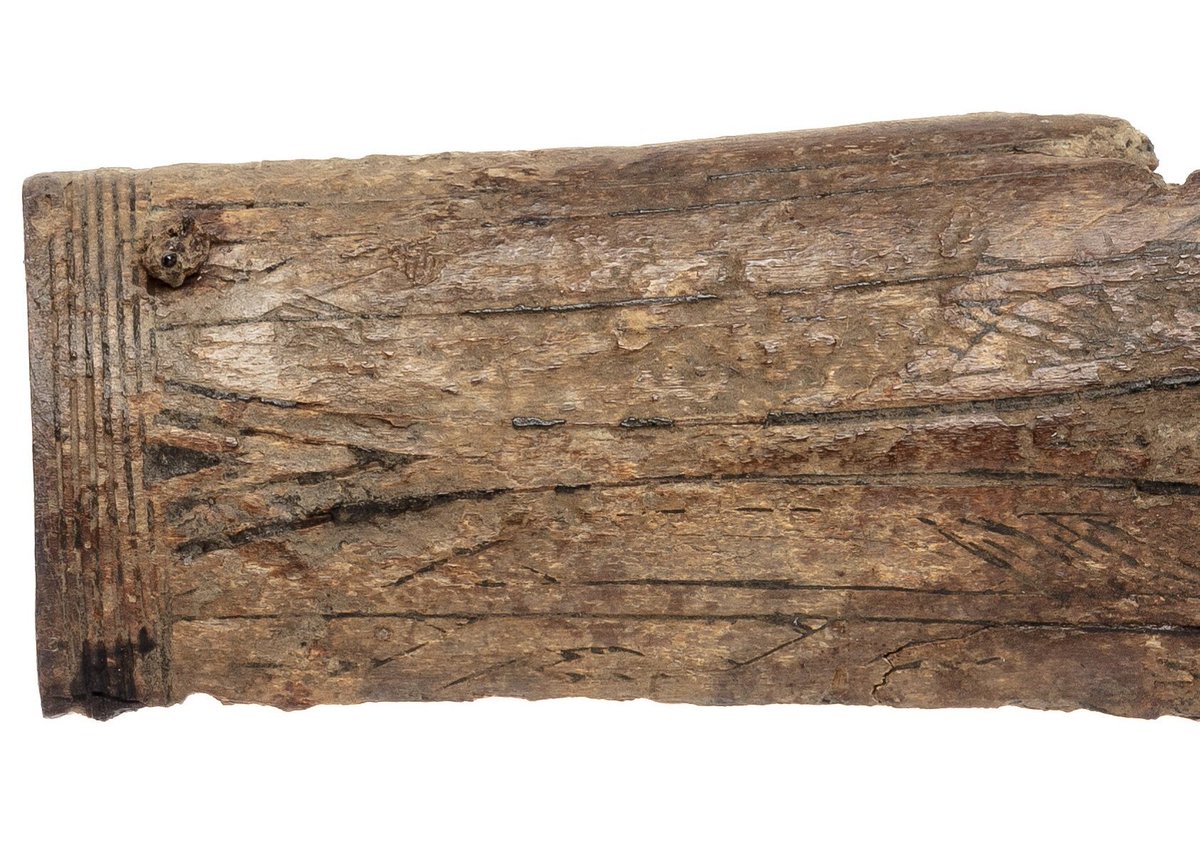
A rune stick from Bryggen, N B384, bears interesting cypher runes shaped like bearded faces, the rune’s ætt indicated by the hairs on the left, its place within it by the hairs on the right.
The inscription reads -sim liui sinu, “sem lífi sínu”, as his life, 1/2
The theonym Tveggi appears on the Sjelle Runestone, raised in memory of the brother of Sigvaldi Strut-Haraldsson, the hero who played a significant role in bringing down Olaf Tryggvason in the Battle of Svolder.
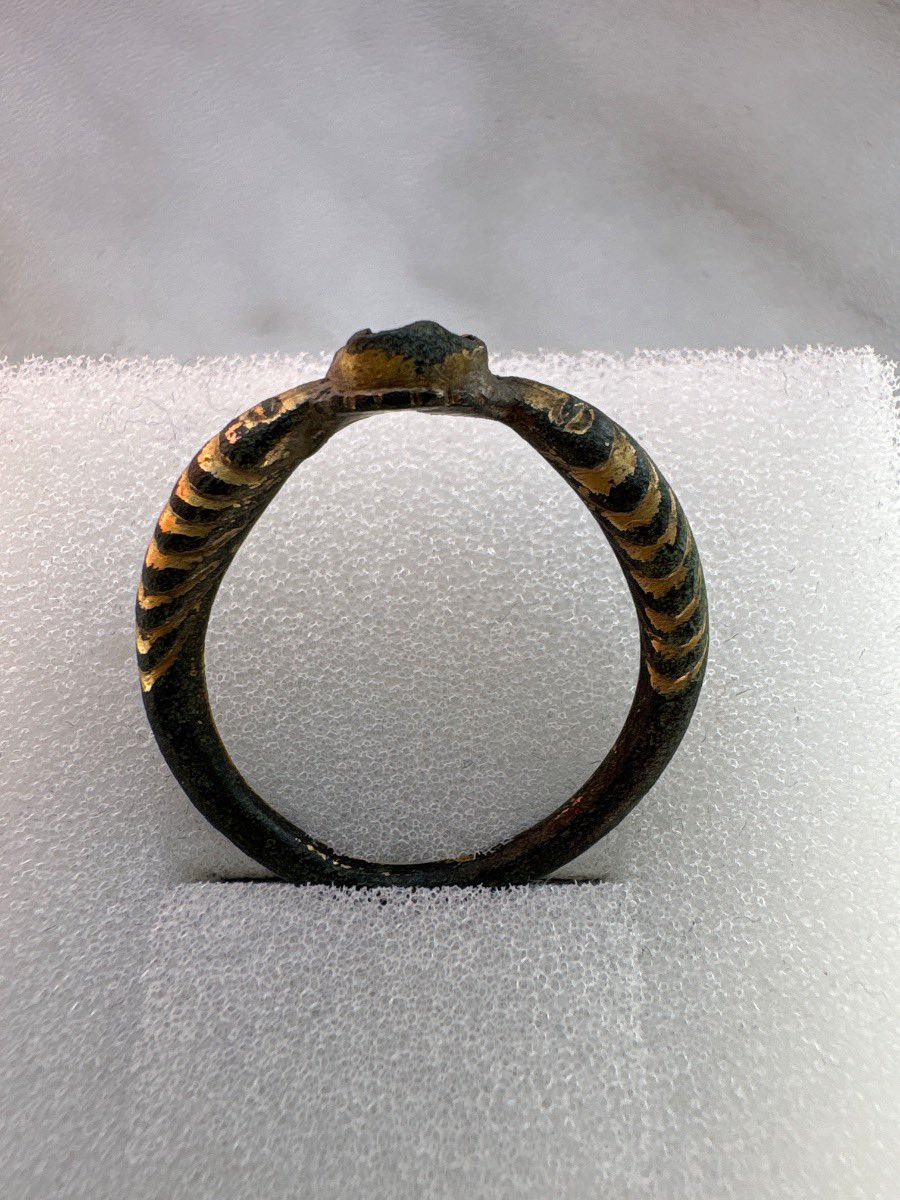
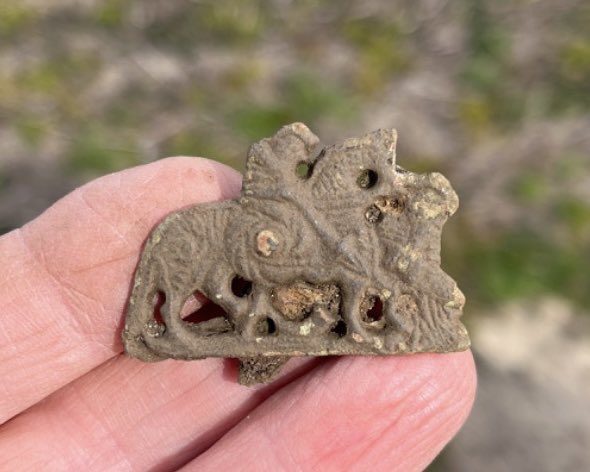
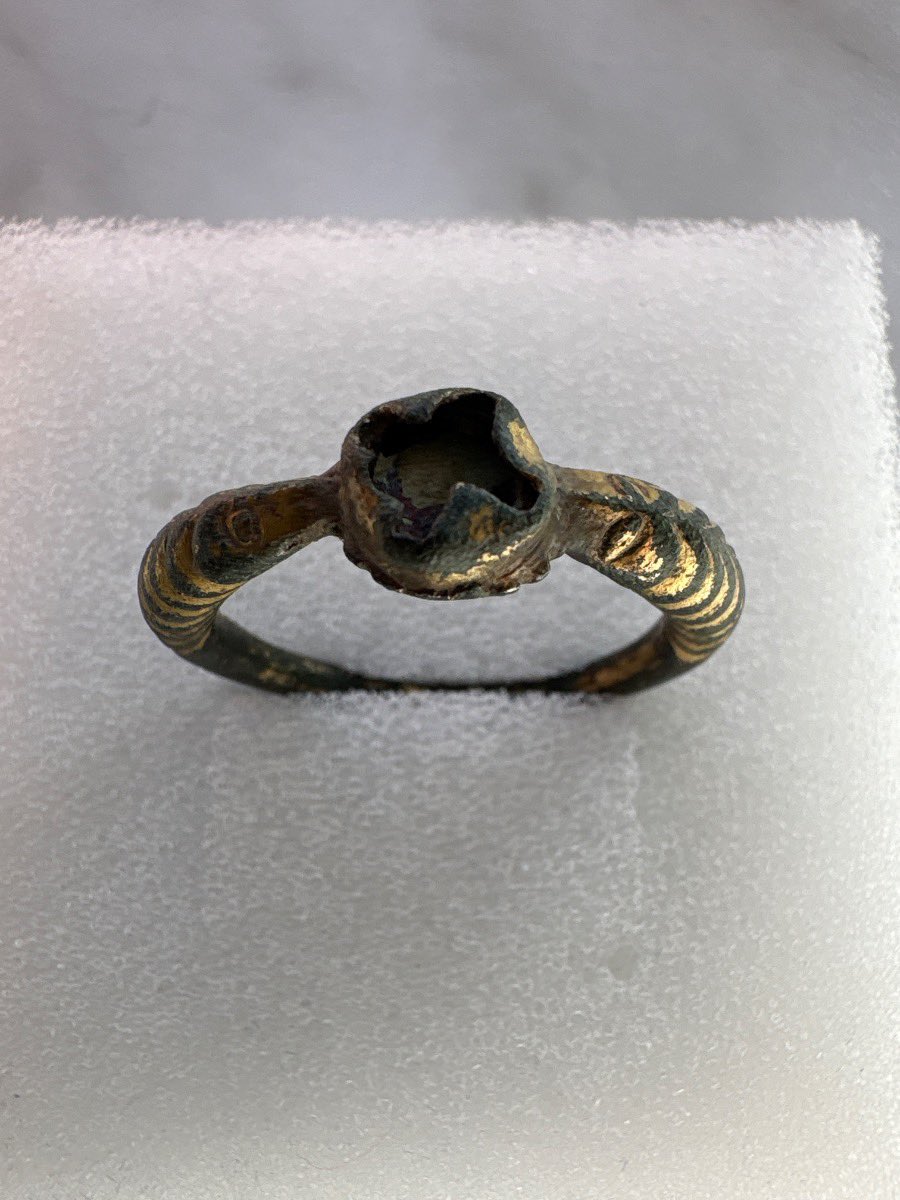
A potential parallel to my Odinic wolf ring from Thetford; this Iron Age bronze ring was found in Jammerbugt, Denmark, with a similar design, the fur parted down the middle. The two wolves would’ve held a stone between them. Thought to be 4-8th Century. ᚨ
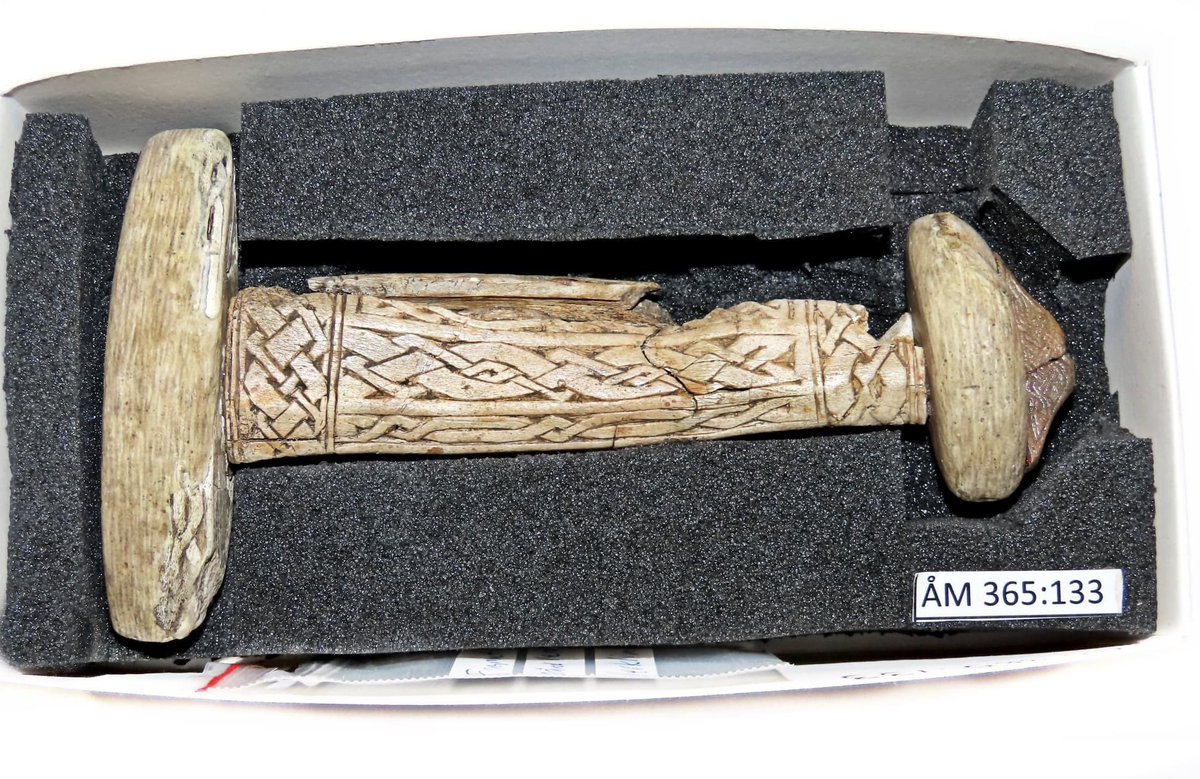
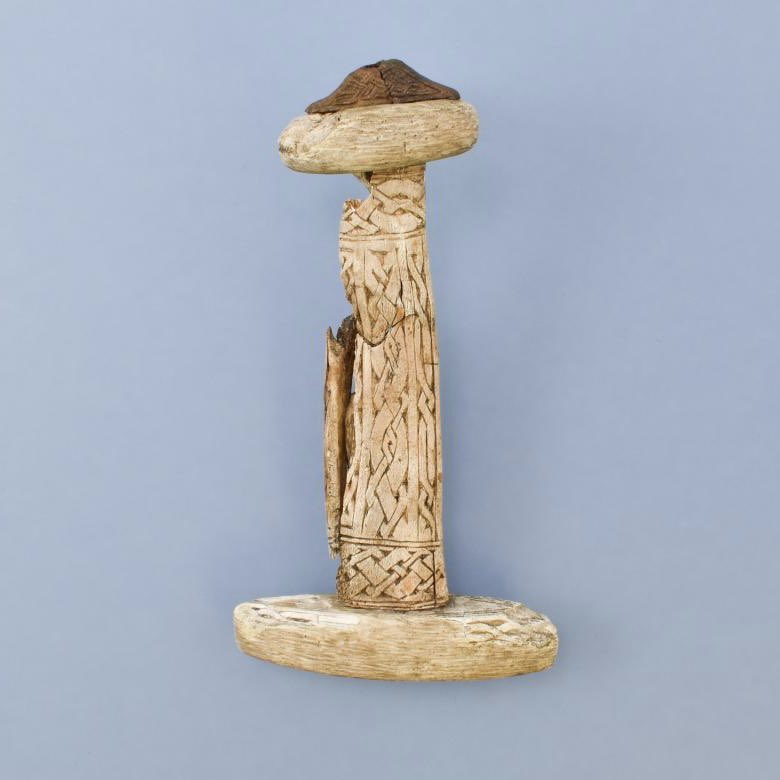
An elk antler Migration Period sword handle from a burial in Stenhagen, Åland Islands, 7th Century. With swords with organic hilts, the materials often corrode away, leaving us to wonder what they looked like; this rare survival shows the level of artistry that went into them.
𐘾
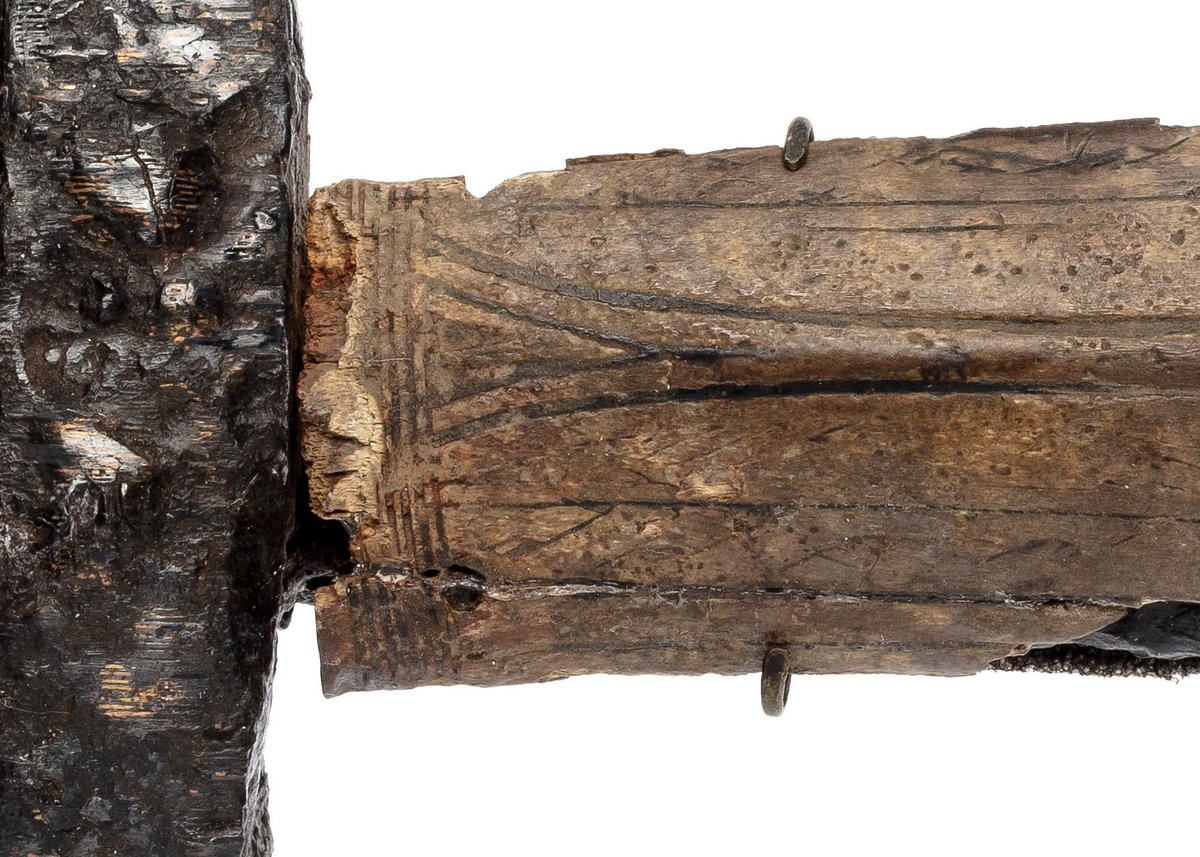
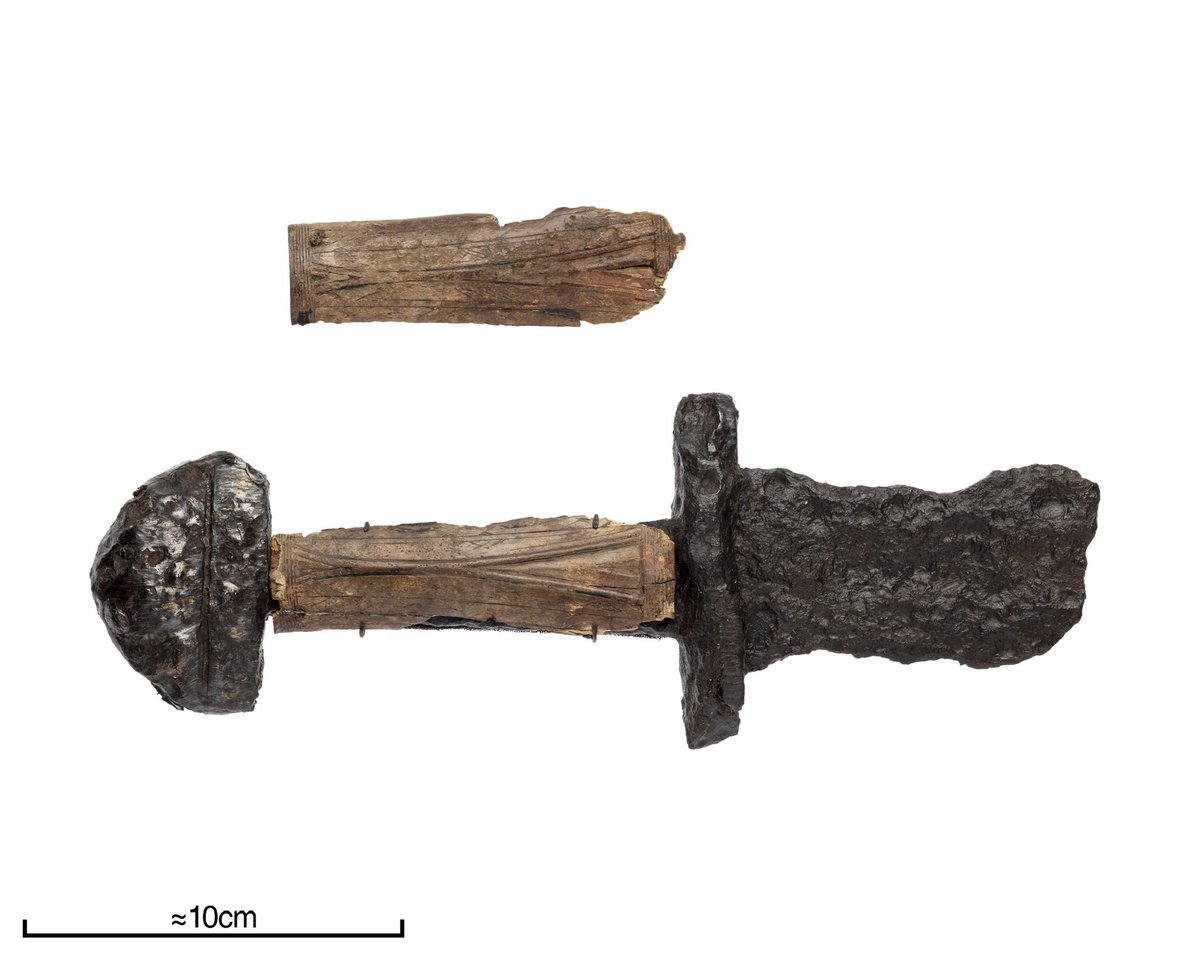
A Viking Age sword with a surviving carved antler handle, from a 10th Century burial in Rösta, Jämtland, Sweden. Albeit worn, one can see the remnants of knotwork and herringbone patterns along the outer cells, and copper wire inlays on the pommel and guard.
𐘾