@mumumouse2 It's not enough just to look around the corner. Without diving into the middle of the wild waves, you can hardly get to the anatomy of the problem.
🧵 [1/2]
Dear Elsevier,
@ElsevierConnect
See this "Chemosphere" Retraction Notice
https://t.co/Qts42A8e44…
"After thorough analysis, these original SEM images did not reveal evidence of manipulation, nor signs of artificial generation through AI tools or similar means. However…
Reverse Image Forensics Challenge: Try to find a unique area in Figure 9 of this recent Scientific Reports paper: 10.1038/s41598-025-17456-6 [Aug 2025] - Annotated by ImageTwin
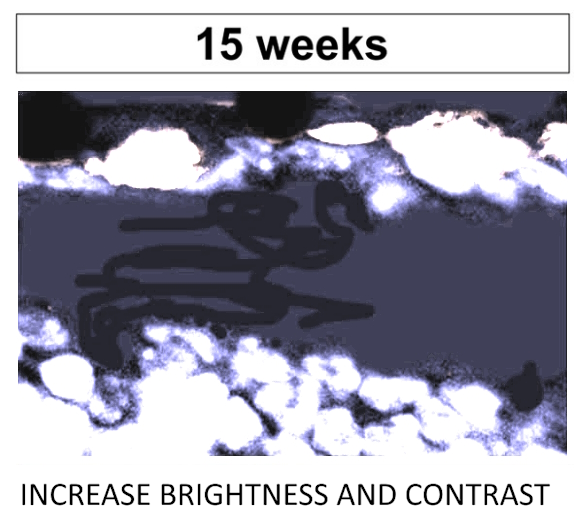
I have written a blog at ForBetterScience. A German lab has published dozens of papers with images that have been scribbled on, or manipulated with the clone tool. Blogs can take a while to read, but maybe scroll through the pictures! Plenty to see! (link in the next comment)
@ElsevierConnect@ImageTwinAI@Proofig Oops! Sorry for the inconvenience. Here is the correct link:
https://t.co/X9mXp0lIvl
DOI: 10.1016/j.chemosphere.2025.144628
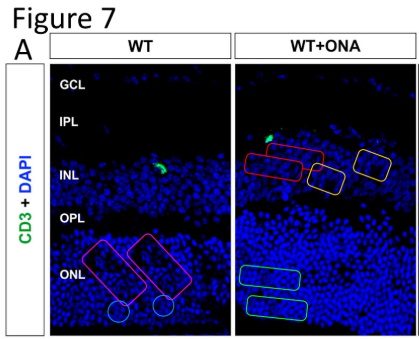
[2/2]
However,… It was noted that the specific sections identified as compromised in the published images correspond to blurry regions in the original data."
What "AI tools or similar means" do you use @ElsevierConnect?!
@ImageTwinAI@Proofig#imageforensics
Abnormal data patterns are observed on the standard deviation values on the Table 3 of this article. Several numbers repeat too many times than expect, such as "0.89" repeats 30 times, "0.44" repeats 23 times. Such abnormal pattern suggests that the data may be manipulated.






![addictedtoigno1's tweet photo. Reverse Image Forensics Challenge: Try to find a unique area in Figure 9 of this recent Scientific Reports paper: 10.1038/s41598-025-17456-6 [Aug 2025] - Annotated by ImageTwin https://t.co/v9oTlDhhz8](https://pbs.twimg.com/media/G5cEwUlXsAAH8pX.png)
![RefractionNotch's tweet photo. [2/2]
However,… It was noted that the specific sections identified as compromised in the published images correspond to blurry regions in the original data."
What "AI tools or similar means" do you use @ElsevierConnect?!
@ImageTwinAI @Proofig
#imageforensics https://t.co/bScflQqAy1](https://pbs.twimg.com/media/G5Dc-o8XkAA5Afz.jpg)





