Regulation of body fluid and salt homeostasis--from observations in space to new concepts on Earth
https://t.co/WfR8C3polC
Just started reading this paper and I love the abstract 👇
The NASA twins study is still one of the most elegant causal experiments in human biology!
Identical twins eliminate genetic confounders entirely. One goes to space for 340 days; one stays on Earth. Every molecular difference you measure is attributable to environment, not genotype. You can almost never do that in humans.
For anyone building models of how context shapes cellular state, this dataset is gold.
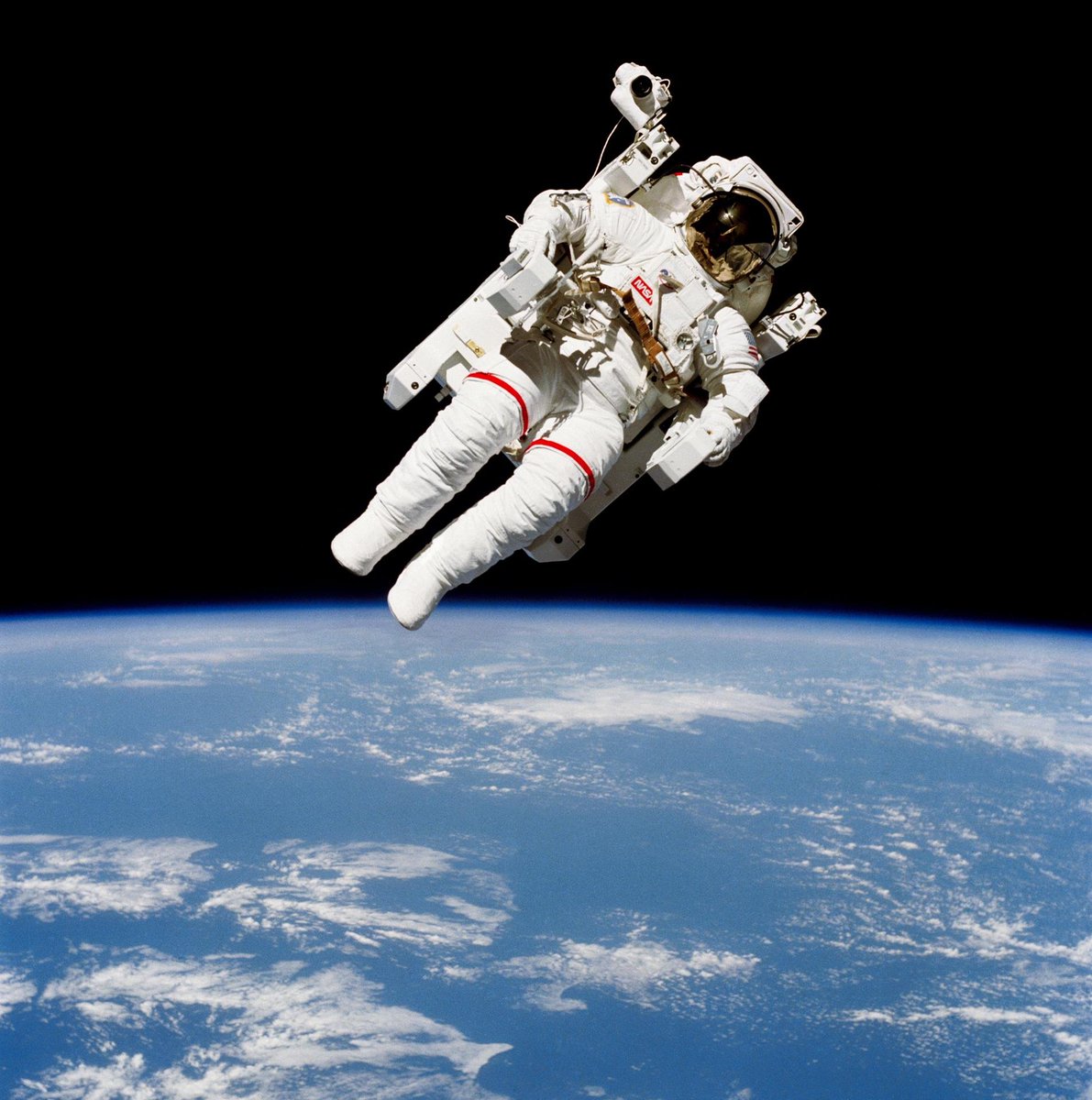
When I was on the ISS for my nearly year long mission, there was a telomere experiment comparing my telomeres to my earth baseline and my twin brother as a control. Hypothesis was they would get damaged and worse due to the environment. Turns out they got better. Initially NASA thought maybe it was due to exercise and diet. After I returned we learned JAXA had a telomere experiment on some small worms the same time I was there. Their telomeres got better too. Never saw the worms doing any exercise. After further study determined it was the radiation.
A periungual, flesh-colored to reddish nodular growth arising from the nail fold is seen (as in image), associated with a neurocutaneous syndrome.
Diagnosis?
A. Pyogenic granuloma
B. Viral wart
C. Koenen tumor
D. Glomus tumor
@elonmusk your teams should look carefully at the vascular health of individuals traveling to space. Microclotting and endothelial pathology may not be readily diagnosed by traditional blood tests. It would be great if you could study the effect of space travel on #microclot formation and oxygen carrying capacity of red blood cells. @SpaceX
Ever since the Human Genome Project 🧬, I've wondered why not a single astronaut has published their genome like Craig Venter or George Church did.
I'm trying to change that.
Support my mission to fly on @blueorigin with @seraspaceage by:
🤝(1) Following my account to make sure you don't miss any future content.
📱(2) Sharing my content containing the #SERASpace tag (social media engagement counts toward astronaut candidacy).
🔗(3) Joining the program through my referral link:
https://t.co/e3XsQt5eut
Help make space science history!
Understanding the relationship between intracranial pressure and spaceflight associated neuro-ocular syndrome (SANS): a systematic review
https://t.co/gr7kAJWEU7
I think there's a fair chance that space research might benefit CSF leakers on earth more than traditional medical research. More scientific thinkers there than in the medical field where anything not by the book is often disregarded.
Cerebrovascular pulsatility following long duration spaceflight is associated with changes in pulse pressure and carotid artery stiffness
https://t.co/nhs8vRqQwa
By studying the brains of autistic girls, we now know the condition presents differently in them than in boys, suggesting that huge numbers of women have gone undiagnosed https://t.co/yjBhzprCCW
Astronauts flying to the International Space Station #ISS can now volunteer for a suite of experiments that aim to help scientists learn more. —Together, these experiments are called the Complement of Integrated Protocols for Human Exploration Research, or CIPHER.