Licensed Associate Marriage & Family Therapist | EMDR & EFT | Working with couples, families, and individuals | Sharing insights & discussing mental health.
@goodreads Realizing I didn’t have to answer questions to prove I’d read the requirements allowed me to dive headfirst into the rich world of classical literature.
This week, I had to say no to a puppy and backyard chickens. I’m not sure why the universe keeps sending animals my way, but I do know my childhood self would be thoroughly disappointed in my decisions!
From the parent pov- AI gives me the tools to tutor my children in alignment with the instruction they are receiving in school. I am unfamiliar with the instruction of Singapore math but can take a snapshot of the book, the problem the child is working on and ask for “teacher manual instructions.”
We currently don’t worry about the children using AI because we allow no screen time during weekdays. Our classical school has also changed their curriculum to require all writing to be completed during school time or in teacher proctored labs. An increasingly necessary implementation.
@PotluckLauren We have a rule that we use no devices in public places because public places are meant for socialization. Devices are meant to be used at home on weekends when they don’t have homework and no activities or play dates going on.
1/ Acknowledge their feelings. A little nervousness is natural after weeks of comfort at home. Let them know it’s okay to feel this way—breaks are big transitions.
2/ Then comes repair. EFT helps couples safely express emotions, turning criticism into clarity and silence into understanding. It’s about learning to say, 'This is where it hurts,' and being heard. 🛠️
1/ EFT starts with understanding: Why did the cracks form? It’s not about blame but about finding the patterns that caused disconnection—like identifying where the bridge faltered under pressure. 🕵️♂️
Ooh fun! I think Socratic conversations could let students explore this without it becoming indoctrination. It feels like there’s room to raise questions and let them draw their own connections, which might land somewhere in between & create fascinating outcomes. Keep us informed.
How are insecure attachments repaired?
This week I’ve been exploring the concept of attachment (a deep emotional bond created between parents and their children during the earliest months and years of life).
In doing so I’ve focused primarily on the goal of secure attachment.
But not all attachments begin securely.
Which begs a pair of questions: What causes insecure attachments and how can they be strengthened?
While anxious and disorganized attachment types can certainly result from erratic parenting, the toxic stress created by unsafe environments, and/or abuse and neglect, it’s important to keep in mind that early relational challenges occur on a broad spectrum of severity and sometimes aren’t the result of any parental shortcoming at all.
In fact, some root causes may not even be within parental control.
Children born extremely prematurely, for example, may spend weeks or months in a neonatal intensive care unit. While essential to their survival, the situation can limit early interaction with even the most attentive and well equipped parents.
What else might impact attachment quality? The list is likely a long one.
Severe postpartum depression, a prolonged military deployment… anything that might present a barrier to strong relational health between a parent and child.
In complex (traumatic) cases of disorganized attachment, families may require a combination of specialized infant mental health services, therapy, and other professional supports.
But in many cases the solution is as simple as a heaping dose of what was missing in the first place: predictably warm and responsive interactions.
Children are remarkably resilient - and while it may take time to create updated patterns of interaction and establish them as the “new normal,” insecure attachments can often become secure with focused effort.
So take heart. And watch as secure attachment begins to take hold.
——
This happy (and securely attached!) duo was shared to IG by tiny.charmzz.
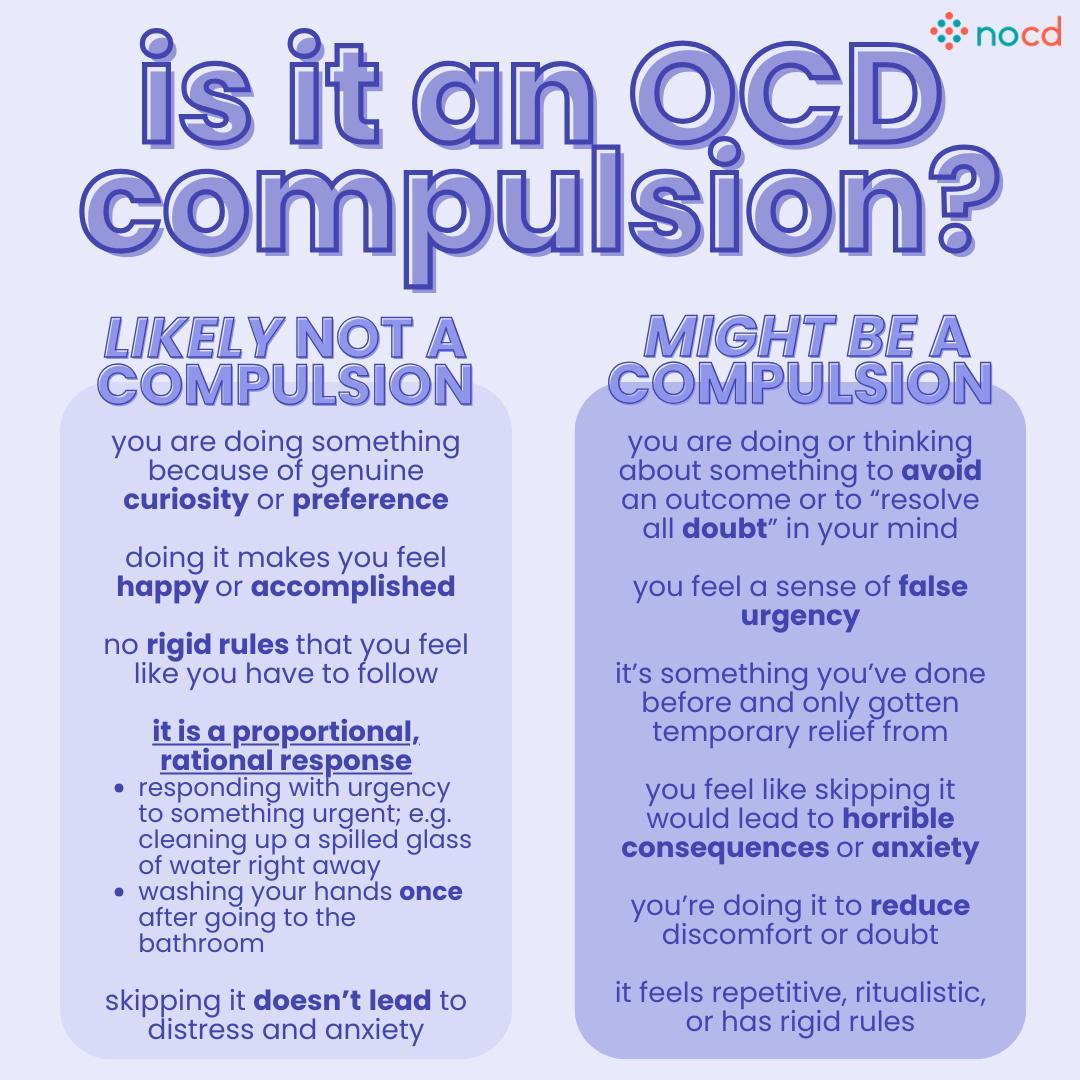
Knowing the general signs of non-compulsive behavior vs. compulsions or rituals can help us recognize if something we're about to do is a compulsion. Remember: Pretty much anything can become compulsive if it’s done ritualistically and to avoid or alleviate discomfort.
🇺🇸US🇺🇸
Suicide rates by Age
Things to note:
1) Men die at 4-9X the rate as women; explosion after age 70.
2) Highest ages of risk:
men: anytime after age 20y
women: between 20-70y
3) Lowest ages of risk: <20y both sexes
4) Time series (Small box) is FLAT since 2018
Woke up in the night and couldn’t sleep, so I prayed a rosary (out of character for me). This morning, I found out my childhood church, which my grandfather helped build, was on fire while I was praying. 🙏 Pray for St. Anthony’s parish