Politically homeless. The pandemic exposed our government as authoritarian and the lack of any opposition standing up for our freedoms is truly frightening.
I never expected my handmade Godzilla lamps to reach so many people. Every order reminds me that my work has value and motivates me to keep creating. If you've been waiting to get one, thank you for supporting my journey. ❤️
Let me categorically Debunk this utter rot. @sainsburys.
I am a poultry Breeder. The hens that lay white eggs (Amberline/White Star) DO NOT have a lower carbon footprint.
Yes they eat a bit less and produce roughly the same amount of eggs as the Brown egg layers (Bovan/Lowman/ISA Brown) but they live shorter lives, are prone to dying suddenly when startled, a flighty and nervous and because they live shorter productive lives (12 -18mnths) vs brown 18/24mnths (both commercial farmed), you have to incubate more which is increased (Electricity/gas costs) and their eggs are not the same quality.
I breed and keep 20+ different breeds, including: ISA Brown hens and White Stars. All my hens are 100% free range, Not a single barn kept bird, I have ISA browns that are 5yrs old and still laying beautiful Brown eggs, I have not seen a White star live beyond 3yrs and certainly none have laid eggs past 18-24mnths.
White stars Lay themselves to death. They are slender birds and because they dont eat a lot, it drains their personal vitality to keep up laying the eggs you want to sell because of the nonsensical lie that they are "More Carbon Neutral"
You want to know about eggs, come talk to someone like me, Don't rely on some hairbrained imagination of a buyer who's trying to squeeze the profit margin for a few extra pennies at our expense and to the poor hens detriment.
This week I came across the obituary of a photographer named David Plowden. I was unfamiliar with his work, but decided to browse his website after reading that he specialized in photos of trains and industry.
I’m not much of an art guy, but these photos are astonishing. (1/4)
The interactive chart is here:
https://t.co/MlnZ7eI47w
Click around to see the big beasts, the tiny oddities, the zero-yield zombies, and the reason serious tax reform is so hard.
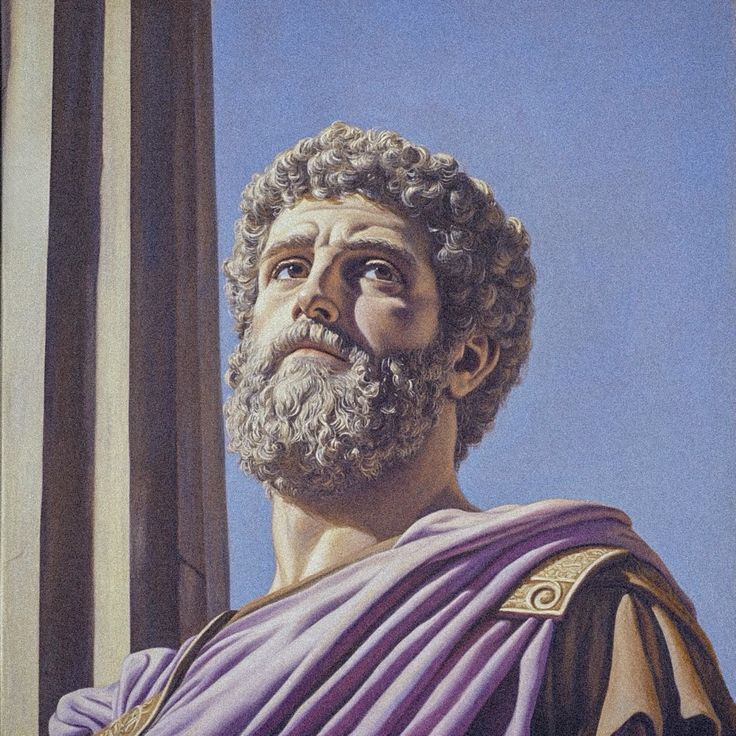
🚨 The most powerful man in the world had a secret morning ritual.
Every day before sunrise, Marcus Aurelius (Emperor of Rome, commander of 400,000 soldiers, the most absolute ruler on Earth) sat alone with a wax tablet and reminded himself that he was going to die, that everything he loved would disappear, and that none of it was under his control.
He called it Memento Mori. It was 1 of 10 techniques he used to stay sane through plague, war, and the slow corruption of his only son.
I turned the 10 into Claude prompts.
You describe whatever emotional weather you're facing... and it runs you through the same exercise Marcus did at sunrise in his tent.
Here are all 10:
There is a scene in @HBO's Chernobyl that most viewers miss. A scientist presents evidence of the disaster to a Belarusian party official. The official dismisses her expertise, then boasts that he used to run a shoe factory.
It is not central to the plot, but it explains everything. The Soviet Union was governed by a snowball of incompetence - decades of nepotism where ministries were handed to people with no relevant knowledge, provided they had the right party connections. Pedigree was political, not professional.
I grew up there. My parents were subject matter experts who spent their careers battling apparatchiks enforcing decisions they did not understand. That is why I flinch when I hear the same logic here in Britain.
@UKLabour politicians celebrate the "right background" - the poorer, the more deprived, the better. Council house to government, presented as triumph. Progress and resilience deserve recognition. But in these jubilations, merit vanishes. And celebrating ascent without competence is not progress. It is the embryo of disaster.
Look at the Labour Party's front bench. Britain's central challenge is wealth creation - economic growth. Yet these are former charity workers, public sector lifers, people who have always been on the receiving end of funds rather than generating them. They have never had to create value others willingly pay for. So they look to regulators for growth ideas. It is farcical. It is only possible in a culture where navigating party structures replaces proven ability.
A friend told me recently his wife had to close her coffee shop - high traffic, real revenue, still unprofitable due to taxes and business rates. In his frustration he said something raw: he no longer cares if folks running the government are toolmakers' sons or landed gentry. He wants competence. He found himself saying he would rather be ruled by Old Etonians.
Not because Eton College guarantees talent. It does not. But sheer competence - knowing your subject - has become so scarce in British governance that the impulse is understandable.
We are not the Soviet Union. We are nowhere near collapse. But on the left of our politics, the distance is shrinking faster than we admit.
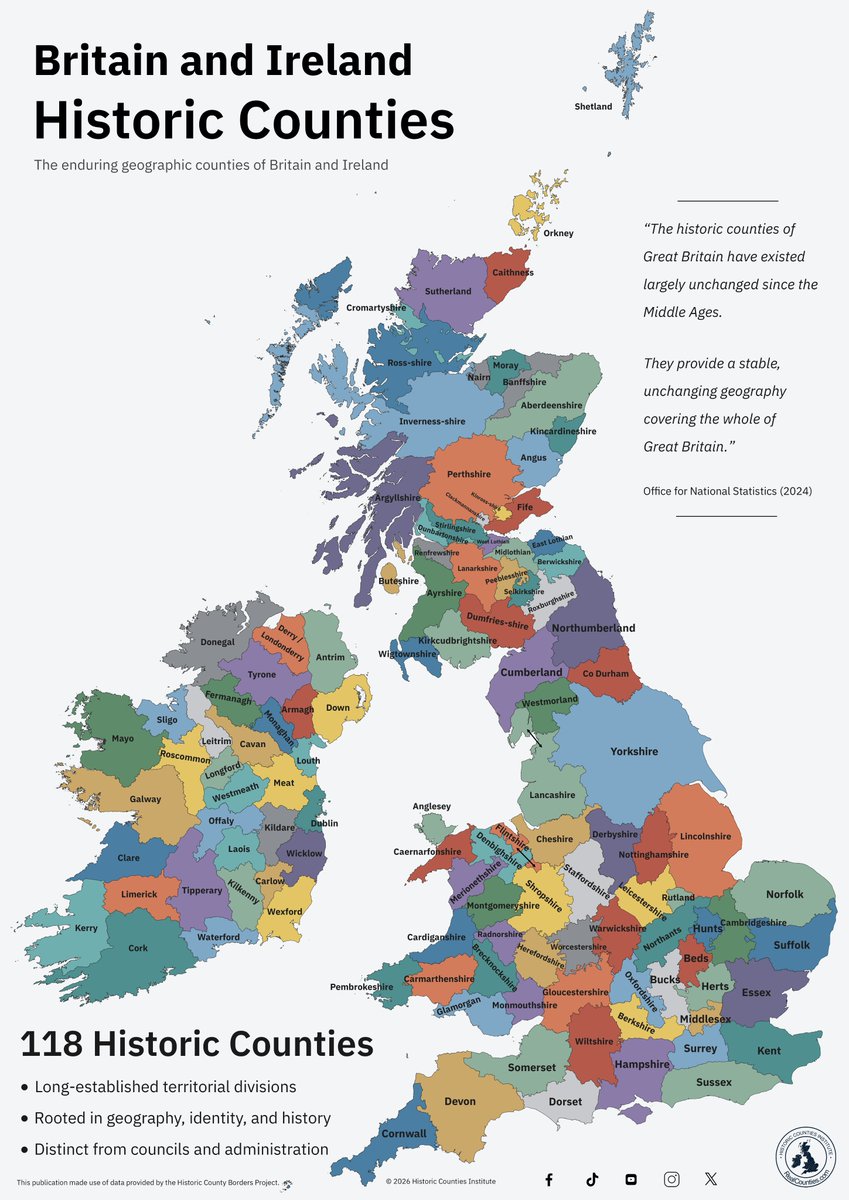
“The historic counties of Great Britain have existed largely unchanged since the Middle Ages.
They provide a stable, unchanging geography covering the whole of Great Britain.”
- @ONS 2024
So why are so many people still told their county “doesn’t exist anymore”?
And why are ever-changing council areas treated as though they are the counties?
These are the 118 historic counties of Great Britain and Ireland 👇
In 458 BC, Rome was on the brink of collapse.
An invading army had trapped the Roman consul and his legion in a mountain pass. Panic spread through the city. The Senate did the only thing they could think of:
They sent messengers to find a 60-year-old farmer plowing his field.
His name was Lucius Quinctius Cincinnatus. He had once been a senator, then lost his fortune paying his son's bail. Now he worked his own four-acre plot just to feed his family.
When the Senate's envoys arrived, they found him sweating behind a plow. They asked him to put on his toga so they could deliver an official message.
The message: Rome was making him dictator. Absolute power. Total command of the army. No checks. No oversight. No term limit.
He accepted.
Within 16 days, Cincinnatus had raised an army, marched out, surrounded the enemy, and forced their surrender. The republic was saved.
He had legal authority to rule for six months. He could have stayed. He could have expanded his power. He could have done what every other ruler in human history did when handed unlimited control.
Instead, he resigned on day 16.
He took off the toga, walked back to his farm, and finished plowing the field he'd left half-done.
Twenty years later, when Rome faced another crisis, they called him back. He was 80 years old. He took command, crushed the conspiracy, and resigned again, this time after just 21 days.
He died poor. On his farm.
2,200 years later, when George Washington was offered a kingship after winning the American Revolution, he refused and went home to Mount Vernon. The reason he was hailed as "the American Cincinnatus" is because Europeans literally could not believe a man who had won would willingly give up power.
King George III, on hearing Washington would resign rather than rule, said: "If he does that, he will be the greatest man in the world."
The lesson isn't that Cincinnatus was humble.
The lesson is that for most of human history, the people most qualified to lead were the ones who didn't want to. And the moment a society starts rewarding those who chase power instead of those who flee from it is the moment the republic begins to die.
Cincinnati, Ohio is named after him.
Most people who live there have no idea why.
It's all the fault of the English 🏴.
This French colony gone wrong has ruined continental Europe for over 8 centuries. It is an embarrassment to Western Civilization.
England is a French startup that grew sentient, deleted its operating system, and has been terrorizing the neighbors ever since. In 1066, William the Conqueror didn't actually intend to create a global superpower; he was just looking for a damp, offshore storage unit for his extra knights. But somewhere between the Battle of Hastings and the invention of the lukewarm ale, the "Normandy Expansion Pack" glitched.
What was supposed to be a lovely vineyard-adjacent outpost devolved into a chaotic, rain-soaked experiment in how many ways a human can boil a vegetable until it loses its will to live.
For eight centuries, Continental Europe has been forced to play the role of the exhausted parent watching a toddler with a flamethrower. The English spent the entire Middle Ages trying to move back into their "parents' basement" in France, leading to the Hundred Years' War—which was essentially just a very long, very violent property dispute over who got the good patio furniture in Aquitaine.
When they finally got evicted, they didn't just walk away; they decided that if they couldn't be French, they would make "Not Being French" their entire personality. They invented an entire Church just so a king could get a divorce, and they pivoted to a global empire primarily so they could find something—anything—with actual spice in it, only to bring those spices home and use them as decorative paperweights.
The sheer audacity of the British project is breathtaking. They took a perfectly functional Romance-language foundation, dragged it through a hedge of Germanic gutturals, and created a linguistic Frankenstein that they now have the nerve to export back to us.
For 800 years, they have sat on that island like a disgruntled tenant who refuses to join the neighborhood watch but insists on judging everyone’s lawn from behind a lace curtain. They spent centuries meddling in European affairs just to ensure no one else could have a nice time, only to eventually execute the ultimate "I’m leaving the party" dramatic exit with Brexit—which, let’s be real, was just the final, agonizing stage of a 1,000-year-old French colony finally admitting it’s too socially awkward to stay in the room.
The tragedy of the Continent is that we are still dealing with the fallout of William’s bad weekend in 1066. We gave them the architecture, the wine, and the legal framework, and in return, they gave us the Industrial Revolution (which ruined the air), the concept of "The Weekend" (which ruined productivity), and the belief that a vacation consists of turning bright pink on a beach in Spain while yelling for a full English breakfast.
England isn't a neighbor; it’s a French experiment that escaped the lab, moved into a cold shed, and decided to make its misery everyone else’s problem. We’ve been paying the "Norman Tax" in psychic damage for nearly a millennium, and quite frankly, we’re still waiting for the refund.
Hello Julia, sans aucune ironie, c'est top que tu prennes le temps de te renseigner. Mais le problème quand on lit Marx aujourd'hui, c'est qu'on prend pour acquis sa prémisse de départ, alors qu'elle a été démontée scientifiquement il y a plus de 150 ans.
Toute la pensée de Marx repose sur la théorie de la valeur-travail. L'idée que la valeur d'un bien vient de la quantité de travail nécessaire pour le produire. Si tu acceptes cette prémisse, alors oui, tout son raisonnement tient. Le capitaliste "vole" la plus-value du travailleur, l'exploitation est mathématique, la révolution est inévitable.
Sauf qu'en 1871, trois économistes (Menger en Autriche, Jevons en Angleterre, Walras en Suisse) découvrent indépendamment la même chose : la valeur n'est pas objective, elle est subjective et marginale.
Un verre d'eau dans le désert vaut une fortune. Le même verre à côté d'une rivière ne vaut rien. Le travail incorporé est identique. Donc le travail ne détermine pas la valeur. C'est le consommateur qui valorise un bien selon son utilité marginale dans un contexte donné.
Exemple concret : tu peux passer 1000 heures à tricoter un pull moche que personne ne veut. Selon Marx, ce pull a énormément de valeur (beaucoup de travail incorporé). Selon la réalité, il ne vaut rien. Parce que personne n'en veut.
À l'inverse, Bernard Arnault crée des milliards de valeur non pas parce qu'il "exploite" mais parce qu'il a su anticiper et organiser des désirs humains à grande échelle. La valeur est créée par la coordination, pas extraite par le vol.
Cette découverte (la révolution marginaliste) a invalidé tout l'édifice marxiste. Pas pour des raisons idéologiques, pour des raisons scientifiques. C'est pour ça que plus aucun département d'économie sérieux au monde n'enseigne Marx comme un cadre d'analyse valide. On l'enseigne en histoire de la pensée.
Maintenant, le truc important. Si ton intention en lisant Marx c'est d'aider les pauvres (c'est une intention noble), alors tu vas être surprise par ce qui suit.
Regarde les chiffres de la Banque mondiale. En 1820, 90% de l'humanité vivait dans l'extrême pauvreté. Aujourd'hui, moins de 9%. Cette chute historique ne s'est PAS produite dans les pays qui ont appliqué Marx. Elle s'est produite dans les pays qui ont libéralisé leur économie.
Chine post-1978, Vietnam post-1986, Inde post-1991, Pologne post-1989. À chaque fois qu'un pays libéralise, des centaines de millions de gens sortent de la pauvreté en une génération. À chaque fois qu'un pays applique Marx (URSS, Cambodge, Corée du Nord, Venezuela), c'est la famine et les goulags.
Ce n'est pas une opinion, c'est l'expérience la plus massive jamais menée en sciences sociales. Plusieurs milliards de cobayes humains, sur un siècle.
Donc paradoxalement, si tu aimes vraiment les pauvres, la position la plus cohérente n'est pas d'être marxiste. C'est d'être pour la liberté économique. Parce que c'est empiriquement la seule chose qui a jamais sorti massivement les gens de la misère.
Pour creuser, je te recommande trois lectures qui vont changer ta vision :
"La Loi" de Frédéric Bastiat (court, lumineux, gratuit en ligne)
"La Route de la Servitude" de Hayek
"Économie en une leçon" de Henry Hazlitt
Bonne lecture, et vraiment chapeau de chercher à comprendre plutôt que de rester dans tes certitudes. C'est rare.
I AM QUITTING MY JOB TO GO FULL IN CLAUDE
Just asked him to:
"Analyze misspriced Polymarket markets opportunities for arbitrage and find wallets that are using it to copy"
Turned $2K into $12K in one night
Monitored ~1k+ wallets
I just realized that there are many arbitrage bots that I can't beat without code knowledge
But I can find them and copy
So Claude created a monitoring terminal and copytraded found wallets using TG copytrading bot
It's not a script and not even the bot, it's an AI agent that is improving with each found wallet
Fetching wallet behaviour, how it's trading, arbitrage, what's sized and timings
70% win rate, 7 wallets copytrading rn from ~500 monitored, bot never paused, never gambling, just math and profit
Giving This Free for 24 hours. To get it:
1. Comment the word 'Claude'
2. Like and Retweet this post
3. Follow me @marryevan999 (so i can DM you)
i will regret giving away this for free but f*ck it:
full guide on how i build high-converting Meta Ads funnels that generated $10M+ online using Claude Code
for 24h, i'm sending it to EVERYONE who likes + comments "META"
(must be following + RT for priority access)
I made $27,000 in 15 days by setting up Claude Code & OpenClaw Trade Setup for non-technical users.
You can also do this, in simple steps.
I’ve prepared the exact step-by-step guide.
Normally priced at $799, but it's free for 24 hours.
To get it:
1. Comment "Trade", I will send you in DM.
2. Like and Retweet this post.
You only need, Claude + 1 laptop + 2 hour/day to make $2,000/day.
You Must Follow me @codewithimanshu, so i can DM you.