Hurricane Isaias is expected to make its way through Georgia this weekend.
Please be sure to monitor local weather alerts and follow tips from @GeorgiaEMAHS to prepare. Stay safe.
With the risk for tornadoes overnight Friday and throughout the day on Saturday, it's important to have multiple ways to receive storm alerts including Wireless Emergency Alerts (WEAS). To check if WEAs are turned on, check the notification settings on your phone.
Please join Leigh Ann and me in prayer for the loved ones of Captain Tim Tallant, who has unexpectedly passed away. Captain Tallant was a longtime public servant and cherished member of the Walton County Sheriff’s Office who is being remembered by colleagues as a man of character who made a difference in the lives of those who knew him.
Proud to have led to the Water Resources Development Act, which passed the House of Representatives this evening.
From the Ports of Savannah and Brunswick to locks, dams, and waterways across the nation, the state of Georgia and all America depend on reliable water infrastructure.
WRDA 2026 cuts red tape, speeds up project delivery, and empowers the Army Corps of Engineers to execute its mission while holding it accountable to keep projects on schedule and on budget.
Proud to work with @USACEHQ to help secure $12M to complete the nourishment project for Tybee Island.
This investment is critical to restoring the shoreline, strengthening protection for homes and businesses ahead of future storms, and preserving the beach that receives over 1 million visitors annually.
Great win for Coastal Georgia!
Army Civil Works has reprogrammed $100 million of surplus capital through our Building Infrastructure, Not Paperwork initiative, deploying unused funds from completed projects directly into high-priority infrastructure nationwide.
It was an honor to welcome Phillip Martin and Patsey Schreiber from the Veterans of Foreign Wars Department of Georgia to the office today to discuss how Congress can better serve our veterans.
It’s time to PASS the Major Richard Star Act!
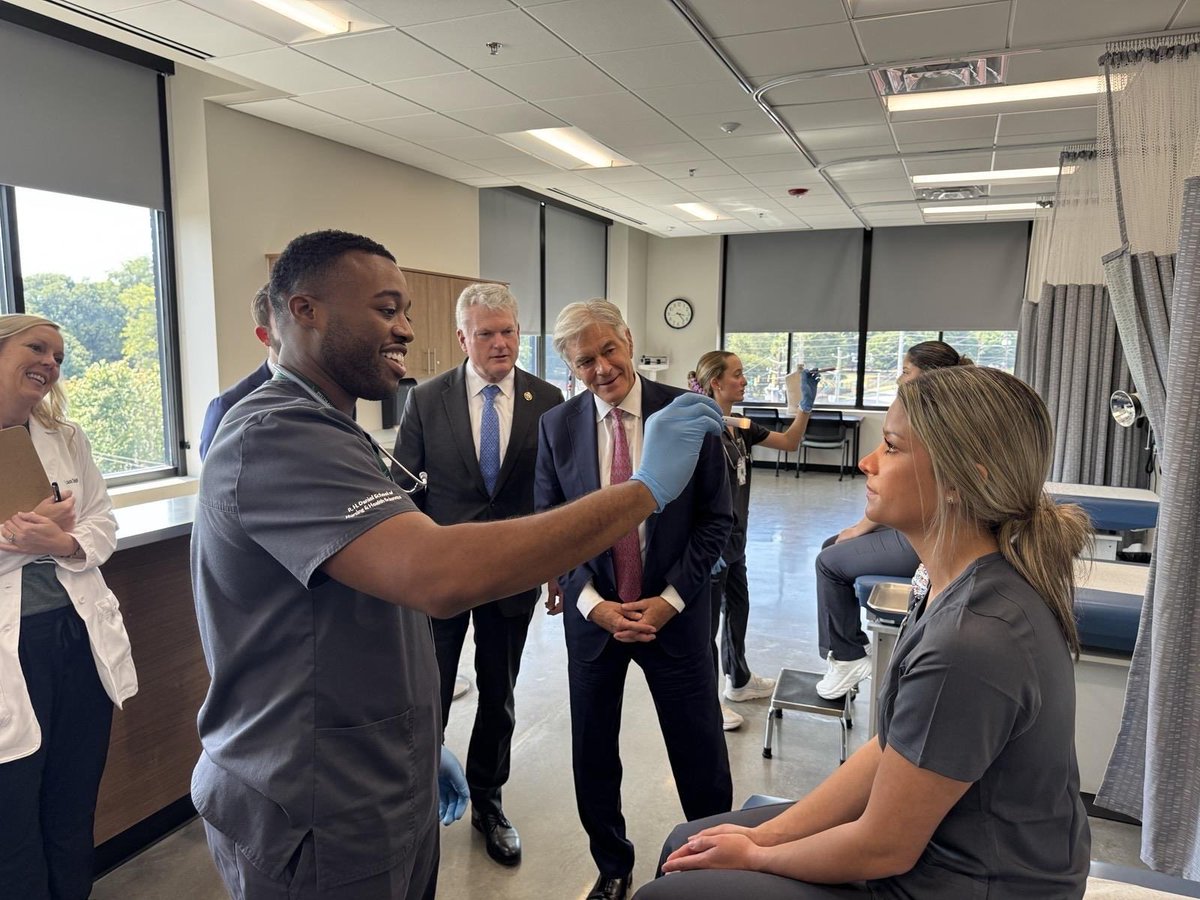
It was great to welcome @DrOzCMS to the 10th District to meet with local leaders and healthcare professionals to discuss the record investment in rural healthcare.
Together, we are supporting rural Georgia and giving patients the opportunity to get the care they deserve, when and where they need it.
September 11, 2001. It’s hard to believe it has been 25 years since that terrible day when we lost thousands of Americans to a terrorist attack that changed the world forever.
Those old enough to recall that day remember exactly where they were when they heard the news and all the fear, confusion, anger, and pain as our country was under attack.
In the midst of tragedy, we also saw the best of America: First responders and civilians rushing toward danger to save others, many making the ultimate sacrifice. We saw passengers on United Airlines Flight 93 heroically stop the terrorists from inflicting more damage knowing that they could not save themselves. We saw our country rally together in a way rarely seen before and since.
Today my prayers are with those who all these years later still grieve the loss of loved ones, and for our great country and its future.
Sec. Telle is a tremendous leader and it has been my privilege to work with him to improve and modernize American water infrastructure.
I know that he will take the same relentless drive to ensuring American soldiers have the tools they need to fight and win.
I am honored to have been selected by President Trump to serve as Acting Secretary of the Army under the historic leadership of Secretary of War Pete Hegseth.
I am blessed to have grown up in a small town in the United States of America, living the realization of the promise of America, the Greatest Nation in the history of the world.
Patriots throughout our nation, from sea to shining sea, enjoy that same precious freedom every day, a miracle that today is too often forgotten. That blessing has been enabled immeasurably by the U.S. Army, which literally built our nation and continues to guarantee those freedoms each passing moment.
The U.S. Military is the most powerful, capable, and dynamic entity humanity has ever devised. The Army is its foundational branch, a hardened fighting force that has crushed America's enemies and secured our freedom for 251 years and counting. Americans everywhere are putting their trust in the Army to again meet a pivotal moment in history, and I am grateful that President Trump and Secretary Hegseth understand exactly how high the stakes are.
To this challenge, I bring my love for our country, deep respect for our service members and their families, and my proven experience rejuvenating a massive, complicated part of the Army. Working closely with the Department of War, the Trump Administration, and Congress, we will deliver a more ready and capable Army.
My previous work in the Army focused on moving at Trump Speed to deliver on one of the Army’s original missions. I will apply that same relentless focus on efficiency to how the Army mans, trains, equips, and modernizes.
It is now my job to make sure we never send our troops into a fair fight. We will equip them with every cutting-edge advantage needed to completely dominate our enemies and return home safely.
God bless our Soldiers. God bless the U.S. Army. And God bless America!
- Hon. Adam Telle, Acting Secretary of the Army
Proud to receive the @FaithandFreedom Coalition’s Friend of the Family Award.
Families are the foundation of American greatness, and I will continue to champion pro-family policies and defend religious liberty as a member of Congress.
Thank you for this honor.
On this day in history in 1963, Martin Luther King Jr. delivered his most iconic speech, “I Have a Dream,” to over 250,000 people on the steps of the Lincoln Memorial.
The March on Washington was a peaceful rally advocating for voting rights and an end to discrimination and segregation against African Americans. A year later, the Civil Rights Act of 1964 was enacted, prohibiting discrimination in employment and education and ending segregation in public places.
Great morning with local leaders and businesses at the Gwinnett Chamber Congressional Appreciation Breakfast.
Main Street is the backbone of our communities and the engine of the American economy. Small businesses create jobs, strengthen our communities, and keep Georgia moving forward.
“May the Lord bless you and keep you; the Lord make his face shine on you and be gracious to you; the Lord turn his face toward you and give you peace.” — Numbers 6:24-26
On this day in history in 1940, Leon Trotsky, the exiled Russian revolutionary, was fatally injured by an ice-ax-wielding assassin working for Soviet leader Joseph Stalin, at his home in Mexico.
Trotsky, born in Ukraine, became a leading Marxist revolutionary and key figure in the 1917 Bolshevik Revolution, later building the Red Army to win the Civil War. His clashes with Stalin led to his exile and eventual expulsion from the Soviet Union.
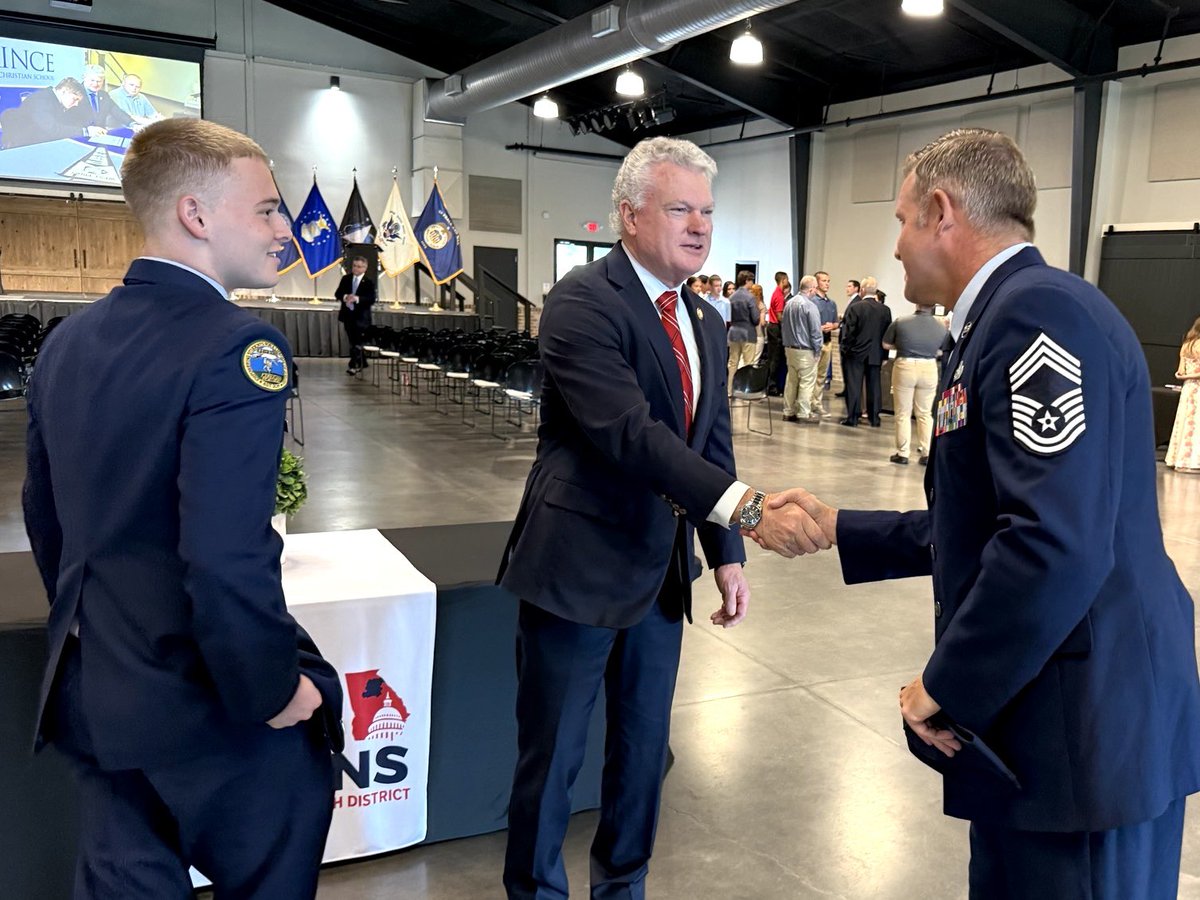
Thank you to the 140 students and parents who joined us for GA-10’s Academy Day to learn more about our nation’s military service academies and the Congressional Nomination process.
Academy Day gives students interested in serving our country the information, resources, and guidance they need to successfully navigate the application process.
I’m proud to see so many young Georgians ready to answer the call to serve our country!
On this day in history in 1877, the infamous Western outlaw Billy the Kid claimed his first victim after a skirmish with a blacksmith.
Billy the Kid’s real name was likely Henry McCarty, though he was better known by the alias William H. Bonney. His short, violent life was filled with prison breaks and shootouts. The gunslinger claimed to have killed 21 men, “one for every year of my life,” but historians put the true number closer to nine. Billy was shot and killed by New Mexico Sheriff Pat Garrett on July 14, 1881.
On this day in history in 1981, IBM releases its version of a personal computer, or PC.
IBM CEO Frank Cary gave William Lowe one month to develop a prototype for a PC that appealed to small businesses and consumers for $1,500. He was given a year to take it to market.
The IBM PC became the industry standard as it was now possible to connect to a television, allowing users to manage text and play games. It improved business efficiency, drove the growth of the software industry, and brought computing into widespread use.
On this day in history in 1934, the nation’s most dangerous criminals arrived at Alcatraz.
Converted into a maximum-security federal penitentiary in 1934, Alcatraz held notorious criminals such as Al Capone, George “Machine Gun” Kelly, and Robert Stroud, the “Birdman of Alcatraz.” The prison became infamous for escape attempts—most notably the 1962 breakout by Frank Morris and the Anglin brothers, which inspired the film Escape from Alcatraz.
Due to high maintenance costs, Alcatraz closed in 1963 after housing over 1,500 inmates in its 29-year run.
On this day in history in 1776, news of America’s Declaration of Independence reached London.
Dispatches from General Howe had finally crossed the Atlantic and arrived by horseback. On August 10, the London Gazette carried a short line confirming that the Continental Congress had declared the United Colonies “free and independent States.” What many in Britain had viewed as a colonial uprising was now an official war.