#LONGCOVIDAWARENESSDAY
Stop scrolling
1️⃣ Read our open letter
2️⃣ Use our template to write to your MP
3️⃣ Demand funding for #LongCovid research
Six years after the start of the pandemic millions are still living with Long Covid.
On #LCAD26 we ask UK policymakers for…
Since 2019, Research-Aid Networks has worked to turn research into real-world impact.
During the pandemic, @Vickyvdtogt played a vital role in expanding this work, and amplifying grassroots and patient-led voices.
https://t.co/GgvyjOCmHA
Recognizing that the organization’s new direction no longer aligns with Vicky’s core expertise and professional goals, which focus on community organizing, and providing structural, strategic, and organizational support to advocates, (grassroots) community groups, and non-profits
The pandemic accord, therefore, must include recovery if we’re serious about resilience and being better prepared for the next one.
https://t.co/Vd6OZFJLHd
This April, the world has one more chance to finalize a pandemic accord that could shape global health security for decades. But we can’t just plan for a next pandemic. We must also reckon with this one.
Recovery is still missing from the draft accord 🧵
https://t.co/keZiaZKNzp
As we wrote in @bmj_latest last year, recovery is a vital part of pandemic preparedness, yet it is still missing from the accord. Proper pandemic preparedness requires accountability, protecting the vulnerable, and rebuilding trust.
https://t.co/Vd6OZFJLHd
At the @UN Humanitarian Networks and Partnerships Weeks (#HNPW) last week, we heard many excellent talks about the importance of and approaches for community engagement during humanitarian aid.
🧵
At the same time, @ResearchAidNet's Dr. Jeremy Rossman recently discussed community engagement in research with Justin Osborne for the 'On Research' podcast of the Collaborative Institutional Training Initiative (@citiprogram).
Last Thursday, I gave a presentation for the Engagement & Inclusion focal area at CWTS (Leiden University) about Patient and Public Involvement (PPI) in research, and the topic of accessibility in research overall.
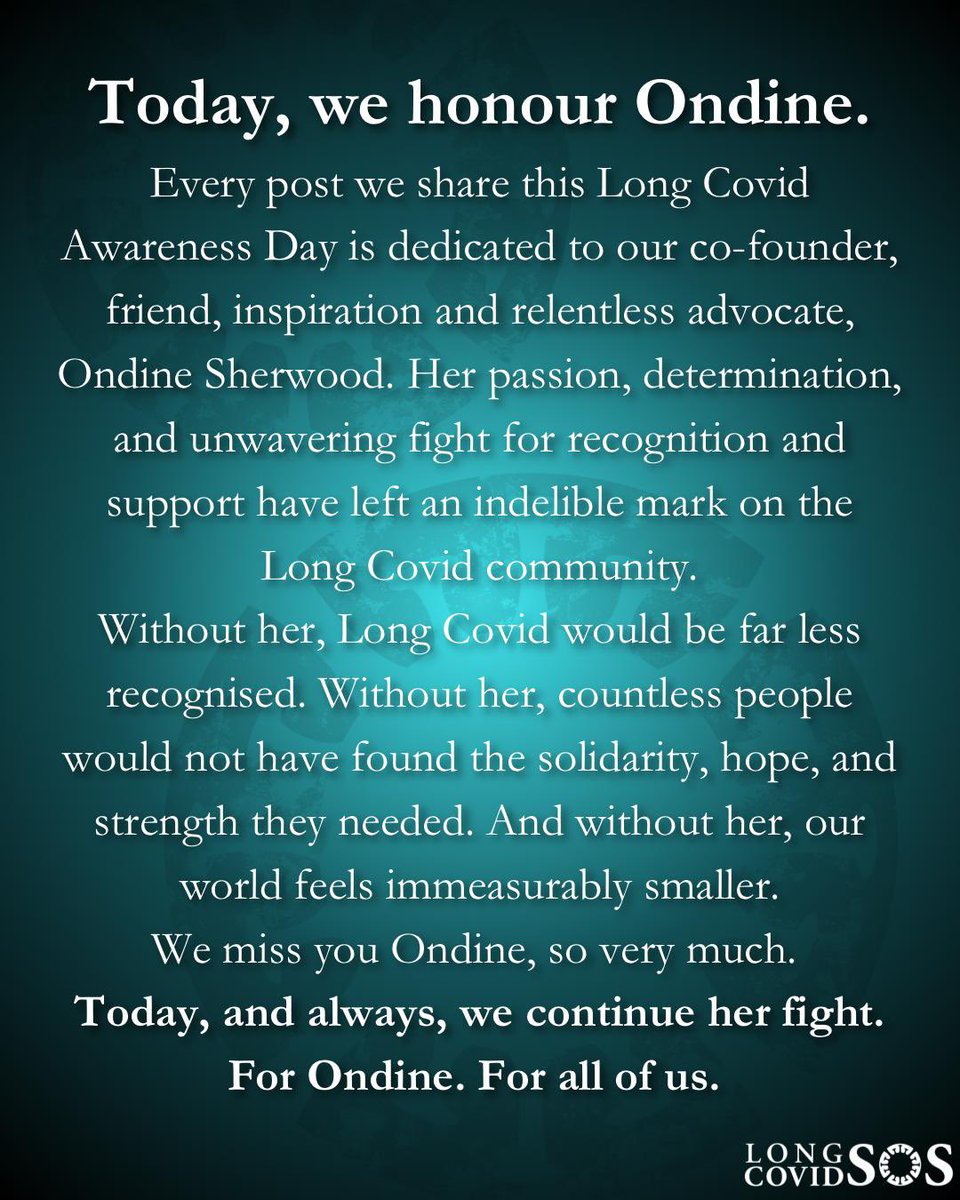
Today, we honour Ondine.
Every post we share on #LongCovidAwarenessDay is dedicated to our co-founder, friend, inspiration & relentless advocate, Ondine Sherwood. Her passion, determination, & unwavering fight for recognition & support have left an indelible mark on the world.
It is with great sadness that we learned about the passing of Ondine Sherwood, Co-Founder and CEO of @LongCovidSOS.
Ondine was a tireless advocate for Long Covid awareness, support, and research, driving meaningful change.
We are heartbroken to share the loss of our co-founder, CEO, and beloved friend, Ondine, who passed away on Tuesday 11th March.
https://t.co/ihEbPF9IMp
She was also a constant source of personal inspiration and a dear friend.
Our hearts go out to Ondine’s family, the Long Covid SOS team and all those mourning in the Long Covid community.
https://t.co/S0lA19O7Gk
In the midst of cuts to U.S. funding and humanitarian aid, the National Council of Nonprofits and over 4,500 nonprofits, including Research-Aid Networks, sent a letter to the U.S. Congress, reminding them of the essential role of charitable nonprofits.
We're excited to announce our latest article, which has been published in @bmj_latest: 'Recovery is missing in the pandemic treaty'
As the @WHO drafts its pandemic treaty, one critical aspect is missing: recovery.
https://t.co/Vd6OZFKjwL
The treaty focuses on health system recovery—a vital piece—but what about societal recovery?
Trust in science has eroded, inequities widened, and economic impacts linger. Ignoring these issues undermines resilience and preparedness for future pandemics.