Interesting to note that Indian #CEO compensations are linked to #EmployeeEngagement benchmarks and their impact on profitability! https://t.co/ghkjggCypb
@Aunindyo2023 HMT made amazing watches for that era. It was very first watch in 72-73 December, watching the NY test India Vs England Test at Eden. It was HMT Tarun.
HMT also brought in day date watches, which were ahead of time: my dad had a black dial day date HMT, with red hands
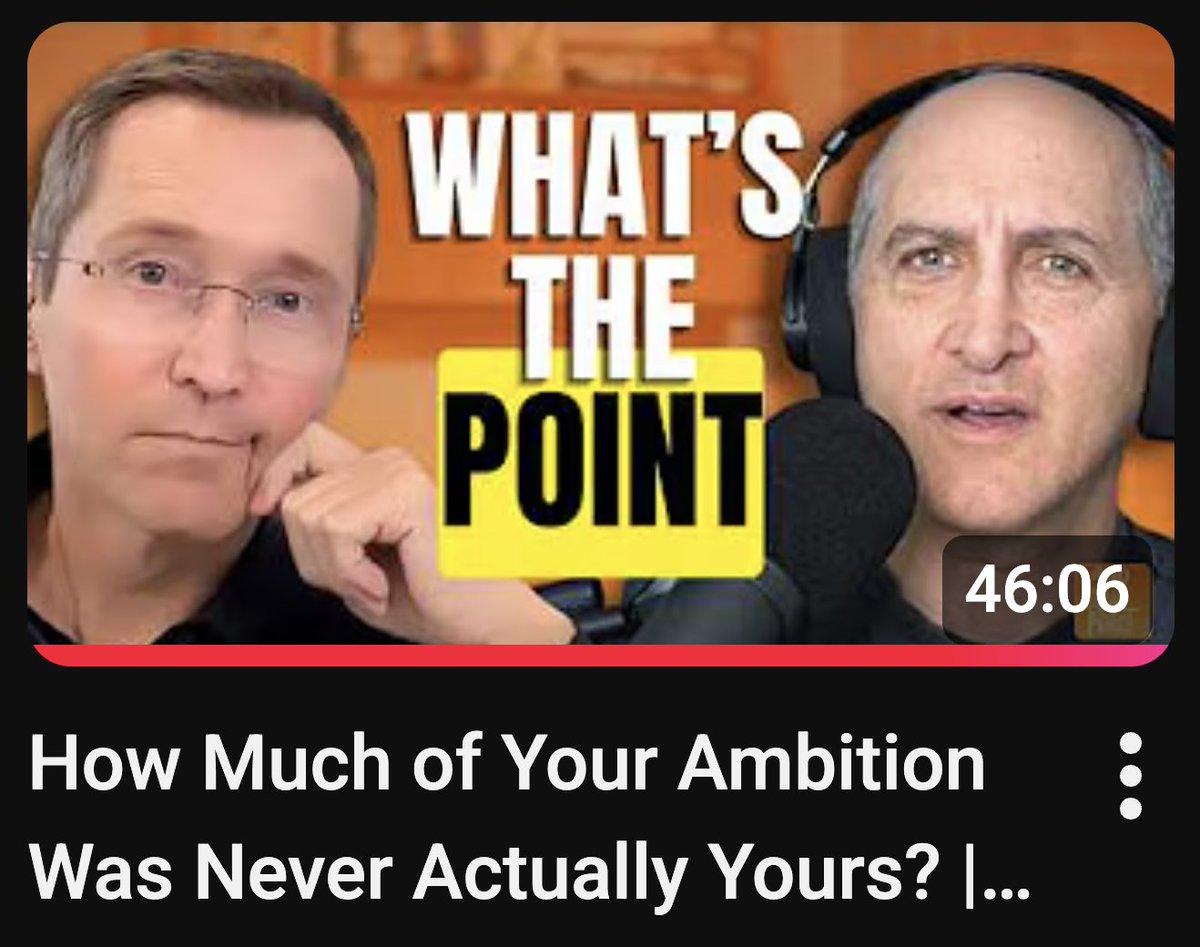
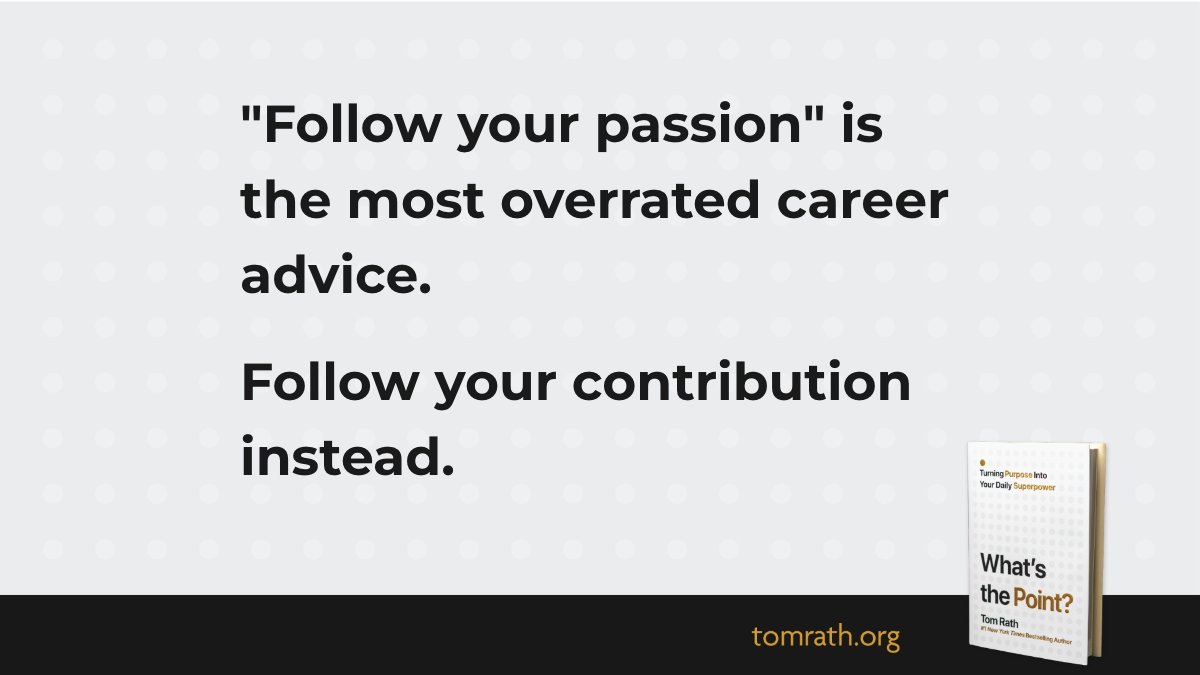
What's the Point of a Life?
A deeply personal discussion with one of the most thoughtful hosts of all time, @jonathanfields on @goodlifeproject
A few takeaways:
- Purpose is manufactured in the lab of our daily choices.
- Life isn't a ladder. It's a garden.
- We fall into a career at 18 looking through a pinhole — then call it identity at 40.
- No headstone mentions a title, an income, or a follower count. Build your day around what they do mention.
- The purest form of giving happens in rooms where no one is watching.
Full conversation on all platforms at: https://t.co/9JU1jGMVfV
BREAKING NEWS: Rowan Atkinson, a legendary icon of comedy, television, and cinema, has left even the world’s richest and most powerful figures stunned—not just with his words, but with decisive action.
At a glamorous red-carpet gala in Los Angeles on December 20, attended by film moguls, tech billionaires, and Hollywood’s most elite stars, Rowan Atkinson took the stage to receive a Lifetime Achievement Award. But instead of offering a conventional acceptance speech, he chose a moment of truth—direct, fearless, and deeply human.
He did not thank the Academy. He did not reminisce about Mr. Bean, Blackadder, or decades of global laughter. Instead, Atkinson looked straight into the audience of wealth and influence and declared:
“We sit here surrounded by diamonds and artistic glory while the world outside is falling apart. If your voice can move millions and you choose not to use it for those who have no voice, then you are not creating change—you are creating noise.”
The room fell into complete silence. Film executives and invited guests sat motionless, struck by the weight of his words. He continued, unwavering:
“If you have more than you need, it no longer belongs only to you. Your responsibility is to lift up those who are still beneath you.”
And he did not stop at words.
That very night, Atkinson announced that all profits from his archived works and future creative projects—estimated at 160 million USD—will be donated to fund children’s health initiatives, climate action programs, and arts education for underprivileged youth.
His message was unmistakable:
“Legacy is not built on what you earn. It is built on what you give.”
In an era when celebrities are often dismissed as hollow symbols, Rowan Atkinson delivered a powerful reminder to the world:
true impact is not created by applause, but by easing the suffering of others.
Are organisations really The Ship of Theseus where every single thing changes but 'something' remains?
The Ship of Theseus, also known as Theseus's Paradox, is a paradox and common thought experiment about whether an object (in this case a ship) is the same object after having all of its original components replaced with others over time.
The term comes from Greek mythology, Theseus was the mythical king of the city of Athens,. Over time, various timbers of his ship rotted and were replaced. A question was raised by ancient philosophers: If no pieces of the original remained in the current ship, was it still the Ship of Theseus? If it was no longer the same, when had it ceased existing as the original ship. (Wikipedia)
Probably no original 'part' of an old company like Hindustan Unilever, which has been around more than a century, remains.
None of the original people who were there at the start are around any longer. Almost certainly no old machine of that time will be in use and maybe no building either. The procedures and processes would have transformed too. Most, if not all, products: Ditto.
The question is: if every single component of the organisation has changed, how is it still the same organisation?
Many interesting aspects of organisations and systems in this fascinating book 'Elephants and Cheetahs'.
I am only part way through the book but the author (Professor Saral Mukherjee who teaches at my alma mater, IIM Ahmedabad) promises that if he does not make the reader see the beauty of operations he would have failed in his mission 😊
And that is why you need books 📚
If you don't feed your mind, nothing will come out!
Hope you are reading something interesting this weekend
@SaralMukherjee@PenguinIndia
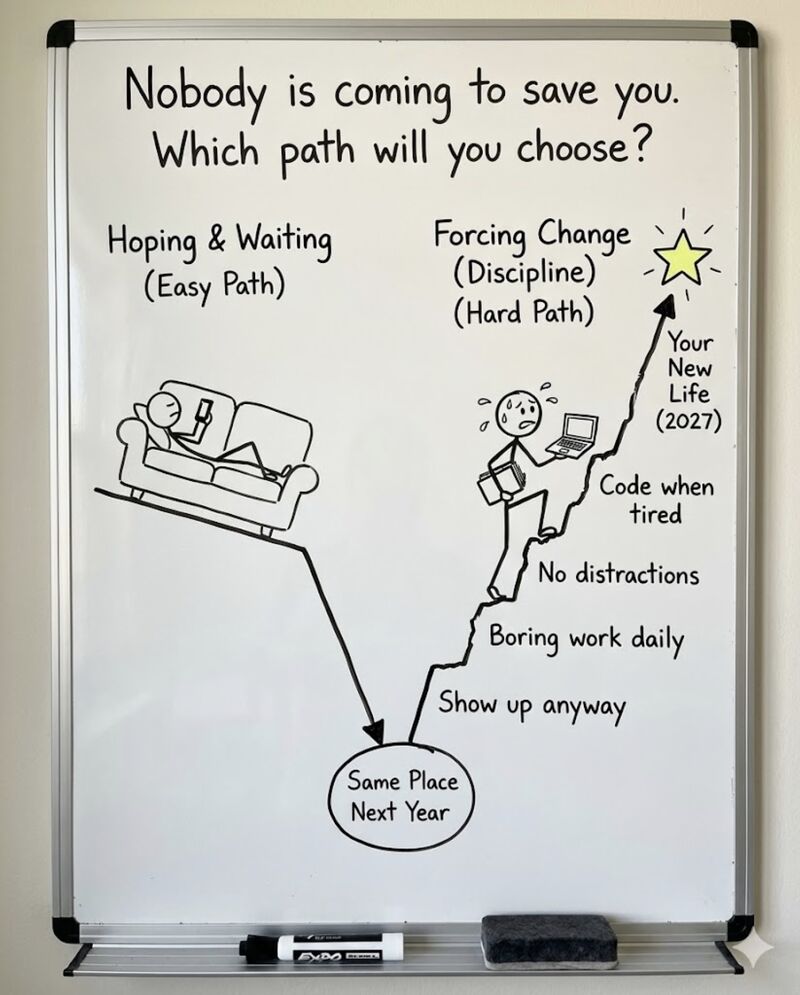
This New Year, don’t just `hope` life will change.
Force it to change.
Let me be brutally honest.
Nobody is coming to save you.
Not the college.
Not the company.
Not the degree.
Not even luck.
If you’re still in the same place next year,
it won’t be because you lacked talent.
It will be because you lacked discipline and courage.
So here’s a challenge for you.
For the next 365 days,
work hard even when you don’t feel like it.
Especially when you don’t feel like it.
Code when your friends are busy wasting time.
Study when motivation is zero.
Practice when results are invisible.
Keep going even when you have a huge self-doubt in your head.
There will be days you feel tired.
There will be days you feel lost.
There will be days you feel like giving up.
That’s normal.
What’s not normal is giving up every time things get hard.
One focused year.
One year of saying “no” to distractions.
One year of doing the boring work daily.
That’s all it takes to change your career.
That’s all it takes to change your life.
Don’t aim for perfection.
Aim for consistency.
Start today.
Not from tomorrow.
Not from Monday.
Today.
If you’re ready to grind this year,
like this post.
Save it.
Come back to it when your mind tells you to stop.
2026 can be your year.
But only if you decide that this time, you won’t quit. 🚀
Cheers,
Akshay Saini
#WishYouMorePowerFor2026
10 habits of happy people
1 kind to others
2 optimistic and hopeful
3 forward looking
4 forgiving
5 humble and grateful
6 good manners
7 work that brings joy and purpose
8 mindful and aware
9 physical and mentally fit
10 spend quality time with loved ones
"If a system were fundamentally unfair, it would not consistently attract and retain so many people who choose to work within it"
Really Mr Goyal?
If this was indeed the case and markets/ employers were perfect, we would not have to legislate across the world on everything from abolition of child labour to paying minimum wages to safety regulations in handling hazardous materials... Not to mention things like provident funds, medical insurance etc
And to answer your question, people choose to work within unfair systems because the choice is between being unemployed and this; not between being employed in a fair system and this
This scene from Good Will Hunting is one of my all-time favorites.
Two takeaways:
1. You can read every book ever written, but knowledge means little without real-world experience.
2. Every single person you meet is fighting a battle you know nothing about.
Picture by Prateek Jain on Dr Manmohan Singh's first day as Finance minister - apparently hangs at @ThePrintIndia
office.
It is a day I still remember - I was thrilled at the thought of what a magnificent opportunity it was for a professional to do something this big for the country. And of course, later he got an even bigger opportunity that he delivered on equally well!
I also remember one of his subsequent interviews where he said that since he had already had a coronary bypass before 1991, his friends advised him against taking so taxing and thankless a job. His answer was that he was willing to die in the service of the nation.
Many dismiss his 1991 reforms as having been dictated by the IMF but the number of countries with multiple crises and that struggle for years, if not decades, is legion. Here we were out of it and on our way in less than a year.
Nevertheless being the honorable man and the academic at heart he was, I remember an interview on completion of 25 years of the reforms where he must've named at least 15 to 20 others with whom he wanted to share the credit for the reforms - so very different from most other politicians and leaders.
What my generation has forgotten is how we were at the right place at the right time with the liberalisation. The salaries of the 80s were at a totally different plane by the year 2000.
For the very first time salaried employees could reach real affluence and wealth by the end of their careers - something which was unthinkable for our parents' generation. It is something we have taken for granted.
On a macro basis he was great for the IT and ITES business which then drove both primary and secondary employment for decades on end.
For me personally, his 1992 budget that began the opening of the market to foreign investors was the landmark event. This became the trigger for me to start on my entrepreneurial journey and for the professional securities industry to take birth in India.
Even when he was Prime Minister and the world saw the Great Financial Crisis (GFC) 2008 onwards, India sidestepped it with the highest GDP growth while reducing debt - a mind boggling feat he has got little credit for.
Most repeat the same tired old cliches of policy paralysis in UPA 2. As always, hardly anyone looks at the data, which shows an achievement unparalleled by even a single other country in the world at the time.
It was the debt reduction and the consequent reduction in interest cost in the budget that created room to fund all the rights based legislations that he brought including Right to information, food, education etc. There was no MNERGA tax or cess. Funds were found within the budget.
Here are extracts from his epoch-making 1991 speech
“I do not minimise the difficulties that lie ahead on the long and arduous journey on which we have embarked. But as Victor Hugo once said, “No power on earth can stop an idea whose time has come”. I suggest to this august House that the emergence of India as a major economic power in the world happens to be one such idea. Let the whole world hear it loud and clear. India is now wide awake. We shall prevail. We shall overcome.”
For me there is also a personal echo in his life story.
Dr Singh had completed Matriculation (Class 10) and my father had completed Intermediate (Class 12) when the Partition happened and the families were displaced. From what Dr Singh said in interviews it is clear that he faced similar pressures, that my father did, of being asked to get a job and help his family economically rather than study. Both of them fought very hard to study, had outstanding academic careers, went right up to doctorates and chose academic careers. Of course, Dr Singh rose to MUCH greater heights in other spheres.
An underrated life lesson: Tolerance for uncertainty is the most valuable human trait. The greatest rewards in life go to those who can show up every single day even when the rewards are uncertain. The one who can tolerate the most uncertainty is the one who will eventually win.
There are a few investors who have turned startups into status games. I’ve held back on saying this for a while but it needs to be called out. They will host events only for IIT/IIM founders. Some call it a mixer, but invite only unicorn founders and flaunt selfie pics with them.
I’ve nothing against IIT/IIM or unicorn founders. Most are smart entrepreneurs. But the job of VCs is to help create an ecosystem regardless of the pedigree. Creating exclusive clubs and playing these popularity games is the worst status games to play in entrepreneurship.
I was a founder with no pedigree. So when I see startup events filtered by tags, I know exactly who gets left out. It’s the same kind of founders who are already battling self doubt, limited visibility and zero access.
This is exactly what happened in the job market 10 years back. Most job descriptions asked for IIT & IIM degree- even if the role had nothing to do with it.
And we lost a whole generation of talent to that lazy filter.
As a society we’ve mistaken proximity for potential. And that’s a dangerous filter for India that is trying to build its identity to value innovation.
If you are a founder- don’t waste time trying to get into rooms built on pedigree.
Build something so real, they have no choice but to knock on your door. Your worth isn’t defined by where you come from, but by what you create.
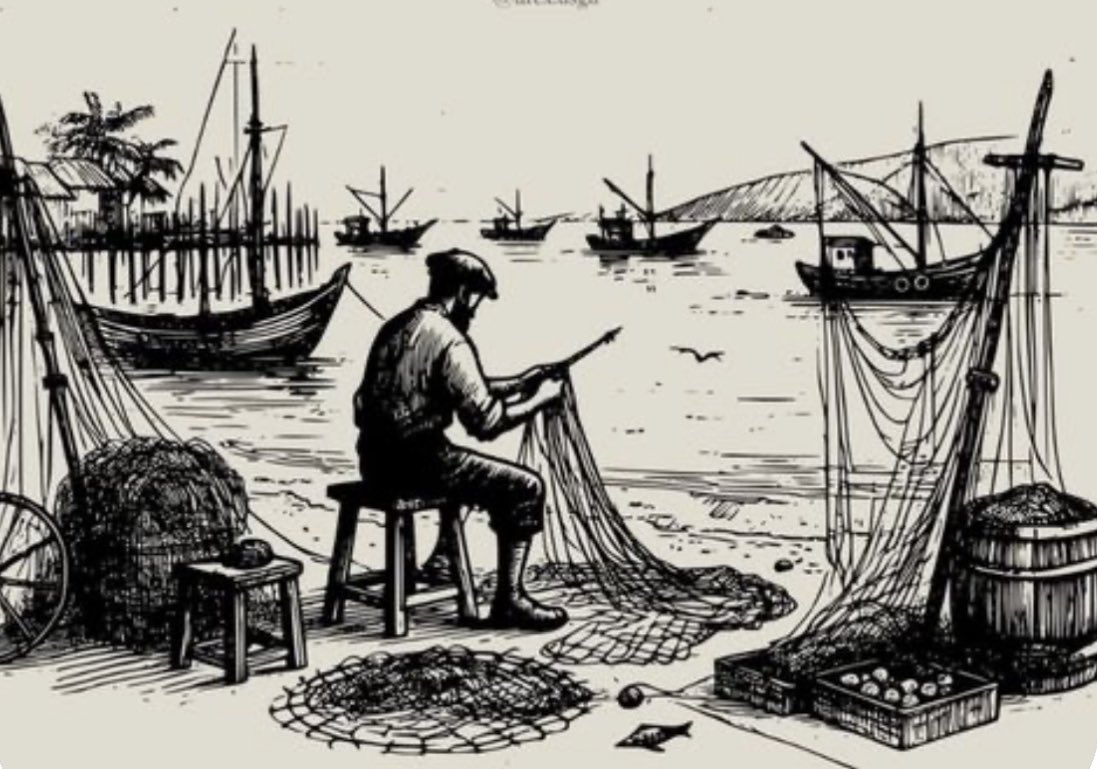
When the sea is too rough, wise fishermen don’t wait- they repair their nets.
In tough times, prepare. Sharpen your tools. Strengthen your mind.
Don’t do nothing- it’s about building what’s next.
🚨 "Don’t worry too much about starting salaries. Be very careful about who you work for, because you’ll take on the habits of those around you," @WarrenBuffett at #Berkshire2025
It's the End of an Era as Warren Buffett announced that Greg Abel will take over as Berkshire Hathaway CEO by the end of the year 👔
Here's a detailed🧵 with Moneycontrol's minute by minute coverage from the #BerkshireHathaway Shareholders Meeting🏛️⏬
@N_Mahalakshmi_
#BerkshireHathaway #BerkshireWeekend #Omaha #Shareholders #Investors #Business
Most companies think building a health first culture means signing a cheque for an employee wellness program. I can tell you with confidence that that culture isn’t a perk you can outsource to a vendor and forget.
At Zerodha & Rainmatter, staying healthy isn’t a policy. It’s a shared language across the company. We show up as a team. We move. We push each other. We recover. We laugh. And then we get back to work with more clarity and less ego. Be it weekdays or weekends we're talking & doing fitness together all the time.
Culture is what you do, not what you sponsor. And that's one of our moat.
I did not have an MBA or a fancy degree when I started building my business.
But I had clarity on one thing.
I wanted to build a team that was smarter than me.
MBAs. CAs. Experts in their fields.
I did my homework to hold my ground. Because real leadership is not about knowing everything. It is about creating a space where talent thrives.
Hire for your weaknesses. Never be threatened by people smarter than you.
That is how you build something that lasts.
#Exclusive | "There are no mature categories, only tired managers," said Bharat Puri, Outgoing MD of Pidilite, in a conversation with @blitzkreigm. Puri added that 'assuming the core category is mature is the biggest mistake that a company can make'
#pidilite#bharatpuri #fevicol #adhesivecompany #cnbctv18digital