Looks like our enthusiastic #SFB1361 members are have a great time at the #EESReplication in Heidelberg, Germany!
Have you heard their talks or visited their posters? Say hi if you spot them!
#DNArepair#DNAreplication
Open call for #PhD positions in the @IPPMainz! 📣
You are a motivated student interested in the topics #RNAbiology, #epigenetics, #immunology or #neurodegeneration & you want to be part of a lively, international community? Apply by 24 October.
➡️ https://t.co/fSbb7Nwm2t
Publication alert! 📰
Great work done by @ReuterLM on the use of high-throughput flow cytometry for analysis of cell cycle stage, replicated DNA, and chromatin-associated proteins!
Read their publication here: https://t.co/kfe66wEc6e
Please RT.
Are you interested in performing your master thesis with us @imbmainz? We have exciting projects on nuclear myosin VI in genome stability. Details below
https://t.co/I9Z7k0KAqM
If interested please apply via the link or contact me directly.
#Mainzer Wissenschaftsmarkt 2024 🔬🧬Unser Postdoc Dr. Maximilian Reuter im Gespräch mit Prof. Dr. Mita Banerjee & Dr. Ruth Gehrmann vom Obama Institute for Transnational American Studies der @unimainz über "Healthy #Ageing zwischen Körper und Kultur".
These protocols are particularly useful for researchers interested in DNA replication related research, as they allow you to quantify DNA content, EdU incorporation and protein chromatic binding at the same time in the same tube!🔬
Here, we provide novel and advanced protocols for high-throughput multidimensional flow cytometry assays in budding yeast and human cells. For the first time, we were able to measure chromatin-bound factors in yeast by flow cytometry.
Heute Nachmittag diskutiere ich mit Kollegen des @sfb1361 und SFB1482 über Altern: Zwischen Körper und Kultur im Herzen @mainz_de. Mit Unterstützung von @imbmainz und #UniMainz.
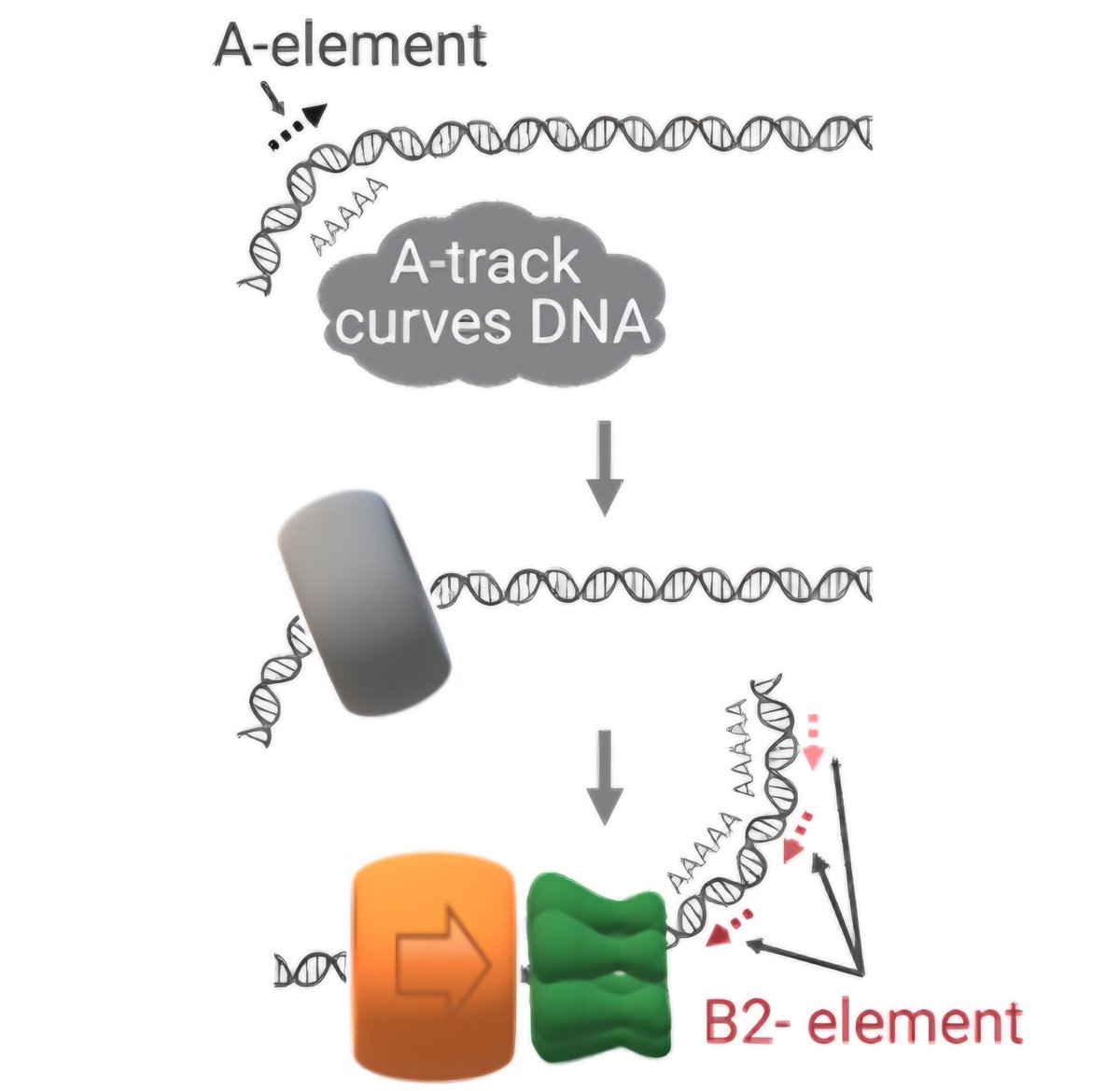
3/3: Interestingly, these sites are characterised by specific sequences and structural features that allow curving the DNA to ease DNA insertion into the MCM2-7 hexamer. Finally we found that origins are more compact than expected, fitting everything between two nucleosomes.🧬🔬
2/3: We found that ORC and MCM2-7 have overlapping binding sites in vivo, which cause ORC redistribution across the genome upon DNA licensing. Here, ORC subsequently recognises its two binding sites while loading the MCM2-7 double hexamer.
Happy to announce our new publication in @NatureComms, spearheaded by super-talented project leader @ReuterLM .
We identified that helicase loading is a self-limiting reaction supporting equal distribution of the replicative helicase across the genome.
https://t.co/xFFIPWF6T3