This is one of the roughest days for bitcoiners...
Coldcard users generated seed phrases and stored BTC on a "trusted" wallet... just to get drained.
Nothing kills confidence more than thinking you did everything right just to lose everything.
This battle only gets harder with frontier model LLMs
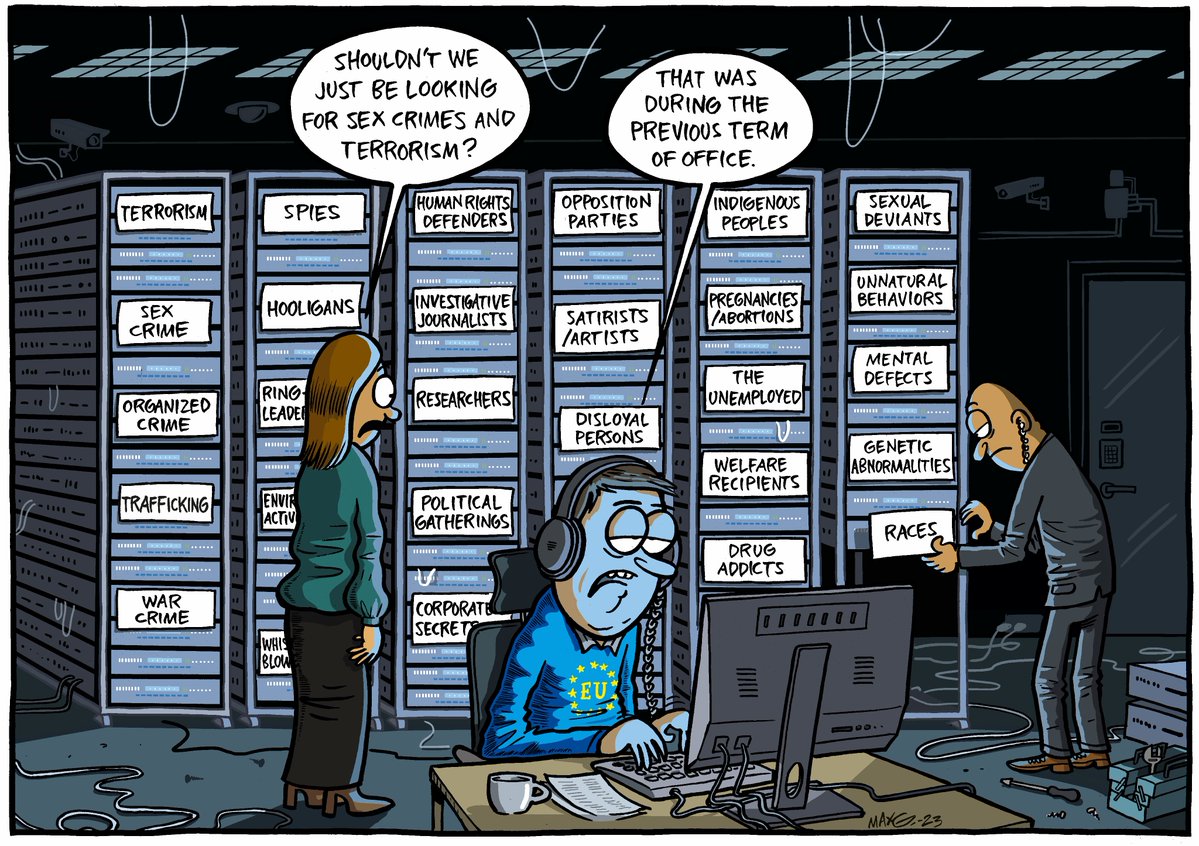
Die EU klagt gegen Irland, Spanien, Frankreich und Niederlande, weil sie das europäische Bespitzelungsprogramm abgelehnt haben.
Immer wieder das selbe Muster, wer sich nicht beugt wird verklagt.
Wir haben GENUG von dieser Brüsseler Diktatur!
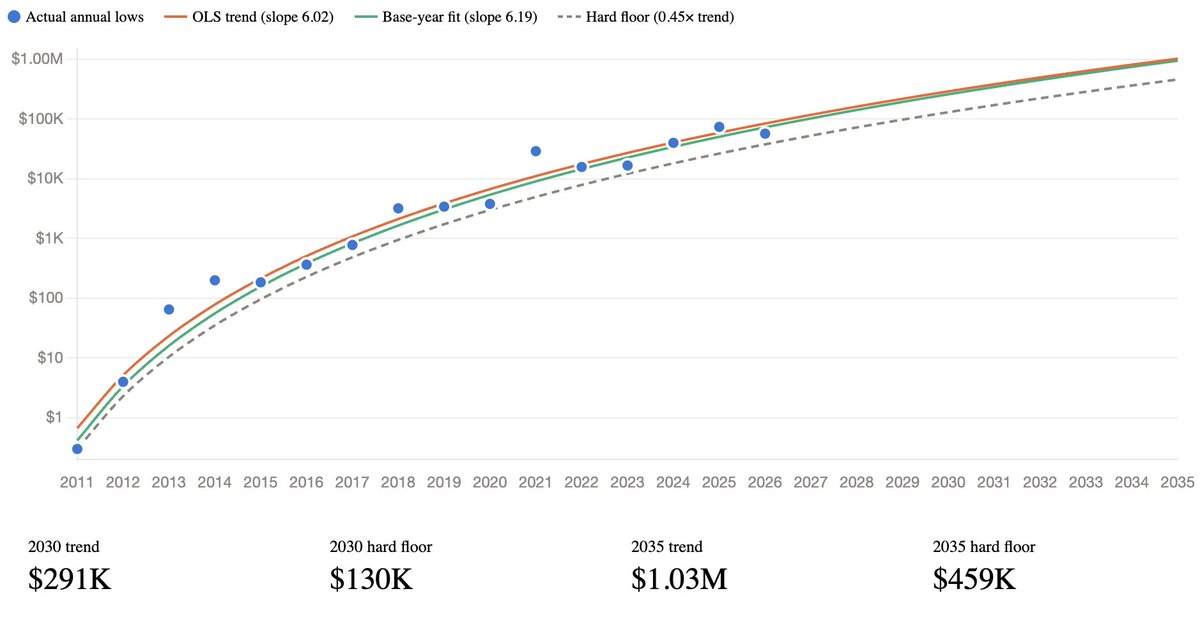
The stock-to-flow pricing model broke last cycle because supply was the main input...
Demand wasn't a factor.
But bitcoin's power law helps us see more clearly the reality of price cycles.
15 years of higher lows sitting across one line...
🇪🇺BREAKING: EU orders Google to share search data and open android up to AI rivals.
Under the Digital Markets Act, the EU has ordered Google to give rivals like OpenAI and Microsoft access to Search data and Android to grant third-party AI assistants powers currently reserved for Gemini.
The unprecedented ruling could dramatically reshape the AI landscape in Europe, with Google warning that the measures threaten the privacy and security protections of millions of users.
Die Änderung der Krypto-Steuer ist nicht Teil des in dieser Woche veröffentlichten Entwurfs zum Jahressteuergesetz von @LarsKlingbeil. 🇩🇪📜👀
Laut @F_Schaeffler ist es für die Regierung nun schwieriger geworden, die Bitcoin-Haltefrist abzuschaffen. 🧐
⬇️
https://t.co/1NbPikDxeN
London Underground. VPN restrictions are still on the table in the UK. Much of it depends on the next Prime Minister. Hopefully, that question mark won't turn into a full stop.
The EU has blocked a chat control skeptics talk on YouTube.
But here’s the thing, the content is in Finnish, and Finnish law allows for this exact thing.
So the EU is currently illegally blocking free press in Finland.
DAC8 schafft ab 2026 eine zentrale Datenbank: Wer besitzt wie viel Bitcoin, wann gekauft, wann verkauft.
Man muss kein Pessimist sein, um zu wissen, was mit solchen Daten passiert:
2019 wurde die bulgarische Steuerbehörde gehackt – Finanzdaten von fast allen Erwachsenen des Landes im Netz.
2020 das Ledger-Leck: 270.000 bis 1 Mio. Kundenadressen veröffentlicht. Danach: gezielte Phishing-Wellen und physische Drohungen gegen Bitcoin-Besitzer.
Der Staat sammelt Daten, die er nicht schützen kann, über Vermögen, das ihn nichts angeht – und bricht gleichzeitig sein Steuerversprechen von 2013.
Eine gläserne Wallet ist keine Steuerpolitik. Sie ist eine Zielscheibe.
Die Haltefrist muss bleiben. #Bitcoin #DAC8 #§23EStG
On Thursday, the European Parliament “adopted” the extension of Chat Control 1.0. This is the temporary suspension of the EU’s ePrivacy rules that allows tech platforms to mass-scan citizens’ private communications, ostensibly to detect child sexual abuse material. “Adopted” is placed in quotation marks here because the word implies something that conspicuously failed to happen: a majority of MEPs voting in favour. In fact, 314 MEPs voted to reject the text, against 276 in favour. And yet it passed anyway.
This was made possible through a procedural sleight of hand worthy of Brussels at its most cynical. The file was rammed through under an “urgency procedure”: European Parliament President Roberta Metsola unilaterally reopened a dossier that MEPs had already rejected in March, and the Council conveniently bounced it back at the start of the summer recess, when securing attendance is hardest. Rejecting it a second time would have required not a simple majority but an absolute one: 360 votes. The law was therefore approved despite a majority of MEPs voting against it. The regulation will now remain in force until April 2028, buying time for negotiations on its even more ambitious successor, Chat Control 2.0.
As German MEP @FabioDeMasi noted following the vote, Chat Control is a “legislative zombie” — a measure the European Parliament has rejected multiple times, revived again and again until the desired outcome emerges. This episode should give pause to those who insist that the EU’s democratic deficit could be cured by handing more power to the European Parliament. Here is that very institution’s president working with the Council to resurrect a file the Parliament itself had buried. If this is how the Parliament operates, empowering it further would only deepen this democratic deficit, lending a thicker veneer of legitimacy to what remains, at bottom, an executive-bureaucratic machine that treats votes as obstacles to be engineered around.
Continue reading here: https://t.co/yxWOZ07vTA
Der Staat greift doppelt zu:
Mit DAC8 melden Kryptobörsen ab 2026 jede Transaktion automatisch ans Finanzamt. Lückenlose Überwachung – beschlossen ohne große Debatte.
Und im selben Atemzug soll die Haltefrist des §23 EStG fallen. 2,6 Mrd. € sind im Haushalt 2027 schon verbucht – ohne Gesetzestext.
Erst die gläserne Wallet, dann der Griff in sie hinein.
Wer 2013 auf die Zusage des Fiskus vertraut hat (Drucksache 17/14062), wird jetzt bestraft. Das ist kein Steuerrecht mehr. Das ist Misstrauen als Staatsprinzip.
Die Haltefrist muss bleiben. #Bitcoin #§23EStG
Chat Control 1 is back. Despite the European Parliament voting down the legislation twice this year, the Council of the European Union and parts of the Parliament today managed – through an urgent procedure – to extend it for another two years. The law was originally introduced as temporary legislation, so that its effectiveness could be evaluated. At the end of 2025, the European Commission itself concluded that it was not possible to determine whether the law had any measurable effect. Even so, it has now been pushed through.
Some of today's amendments could have stopped the law. And a majority of the voting MEPs wanted to do so. By a margin of 314-276, the Parliament voted to reject the proposal through these amendments. However, since it was an urgent procedure, 361 votes were required. As a result, the majority lost today and Chat Control 1 was passed. The urgent procedure was a dirty play by the Council and parts of the Parliament – it’s a procedure not meant to be used on legislation already rejected by the Parliament.
For now, Chat Control 1 will remain in effect. This means that tech companies may continue scanning communications without a warrant or suspicion.
However, the real battle is Chat Control 2. Unlike Chat Control 1, it would require all providers to scan communications, and to do so far more extensively than Chat Control 1 ever has.
The European Parliament voted AGAINST Chat Control. 314 to 276.
And it passed anyway.
Let me tell you how: they needed 361 votes to say no. On the last day before vacation. Every empty seat counted as a yes.
They lost the vote. They won the law.
That’s not democracy. That’s a trick. #ChatControl
🇪🇺 The EU just passed Chat Control 1.0 in Brussels.
Platforms can now scan your private messages again, officially "voluntary," in practice blanket surveillance.
Here's the democratic scandal: 314 MEPs voted against it. Only 276 voted for it.
It passed anyway... because an absolute majority of all MEPs was required to reject it, not just a majority of those present.
More people voted no than yes. It still passed.
Pushed through on an urgent procedure just before summer recess, when absences are highest and attention is lowest.
This is how rights disappear folks. Not in one dramatic moment, but in procedural fine print, on a slow news day, while everyone's looking at Tehran.
Source: @Fidias0 / Writer: Oliver