Some of my favorite Sam Walton ideas:
1. I went to the library and checked out every book on retailing.
2. I’ve always held the bar pretty high for myself. I’ve set extremely high personal goals.
3. We always ran a real tight organization. We had no excess people.
4. We have been ahead of most other retailers in investing in technology.
5. It never occurred to me that I might lose. It was almost as if I had a right to win. Thinking like that often seems to turn into a self-fulfilling prophecy.
6. There hasn’t been a day in my adult life when I haven’t spent time thinking about merchandising. It has been an absolute passion of mine.
7. I was never in anything for the short haul.
8. I constantly meddled with the status quo.
9. We just started repeating what worked.
10. We just got after it and stayed after it.
11. Our money was made by controlling expenses.
12. You can make a lot of different mistakes and still recover if you run an efficient operation. Or you can be brilliant and still go out of business if you’re too inefficient.
13. I overcame every single one of my personal shortcomings by the sheer passion I brought to my work.
14. I've never done much investing in anything except Walmart.
15. I was always looking for offbeat suppliers or sources.
16. I’ve always thought of problems as challenges. I didn’t dwell on my disappointment.
17. We were serious operators who were in it for the long haul.
18. We had a disciplined financial philosophy and we had growth on our minds.
19. Many of our best opportunities were created out of necessity. The things that we were forced to learn and do because we started out under financed and under capitalized.
20. Whatever money we made in one store, we’d put it in another new one, and just keep on going.
21. We couldn’t care less about what is forecast or what the market says we ought to do.
22. I have always pursued everything I was interested in with a true passion—an obsession—to win.
23. Most everything I’ve done I’ve copied from somebody else.
24. Control your expenses better than your competition. This is where you can always find the competitive advantage. We ranked number one in our industry for the lowest ratio of expenses to sales.
25. I like to keep everybody guessing. I don't want our competitors getting too comfortable with feeling that they can predict what we're going to do next.
26. We were obsessed with keeping our prices below everybody else’s. Our dedication to that idea was total.
27. One way I’ve managed to keep up with everything on my plate is by coming in to the office really early. (4:30am) That early morning time is tremendously valuable: it’s uninterrupted time when I think and plan and sort things out.
28. I learned a lesson which has stuck with me all through the years: you can learn from everybody.
29. We started out swimming upstream and it’s made us strong and lean and alert.
30. We looked for the action-oriented, do-it-now, go type of folks.
31. Exercising your ego in public is definitely not the way to build an effective organization.
32. I probably visited more headquarter offices of more discounters than anybody else—ever. I would just show up and as often as not, they’d let me in. I’d ask lots of questions about pricing and distribution, whatever. I learned a lot that way.
33. My style as an executive has been dictated by my talents. I’ve played to my strengths and relied on others to make up for my weaknesses.
34. The folks on the front lines—the ones who actually talk to the customer—are the only ones who really know what’s going on out there. You’d better find out what they know.
35. It’s generally my gut that makes the final decision. If it feels right, I tend to go for it, and if it doesn’t, I back off.
36. Nothing else can quite substitute for a few well-chosen, well-timed, sincere words of praise. They’re absolutely free—and worth a fortune.
37. Go the other way. Ignore the conventional wisdom. If everybody else is doing it one way, there’s a good chance you can find your niche by going in exactly the opposite direction.
38. Commit to your business. Believe in it more than anybody else.
39. One thing I don’t even have on my list is “work hard.” If you don’t know that already, or you’re not willing to do it, you probably won’t be going far enough to need my list anyway.
Charlie Munger’s simple rules that make life better:
1. Don’t envy
2. Don’t overspend your income
3. Stay cheerful in spite of your troubles
4. Deal with reliable people
5. Do what you are supposed to do
I still don't know what lead to "success". But I know what leads to insuccess: a temperament of complaint, the mentality of permanent victimhood, and the collective and individual propensity for lamentation.
Bruce Greenwald is one of the most prolific Value Investing teachers out there.
His superpower is simplifying complex subjects like valuation and competitive analysis to help investors beat Mr. Market.
Here's a thread on my favorite Bruce Greenwald knowledge resources ... 🧵
Peter Cundill is one of the most consistent value investors ever.
His Value Fund generated a 15% CAGR over 33 years. Turning $100 into $10,000.
He followed in Ben Graham's footsteps but carved his own path.
Here are six of Cundill's most important investing lessons ... 🧵
I'm a Chief Technology Officer at Deloitte.
I've hired 100+ people in my career and I know in the first 9 minutes if a candidate has what it takes.
Here are 10 things that will make you stand out in any interview:
The most powerful skill to learn for 2023:
Storytelling.
But most people don’t have any stories to share.
Use these 3 frameworks to generate endless viral story ideas:
Charlie Munger is a modern-day polymath and one of the most respected investors of all time.
He credits reading 500 pages/day with much of his success—his children even call him a book with legs.
Here are 20 of his favourite books:
3/
Influence by Robert Cialdini.
”You couldn’t start with a better book than Cialdini’s Influence to avoid being manipulated by vendors and by lenders using the standard tricks of the vendor and lender trade.”
–Charlie Munger
https://t.co/2k3i8zkqrO
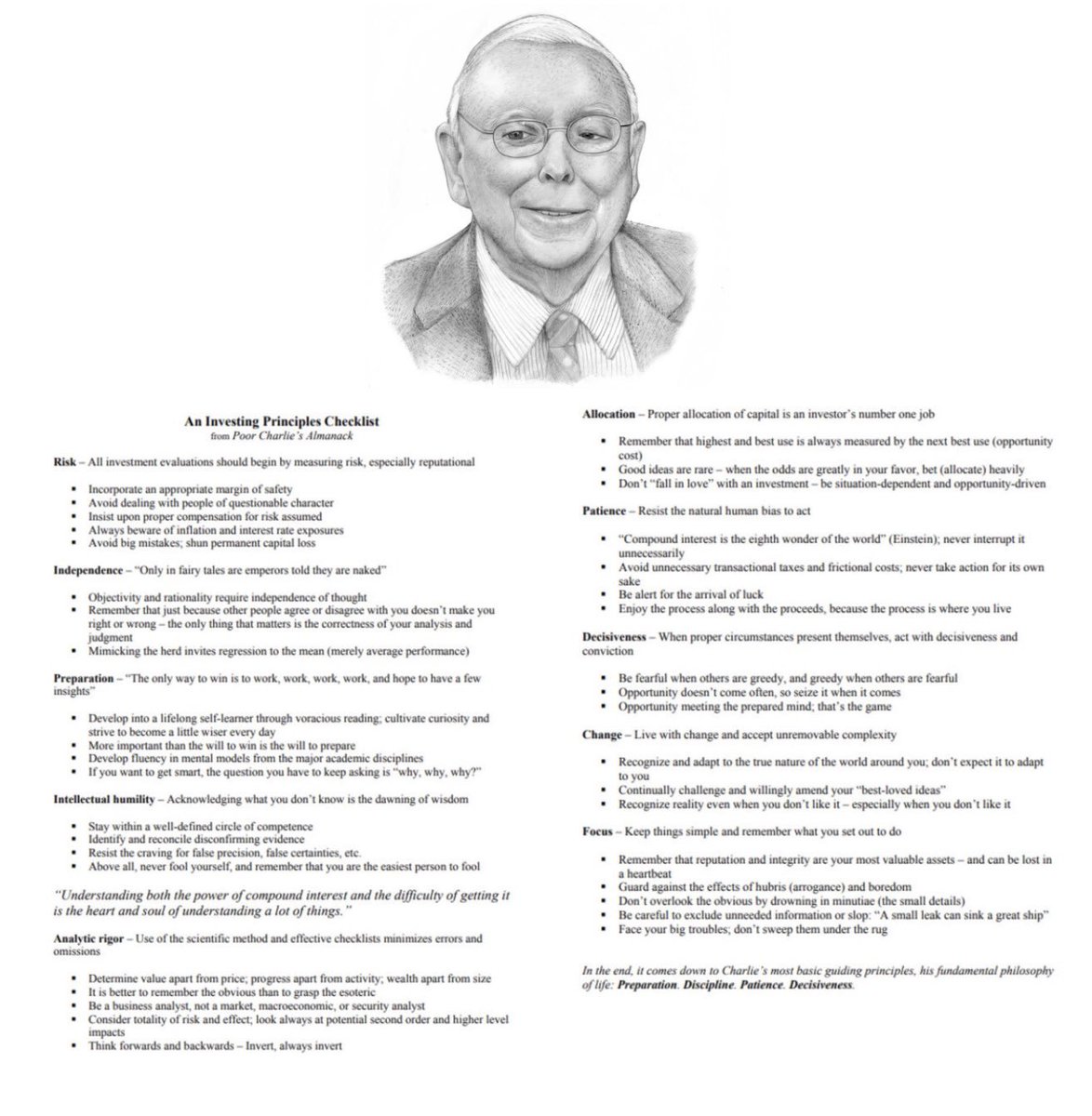
If you're trying to analyze a company without using an adequate checklist, you may make a very bad investment" - Charlie Munger
Small Thread of Investment Checklist from Masters
1. Charlie Munger's Investment Checklist
📚🧵Charlie Munger is one of the most intelligent men in the investment world.
We can all learn a lot from Charlie Munger.
Here are Charlie's 100 best investment quotes full of (investment) wisdom ⬇️⬇️
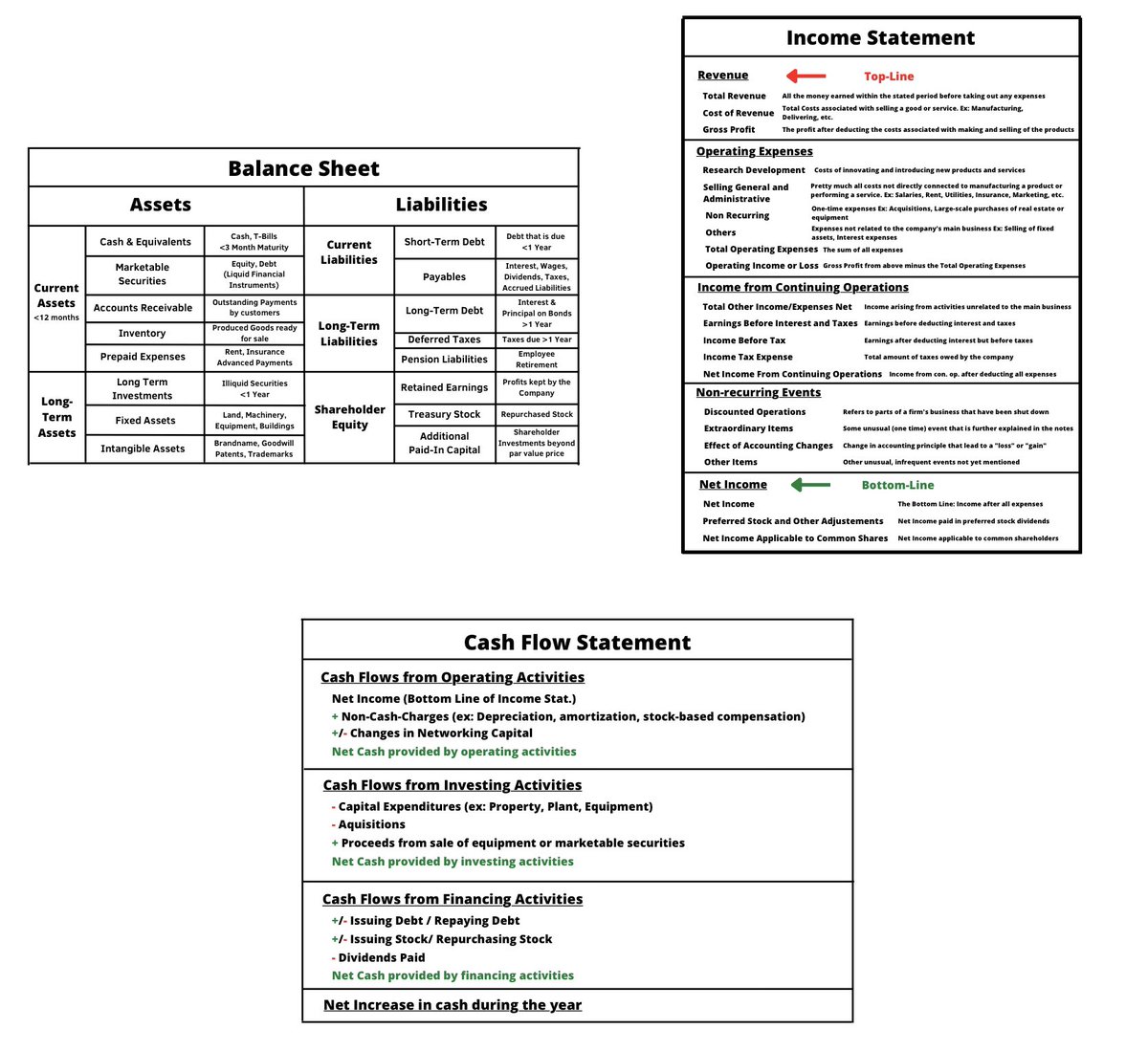
Every Investor MUST know how to analyze companies.
A huge part of that, is analyzing the 3 financial statements.
Here’s how to analyze and interpret the…
- Balance Sheet
- Income Statement
- Cash Flow Statement
Everyone says, "A bad management can ruin a good business."
But how the hell do you even assess management?
Here are 25 qualities you should look for:
(Lessons from Buffett, Bezos, & Peter Drucker's writings)