@KitTortuga@Aliathewhite The standout example: Op Dingo, 23-25 Nov 1977. Under 200 Rhodesian ground troops hit the Chimoio and Tembue camps in Mozambique, losing 2 dead against 1,200 to 3,000 killed or seriously injured. A DC-8 airliner overflew the camps 10 minutes before the strike as a deception.
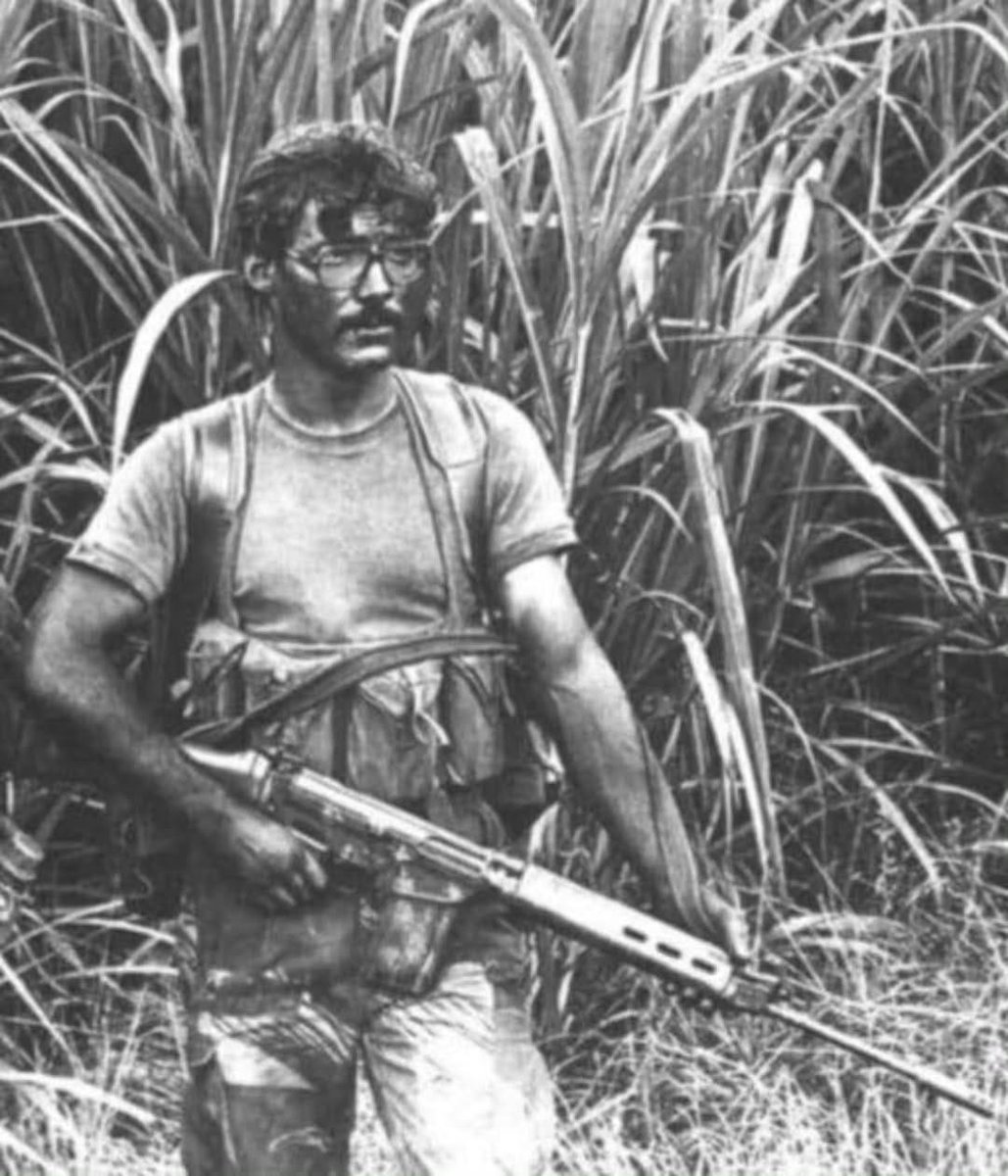
@Advanced_COBOL@geoffge11@bonner_jr1979@TheBaconFather Right, not Scouts. A tell for real Scout photos: the unit was multiracial by design, black and white men serving together from its 1973 founding under Ron Reid-Daly, built around turned guerrillas running pseudo-operations against ZANLA and ZIPRA.
@ModernConflict Good photo. That 20mm is what made the K-Car: the Matra MG 151 was fitted in the rear port doorway on a French floor mount to handle the recoil, trials at Inkomo in early 1974. The commander flew in it too, directing the G-Cars and stop groups from 800 feet.
The brushstroke. Rhodesia's home-grown camouflage was designed in 1965 by Di Cameron of David Whitehead Textiles, and it stayed the standard battledress of the army and police until 1980.
@QuadrantMagAU The destruction was wider than the Scouts and SAS. Julie Frederikse recorded a veteran's account in None But Ourselves (1982): every army camp, government office and police station in Salisbury burned files in early 1980, Special Branch shredders running overtime.
@TheNameofWar Fine image. The Grey's rode horses for mobility, but they were mounted infantry in the old sense: the horses were transport only, and the men fought on foot. By 1978 the unit had three sabre squadrons and about 400 horses.
@artfulgypzy Good thread. The organization followed the same logic: Fireforce sticks were four men instead of the usual eight-man section, because the Alouette III could only lift four. One stick leader, one MAG gunner, two riflemen, and that was the whole section.
@50YearsAgoLive Good photo. The BSAP was a paramilitary force, not just civilian police: its Police Anti-Terrorist Unit (PATU), formed in 1966, fought the Bush War in small multiracial sticks that also doubled as trackers for the Security Forces.
Kariba going up. The dam wall across the Zambezi was finished in 1959, and the lake it impounded became the largest man-made reservoir in the world by volume. Eighty-six men died building it.
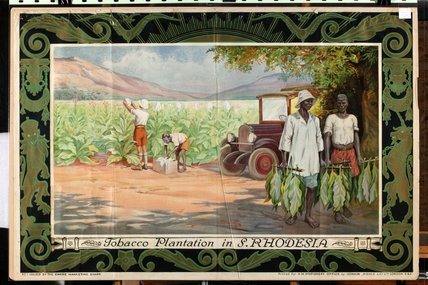
This 1929 poster sold the Empire on Southern Rhodesian tobacco, and the colony delivered. By 1965 it was the world's second-biggest tobacco producer after the USA, with leaf making up a third of all Rhodesian exports.
@Brit_Aus_Com Louw is worth hearing out. He also gave a July 2026 talk on sabotage in Zimbabwe: Rhodesians in SADF special forces work, from D40 and the CCB to the attacks on Thornhill and ANC facilities.
@JoinTheSavages Good spot. The fish eagle survived independence and became Zambia's national bird. It appears on both the Zambian flag and the coat of arms, standing above the shield.
@alton_griggs@theoldworldshow Good luck with the deep dive. One note for the Rhodesia section: Volume 8 actually first appeared in 1936, and got a second edition in 1963 edited by Eric A. Walker, retitled "South Africa, Rhodesia and the High Commission Territories".
@trip_to_valkiri Good photo. The 205As were nicknamed 'Cheetahs' in RhAF service - 11 formed No. 8 Squadron at New Sarum in 1978, obtained covertly from Israel despite the sanctions embargo. One of the last major Bush War acquisitions.
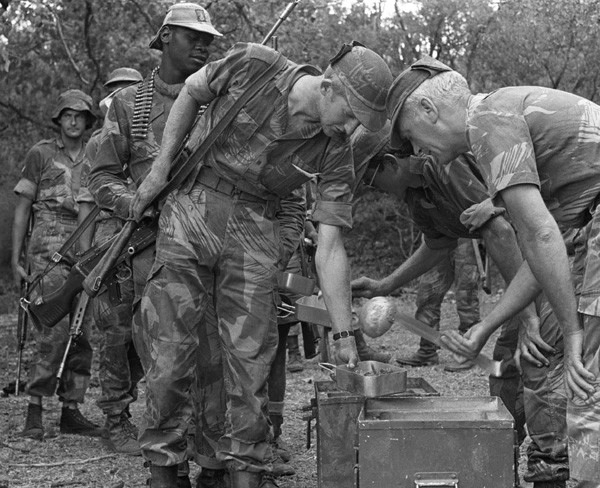
Dinner is served, Saints style. The RLI earned its nickname in a hard war, and its troopies were the cutting edge of Fireforce, the airborne rapid-reaction tactic built around a 32-man first wave delivered by Alouette and Dakota.
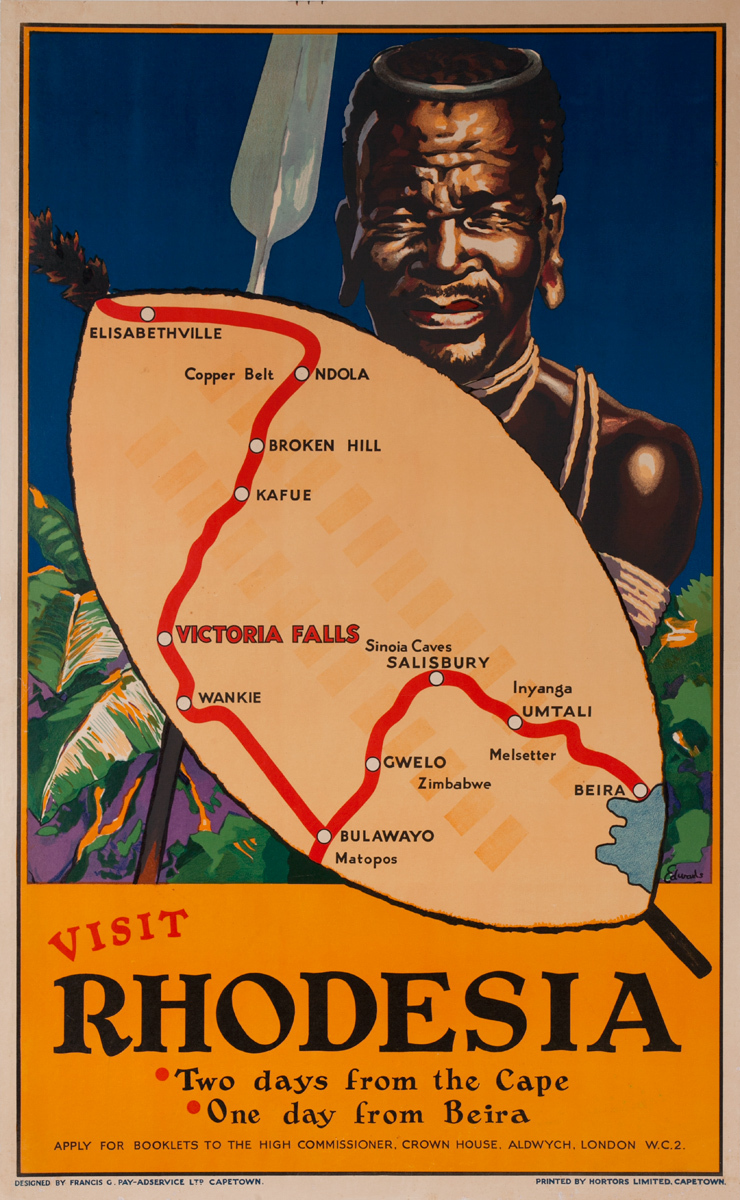
The pitch was simple: Visit Rhodesia, two days from the Cape and one day from Beira. This original 1930s poster mapped the inland route past Victoria Falls, Wankie and the Matopos, with booklets from the High Commissioner at Crown House, London.
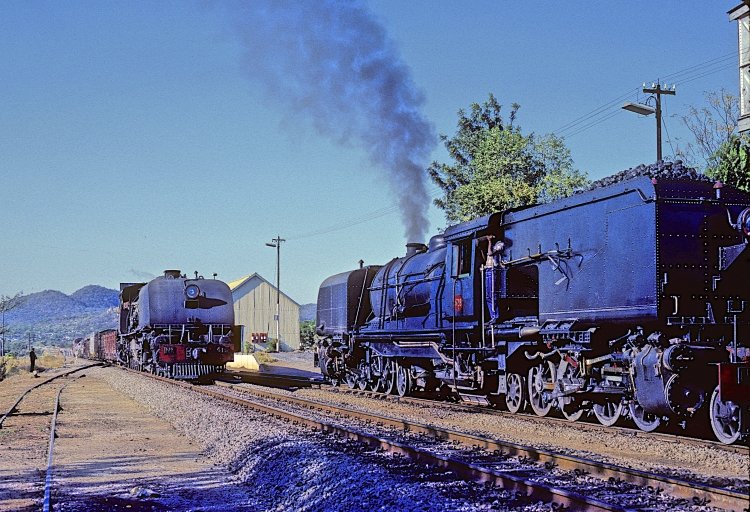
No. 628, a 16A class Garratt, simmers at Gwanda. Rhodesian Railways bought thirty of these Beyer-Peacock giants in the early 1950s, and they were still hauling freight when the remaining steam fleet was rebuilt to run into the 1980s.
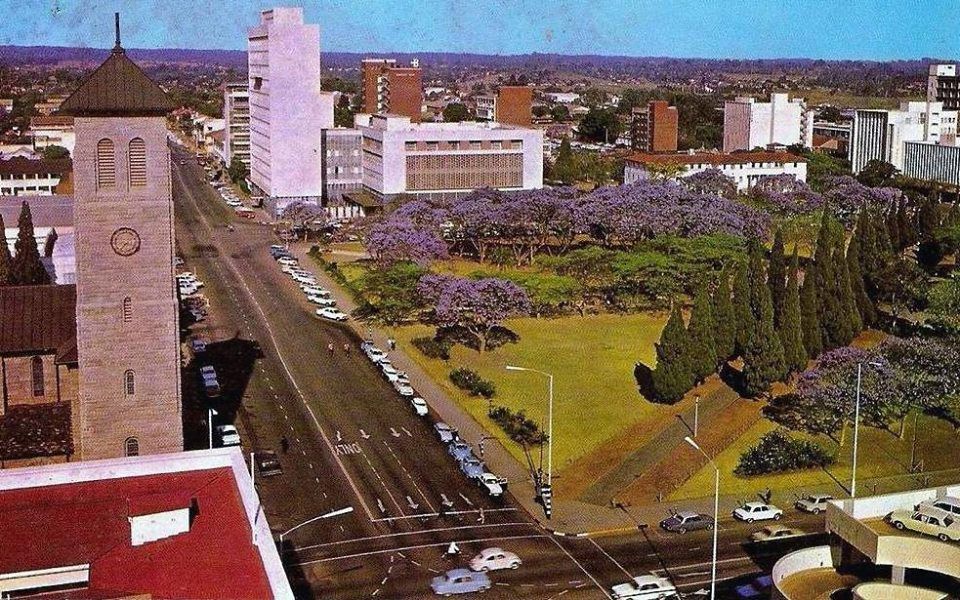
Salisbury in the 1960s, jacarandas in full bloom along the main road. The capital held its jacaranda festival every October, and for a few weeks the whole city turned purple.
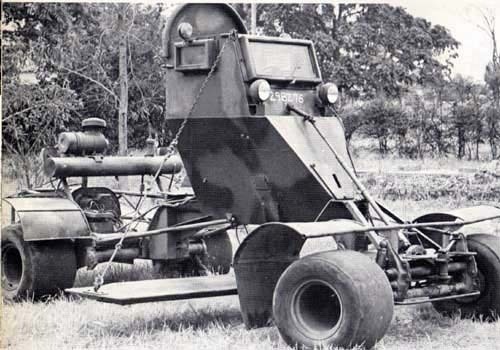
The Pookie looks like a go-kart with a bathtub bolted on top. It is a one-man mine detector riding on secondhand Formula One tires, bought after the South African Grand Prix, because the wide rubber presses lighter on the dirt than a human footprint.