“What is your meaning in this life?” Alice Walker asks.
Walker, who was born in 1944, is an American novelist, short story writer, poet, and social activist. In 1982, she became the first African-American woman to win the Pulitzer Prize for Fiction, which she was awarded for her novel “The Color Purple.” Over the span of her career, Walker has published seventeen novels and short story collections, twelve non-fiction works, and collections of essays and poetry.
Source: @FemalePoets, @Wikipedia
🚨 BOMBSHELL! Zohran Mamdani completely dismantles Donald Trump's racist immigration lies.
He confirms America was built by banished Muslims and marginalized groups, not the corrupt elite.
He exposes the establishment for turning the nation into an arena of supremacy.
Abdul El-Sayed on AIPAC: “Why does an organization that wants to send our money abroad to drop bombs on women and children, to back a genocidal foreign government, why are they attacking me? Well, because they know I want to keep our money here, to invest in women’s health here and childcare here. They know they can’t beat us on the fundamentals of the debate”
To Senator McMorrow, her family, her staff, and her supporters: thank you for the work you did for democracy.
The same party insiders she had the courage to challenge have been bullying anyone who opposes their chosen candidate.
I welcome her supporters to our movement to stand up against money in politics, to put money back in pockets, and pass Medicare for All. We cannot allow the establishment to decide our nominee for us.
👏DO👏NOT👏LET👏THIS👏STORY👏DIE👏
Texas Attorney General, and now Republican nominee for the Texas Senate Ken Paxton gave his friend 28 days in jail after he repeatedly raped a young boy.
He does not have to register as a sex offender.
He didn’t even lose his license to practice law.
June 17, 1972. Washington D.C.
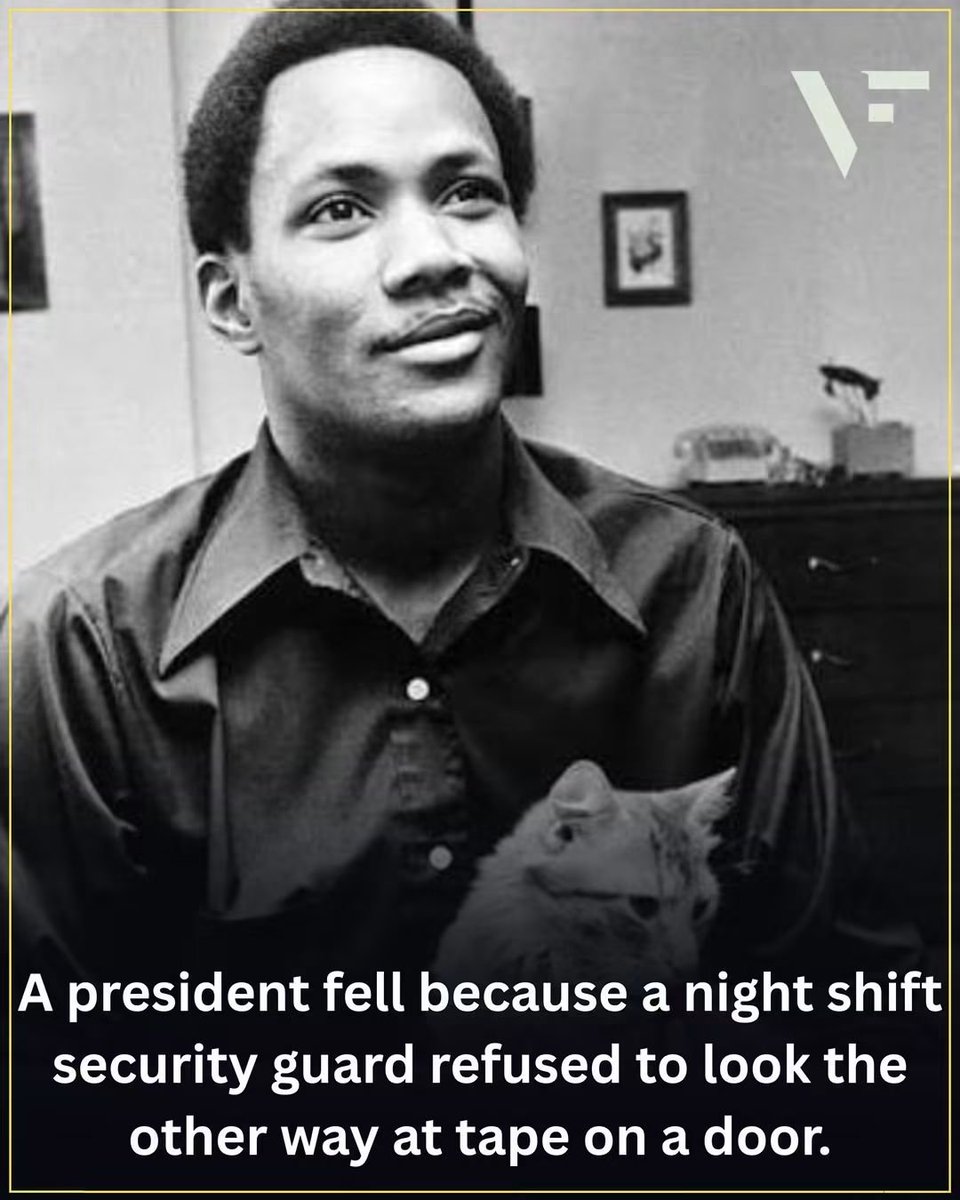
Frank Wills was working the graveyard shift at the Watergate office complex. It was the kind of job people don't notice until something goes wrong.
Around midnight, during his rounds, he found tape holding a door lock open. He removed it. Probably kids, he thought. A prank.
Two hours later, he checked again.
The tape was back.
Someone wanted that door open. Someone was still inside.
Frank Wills was not a detective. He was not a politician. He was not powerful or protected or connected. He was a 24-year-old Black security guard making $80 a week, doing a job most people considered invisible.
He could have walked away. Ignored it. Finished his shift. Gone home.
Instead, he picked up the phone and called the police.
That call led to five men being arrested inside the Democratic National Committee headquarters. Those arrests exposed a burglary operation. That burglary exposed a White House cover-up. That cover-up ended Richard Nixon's presidency and shook American democracy to its foundation.
History remembers Watergate as a political scandal. It should also remember it as the moment one ordinary man chose integrity over silence.
Frank Wills testified before Congress. He appeared on television. For a brief moment, the nation knew his name. Then the cameras moved on, the way they always do.
He lost his security job. The man who had set off the chain of events that toppled a presidency could not find steady work. He struggled financially for years. He took odd jobs. He never received meaningful compensation for his role in history.
In 2000, Frank Wills died at age 52 in relative poverty. Without the recognition, the pensions, the book deals, the speaking fees that others connected to Watergate received.
The journalists who reported the story became legends. The prosecutors who built the case became heroes. The politicians who investigated became statesmen.
The security guard who made the first call was forgotten.
This is not only Frank Wills' story. It is the story of who gets remembered and who gets erased. Of whose heroism gets monuments and whose gets ignored. Of how power decides which acts of courage are recorded and which are not.
Frank Wills was not supposed to be important. He worked the night shift. He carried keys. He checked doors. He was the kind of person powerful people learn not to see.
But he saw what was wrong. And he refused to look away.
American democracy held that night not because of speeches or strategy or systems.
It held because one ordinary Black man working for $80 a week decided that tape on a door mattered.
Power collapses when watched closely. History changes when someone does the right thing quietly. And heroes do not always stand at podiums.
Sometimes they carry keys. Sometimes they work the night shift. Sometimes they die forgotten.
Remember Frank Wills.
"Brave men do not gather by thousands to torture and murder a single individual, so gagged and bound he cannot make even feeble resistance or defense." Ida B. Wells
Trump stood at Tȟuŋkášila Šákpe — “Six Grandfathers,” aka Mount Rushmore — last night and told America that anyone who says it was built on stolen land is spreading “Marx’s lies about our heritage.” He said the people who “tell our children that we live on stolen land” are doing “something much worse than slandering our past” — they’re “attacking our future.” He called them “a band of thieves, radicals and lunatics.”
No, Trump. You’re wrong.
So let’s be direct about it, since you weren’t: Yes. The United States of America is stolen land. It was founded through genocide, oppression and dispossession of the people who were already here. That’s not a Marxist talking point. That’s the historical record, and here are the receipts…
Start with the ground he was standing on.
READ/SHARE MY PIECE ON INDIGENOUS INSIDER: https://t.co/Ey0IlCdLxy
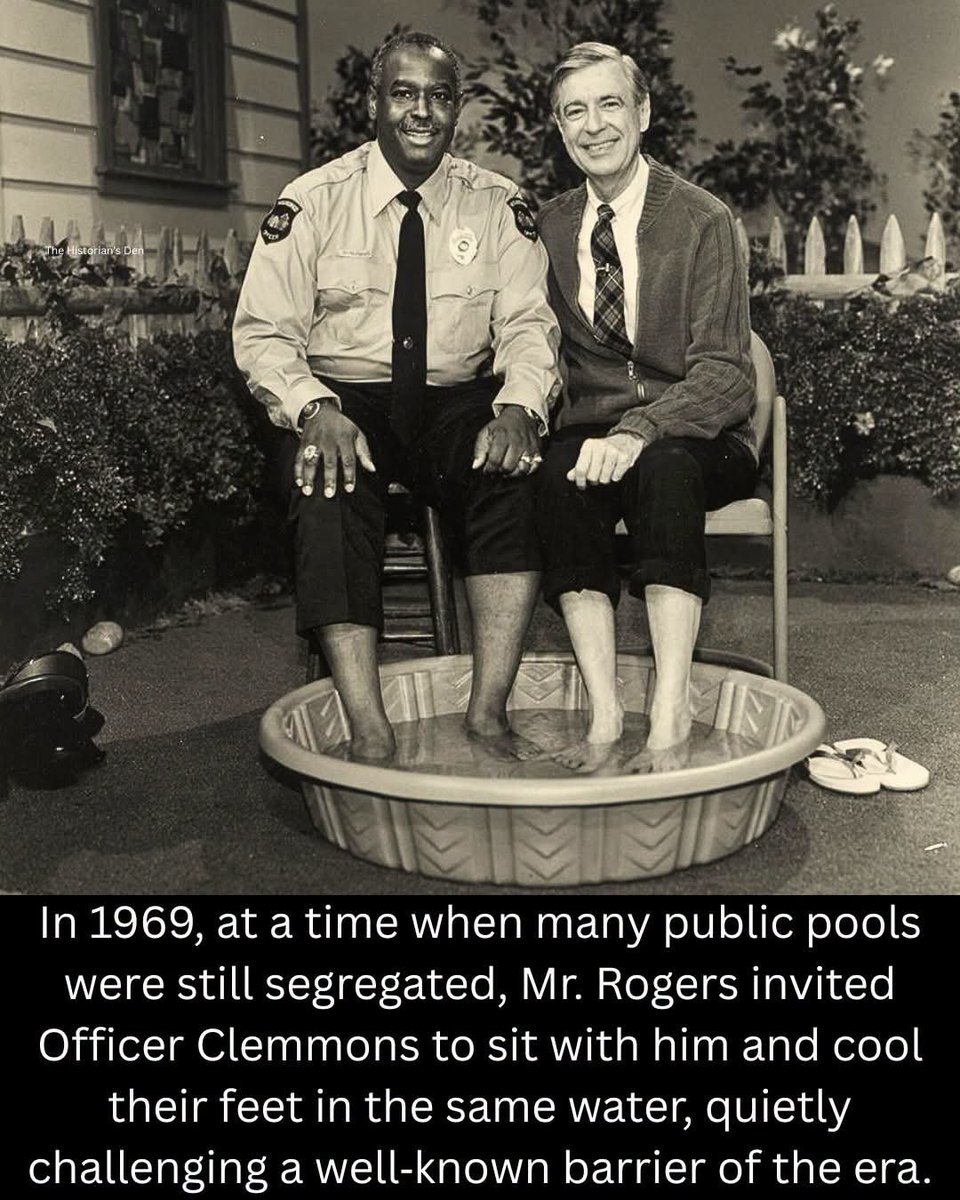
The 1969 scene featuring Fred Rogers and François Clemmons remains one of the most quietly symbolic moments in American television. On Mister Rogers’ Neighborhood, Rogers invited Clemmons, who portrayed the neighborhood police officer, to join him in cooling their feet together in a small wading pool. The gesture was simple and unspoken, yet it carried weight at a time when racial tensions were still deeply embedded in everyday life across the United States.
During the late 1960s, public swimming pools were among the many spaces where segregation persisted, even after the Civil Rights Act of 1964. Black Americans were frequently barred from entering pools or faced hostility when they attempted to use them. Against this backdrop, Rogers’ invitation to Clemmons, an African American performer, served as a subtle but deliberate counter‑message. By sharing the same water, the show modeled a vision of equality and neighborliness that contrasted sharply with the realities many families experienced.
The moment did not rely on overt political statements; instead, it used the gentle tone of children’s programming to challenge a social barrier. Clemmons later reflected on how meaningful the gesture was, both personally and culturally. Today, the scene is often revisited as an example of how small acts in popular media can contribute to broader conversations about inclusion, dignity, and the slow, ongoing work of social change.
Cc: the history den
One year ago today, Trump signed his and Republicans’ big, ugly bill.
Since then, millions have lost healthcare and food stamps — but the super-rich and corporations are doing better than ever.
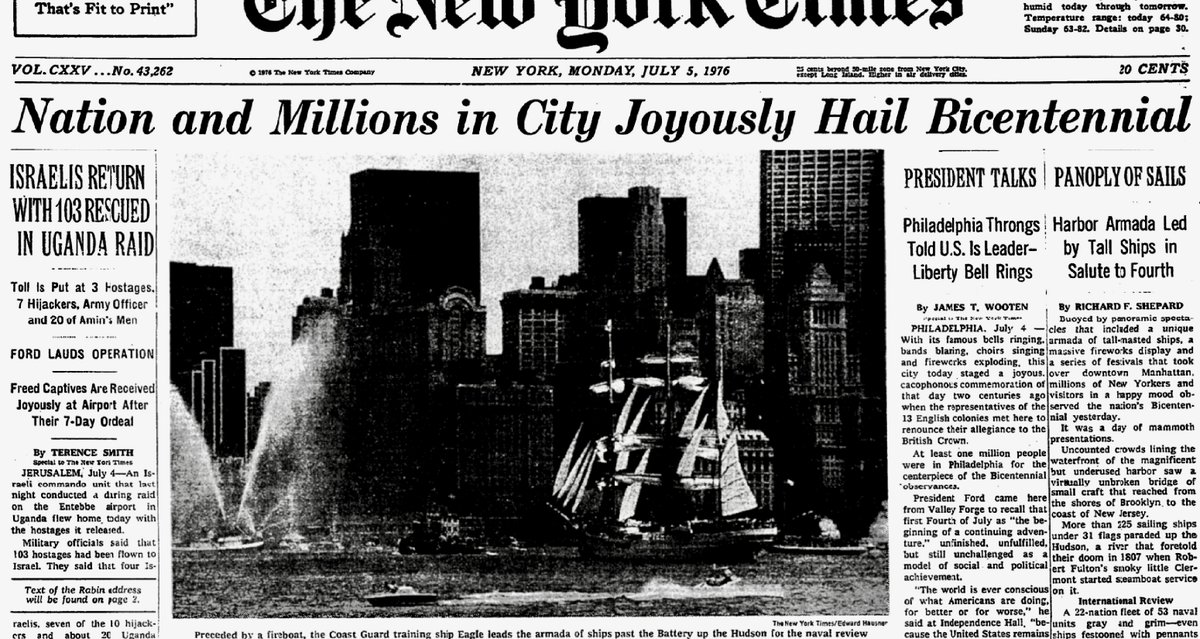
I'm posting this today, on July 4, because some people in this world do not have the luxury of knowing the explosions they're hearing are just fireworks.
So you mean to tell me that someone down your ancestry line survived being chaıned to other human bodięs for several months in the bottom of a disease-infested ship during the Middle Passage, lost their language, customs and traditions, picked up the English language as best they could while working free of charge from sun up to sun down as they watched babies sold from out of their arms and women rapęd by ruthless sIave owners.
Took names with no last names, no birth certificates, no heritage of any kind, braved the Underground Railroad, survived the Civil Wąr to enter into sharecropping... Learned to read and write out of sheer will and determination, faced the burning crosses of the KƘK, everted their eyes at the black bodies swinging from ropes hųng on trees...
Fought in World Wąrs as soldiers only to return to America as boys, marched in Birmingham, hosed in Selma, jailed in Wilmington, assassinated in Memphis, segregated in the South, ghettoed in the North, ignored in history books, stereotyped in Hollywood...
and in spite of it all, someone in your family line endured every era to make sure you would get here, but you receive one rejection, face one obstacle, lose one friend, get overlooked, and you want to quit?
How dare you entertain the very thought of quitting. People, you will never know survived from generation to generation so you could succeed. Don’t you dare let them down!
It is NOT in our DNA to quit!
Strange fruit by Nino Simone. Did you know the FBI target Billie holiday for singing, strange fruit. The song was about Black people being a hang all across America.
Stacey Abrams breaks down Donald Trump’s calculated march toward authoritarian rule. She connects the dots with surgical precision: discredit the media, undermine the courts, politicize law enforcement, and attack elections. It’s a playbook.
#America250Year#AmericaNow#America
Sister Leticia Ugboaja was walking to Sunday Mass when ICE arrested her in the street. A woman of faith simply trying to get to church. How did we get here? When a nun cannot walk to worship without fear of being detained in this country, we have to stop and ask what values are we standing on.