Important piece from The Times’ editorial board:
“The government cannot afford to continue to look the other way while a once-in-a-generation theft of intellectual property is perpetrated.”
AI companies must pay for the work they train on.
https://t.co/pJhKeJNJHt
If the assisted suicide bill can’t survive detailed parliamentary scrutiny, it should not become law: urge Ministers to rule out abusing the Parliament Act to impose a private member's bill - Click here: https://t.co/Xki9CCg3Qv
Generative AI is “built atop the theft of creative professionals’ work”.
This clear, concise summary in the LA Times of the huge problem at the core of much generative AI is well worth a read.
https://t.co/uFxoCD14lT
Historically, Cambridge recruited very strongly from the north. It's good to see the relatively recent imbalance the other way being addressed at the highest level.
https://t.co/9BuF9aHBAA
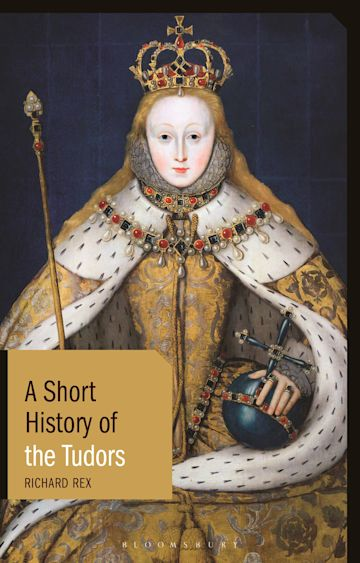
A Short History of the Tudors
Richard Rex @RichardRex1961
Combining an expertise on the #Tudor dynasty with an authoritative understanding of its religious and political make-up, A Short History of the Tudors provides a fresh and accessible perspective of one of the most formative periods of British history.
Rex considers the ways in which the Tudors shaped the beginnings of modern #England through the momentous break with Rome in a comprehensive yet balanced way. Close attention is also paid to the dismantling of the baronial system and centralisation of secular power, as well as an exploration of the break with Rome, the two pillars on which the author's argument will rest.
The book is organised chronologically and divided up into time periods, making it the ultimate companion for anyone keen to delve into the history of #Britain's most notorious dynasty.
The famous and infamous key players in the Tudor age have long endured in text books and are, brought to life here by Rex. Lively portraits of John Fisher, Thomas Moore and Thomas Wolsey and Mary Queen of Scots are painted, as well as the lesser-known players like the flamboyant Robert Devereux. A leading authority on the Tudors and British religious history, Richard Rex brings to life a dynasty which continues to engages and fascinate readers.
https://t.co/TQRyj9ynzZ
@BloomsburyRS
I’ve resigned from my role leading the Audio team at Stability AI, because I don’t agree with the company’s opinion that training generative AI models on copyrighted works is ‘fair use’.
First off, I want to say that there are lots of people at Stability who are deeply thoughtful about these issues. I’m proud that we were able to launch a state-of-the-art AI music generation product trained on licensed training data, sharing the revenue from the model with rights-holders. I’m grateful to my many colleagues who worked on this with me and who supported our team, and particularly to Emad for giving us the opportunity to build and ship it. I’m thankful for my time at Stability, and in many ways I think they take a more nuanced view on this topic than some of their competitors.
But, despite this, I wasn’t able to change the prevailing opinion on fair use at the company.
This was made clear when the US Copyright Office recently invited public comments on generative AI and copyright, and Stability was one of many AI companies to respond. Stability’s 23-page submission included this on its opening page:
“We believe that Al development is an acceptable, transformative, and socially-beneficial use of existing content that is protected by fair use”.
For those unfamiliar with ‘fair use’, this claims that training an AI model on copyrighted works doesn’t infringe the copyright in those works, so it can be done without permission, and without payment. This is a position that is fairly standard across many of the large generative AI companies, and other big tech companies building these models — it’s far from a view that is unique to Stability. But it’s a position I disagree with.
I disagree because one of the factors affecting whether the act of copying is fair use, according to Congress, is “the effect of the use upon the potential market for or value of the copyrighted work”. Today’s generative AI models can clearly be used to create works that compete with the copyrighted works they are trained on. So I don’t see how using copyrighted works to train generative AI models of this nature can be considered fair use.
But setting aside the fair use argument for a moment — since ‘fair use’ wasn’t designed with generative AI in mind — training generative AI models in this way is, to me, wrong. Companies worth billions of dollars are, without permission, training generative AI models on creators’ works, which are then being used to create new content that in many cases can compete with the original works. I don’t see how this can be acceptable in a society that has set up the economics of the creative arts such that creators rely on copyright.
To be clear, I’m a supporter of generative AI. It will have many benefits — that’s why I’ve worked on it for 13 years. But I can only support generative AI that doesn’t exploit creators by training models — which may replace them — on their work without permission.
I’m sure I’m not the only person inside these generative AI companies who doesn’t think the claim of ‘fair use’ is fair to creators. I hope others will speak up, either internally or in public, so that companies realise that exploiting creators can’t be the long-term solution in generative AI.
Did Thomas More really mastermind the capture of William Tyndale from his cell in the Tower of London? (Spoiler alert: answer contains the words 'evidence', 'no', 'speculation' and 'unfounded'.)
Thomas More and the Taking of William Tyndale https://t.co/6EYwXmhSfM
My article on 'The Lost Breviarium Compertorum and Henry VIII's First Act for the Dissolution of the Monasteries, 1536', is now on open access in the Journal of Ecclesiastical History 74 (2023), pp. 738-52:
https://t.co/Hyw4kYIWtE
John T. McGreevy's 'Catholicism' offers a global history of Catholicism's encounter with modernity. You might want to read my review. You should read his book.
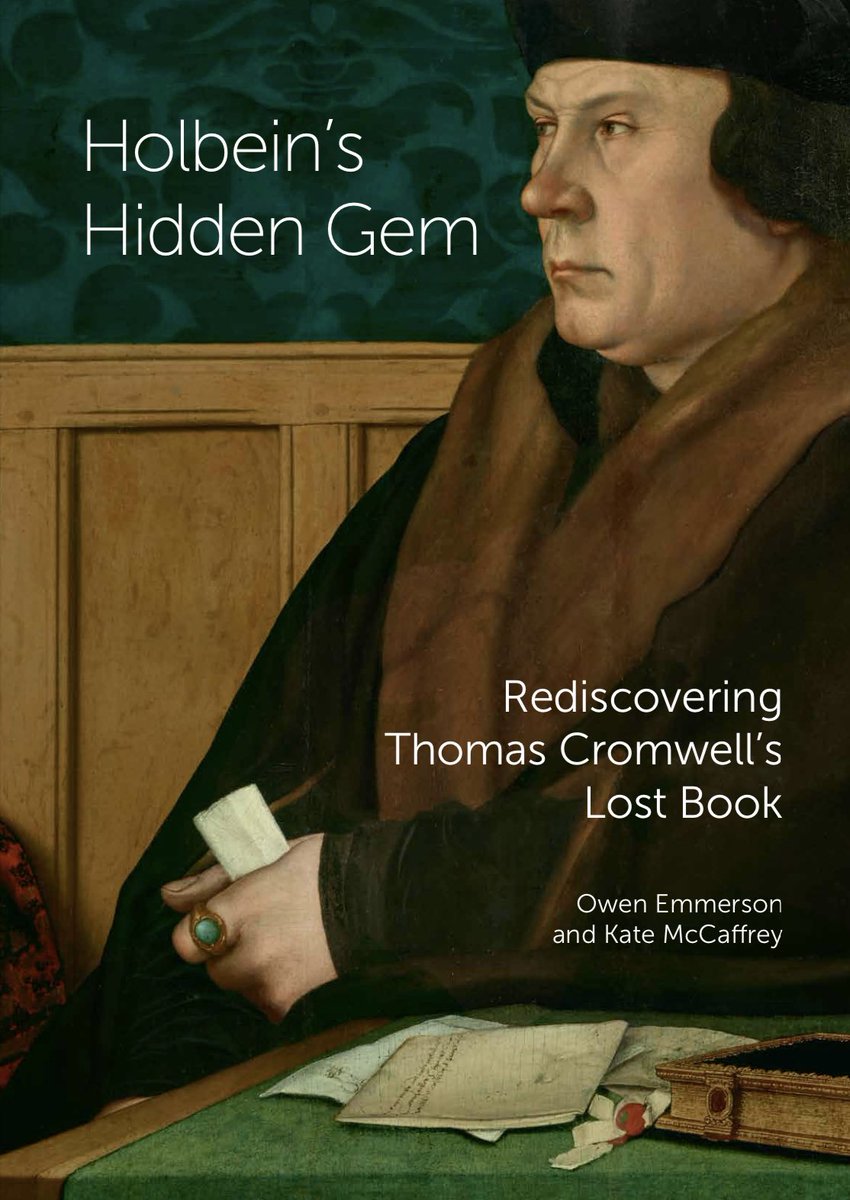
You can find out more about our journey of discovery in the brand new book I have authored with @kateemccaffrey, entitled ‘ Holbein’s Hidden Gem: Rediscovering Thomas Cromwell’s Lost Book’. It is available exclusively from @HeverCastle’s shop.
You can find out more about our journey of discovery in the brand new book I have authored with @kateemccaffrey, entitled ‘ Holbein’s Hidden Gem: Rediscovering Thomas Cromwell’s Lost Book’. It is available exclusively from @HeverCastle’s shop.