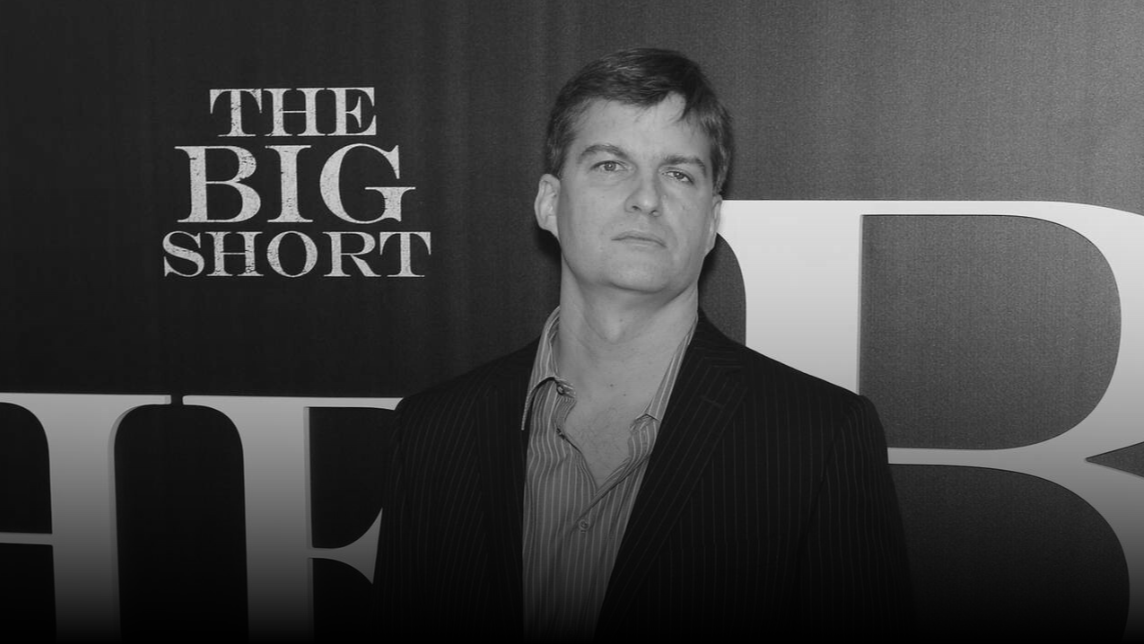
Breaking: Michael Burry has disclosed his updated positions
He:
• Added to Micron $MU short at $933.86
• Added to Nvidia $NVDA short at $210.28
• Added to Caterpillar $CAT short at $893.49
• Added to Semiconductor ETF $SOXX short at $535.83
• Added to Flutter $FLUT long at $100.72
• Added to DraftKings $DKNG long at $23.07
• Added to Molina $MOH long at $197.02
Burry left his Tesla, Palantir and QQQ shorts untouched
I’m sick of reading AI slop, so today I’m open-sourcing my /no-ai-slop skill that removes 20+ slop patterns from any piece of writing.
📌 Get the free skill here: https://t.co/YshUga82ks
If you find it useful, please consider starring the repo so more people can find it.
Why I built the skill:
I use AI to edit my writing because it helps me fix spelling, grammar, and clarity.
But even the best models keep producing the same slop that this skill removes:
→ Binary contrasts: “It’s not X. It’s Y.”
→ Throat-clearing openers: “Here’s what nobody tells you.”
→ Fake-profound endings: “The future isn’t coming. It’s already here.”
Use this skill responsibly.
I always write a first draft manually before iterating with AI on edits and I make sure to do another manual pass at the end as well.
That’s in contrast to using AI to automate pumping out slop end-to-end.
📌 Read my full post for more on how I try to use AI responsibly to edit without giving into the dark side: https://t.co/C68RSabtb0
Anthropic CFO Krishna Rao talks about the cultural interview part in the Anthropic employee selection process.
"Somebody could be flying colors on everything else and really the smartest person you've met in this role. we won't hire them if they don't pass the culture bar."
----
From "Invest Like The Best" YouTube channel, (link in comment)
Thinking Analytically — A Guide for Making Data-Driven Decisions: https://t.co/NUlFJLLnLR
Amazon summary:
This book introduces the ‘Thinking Analytically’ pyramid, covering:
1. Cognitive Foundation: Understand how cognitive limitations impact data interpretation.
2. Probability Mindset: Improve probabilistic thinking and avoid common errors.
3. Data Quality: Learn how subtle problems can distort the results.
4. Experimental Design: Explore how context affects the conclusions you can draw.
5. Analytics: Produce sound results by integrating all pyramid levels.
GOOGLE JUST TURNED NOTEBOOK LM INTO AN SEO RESEARCH MACHINE
Most people still think Notebook LM summarizes PDFs.
They're missing the biggest SEO update Google has shipped this year.
Research Engine:
→ Start with a completely blank notebook
→ Give it one topic idea instead of uploading documents
→ It searches the web and finds relevant sources for you
Research Workflow:
✓ Reads the sources automatically
✓ Shows its reasoning instead of acting like a black box
✓ Uses Gemini 3.5 for better research and analysis
The Secret Feature:
→ Every notebook now gets its own cloud computer
→ It cleans keyword lists
→ Builds spreadsheets
→ Creates charts
→ Spots patterns in your SEO data
Finished Outputs:
✓ Content briefs
✓ Slide decks
✓ Reports
✓ PDFs
✓ Keyword research
Instead of juggling 4 different AI tools, Notebook LM now handles the entire research pipeline in one place.
If you're doing SEO in 2026, this is worth learning before everyone else catches on.
Generative AI systems can create content, like text or code, based on data they've been trained on.
And in this 65-hour bootcamp, @andrewbrown (and many other instructors) teach you key GenAI concepts.
You'll get hands-on experience with Python data libraries, learn about prompt engineering, model fine-tuning, & AI agents, & lots more.
https://t.co/NWsYTv1nvV
We aren't the authors of our thoughts. We're just the user interface. We look at the universe and see a solid reality. The universe looks at us and sees a line of code.
We spend our lives trying to leave a mark on the surface of reality. Oblivious to the fact that our existence is being computed from beneath. We aren't separate individuals. We're just the localized tips of a single, massive mathematical architecture.👇
Creatine, long celebrated for supporting muscle growth and athletic performance, is gaining recognition in neuroscience as a powerful aid for brain energy management—especially under demanding conditions like mental stress, intense cognitive effort, or sleep deprivation.
As the brain's primary energy currency, adenosine triphosphate (ATP) gets rapidly depleted during high-demand tasks. Creatine helps by facilitating the quick recycling of ATP through the phosphocreatine system, providing neurons with a more reliable energy buffer to sustain performance when demands spike.
Recent systematic reviews and meta-analyses of randomized controlled trials have quantified these effects. A 2024 meta-analysis (Xu et al., Frontiers in Nutrition) found that creatine monohydrate supplementation significantly improved memory performance, with a standardized mean difference (SMD) of 0.31 (95% CI: 0.17–0.44; equivalent to Hedges' g ≈ 0.30), alongside benefits in information processing speed and attention time in some measures. An earlier 2023 meta-analysis (Prokopidis et al., Nutrition Reviews) reported an overall SMD of 0.29 for memory enhancement in healthy individuals, with particularly strong effects in older adults (SMD = 0.88 in those aged 66–76 years).
While this 0.31 SMD reflects a modest-to-moderate standardized effect size (not a literal 31% raw improvement in every person or task), it indicates meaningful gains in memory, mental clarity, and processing efficiency—especially when the brain is challenged.
Benefits tend to be most evident in specific groups: older adults (who may have lower baseline brain creatine), vegetarians/vegans (with naturally reduced dietary intake), females, and those experiencing sleep deprivation or high mental fatigue. Emerging research is also exploring creatine's therapeutic potential for neurological conditions such as Alzheimer's disease, traumatic brain injury, depression, and mild cognitive impairment, though evidence remains preliminary and strongest for memory support.
Creatine isn't a miracle cure or standalone fix—it's best viewed as a supportive nutrient that bolsters brain resilience. Experts stress the need for more large-scale, long-term studies to clarify optimal dosing, duration, and broader impacts on neurological health.
[Xu C, et al. (2024). The effects of creatine supplementation on cognitive function in adults: a systematic review and meta-analysis. Frontiers in Nutrition, 11:1424972. doi:10.3389/fnut.2024.1424972]
Most students struggle with essays not because of writing but because of structure.
A simple 5-paragraph framework can make the process much easier:
• Introduction (hook + thesis)
• 3 Body paragraphs (one key idea each)
• Conclusion (restate + summarize)
Good writing starts with good organization.
Deleting a file looks weightless.
No smoke. No sound.
No visible wound in the universe.
But physics says something stranger: when information is truly erased, the world must pay a small thermodynamic price.
This is Landauer’s principle.
In 1961, Rolf Landauer, working at IBM, asked a question that sounded almost too philosophical for engineering:
What is the physical cost of computation?
The answer was not hidden in the screen. It was hidden in the word erase.
A bit can be 0 or 1. If you reset it to 0, regardless of whether it began as 0 or 1, you have destroyed information about its past state. Two possible histories have been compressed into one final result.
That is not just a logical operation.
It is a physical act.
Landauer’s insight was that logical irreversibility becomes physical irreversibility. If a computation throws away information, the missing distinction does not simply vanish into nothing. The entropy has to go somewhere.
Usually, it goes into the environment as heat.
The famous bound is:
E ≥ kBT ln 2
Here, kB is Boltzmann’s constant, T is temperature, and ln 2 appears because one bit has two possible states.
At room temperature, this energy is incredibly tiny, around 3 × 10⁻²¹ joules per erased bit. Your laptop wastes vastly more energy than this for practical reasons: resistance, imperfect circuits, speed, error control, architecture.
But the principle is not about today’s inefficient machines.
It is about the basement floor of physics.
Landauer’s principle tells us that information is not an abstract ghost. A bit must live somewhere: in a voltage, a magnetic domain, a trapped particle, a quantum state, ink on paper, or neurons in a brain.
To change information, you must change a physical system.
To erase information, you must erase a physical distinction.
This also helped clarify Maxwell’s demon, the imaginary creature that seemed able to beat the second law of thermodynamics by sorting fast and slow molecules.
The demon’s trick depends on information. It measures molecules, remembers results, and uses that knowledge to extract work. But to keep operating, the demon must reset its memory.
That erasure has a cost.
The demon does not defeat thermodynamics.
It becomes part of thermodynamics.
This is why Landauer’s principle is so beautiful. It does not make physics more mystical. It makes information less mystical.
The lesson is not that thoughts create reality or that the universe is magically made of data.
The lesson is more disciplined:
Knowledge needs a body.
Memory needs a medium.
Forgetting leaves a trace.
In ordinary life, deleting something feels like making it disappear.
In physics, disappearance is never so innocent.
Even a lost bit has to go somewhere.
“If you asked me how many times you came into my mind, I would say once. Because you came and never left.”
- Mahmoud Darwish
Mahmoud Darwish is widely regarded as one of the most important poets of the modern age, celebrated for his ability to weave themes of love, exile, memory, loss, and identity into deeply moving verse.
Born in Palestine in 1941, Darwish became a powerful literary voice for those living with both displacement and hope. His poetry often reflected the ache of separation, the longing for home, and the enduring bond between people and place. At the same time, his work reached far beyond political themes, exploring love, solitude, beauty, hope, and the fleeting nature of life itself.
Through rich imagery and elegant language, Darwish transformed personal experiences into reflections on universal human emotions. His poems continue to resonate with readers around the world because of their honesty, depth, and emotional clarity.
Today, Mahmoud Darwish remains an enduring symbol of remembrance, poetic expression, and the ability of words to preserve both identity and the most profound aspects of the human experience.
Anthropic’s Claude Fable 5 “is really good”, according to early testers and developers speaking to our reporter @steph_palazzolo.
“Where it really stands out and does really well is with these super complex, long running tasks.”
“I spoke with developers who said that they were able to build entire video games with just a single prompt and [with] very minimal kind of feedback and fixes.”
Higgsfield Plugin for DaVinci Resolve is live.
Quick tutorial:
1. Generate footage and transitions
2. Draw on any clip to edit what you want
3. Apply AI LUTs to match your grade
4. Remove backgrounds, reframe, upscale to 4K
5. Rebuild any shot to your camera, lens, aperture using Cinema Studio












![Rainmaker1973's tweet photo. Creatine, long celebrated for supporting muscle growth and athletic performance, is gaining recognition in neuroscience as a powerful aid for brain energy management—especially under demanding conditions like mental stress, intense cognitive effort, or sleep deprivation.
As the brain's primary energy currency, adenosine triphosphate (ATP) gets rapidly depleted during high-demand tasks. Creatine helps by facilitating the quick recycling of ATP through the phosphocreatine system, providing neurons with a more reliable energy buffer to sustain performance when demands spike.
Recent systematic reviews and meta-analyses of randomized controlled trials have quantified these effects. A 2024 meta-analysis (Xu et al., Frontiers in Nutrition) found that creatine monohydrate supplementation significantly improved memory performance, with a standardized mean difference (SMD) of 0.31 (95% CI: 0.17–0.44; equivalent to Hedges' g ≈ 0.30), alongside benefits in information processing speed and attention time in some measures. An earlier 2023 meta-analysis (Prokopidis et al., Nutrition Reviews) reported an overall SMD of 0.29 for memory enhancement in healthy individuals, with particularly strong effects in older adults (SMD = 0.88 in those aged 66–76 years).
While this 0.31 SMD reflects a modest-to-moderate standardized effect size (not a literal 31% raw improvement in every person or task), it indicates meaningful gains in memory, mental clarity, and processing efficiency—especially when the brain is challenged.
Benefits tend to be most evident in specific groups: older adults (who may have lower baseline brain creatine), vegetarians/vegans (with naturally reduced dietary intake), females, and those experiencing sleep deprivation or high mental fatigue. Emerging research is also exploring creatine's therapeutic potential for neurological conditions such as Alzheimer's disease, traumatic brain injury, depression, and mild cognitive impairment, though evidence remains preliminary and strongest for memory support.
Creatine isn't a miracle cure or standalone fix—it's best viewed as a supportive nutrient that bolsters brain resilience. Experts stress the need for more large-scale, long-term studies to clarify optimal dosing, duration, and broader impacts on neurological health.
[Xu C, et al. (2024). The effects of creatine supplementation on cognitive function in adults: a systematic review and meta-analysis. Frontiers in Nutrition, 11:1424972. doi:10.3389/fnut.2024.1424972]](https://pbs.twimg.com/media/HLuQ32aXEAAVky-.png)


