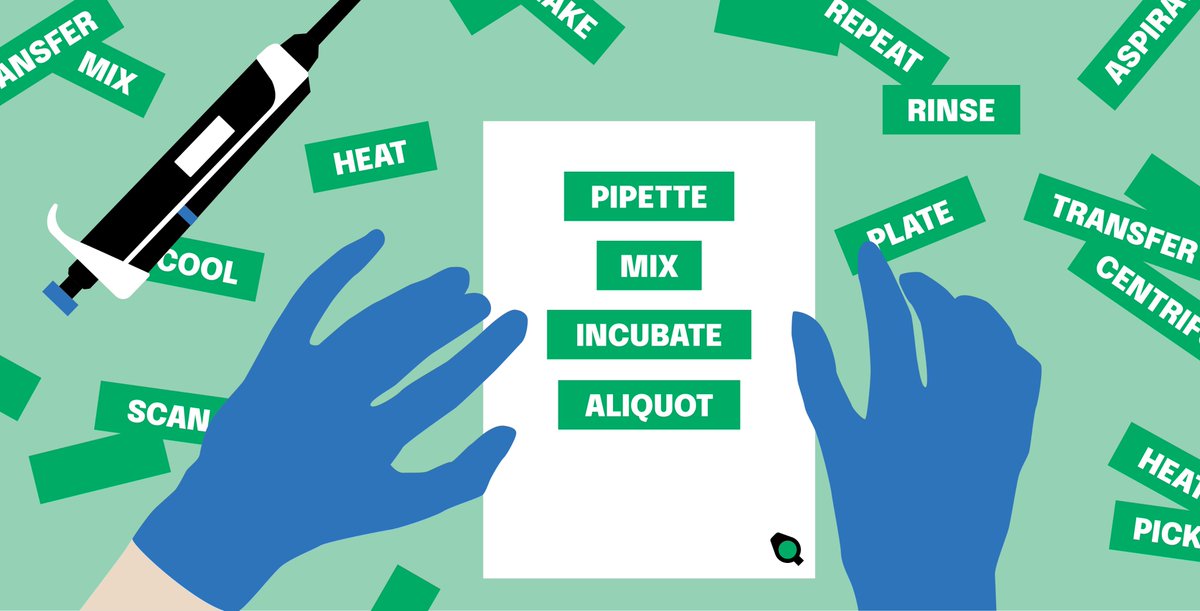
Our first partnership – with @brieflybio! It enables liquid handling for scientists with zero automation experience.
We decided to partner after seeing their demo, where it only took a molecular biologist 1-2 minutes (not days!) to set up a liquid handling block.
Why can't AI turn human protocols and methods into lab automation? 🤖
I dig into this more in a new post, as well as our thoughts on what can be done to help. Check it out below 👇
https://t.co/LcWPfJqRFT
Spending a lot of time translating scientists' workflows into automated ones?
Check out @brieflybio's interface that flexibly converts text-based protocols into automation-ready ones. Here's an example for the @Biosero ecosystem.
Come see us at @SLAS_Org for a demo!
Here's a little peak into our new interface to take text-based protocols, structure them, and adapt them to the constraints of an automated system.
Come chat to us @brieflybio at our booth at @SLAS_Org if you're interested :)
We're announcing a new interface for lab automation to lower the barrier to programming lab robotics.
With our partners at @Biosero , we're demoing this at @SLAS_Org. We want to bring more flexibility to automating science. Read more below 👇
By making our tool free and open, we want to reduce and remove barriers to this kind of collaboration, and make it easier for scientists to trade smaller, useful pieces of work – whether that’s inside their lab, or with the community.
We want to make that collaboration easier. It could be sharing a complete protocol for an optimised method, or sharing your research portfolio so others can get inspired.
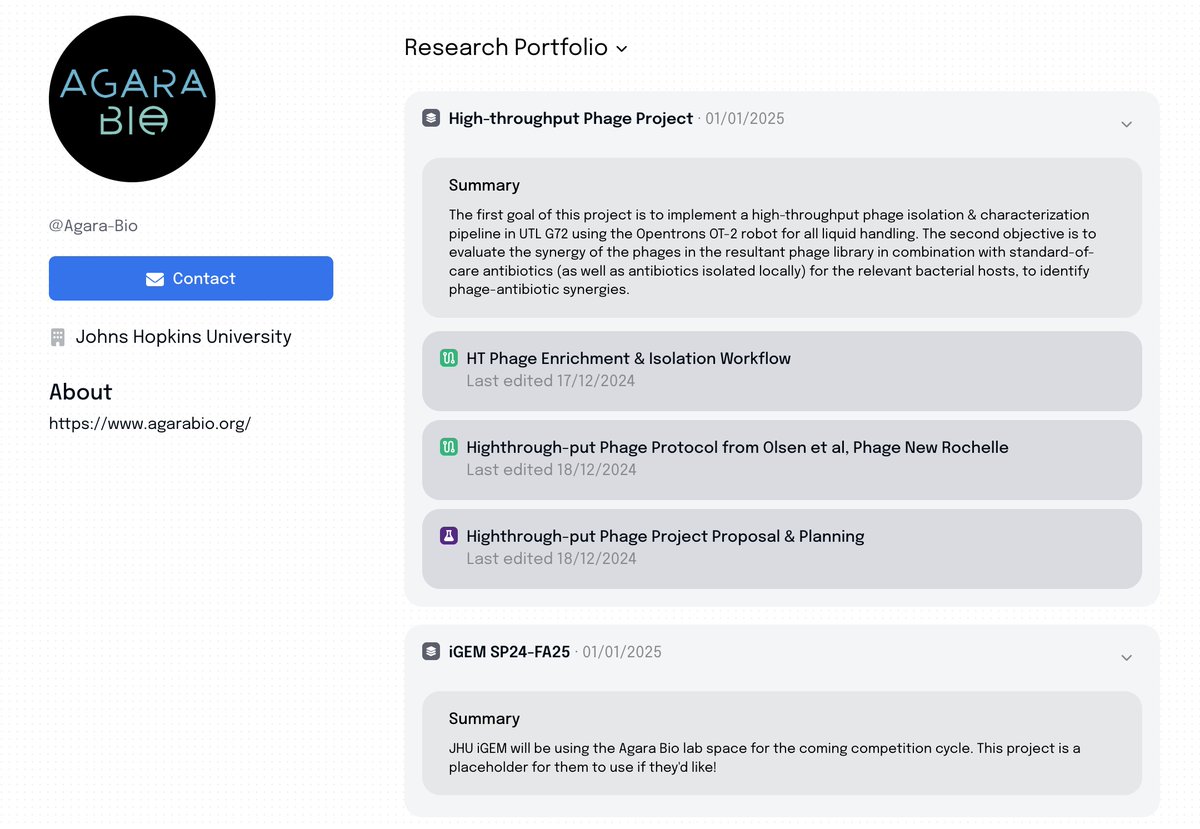
Meet @AgaraBio , an undergraduate-led community lab 🧪
Agara Bio is an open bio-lab run by undergraduate students at @JohnsHopkins.
It gives them the freedom to delve into their own research ideas, learn new techniques and hone existing ones.
From next year, Agara will share some of their community projects on their @brieflybio portfolio page, so you can find out what they’re up to.
This includes automating a phage isolation and characterisation platform on @opentrons OT2, as well as hosting JHU's 2025 iGEM team.
Their shared lab protocols there too, so new lab members can easily find out how to get started.
Take a look at the link below 👇