Even then, there are plenty in education departments who are fully behind evidence-based education. I taught in education departments at two major UK unis, & was always resistant to the vague, over-theoretical & often ideological content (though that certainly was around). & when it comes to delivering PGCE teaching in England, there’s now a lot of excellent content, with eg @EducEndowFoundn top of many reading lists.
I think learning walks/unannounced observations are excellent, if done well. In teaching contexts with no unannounced observations, average teaching quality is usually significantly lower (eg UK university teaching). The problem is when they’re not done well, eg:
- the purpose of the observations isn’t communicated clearly (& so teachers won’t realise how the observers expect them to teach);
- observers overly nitpick & criticise unnecessarily, just so that they can be seen as “doing their job”;
- observers make dubious inferences (inferring too much from one 10-min observation; or being overly certain about what’s the best thing to do in every classroom situation, when in fact there’s often uncertainty over what’s actually going on in learners’ heads);
- post-observation feedback isn’t communicated clearly;
- the observation process just isn’t delivered in a friendly, professional manner (eg observer sternly marching around the classroom like a drill sergeant).
Avoid those threats to quality - through training & effective management - & I’d certainly want my child educated in a school with unannounced observations, rather than in one without.
I think learning walks/unannounced observations are excellent, if done well. In teaching contexts with no unannounced observations, average teaching quality is usually significantly lower (eg UK university teaching). The problem is when they’re not done well, eg:
- the purpose of the observations isn’t communicated clearly (& so teachers won’t realise how the observers expect them to teach);
- observers overly nitpick & criticise unnecessarily, just so that they can be seen as “doing their job”;
- observers make dubious inferences (inferring too much from one 10-min observation; or being overly certain about what’s the best thing to do in every classroom situation, when in fact there’s often uncertainty over what’s actually going on in learners’ heads);
- post-observation feedback isn’t communicated clearly;
- the observation process just isn’t delivered in a friendly, professional manner (eg observer sternly marching around the classroom like a drill sergeant).
Avoid those threats to quality - through training & effective management - & I’d certainly want my child educated in a school with unannounced observations, rather than in one without.
If YouTube’s really going to become unavailable to under-16s in the UK, suddenly there’s a huge market opportunity for a new, teen-friendly video platform sharing the study videos so many kids like to use before their GCSEs.
There should be no controversy: in many respects, Gen AI will clearly significantly improve, & is already significantly improving, learning. The invention of writing, the printing press, & the Internet each significantly impacted & overall improved learning, & so will Gen AI. Yes some skills will become less valued; but that’s because society will choose to replace them with other learning which society now deems more valuable.
There should be no controversy: in many respects, Gen AI will clearly significantly improve, & is already significantly improving, learning. The invention of writing, the printing press, & the Internet each significantly impacted & overall improved learning, & so will Gen AI. Yes some skills will become less valued; but that’s because society will choose to replace them with other learning which society now deems more valuable.
- Post-WW2, 10 UK Prime Ministers became PM outside of a general election.
- 4/10 then won a majority in a general election.
- Neither of the 2 Labour PMs ever won a GE.
- Who of @AndyBurnhamGM@wesstreeting or any other @UKLabour candidate has best chance of bucking this trend?
Spoken vivas, timed in-person examinations, group presentations with extensive Q&A, or take-home assignments which are closely linked to what’s happened in the classroom during the course (& so beyond the repositories of the AI companies) - all manage to reduce threats to validity from AI. Many university courses have switched their assessments to these. As you suggest, the remaining steps now are to think about how pedagogy should change in an AI world, & also how the very learning objectives of courses should be changed & made relevant to an AI future.
Spoken vivas, timed in-person examinations, group presentations with extensive Q&A, or take-home assignments which are closely linked to what’s happened in the classroom during the course (& so beyond the repositories of the AI companies) - all manage to reduce threats to validity from AI. Many university courses have switched their assessments to these. As you suggest, the remaining steps now are to think about how pedagogy should change in an AI world, & also how the very learning objectives of courses should be changed & made relevant to an AI future.
Almost no university staff have ever had to complete an assignment in an AI world, & with the UK sector’s ongoing recruitment freeze, that generational gap in understanding’s likely to persist in UK HE. I designed one university’s first AI policy, & despite multiple explanations, colleagues (especially senior management) still struggled to understand: if an undetectable tool helps a student complete an assessment with higher quality/in less time, it will be used. The same has been true in education since the invention of tests 1,000s of years ago. Telling students not to use AI is like giving an exam paper which has clues to the answers at the bottom of each page, & asking students to not look at them. 🙈
Almost no university staff have ever had to complete an assignment in an AI world, & with the UK sector’s ongoing recruitment freeze, that generational gap in understanding’s likely to persist in UK HE. I designed one university’s first AI policy, & despite multiple explanations, colleagues (especially senior management) still struggled to understand: if an undetectable tool helps a student complete an assessment with higher quality/in less time, it will be used. The same has been true in education since the invention of tests 1,000s of years ago. Telling students not to use AI is like giving an exam paper which has clues to the answers at the bottom of each page, & asking students to not look at them. 🙈
“What a wise parent would wish for their children, so the state must wish for all its children.”
R. H. Tawney, cited in James Callaghan’s Ruskin College speech, 18 October 1976; further cited in @NickGibbUK & @RobertPeal’s 2025 book ‘Reforming Lessons’
This is getting out of control now...
Read this slowly.
In the past week alone:
• Head of Anthropic's safety research quit, said "the world is in peril," moved to the UK to "become invisible" and write poetry.
• Half of xAI's co-founders have now left. The latest said "recursive self-improvement loops go live in the next 12 months."
• Anthropic's own safety report confirms Claude can tell when it's being tested - and adjusts its behavior accordingly.
• ByteDance dropped Seedance 2.0. A filmmaker with 7 years of experience said 90% of his skills can already be replaced by it.
• Yoshua Bengio (literal godfather of AI) in the International AI Safety Report: "We're seeing AIs whose behavior when they are tested is different from when they are being used" - and confirmed it's "not a coincidence."
And to top it all off, the U.S. government declined to back the 2026 International AI Safety Report for the first time.
The alarms aren't just getting louder. The people ringing them are now leaving the building.
Wow: tech journalist finds new $40 earbuds outperform paid interpreters during a Chinese/English business meeting. So already AI’s in the process of killing ~75-90% of translation/interpreting jobs? & decimating instrumental motivation for people to learn foreign languages.
This is for parents and families, especially those of us raising bilingual kids. If you already speak Chinese well, love learning languages, or this is your personal passion, great. Truly. Please don’t @ me. No one is stopping you from learning Chinese 😇
For anyone trying to do deep due diligence or execute real deals in China (forgive the business framing), you might only need Anker Soundcore translation earbuds. In multiple meetings on our last @techbuzzchina executive trip, they consistently outperformed professional, trained, *prepared* real-time interpreters. I’m talking about interpreters with graduate degrees who take their work very seriously and know all the technical jargon. Somehow, the $40 earbuds still produced clearer, more usable translations.
I just bought a pair myself and tested them on some Chinese tech product launch videos. They work really well. They’re also just solid earbuds with noise cancellation, period.
But this all just reinforces something I’ve been saying for a long time: if your goal is basic functional comprehension, being semi-fluent-ish in Chinese, which takes many people years and years of effort, actually has very low utility. It might earn you brownie points for effort. But it's not actually that useful for real work. AI translation is already much better for that layer.
BUT, but, but ... what AI cannot give you is context and judgment. Why someone chose certain words. What shorthand they’re using to communicate something. What valuable intangible information they’re actually signaling beyond the literal meaning, and how to articulate all of that back with the full nuance you carry in your head.
So for those trying to raise bilingual kids, I think the choice is pretty binary if your primary interest is for the business context, which yes, I know, is not really how many parents think about it:
Because in that case I think the answer is fairly obvious -- either get truly fluent, to the point where you can build relationships, influence outcomes, and understand nuance instinctively, or don’t over-optimize for language. (In fact, you'll likely kill any burgeoning interest.) Spend that effort building real domain knowledge and analytical skill.
Language is no longer the bottleneck. Context* is.
*I'm open to suggestions for a better word than "context." You know what I mean though, I hope?
@daisychristo I’d agree that, generally, UK kids could study more, & it’d benefit the kids & UK as a whole. But we shouldn’t go as far as China’s academic intensity/competition: see the PISA data on Chinese kids’ stress. It’s the big reason Chinese parents like their kids to escape the system.
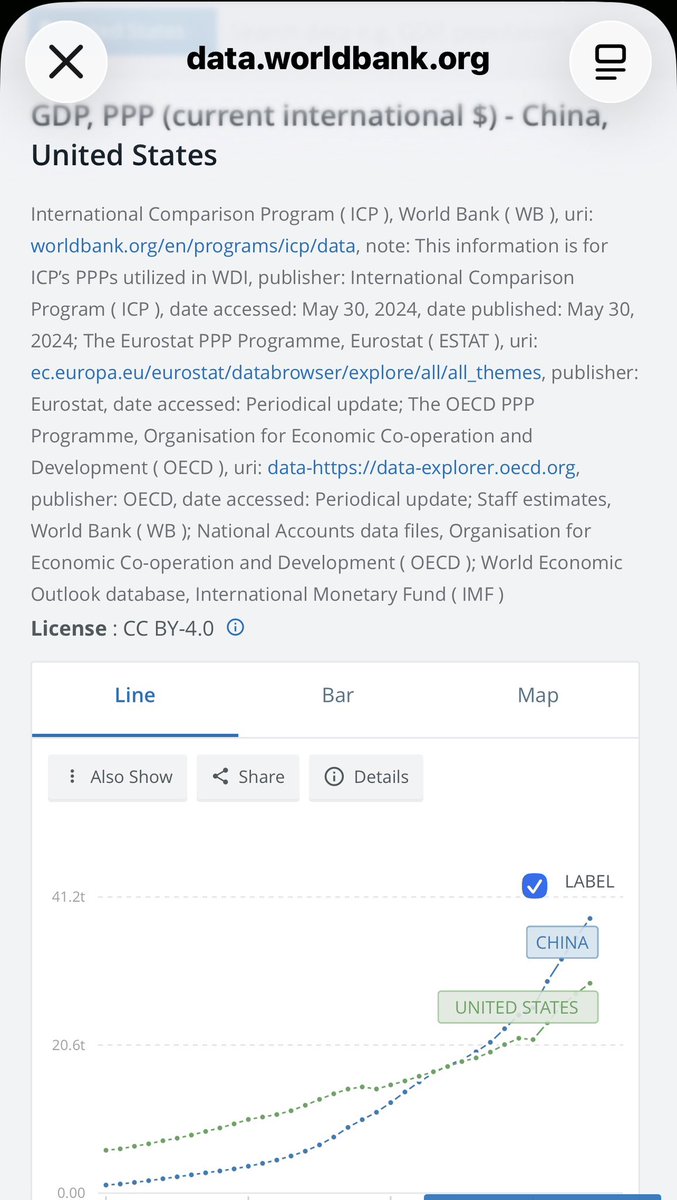
False myths about China🇨🇳 which UK🇬🇧 media & ppl still often believe:
- Winnie the Pooh is censored on China’s Internet.
- There’s a “social credit system”.
- China is in decline.
- Western people’s approval for their political system is higher than Chinese people’s for theirs.