A moral dilemma is what humans call a situation where reality can no longer sustain the full variety of human social constructs on their binary right vs wrong scale.
The autistic experience of being wrongly accused of doing something wrong, when in fact you were just logically applying the same rules to yourself that others were applying. But you didn't know were not equal to others, so you weren't allowed to apply the same rules.
im sorry if this is a hot take but you have to at least tolerate people you find annoying or you WILL fall into fascist thinking. everybody’s a leftist until they see somebody a little too autistic for their tastes it seems.
Have men considered that, for many women, “conventional femininity” feels like Chinese foot binding for the soul? Insisting on conformity to feminine norms that don’t come naturally to us is actively harmful to mental health (and ultimately physical wellbeing).
Instead he proceeded to give me a long list of the ways in which I wasn’t enough of a “traditional woman”
The bright red hair dye? It had to go. Oh you’re a natural ginger? Can you dye it brown? “We” prefer brunettes.
/3
Perhaps, for non-disabled people someone with a disability who is seen as ‘worse off’ (physically, materially socially) provides a way of consolidating their own status as a successful member of society etc.
Dear @UKLabour,
Stop targeting disabled people in an attempt to to seem fiscally tough. It's failing, and instead of making you look strong, it's exposing your ethical weakness.
Do better.
— Jay
I think other people underestimate how stressful it is to negotiate social world and social interactions as a visibly disabled person - you are placed in a position where you are having to continuously manage other people’s discomfort surrounding disability.
Once again, disabled people are considered LAST in emergency preparedness. This stems from pervasive ableism in society and our culture’s historical and current acceptance of eugenics of disabled people.
H/T @GHMansfield for his advocacy and always centering disabled voices
Too much research on disability within the social sciences is underwritten by the unstated question: “how do we normalise or deal compassionately with this group of people we unquestionably deem to be the problem.” Pwds have problems but are we the problem? I wouldn’t be so sure.
Being "able bodied" is temporary, you will age, you will get injured, you will get sick and you will wish you fought more for the system to protect the vulnerable.
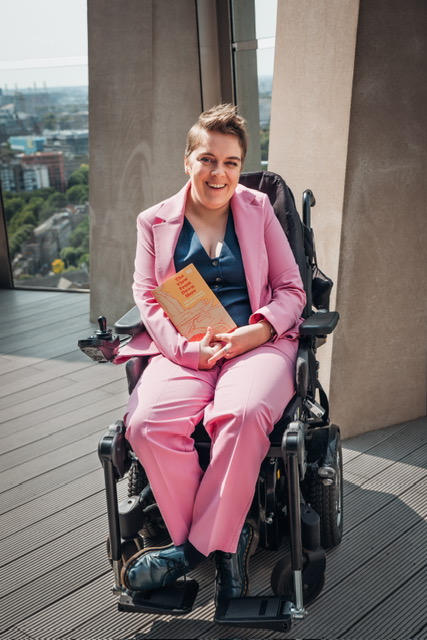
However. And it's a big however. Getting interest or engagement from nondisabled people has been like pulling teeth. It's been hard to sell books or book events or even get people to share stuff about it on social media. I think that that's because this is a book about disability
This little book turns one year old on Saturday and to be honest I'm feeling the feelings
Let me first say that I am incredibly proud of it. Every time I see it in a bookshop or someone tags me in a post I think: "I did that!"
Ableism is telling disabled people to stay home forever. Ableism is telling disabled people we’re not trying hard enough. Ableism is putting all the blame on disabled people rather than blaming the system that makes it so we can’t access the world.
Disabled people have the same right to an independent and fulfilling life whether or not they are able to work.
We should celebrate the fact that the welfare system in this country exists to support disabled people to live full and active lives, not decry that support.
There's a version of this which goes on in the disability community. But instead, the parameters of exclusion are "you don't have a valid enough medical diagnosis to sit with us."
The idea “every aspect of the support for disabled people” must “help people get into work” is deeply grim from Labour. Benefits and the NHS don’t exist to turn disabled people into economic productively units. They are to help us live well. https://t.co/qrgEsAlGHv
There is a lot of speaking over disabled people, not listening to disabled people. It's not just done by non-disabled people. There are disabled people invested in ableism that they don't know harms or will harm them in the future.
“It is not simply that such ideas are unethical or demeaning – they are unworkable. Relying on the DWP to sort paperwork for a new wheelchair would be like relying on your flaky friend to book the group holiday. Sorry but no one is going anywhere.”
My col https://t.co/yURwE6HaQL