@Polymarket Boston bars running out of beer because Scottish fans 'tripled St. Patrick's Day.' The Irish spent 200 years building that reputation and the Scots cleared it in 90 minutes.
USAF jet landing LAX reports man in a “wing suit”
SAM741 (Gulfstream C-37) was on approach to LAX from Nellis Air Force Base when they spotted a man in a “wing suit” pass above them. 😳
Audio via @theATCapp
having quite a bit of fun learning this new Launchkey. Having a midi controller with the arpeggiator and sequencer stuff onboard really does feel like a good middle ground between a simple midi keyboard without that stuff (and having to do all the arpeggiating in Ableton), and having a real HW synth with that stuff on board.
In the 1960s, a direct flight to Neptune would have taken nearly 30 years. That was longer than most spacecraft could survive. Reaching the outer planets seemed almost impossible.
But one engineer, working quietly with a pencil, found a way around this problem.
Gary Flandro, a scientist at NASA’s Jet Propulsion Laboratory, was asked to study how spacecraft might travel to the distant planets despite the limits of rocket technology at the time. Fuel was scarce, and engines were not powerful enough for such long journeys.
Flandro turned to a clever idea from physics called a gravity assist, sometimes known as a planetary slingshot. The concept is simple in principle. When a spacecraft passes close to a large planet, the planet’s gravity pulls it in and then flings it forward. In doing so, the spacecraft steals a tiny bit of the planet’s motion around the Sun. The planet slows down by an amount too small to notice, but the spacecraft gains a huge increase in speed without using any fuel.
With only paper, pencil, and the limited computers of 1965, Flandro calculated the future positions of Jupiter, Saturn, Uranus, and Neptune. What he found was remarkable. In the late 1970s, these giant planets would line up in a rare formation. This alignment would allow a single spacecraft to travel from one planet to the next, gaining speed at each step.
This opportunity appears only once every 176 years.
Flandro showed that a spacecraft could use Jupiter’s gravity to reach Saturn, then use Saturn to reach Uranus, and finally use Uranus to reach Neptune. This chain of boosts would cut the travel time to Neptune from about 30 years down to just 12.
This elegant piece of mathematics changed everything.
It became the foundation for the Voyager 1 and Voyager 2 missions, both launched in 1977. Thanks to this precise planning, the two spacecraft sent back the first close images of the outer planets. They later continued their journey beyond the solar system, becoming the first human-made objects to enter interstellar space.
All of it began with a simple insight, worked out by hand, that turned an impossible journey into a reachable one.
I want to introduce you to Steve. He’s 83. His wife died a few months ago and he comes to this lodge in Spring Mill, Indiana and draws. He taught art in Terre Haute, IN his whole life. He also did courtroom sketches in court cases. In the comments I’ll share some pics from his sketchbook. He was excited when I said I was going to share his sketches with the world.
Here you can see the USMC F-18 right before it impacted terrain and crashed near Rimrock Lake. It looks like it was smoking prior to the pilot ejecting.
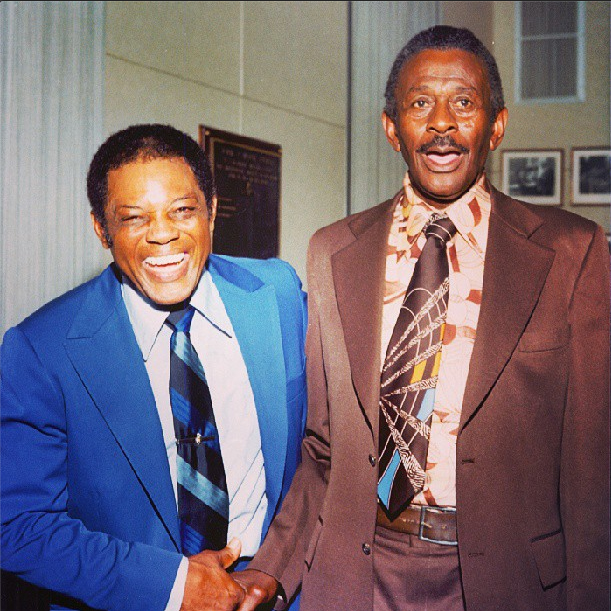
"Satchel Paige had a very, very good fastball......
But the first time I faced Satchel, he threw me a little breaking ball, just to see what I could do, and I hit it off the top of the fence.
I got a double.
When I got to second, Satchel told the third baseman:
'Let me know when that little boy comes back up.'
Three innings later, I go to kneel down in the on-deck circle, and I hear the third baseman say:
'There he is.'
Satch looked at the third baseman, and then he looked at me.
I walk halfway to home plate and he says:
'Little boy.'
I say, 'Yes, sir?' because Satch was much older than I am, so I was trying to show respect.
He walked halfway to home plate and said:
'Little boy, I'm not going to trick you.
I'm going to throw you three fastballs and you're going to go sit down' and I'm saying in my mind:
'I DOOON'T THINK SOOOOOO.
If he threw me three of the same pitch, I'm going to hit it somewhere.
I turned to the catcher and asked:
“What does he mean?”
Catcher told me:
“He’s going to throw you three fast balls.
Nothing else.”
He threw me two fastballs and I just swung.....
I swung right through it.....
And the third ball he threw, and I tell people this all the time, he threw the ball and as he let go he said:
'Go sit down.'
This is while the ball was in the air.
Yes, he struck me out with three pitches.
He was just magnificent."
17 year old Willie Mays facing Satchel Paige for the first time.
@CynicalPublius@_Buzz_Saw In our young life we lived in Alexandria. The husb would take our two oldest sons on early weekend mornings to stand outside and watch before they went in. His wake up call to all of us grumps over the next few decades was "wake up. time to make the donuts." =) 🍩
The Last Flight of Major Richard Bong
After serving three combat tours flying the Lockheed P-38 Lightning in the Southwest Pacific, Major Richard Ira Bong, Air Corps, United States Army, was assigned as an Air Force acceptance test pilot for new Lockheed P-80 Shooting Star jet fighters at the Lockheed Air Terminal, Burbank, California.
The P-80A was a brand new jet fighter, and Major Bong had flown just 4 hours, 15 minutes in the type during 12 flights.
Shortly after takeoff in P-80A-1-LO 44-85048, the primary fuel pump for the turbojet engine failed. A back-up fuel pump was not turned on. The Shooting Star rolled upside down and Bong bailed out, but he was too low for his parachute to open and he was killed. The jet crashed at the intersection of Oxnard Street and Satsuma Avenue, North Hollywood, California, and exploded.
Courtesy of https://t.co/Rdi1NSam4c