After months of work, I’m excited to share The Last Reel, my horror game set in Japan and inspired by the black-and-white rubber-hose cartoons of the 1930s.
Behind the playful animation are unsettling places to explore, puzzles to unravel, monsters to escape, and chases that won’t give you much time to think.
Seeing it all come together in this trailer means a lot. I’d love to hear what you think. 🖤
Horror fans and content creators: interested in playing early? DM me about early access.
🎮 Wishlist The Last Reel on Steam! (link in comment below)
If you use AI to code your game but keep it quiet, don’t attack other devs for openly disclosing their AI use just to farm clicks. That’s pure hypocrisy.
I have proof that some of you use AI yourselves. You know who you are. If you keep targeting other developers over it, I’ll make that evidence public so people can judge the double standard for themselves.
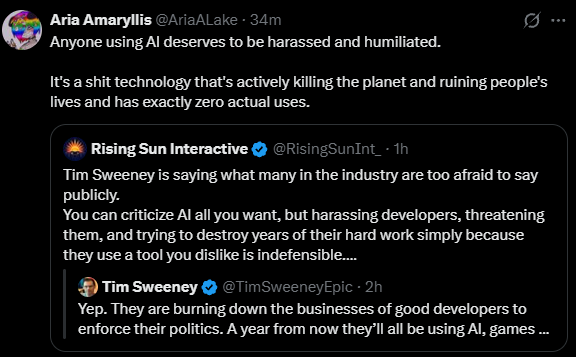
Tim Sweeney is saying what many in the industry are too afraid to say publicly.
You can criticize AI all you want, but harassing developers, threatening them, and trying to destroy years of their hard work simply because they use a tool you dislike is indefensible.
Disagree with the technology, not someone's right to create.
@crierlon Yep. They are burning down the businesses of good developers to enforce their politics. A year from now they’ll all be using AI, games will be better and made faster, and they’ll pretend their hate mob posting the death threats wasn’t wrong but merely misunderstood.
You keep mocking every post about hypocrisy, yet every time I ask whether you’ve used AI in your game, you dodge the question.
I have a screenshot of what you said about vibe coding a few days ago, but I’m keeping it private because I don’t want to hurt your sales.
You’re welcome to answer directly. Mocking other devs over AI while refusing to clarify your own use is exactly the double standard I’m talking about.😆
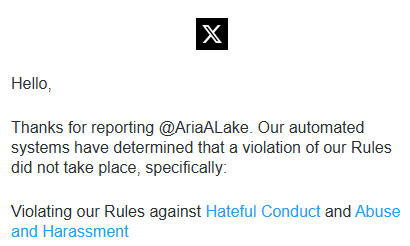
@allegrajacchia Is harassing developers because they use AI to create games acceptable on X now? People can dislike AI without targeting and bullying creators. Is this behavior allowed on your platform?
@dharh Go harasses Anthropie, OpenAi, Elon Musk, presidents like Trump and governments pushing for Ai. Devs have just used the tool, we did not create it. And btw, U r using Elon platform powered by Ai and u paying him, so you are supporting Ai company and that's hypocrisy.
You don't give a damn about indie developers. You're just using the anti-AI outrage to farm clicks and engagement.
You took a developer honestly disclosing that AI ASSISTED with his game and twisted it into “he has no skills, no passion, and did no work.”
You didn't even judge the game. You saw “AI” and spotted an opportunity for engagement.
Stop pretending you're defending indie devs when you're publicly throwing one under the bus for likes. 💀
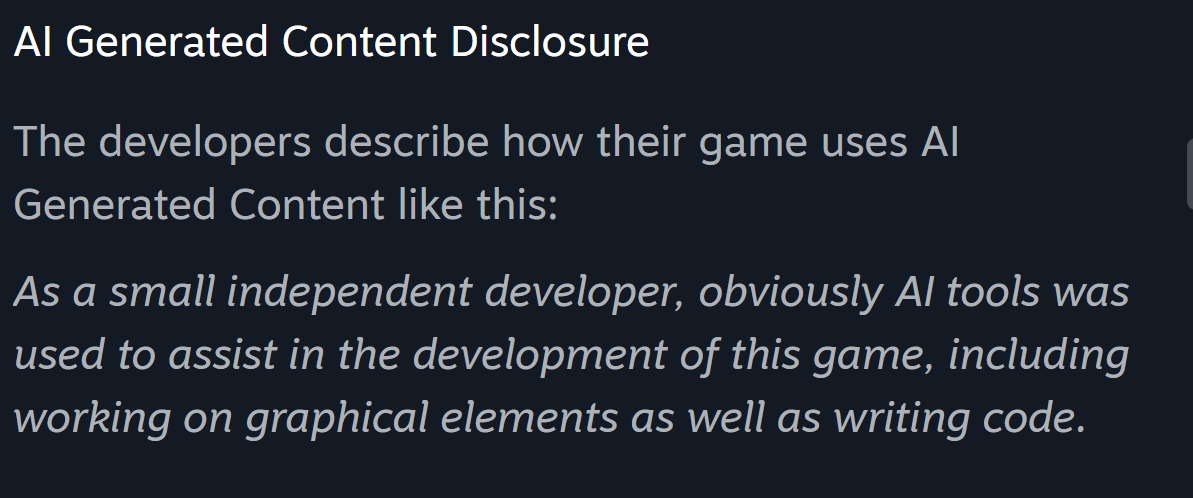
This has to be one of the worst AI disclosures I've come across in the sea of AI slop this Steam Next Fest.
"I'm an Indie dev so of course I have to obviously use AI to write the code of my game....." blah blah blah 🥱
Absolute slap in the face to every other Indie Dev putting in the work and developing their games with real skill and passion.
Learn the craft like all the others have! Make something with what you know and show players you can actually build a game. Earn that respect instead of just prompting AI to generate the code for you.
If you want to use AI, fine. But don’t sit here saying “obviously” it needs to be used just because you’re an indie. Don't give Indie's a bad rep just because you're too lazy to learn the craft yourself and do the full work.
Do better.
#SteamNextFest #AISlop
@SebaFighter Bro u aint reading what i wrote. U just playing the anti ai monologue without reading. Dont buy what we create, but dont come to harasse people and wish them death cause they are using Ai.
Steam forces developers to disclose AI use, handing the anti-AI mob ammunition to attack them, while Valve's own developers use AI without the same disclosure requirements.
And AI-generated code? No disclosure needed, conveniently, because it's nearly impossible to detect. As if coding with AI somehow isn't using AI.
Hypocrisy at its finest.
Just to show you the IQ level of some anti-AI folks. 😂
Simply because I defend my vision of AI in game development, they're now accusing me of being Tim Sweeney's alt account. LMAO.
If Tim needed an alt account to speak his mind, he wouldn't be taking a public stand in the first place.
Tim has something you clearly lack, my guy: BALLS.