Today in NBA history...
Magic Johnson's sky hook with 2 seconds remaining in Game 4 of the 1987 NBA Finals ✨
The Lakers won and took a 3–1 series lead!
One of the biggest misconceptions in high school sports is that coaching is primarily about practices, games, and wins.
The reality is that coaching has become one of the most challenging roles in education because coaches are expected to wear dozens of hats while being evaluated from every direction.
Every parent, player, administrator, and community member often has a different expectation of success.
One family wants college recruiting to be the priority.
Another wants playing time.
Another wants winning.
Another wants player development.
Another wants discipline.
Another simply wants their child to enjoy the experience.
The challenge is that those goals frequently conflict, and coaches are often expected to satisfy all of them simultaneously.
Most coaches are balancing far more than what happens between the lines. They manage team culture, player conflicts, parent concerns, academics, transportation, fundraising, budgets, equipment, scheduling, eligibility, social media issues, and the emotional needs of teenagers.
At the same time, every roster includes athletes with different abilities, goals, motivations, and commitment levels. Some dream of college athletics. Some are trying to make varsity. Some simply want to belong. Building one program that serves all of them is incredibly difficult.
Perhaps the greatest challenge is decision-making.
Who starts?
Who plays?
Who sits?
Who travels?
Who gets moved up?
Who gets cut?
Every decision creates opportunity for one athlete and disappointment for another. Even well-intentioned decisions can be viewed as favoritism or politics when seen through the lens of an individual family.
Recruiting adds another layer of complexity. Coaches are expected to help athletes pursue college opportunities while also managing the needs of an entire team. Supporting one athlete can sometimes raise questions from another family about their child’s opportunities.
Social media has amplified many of these challenges. One lineup decision, one difficult conversation, or one emotional moment can quickly become public discussion, often without the full context.
There are also pressures many people never see.
Pressure from administrators to represent the school well.
Pressure from parents to provide opportunities.
Pressure from athletes to help them achieve their goals.
Pressure from communities that often measure success by wins and losses.
Pressure to retain athletes in an era of increasing transfers and movement.
And all of this occurs while coaches are trying to develop young people, not just athletes.
What makes coaching difficult is not that people don’t care.
It’s that everyone cares deeply, but often about different things.
Parents focus on their child.
Players focus on their opportunities.
Administrators focus on the school.
Communities focus on results.
Coaches must somehow balance all of those interests while making decisions they believe are best for the team.
As a former college coach, athletic director, and high school administrator, I’ve learned that most coaches are not trying to hold athletes back, play favorites, or make life difficult for families. Most are simply navigating competing priorities, limited resources, and difficult decisions while trying to do what’s best for kids.
Because at its core, coaching has never really been about managing games.
It’s about managing people.
And that’s what makes it both incredibly challenging and incredibly important
I was a head coach for 20 years.
We won a lot of games.
But I'll tell you exactly what made our state tournament teams different.
It wasn’t our best player.
[THREAD] 🧵
Mitch Johnson shares the biggest lesson he learned from Gregg Popovich.
"How important people and relationships are."
"He understands people and relationships and the significance of every moment and every touch point with every person."
The best leaders and coaches invest in people.
Then he explained what investing in people really looks like:
"That can be having to yell and hold someone accountable. And that can be to put your arm around someone's shoulder and love 'em."
The best leaders combine high standards with high support.
"He did it better than anybody, I think, that's ever walked the sidelines."
"I will attempt to do it my way in whatever that looks like moving forward."
Great leadership isn't one style. It's knowing your people well enough to give them what they need.
Invest in the relationships. Care about people, hold them to their potential, and lead in your style.
(🎥 KENS5 - San Antonio)
Today is my final day at @MyDesert after 40 years, as retirement calls. But I can't leave without the most important goodbye of all, to you, the readers . . . https://t.co/1leFfoVHBs
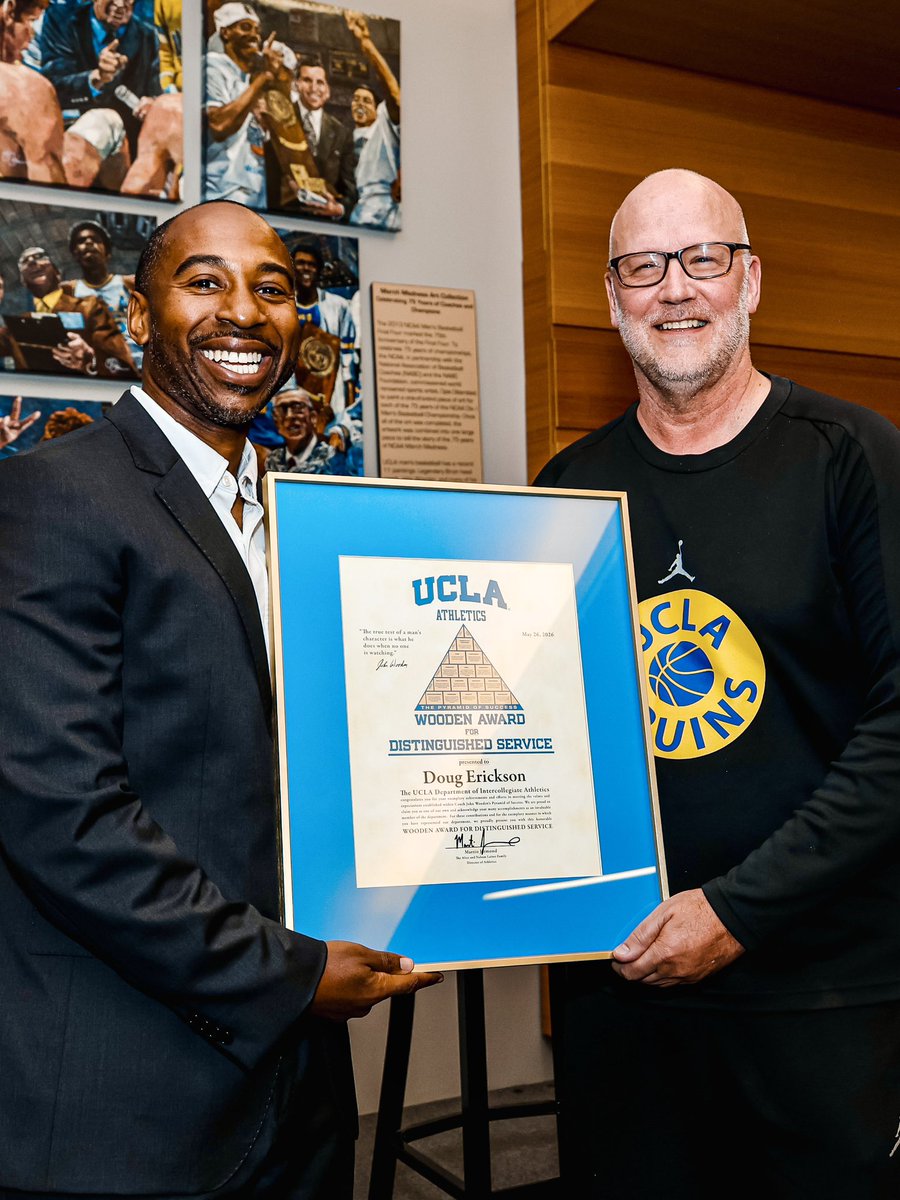
Congratulations to UCLA men’s basketball operations director 𝐃𝐨𝐮𝐠 𝐄𝐫𝐢𝐜𝐤𝐬𝐨𝐧 on earning the Wooden Award for Distinguished Service.
This honor is bestowed to distinguished employees each school year. Erickson has served UCLA’s program for 34 seasons.
#GoBruins 🙏
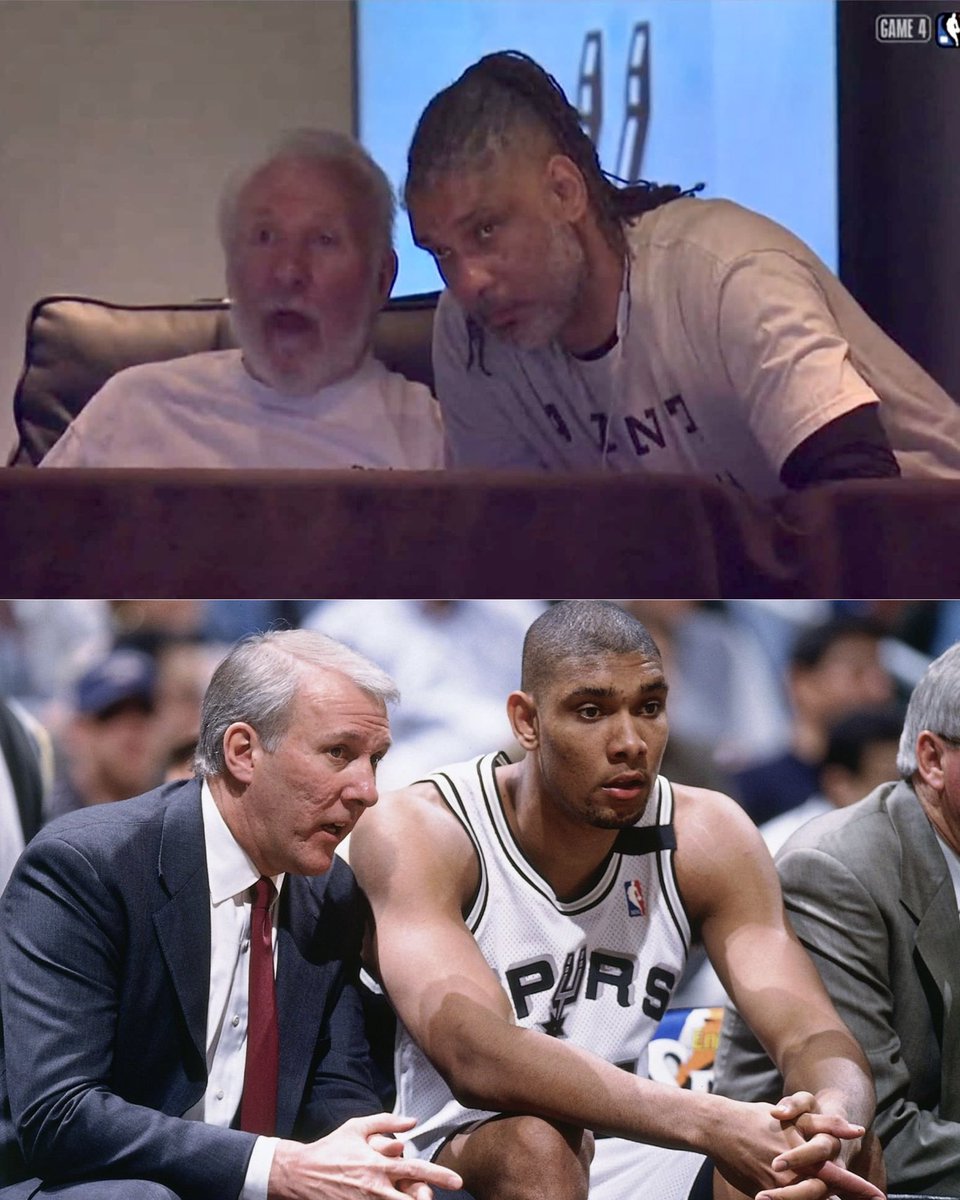
La prima foto è del 2026, precisamente di due giorni fa.
La seconda è del 1997, ventinove anni fa.
Nella prima c’è Gregg Popovich che parla e Tim Duncan che ascolta.
Nella seconda la stessa cosa.
Tra una foto e l’altra sono trascorsi 29 anni, i due hanno riscritto la storia del basket, hanno vinto e infranto record, sono diventati uno dei migliori coach e uno dei migliori giocatori nella storia del basket.
Nel mezzo, però, Gregg Popovich ha avuto problemi di salute che lo hanno costretto ad abbandonare il basket. Ma nonostante i problemi a deambulare, a parlare e di vista, continua oggi a stare vicino alla sua squadra, gli Spurs, seguendo gli allenamenti e parlando di tanto in tanto anche negli spogliatoi.
Ad accompagnarlo ovunque, ad aiutarlo a scendere dall’auto e salire le scale, a portargli la stampella, a trascorrere con lui intere giornate a parlare di basket, e a portarlo di tanto in tanto in tribuna a vedere le partite, c’è Tim Duncan.
In questi 29 anni, da quando si sono conosciuti, un ragazzo, diventato uomo, continua ad ascoltare.
Ascolta la persona che ha dichiarato di avergli cambiato la vita, di averlo reso un giocatore migliore e soprattutto una persona migliore.
Il rapporto tra Popovich e Duncan è una storia che travalica i confini dello sport perché contiene tutto: stima, amicizia, rispetto, riconoscenza, gratitudine.
È una storia semplicemente meravigliosa.
In these remaining days of school, you may notice some students acting a little differently. A little more emotional. A little more withdrawn. A little more reactive. A little more clingy. A little more tired.
Please remember, not every child is counting down the days until summer.
For some students, school is the safest place they know. It is where they receive consistent meals, where someone notices when they are absent, where they are greeted with a smile, and where there is structure, routine, laughter, encouragement, and love. It is where they feel important, where they feel seen, and where they can finally exhale for a little while.
For some children, the end of the school year feels less like freedom and more like loss. Loss of connection. Loss of safety. Loss of predictability. Loss of the people who helped them believe in themselves.
Sometimes what looks like “bad behavior” is really anxiety, fear, sadness, grief, or uncertainty underneath. All behavior is communication.
In these final days, lead with empathy before frustration, connection before correction, and compassion before consequences. A few extra minutes of kindness right now may stay with a child forever.
Thank you for the love you pour into kids who may never fully be able to explain just how much they needed you. You mattered more than you know this year.
#maslowbeforebloom
Attention Class of 2026…
I’m 50 years old. I graduated high school in 1994. And in 3 months, all three of my kids will be in high school. Time flies.
The lessons below aren’t theories. They’re principles that have allowed me to build a deeply fulfilling life, meaningful relationships, a rewarding career, and experiences I could have only dreamed about when I was your age.
Here are 26 mini-lessons for the Class of 2026:
1. Your attitude is a choice. Choose one that makes people want to be around you.
2. Do what needs to be done… even when you don’t feel like it (discipline > motivation).
3. Stop worrying about being impressive and focus on being helpful.
4. Confidence isn’t something you wait for. It’s something you build.
5. The people you spend time with will either raise your standards or lower them. Choose wisely.
6. Repetition is not punishment. It’s the foundation of mastery.
7. Run your race at your pace. Comparison is a trap.
8. Being coachable (and open to feedback) is a superpower (listen > defend).
9. Your phone will be a powerful tool or your biggest distraction. Decide which one it will be.
10. The most successful people I know are open-minded, curious, and courageous.
11. Learn how to communicate well and communicate clearly.
12. Don’t confuse movement with progress. Being busy doesn’t always mean being productive.
13. Energy is contagious. Add energy to every room you enter.
14. Mistakes are feedback. Learn from them, then move forward quickly.
15. Protect your reputation. It takes years to build and seconds to ruin.
16. Appreciate what you have while pursuing what you want.
17. A complement unshared is a momentary act of selfishness.
18. Health is wealth. Take care of your body and your mind (“guard your yard”).
19. Your habits are writing your future story every single day.
20. The strongest relationships are built on trust, consistency, and presence… not convenience.
21. A candle loses nothing by lighting another candle.
22. Learn to be comfortable being uncomfortable. Growth lives there.
23. Don’t wait for perfect conditions. Start before you feel ready.
24. Humility opens doors that arrogance closes.
25. Success without fulfillment is empty. Build a life you actually enjoy living.
26. Leave every place you go better than you found it and always return your shopping your cart!
Class of 2026… the world doesn’t need more people chasing status. It needs more people committed to service, growth, integrity, and impact.
You have far more potential than you realize.
Now go make a difference.
I believe in you.
A community college professor named Marty Lobdell taught the same study skills lecture for 30 years. The video quietly became one of the most watched educational recordings online, with over 10 million views.
He spent his career watching students fail not because they were lazy, but because no one had taught them how their brain actually works when learning something difficult.
The lecture, “Study Less Study Smart,” contains a powerful framework.
Your brain cannot sustain focus the way most people believe. Studies show the average learner hits a wall between 25 and 30 minutes. After that, efficiency collapses. You’re still sitting there, but almost nothing is being absorbed.
Lobdell told the story of a student who planned to study 6 hours a night, 5 nights a week. Thirty hours total. She failed every class. She was not lacking effort. She was confusing time near books with actual learning. The fix is simple: when focus drops, stop, take a 5 minute rewarding break, then return. That reset makes a massive difference.
He also destroyed the myth of highlighting and re reading. Recognition is not the same as recall. To prove it, he read 13 random letters. Almost no one remembered them. Then he turned them into “Happy Thursday.” The entire room recalled them instantly. The brain stores meaning, not repetition.
This is why elaborative encoding works so well.
Finally, he shared the most important principle: 80 percent of study time should be active recitation. Close the book and explain the material in your own words. Teach it to someone else or an empty chair. Retrieval is where real learning happens.
His closing line stuck with me: If this information does not change your
behaviour, you have not actually learned it.
The best students do not study more hours. They stop confusing the feeling of studying with the reality of learning.
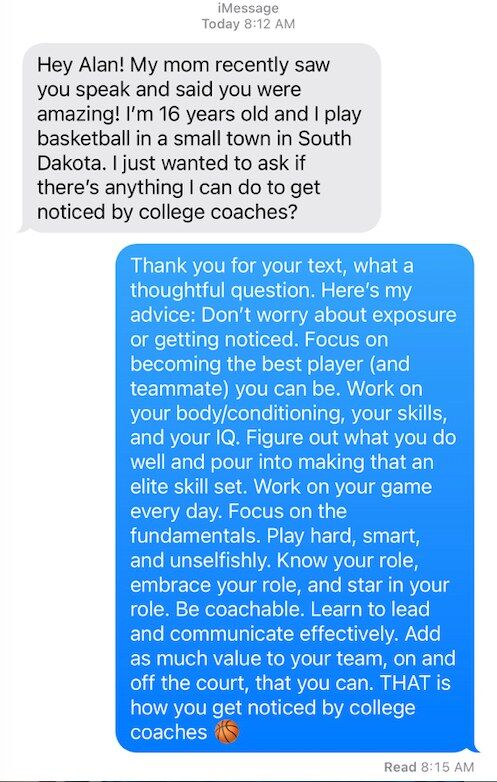
This kid texted me seeking some advice. Here is my response.
NOTE: This advice far exceeds the game of basketball... and can be applied by anyone in any industry looking to advance in their profession!
On this day in 2004...
@derekfisher hit one of the most iconic postseason shots in NBA history with 0.4 seconds left in Game 5 of Round 2, giving the Lakers a 3-2 series lead over the San Antonio Spurs!
Lakers would go onto win the series 4-2 🔥
The CBS Sports intro for the 1988 NBA Finals between the Detroit Pistons and Los Angeles Lakers is pure 80s nostalgia.
They don’t make intros like this anymore. 🔥