@x_Aurelion@AssurCore Strabo wrote about the districts of Calachene (Kalhu) and Ninus (Nineveh) and Plutarch mentions that those Assyrians were in conflict with Tigranes, Xenophon place-names and identification clearly shows he lacked knowledge of the area.
@zablzabl @B1iin_ 1. The Neo-Assyrian Qasra Knoll is inside old-Ankawa, opposite of the old Mar Gewargis church (religious transition)
2. Present Ankawis descend from medieval/ancient Adiabene who in turn descend from Neo-Assyrians.
3. The conclusion was also drawn by renown scholar Simo Parpola.
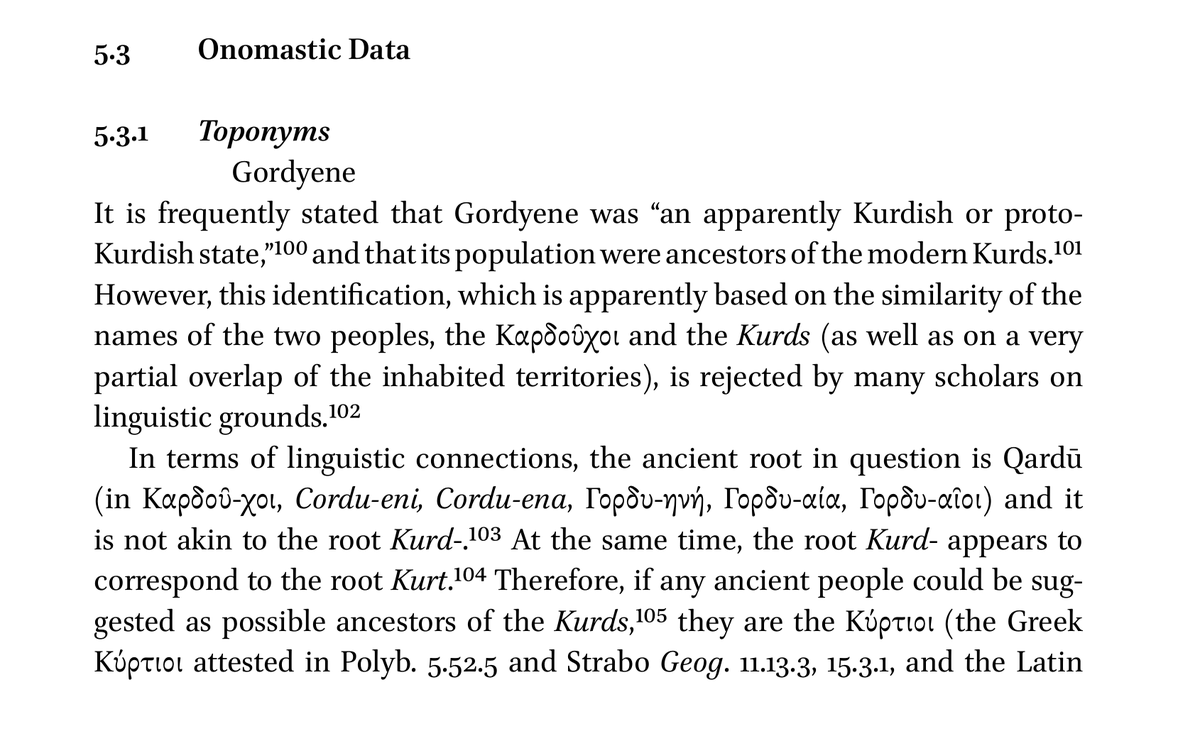
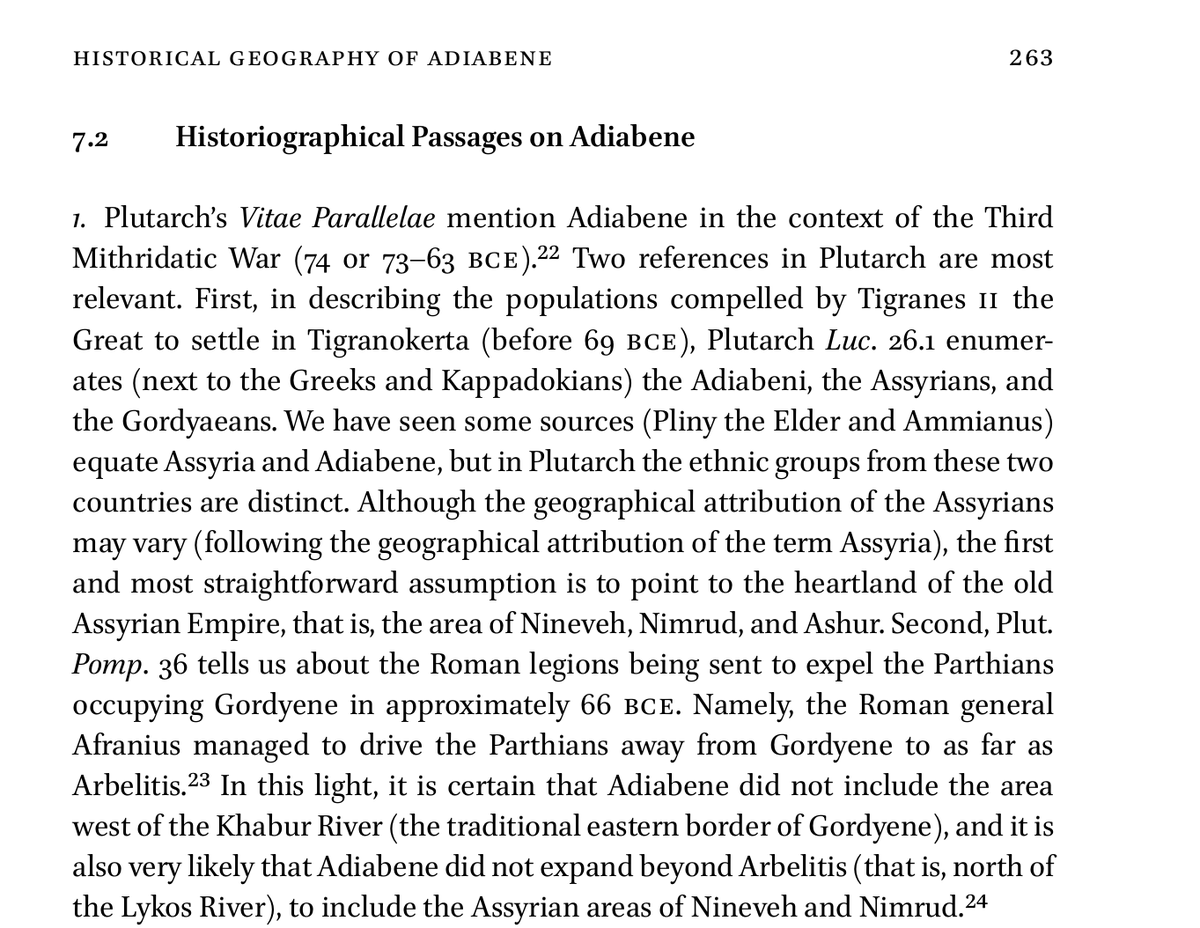
Michal Marciak (2017) who specializes in the ancient near east via the Hellenistic period, affirms the Nineveh (Aturia) region as the Assyrian ethnic zone, whereas Cyrtians (Kurds) centered in Persis & Atropatene-Media
Maps illustrating the boundaries these ethnicities lived in.
@GulaSur153 That’s false
Adiabene-Assyrians (Semites) still retained their proper regions in the upper Tigris zone (Plutarch, Strabo..)
Chaldeans-Babylonians (Semites) also continued within their respective regions in south Mesopotamia according to ancient scholars Strabo, Ptolemy..
Michal Marciak (2017) who specializes in the ancient near east via the Hellenistic period, affirms the Nineveh (Aturia) region as the Assyrian ethnic zone, whereas Cyrtians (Kurds) centered in Persis & Atropatene-Media
Maps illustrating the boundaries these ethnicities lived in.
@shoresh03 Erbil & Duhok city-areas are historically part of the Assyrian imperial central heartland, as is Nineveh/Nimrud & Assur.
The East-Syriac/NENA Christian tradition and localities is rooted in the Nineveh-Arbil regions, you're triggered because Assyrians live in Assyria.
Historic bilingualism of Akkadian & Aramaic which relates to Assyrian linguistic continuity of present dialects 'Northeastern Neo-Aramaic' (NENA)
A clipped version of the lecture, Assyrian Renaissance: Assyrians & Aramaic - Dr. Jonathan Valk
@inpic0 Regarding the ethnic identification of the different denominations, this is a global issue of church and religious politics, people can call themselves what they want, we don't have an identity issue simply because if they don't identify with Assyrian then they're not Assyrians.
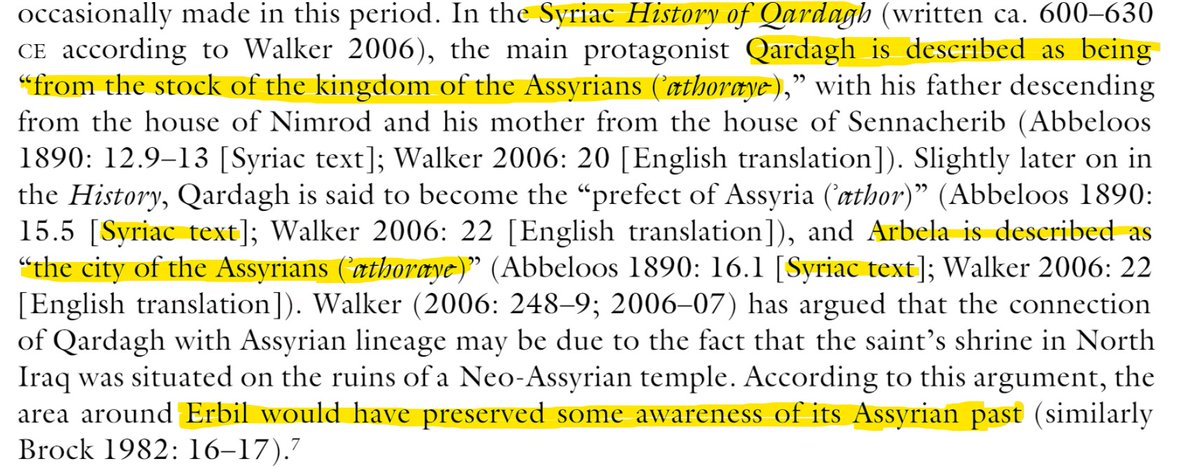
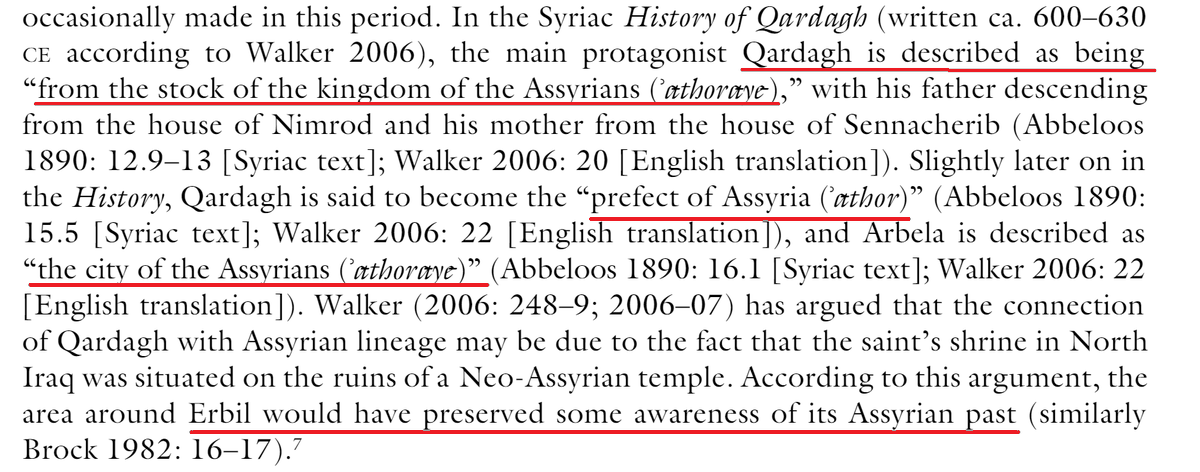
@inpic0 https://t.co/GZfcaEOUkv Who told you we forgot our identity? Our medieval Syriac Adiabene ancestors called our country/city 'Assyria', our people tied to the land 'Assyrians' and described our ancestral roots as gensa/genos 'Assyrian', You are conflating ethnonym and heritage.
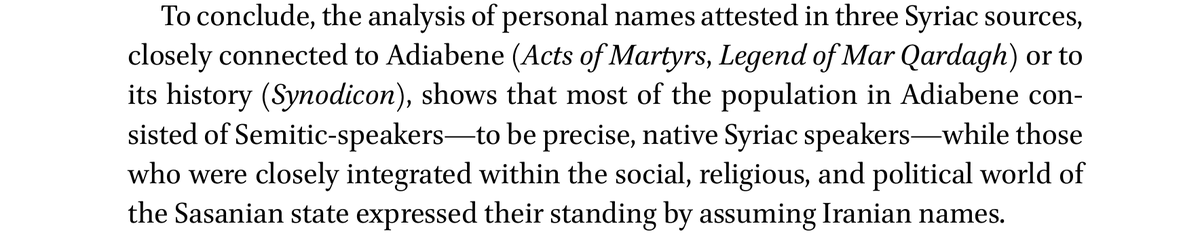
The population of Sassanid-period Ecclesiastical province of Assyria (Nineveh/Mosul, Arbil) was largely native Assyrian,
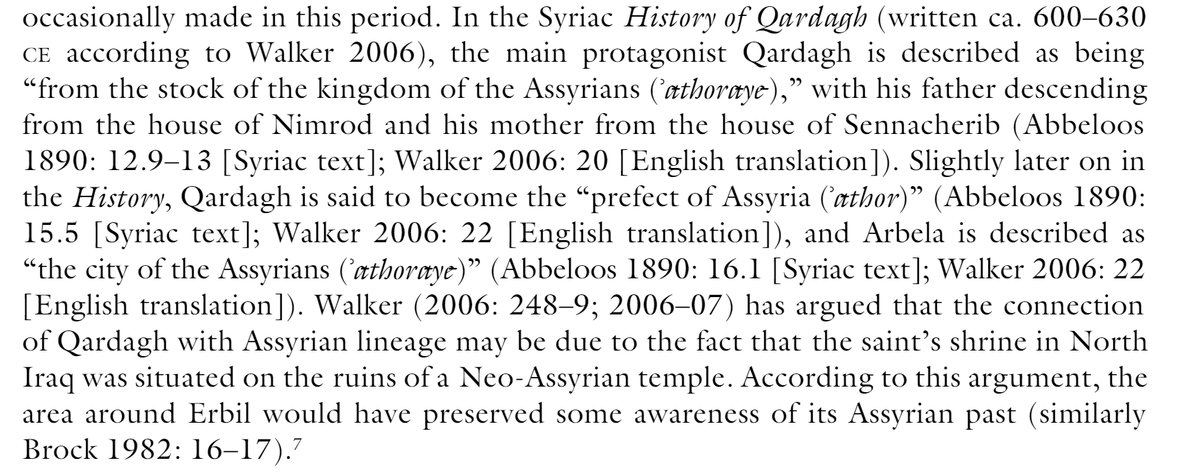
Medieval Arbela region Syriac writers (Adiabene) identified as Assyrians (Athoraye), one of them being the renown Mar Qardagh
The Assyrians of Hakkari aren't only descendants of medieval Ninevites as more commonly known, the Hakkari region also had descendants of medieval Arbelites with some still carrying a memory from Arbela such as Bne Qelatha-Mar Bisho, Mahe Khtaya-Bi Qasha, & Zawita-Arbelaya.
@Ariansewgat 98.4% Northern West Asian, not 98.4% Kurdish, these test companies don't show how much %admixture you have, for example on 23andme I am 99.8% Northern West Asian with number 1 region being Nineveh, but this doesn't mean that I am 99.8% Assyrian admix, to show this run G25 test...
@shoresh03@ZagrosianKay@grok The projecting is funny, you keep arguing about "ethnonym", which again is a non-issue and I agree with anyways, by posting the images you admit that Arbil/Adiabene is originally a Syriac (Assyrian heritage) city/region, not the Kurds who colonized Arbil in the 11th century AD.
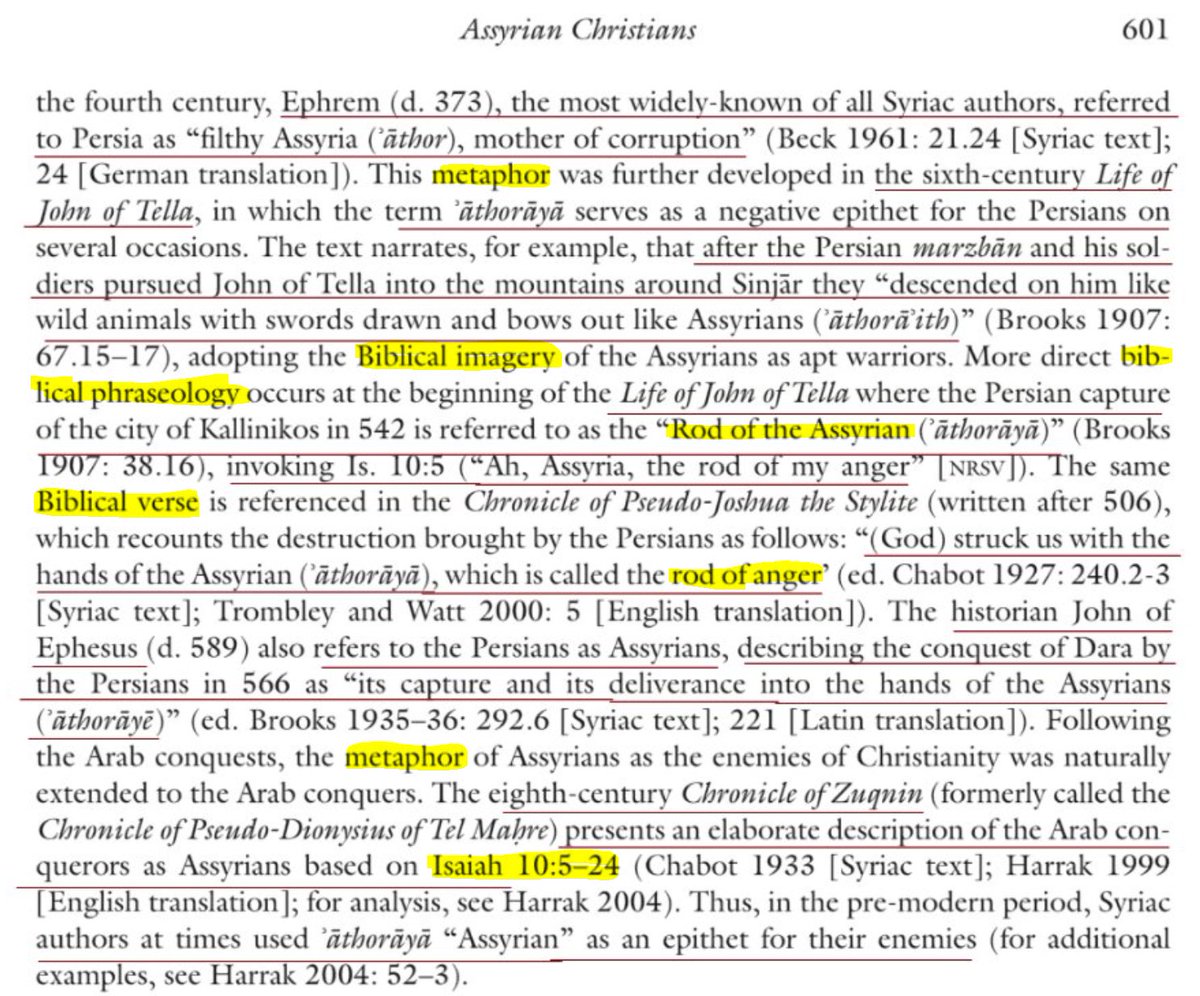
@Chaldean_People 1. Enemy is metaphorical.
2. Assyrian city Arbela was part of the ecclesiastical province of the Assyrians, as you know Arbela city is not Mosul city.
3. Mar Ephraim calls Assyria 'Glorious', & other Syriac writers (e.g. Mar Addai) mention Assyrian embracement of Christiantiy.
@shoresh03@ZagrosianKay@grok https://t.co/05ZpTXSG6q Suryaye (Adiabene Assyrians) categorized as ethnically different from Persians/Parsaye, Huzaye (Elamites/Lurs) and Arameans (south/central Meso Nabataeans)
@NatlContext Medieval Adiabene (Assyrian) Suraye Christians saw themselves differently from their south neighbours Aramaye (Nabataeans),
The Church of the East (Nestorian) Arameans were located in Central Mesopotamia, especially around the area of Mahoze https://t.co/UZZlnQWDET
@shoresh03@ZagrosianKay@grok Aramaya was used in Osroene by West Syriacs as a linguistic term or inner grouping belonging to that language, in East Syriac Adiabene tradition, Aramaya is scarce.
The Ecclesiastical province of Assyria was Mosul & Arbil regions, (as I also showed above for Arbil) not Kirkuk.
@shoresh03@ZagrosianKay@grok https://t.co/5O8Rerz6LQ Michal Marciak who specializes in the history of Adiabene equates Adiabeni Syriac Christians as local Assyrian via heritage/ancestry.
@shoresh03@ZagrosianKay@grok This is what happens when ultranationalists take Assyriologists, Syriacists works out of context and use dumb analogies, the argument against Assyrian-continued identity is ETHNONYM, otherwise Syriac Adiabene heritage is from the old Assyrians. https://t.co/kp320nVhta
@shoresh03@ZagrosianKay@grok The Adiabene (Arbil region) church fathers that identified as Assyrians (Athuraye) are from the city of Arbil AND the village of Hazza you fraud
@shoresh03@ZagrosianKay@grok You are wishing for a forgery or missing context, fact is the medieval native Arbelites and Arbil city (Adiabene) identified as Assyrian (Athuraya)
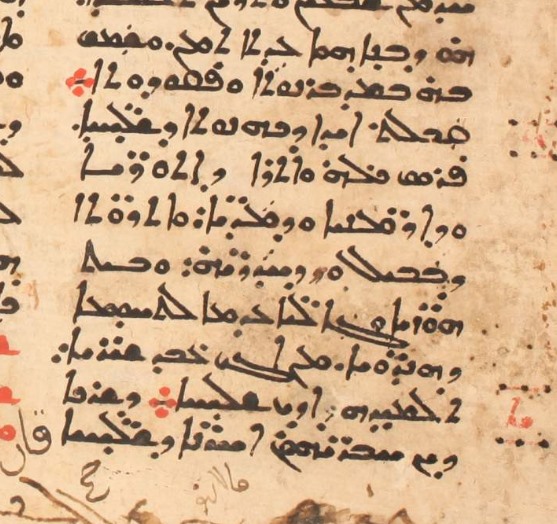
Gensa Athuraya (Assyrian origin/heritage), M'dita d-Athuraye (Assyrian city), and Atra d-Athuraye (Assyrian country)