@therealmrbench@BonnieCrombie Often media & sometimes politicians get it wrong when it comes to what causes flooding - sometimes they do corrections when they look at the data: https://t.co/LF8qLXigYf but often flooding is still blamed on more intense/frequent storms NOT observed in S.Ontario or Canada data
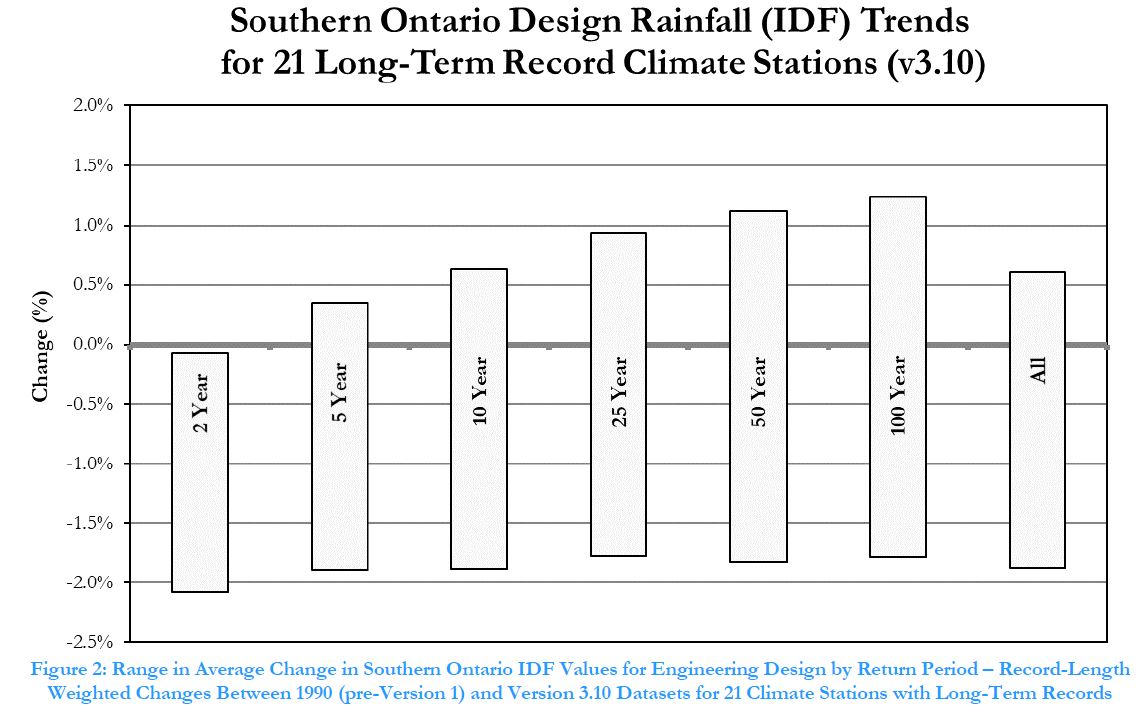
@therealmrbench@BonnieCrombie The climate in terms of extreme rainfall has not changed in 30 years based on @environmentca Engineering Climate Datasets for Southern Ontario, including Mississauga/ Pearson A climate station https://t.co/vgo3P04fPQ
@RogerPielkeJr Thanks Roger. Similar trends in Canada based on long term @environmentca data: https://t.co/Pc5aHVrQzL ... some report on a shorter time periods starting in the late 1940's or 1970's and miss the earlier highs: https://t.co/kKvvXUcPV2 @TorontoStar#climatechange#extremeweather
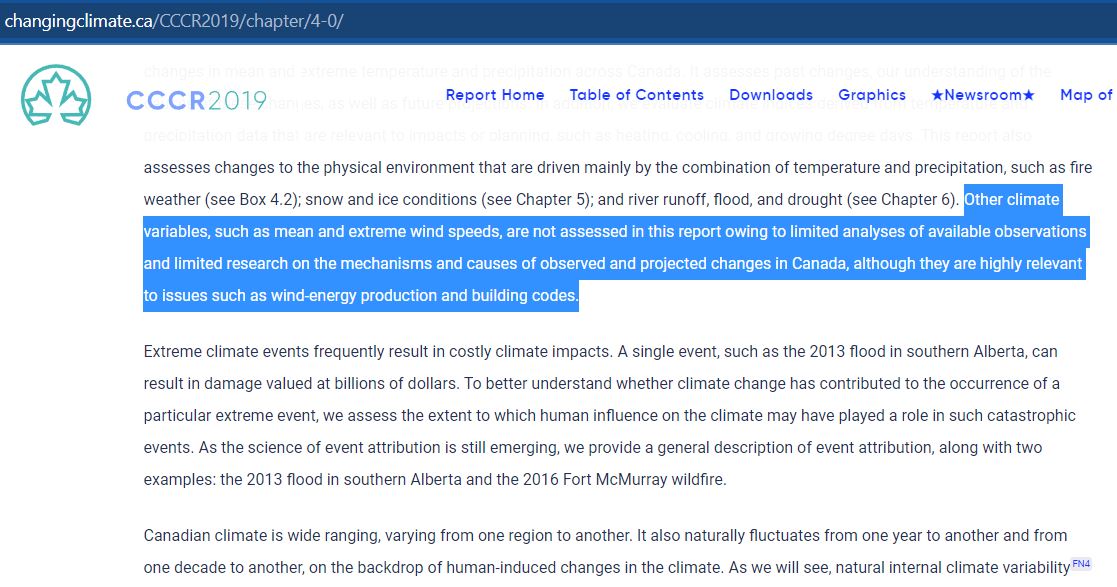
@gavenuti@350Canada@JustinTrudeau Can @350Canada or @JustinTrudeau point to data showing wind or other extreme weather is hitting 'harder' and 'more often'? The @Canada in a Changing Climate Report did not have any analysis of extreme wind & said no evidence of observed more extreme rain (https://t.co/dRUxD8Cfle)
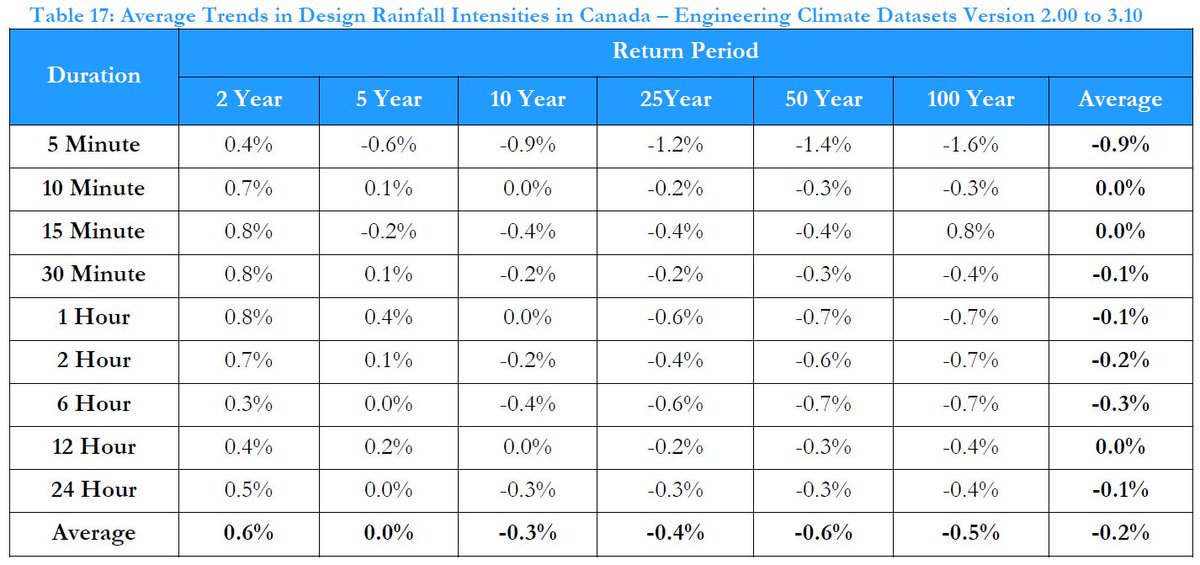
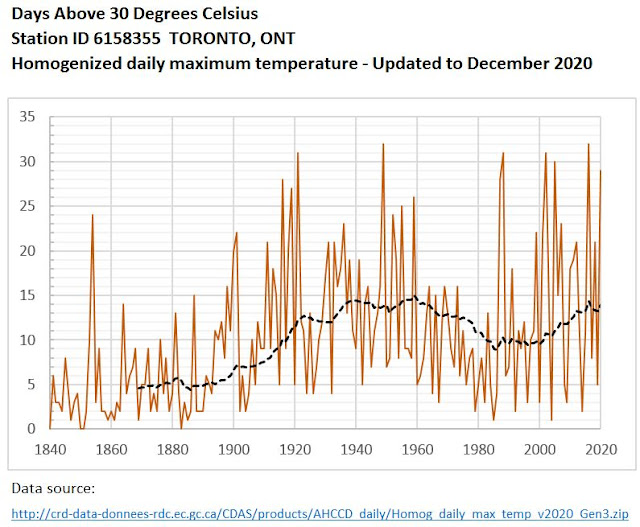
@gavenuti@350Canada@JustinTrudeau Recent storm was a tragedy. But the NRC's recent benefit cost guideline for flood control shows that extreme rainfall has not been increasing across Canada (https://t.co/7YGPeRMZbb) & @environmentca AHCCD data shows many city extreme temps not increasing (https://t.co/Pc5aHVrQzL
@mdhDuBois@arbol_y_agua Hi Marccus, here is a link: https://t.co/TbtP3Gsshc - GSI costs are in Appendix F Annex F1. I'd think depending on local goals & benefits pursued, & varied site constraints (sanitary I&I/chlorides in WHPAs/shallow rock...) or opportunities, different approaches are preferred.
@highlyanne @nanditabasu2 @StormWater_TO @NPR@EcoGreenQueen @PSUstormwater @mdhDuBois Not sure how GI can "take the top off big events" ? Sized to handle frequent small events GI gets filled in the rising limb of hydrographs & volume is not available for peak shaving. A better argument could be to reduce volumes cumulatively. Conveyance for big events is needed.
@highlyanne @NPR@EcoGreenQueen @PSUstormwater @mdhDuBois Unfortunately not a solution for most urban flooding challenges (50+ year old systems built to low standards) where conveyance/control of larger events is needed. Retrofitting large areas financially not sustainable (re lifecycle costs) - Ontario example: https://t.co/KeKwKc7gLz
@AndrewSiffert@IPCC_CH Hi Andrew, the new @NRC_CNRC cost benefit guideline for flood control reviews rain intensities in Canada. Overall 100-year intensities decreased especially over short durations. In southern Ontario, since 1990 100-year intensities are overall unchanged: https://t.co/7YGPeRMZbb
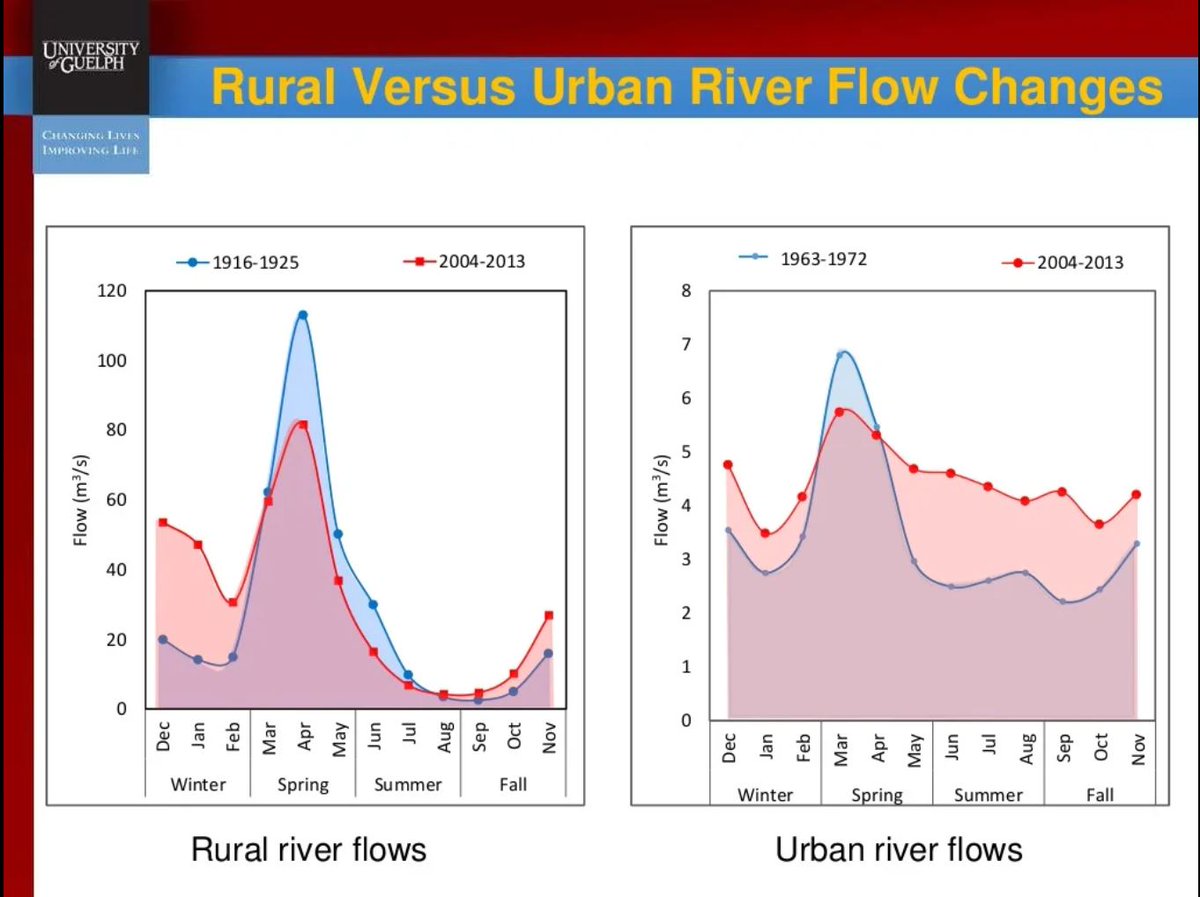
@terencecorcoran Good point Terence. Flood peaks are up and down in Canada (https://t.co/AWlYzxeOQI). @Canada 2021 National Issues report explains increased losses since the 1980's were due to 'growing exposure and rising asset values': https://t.co/6u6cNZhCR4 #flooding#climatechange
@RogerPielkeJr Unfortunate 'trickle-down effect' is that tools like https://t.co/isdmRNYfJC from @environmentca use scenarios to guide other analysis, but with no consideration of the implausibility.
@gavenuti@ClimateReality The National Research Council of Canada's new cost-benefit guideline for flood control reviews trends and shows some regions have flat or decreasing trends: https://t.co/7YGPeRNx0J - overall, 100-year storms are not more severe based on @environmentca Engineering Climate Datasets
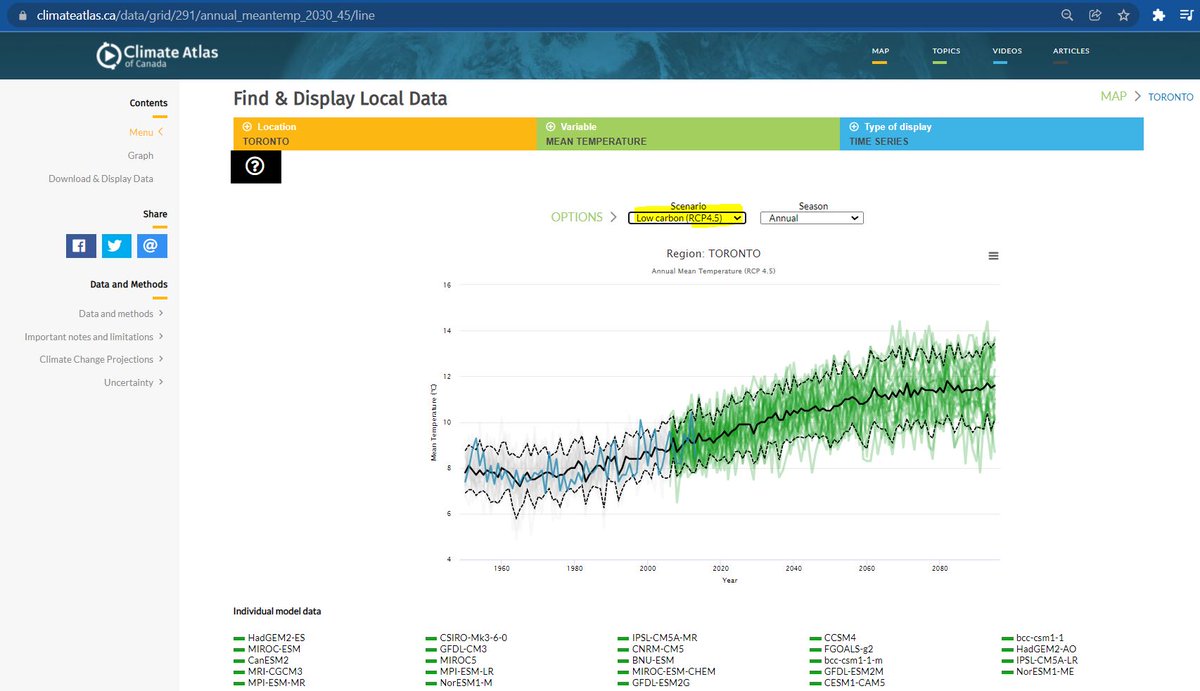
@RogerPielkeJr Good to know as many estimate extreme rain shifts w/ temperature. So why does @Canada plot RCP 8.5 as default scenario that paper shows "lies far outside the range of plausible scenarios", and has no option for more plausible SSP 3.4 range (@Canada calls RCP 4.5 'low carbon').