¿Por qué los intelectuales odian el capitalismo? - Jesús Huerta de Soto
Bertrand de Jouvenel, en su análisis sobre la relación entre los intelectuales y el capitalismo, sostiene que muchos de ellos tienden a rechazar el sistema capitalista debido a su naturaleza impersonal y a la percepción de que promueve desigualdades.
De Jouvenel argumenta que este rechazo se origina en el deseo de los intelectuales de tener un papel central en la sociedad, algo que el capitalismo no necesariamente les garantiza. Jesús Huerta de Soto amplía esta crítica al señalar que el odio de los intelectuales hacia el capitalismo se fundamenta en cuatro factores: ignorancia, soberbia, resentimiento y envidia. La ignorancia se manifiesta en una falta de comprensión de cómo el capitalismo fomenta el bienestar general; la soberbia, en una actitud de superioridad moral frente al mercado; el resentimiento, por no ser reconocidos como actores clave en el sistema; y la envidia, hacia quienes prosperan bajo un modelo que privilegia el mérito y la innovación.
Estas críticas reflejan un profundo desacuerdo con los principios de la economía de mercado, que valora la descentralización y la competencia, en contraposición al control centralizado que muchos intelectuales prefieren.
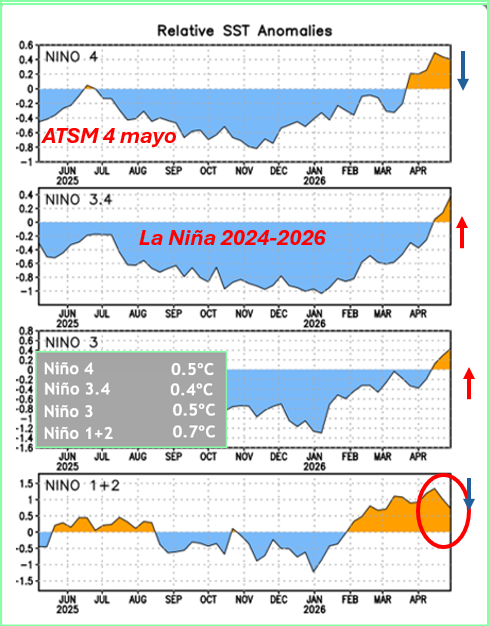
@gaurav_kochar This is the latest report from NOAA (1 june).
Facts!
Please area 1+2.
There could be >1.7C, like in Ecuador coast are negative ones.
Good temper we need.
@gaurav_kochar This is the latest report from NOAA (1 june).
Facts!
Please area 1+2.
There could be >1.7C, like in Ecuador coast are negative ones.
Good temper we need.
“Once you get some government program in... it becomes a special privilege of a small group which has an enormously strong interest to maintain it. And you do not have any comparable group that has an interest to get rid of it.”
— Milton Friedman
Elon Musk just defended America better than every politician in Washington combined.
Musk: “After World War 2, the US could have basically taken over the world and any country. Like we got nukes, nobody else got nukes. We don’t even have to lose soldiers. Which country do you want?”
One nation on earth held a weapon nobody else had.
Total dominance. Zero competition. No risk of retaliation.
Every empire in history that held that kind of advantage used it.
Rome. The Mongols. The British. The Ottomans.
They conquered until they collapsed.
America had a bigger advantage than all of them combined.
And it rebuilt the countries it just defeated.
Musk: “The United States actually helped rebuild countries. So it helped rebuild Europe, it helped rebuild Japan. This is very unusual behavior, almost unprecedented.”
Almost unprecedented?
It had never happened before. Not once in 5,000 years of recorded history.
The Marshall Plan wasn’t foreign aid.
It was the most radical act of restraint any superpower ever committed.
America turned its enemies into allies. Turned rubble into economies. Turned surrender into partnership.
Germany went from ashes to the economic engine of Europe in a generation.
Japan went from unconditional surrender to the third largest economy on earth.
Three years after the war, America was flying food into Berlin.
A city in the heart of the nation that just tried to destroy it.
That’s not policy.
That’s a civilization deciding what it is at the exact moment it has the power to be anything.
You’re being told a story right now.
That America is the villain of history.
You hear it everywhere. Media. Universities. Social platforms.
Musk: “There’s always like, well America’s done bad things. Well of course America’s done bad things, but one needs to look at the whole track record.”
Every nation on earth has dark chapters. Every single one.
The difference is what a country does when nobody can stop it.
And when nobody could stop America, it fed its enemies and rebuilt their cities.
Musk: “The history of China suggests that China is not acquisitive. Meaning they’re not going to go out and invade a whole bunch of countries.”
Probably right.
China has historically built walls, not fleets.
But the real question isn’t about borders anymore.
We’re approaching a moment that mirrors 1945 in ways nobody has fully processed yet.
AI is going to give a handful of people a power advantage that makes nuclear monopoly look quaint.
If someone is going to hold that kind of power, who do you want it to be?
The country that conquered when it could? Or the one that rebuilt when it didn’t have to?
Every alliance. Every trade route. Every economy.
Billions lifted out of poverty.
All of it traces back to one act of restraint that had never been done before.
And carries no guarantee of being repeated.
The most powerful thing America ever did wasn’t building the bomb.
It was what it didn’t do after.
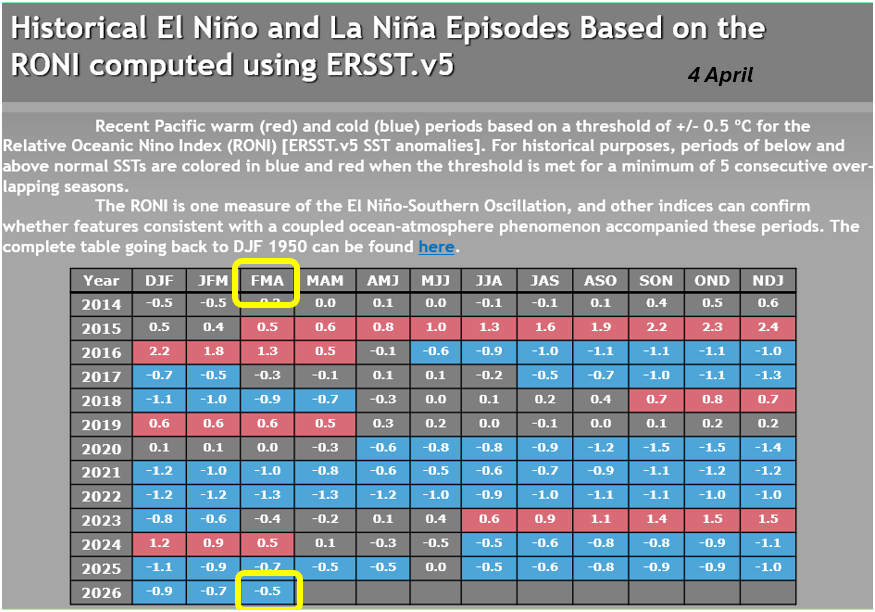
We need to talk about the "Super El Niño" hype. 🚨While raw SST anomalies in the Pacific are spiking, looking SSTA alone is like looking at a car's speedometer without knowing if the tires are touching the road. To measure the real intensity, look at RONI, not just anomalies. 1/3
Jeff Bezos just told everyone to stop worrying about AI taking their jobs.
Then he said something most people completely missed.
Bezos: “I am not worried about this. I find that people, all of us, we are so unimaginative about what future jobs are going to look like.”
He’s not dismissing you. He’s challenging you.
Every generation has been terrible at predicting what comes next.
Nobody in 1995 was planning to become a YouTuber. Nobody in 2005 was dreaming of managing a Shopify brand from their kitchen table.
Those jobs didn’t exist until the world shifted and someone with imagination filled the gap.
That’s the pattern Bezos is pointing at.
The jobs that AI creates won’t look like anything we’d recognize today. They never do.
What changes is that the barrier between wanting to do something and actually doing it is about to collapse.
The person who always wanted to build but couldn’t code will build. The person who always wanted to create but couldn’t afford a studio will create.
AI doesn’t eliminate ambition. It removes the obstacles standing in front of it.
The people who thrive next won’t be the most technical. They’ll be the most imaginative. Bezos isn’t warning you. He’s telling you the door is wide open.
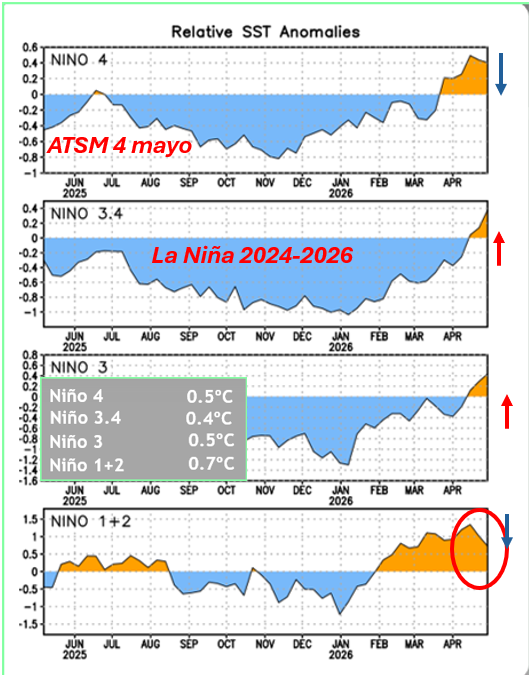
@Mario___Ramirez Según el reporte de NOAA, la ATSM en 3.4 al 4 de mayo es +0.4. Pero, este modelo sugiere ~1; +0.6C de error!!!
Por otro lado la intensidad del evento se mide por el indice RONI, que ahora mismo está en -0.5 (leer 4 mayo).
Saludos
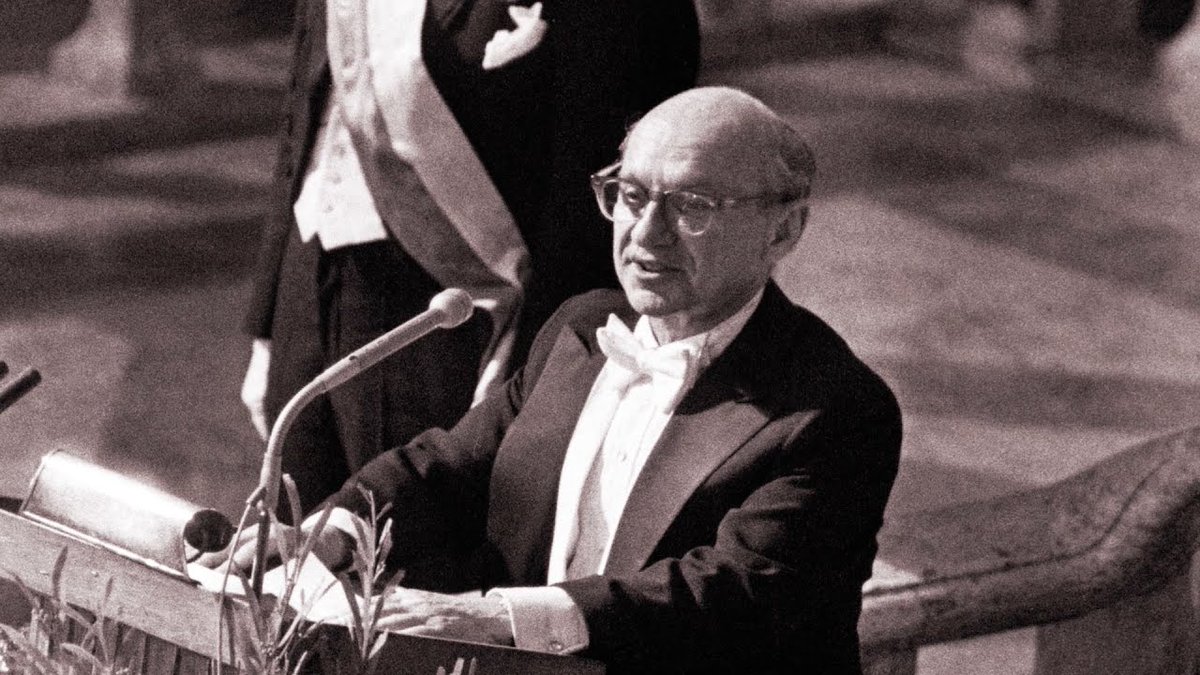
Milton Friedman on government’s four major functions:
1) Ensure national defense
2) Protect citizens from “abuse and coercion by other citizens”
3) Define and uphold private property rights
4) Maintain a judicial system to adjudicate disputes and enforce rules
El Niño 2026-2027
Fenómeno EL Niño: Proceso acoplado oceanográfico-Meteorológico.
Donde? Area 3.4 (Figura)
Intensidad? Define el evento RONI y su intensidad.
4 Mayo/26
RONI=-0.5C (La Niña)
ATSM: +0.4C (3.4)
En 1+2: +0.7C (⬇️)
SOI: ~ -11
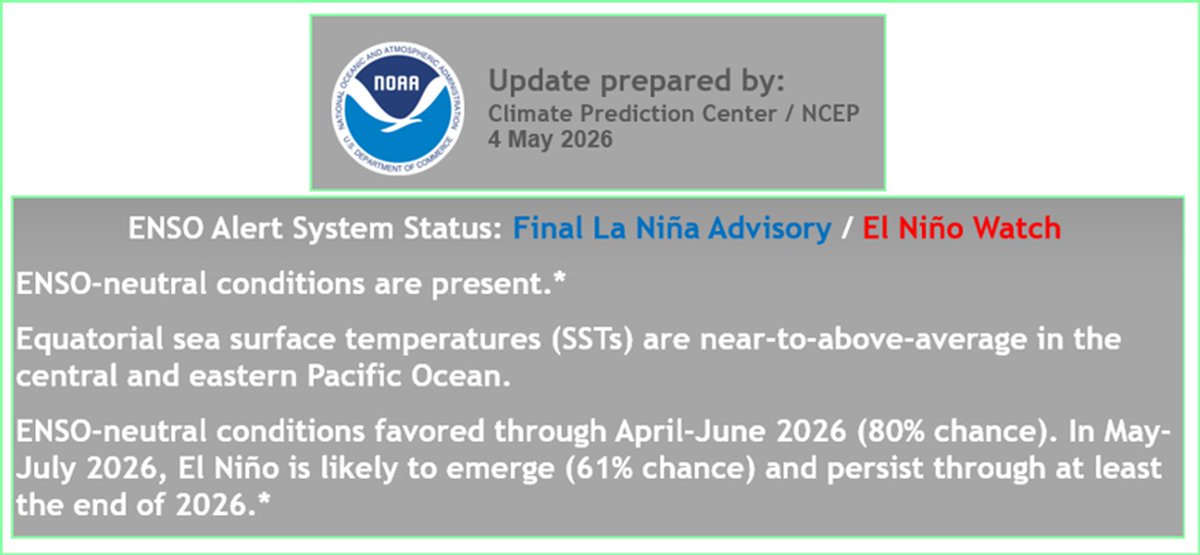
Estamos cond. neutras favorables
Pilas!
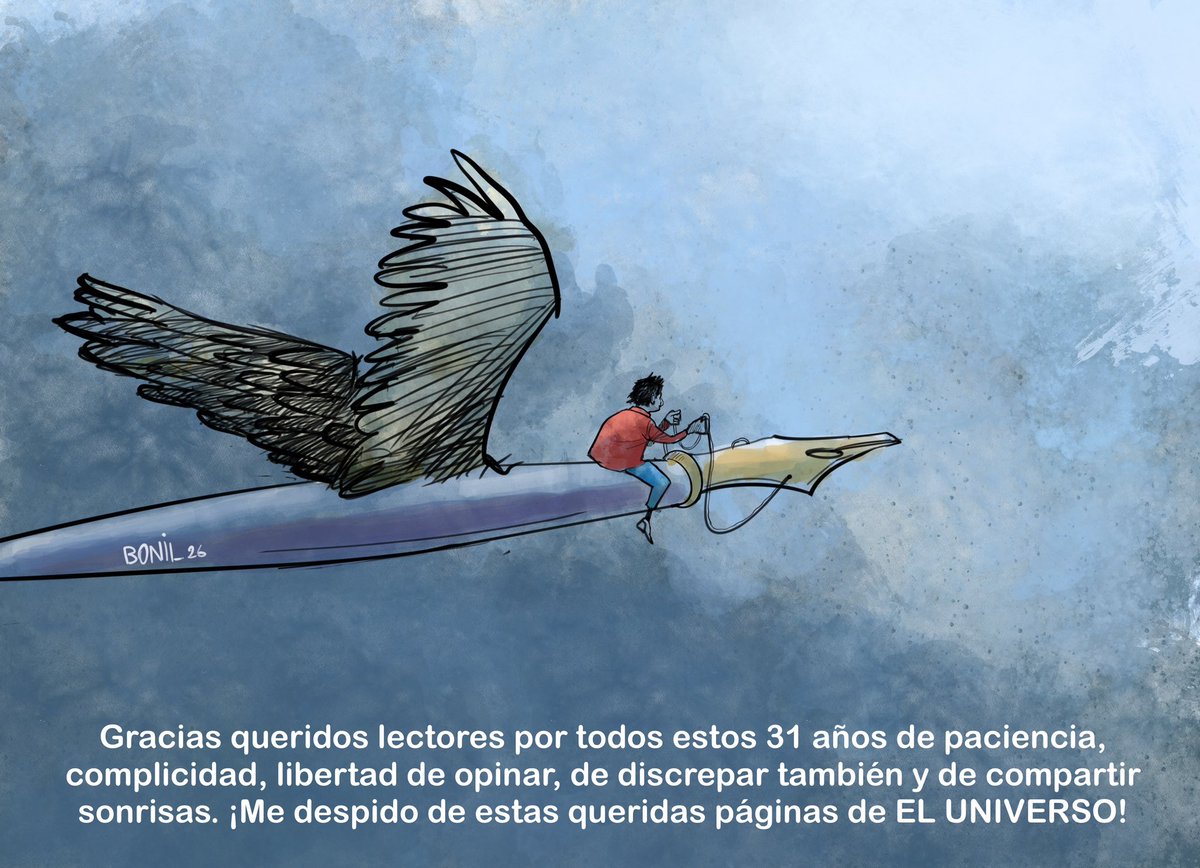
He dibujado en distintos medios desde hace 40 años, 31 de ellos en El Universo donde también disfruté la libertad de opinar y compartir sonrisas🤝 Todos tenemos nuestras propias visiones.
Cada quien tiene su rumbo. Y yo tengo el de siempre: donde me lleve mi pluma.
@ALBERTOACOSTAB Ya lo están haciendo en Centroamérica y están ganando participación. No es posible hacer un oligopolio de un producto que se puede cultivar en otros sitios. El Gobierno debe velar por el sector y ponerlos a competir, no protegerlos.
President @JMilei on protectionism:
“Why should Argentinians pay more for goods they could get for less? It’s false that this destroys jobs.
When the economy opens up, some products will be cheaper and some jobs will be lost, but people will spend less money.
And what they save, they will spend in other sectors that will generate more jobs in other parts of the economy where people want to work and where they are more productive.” 🎯
“The use of force to achieve equality will destroy freedom, and the force, introduced for good purposes, will end up in the hands of people who use it to promote their own interests.”
— Milton Friedman
Milton Friedman: “Keep your eye on one thing and one thing only: how much government is spending, because that’s the true tax.”
“If you’re not paying for it in the form of explicit taxes, you’re paying for it indirectly in the form of inflation or borrowing.”